

Russia’s transfer of ramjet expertise for Iranian Supersonic Missiles marks a shift from arms sales to capability-building. If successful, Iran could independently produce advanced anti-ship missiles, threatening US naval power and altering the Gulf balance.
Technology transfers reshape military balances more enduringly than arms sales. The most dangerous weapons transfers are not always the ones that cross borders in crates. They are the ones that arrive as blueprints, test data, and engineering expertise, allowing a state to build what it could not previously produce. The Russian-assisted program to develop Iranian Supersonic Missiles, codenamed C430L, exemplifies this shift.
For years, Moscow sold Tehran finished weapons or, more recently, bought Iranian drones for its war in Ukraine. Now the relationship has inverted. Russian specialists from NPO Mashinostroyenia are helping Iran overcome the hardest technological barrier in cruise missile design: ramjet propulsion for sustained supersonic flight. This is not a transaction that ends with a delivery. It is a transfer of industrial capability.
If successful, Iran could eventually manufacture advanced supersonic anti-ship missiles independently, threatening US naval forces in the Arabian Sea and complicating the blockade that currently holds. The paradox is that Russia, which once relied on Iranian drones to sustain its war effort, is now providing the expertise that could make Iran a more formidable adversary for Washington. The strategic consequence is clear: Iranian Supersonic Missiles, built with Russian fingerprints, may soon arrive not as imported weapons but as domestically produced systems, and that changes the balance of power in the Gulf of Oman and beyond.
Russian Assistance to Iranian Supersonic Missiles
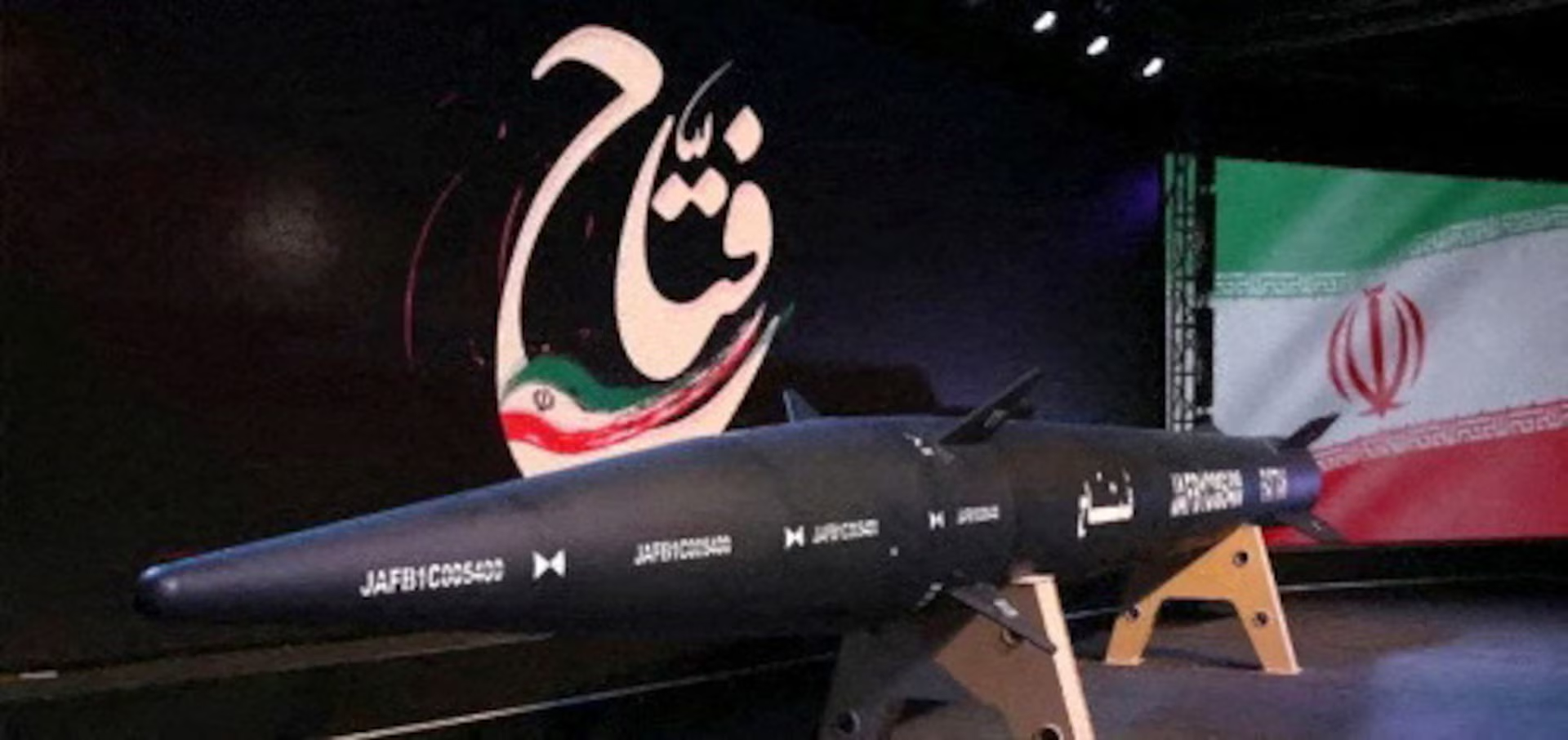
Russia has reportedly been helping Iran to develop an advanced supersonic cruise missile capability, offering Tehran something potentially more consequential than another weapons delivery: the technical knowledge needed to develop the system at home.
According to a Financial Times investigation based on leaked Russian correspondence, travel records, and military patents, the covert programme, codenamed C430L, began in 2023 and has continued during the current US-Israeli war with Iran.
The programme has brought senior specialists from Russian missile manufacturer NPO Mashinostroyenia into direct contact with Iran’s defence establishment. Their work has focused on helping Tehran develop ramjet propulsion, which allows cruise missiles to sustain supersonic speeds while flying through the atmosphere.
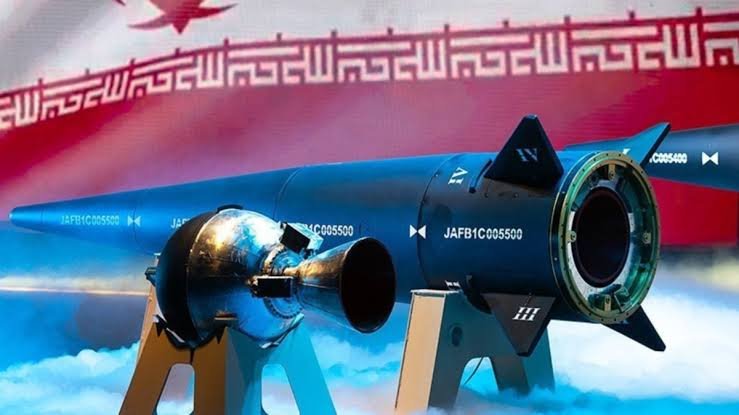
Iran has already built and flight-tested a ramjet propulsion system, although there is currently no evidence that a Russian-assisted missile has entered operational service.
Russian engineers reportedly analysed Iranian flight-test data and advised their counterparts on technical problems involving fuel systems, combustion stability, air intakes and engine nozzles.
The distinction matters. Rather than selling Tehran a finished Russian missile, Moscow appears to be helping Iranian engineers overcome technological barriers that have constrained their own programme for years.
If successful, that assistance could eventually allow Iran to manufacture and further develop a new family of advanced cruise missiles independently.
Closing a Gap in Iran’s Arsenal
Iran already possesses the Middle East’s largest and most diverse missile arsenal, including ballistic missiles, land-attack cruise missiles, and increasingly sophisticated anti-ship weapons.
Yet sustained supersonic cruise flight has remained a significant technological challenge. Tehran has pursued the capability for years. Iranian officials announced plans for supersonic anti-ship missiles in 2016, while two Iranian diplomats were arrested in Ukraine in 2018 while allegedly attempting to obtain components and documentation relating to the Soviet-designed Kh-31A anti-ship missile.
Iranian Supersonic Missiles Threaten US Naval Power
The military value would be particularly significant at sea. “A supersonic anti-ship cruise missile can fill an important gap in Iran’s naval arsenal,” Farzin Nadimi, Senior Fellow at the Washington Institute, told The New Arab.
Unlike ballistic missiles descending from higher trajectories, a ramjet-powered cruise missile could approach a vessel at low altitude while travelling at Mach 2 or Mach 3, reducing detection and interception time. Iran’s anti-ship ballistic missiles have so far failed to strike manoeuvring US carriers or destroyers during the current conflict, while, according to Nadimi, a sea-skimming supersonic weapon would leave Aegis-equipped vessels considerably less time to respond.
“That is the threat to the Gulf of Oman/Arabian Sea picket that now holds the blockade,” he said.
The threat could extend further offshore if an air-launched variant were eventually integrated with more modern combat aircraft. Iran has been seeking Russian fighters for years as part of an effort to modernise an air force still largely reliant on aircraft acquired before the 1979 revolution. Leaked Russian documents indicate that a contract covering military aircraft for Iran was signed as early as June 2021 and continued to be implemented after Russia’s full-scale invasion of Ukraine.
The first tangible result was the delivery of Yak-130 advanced jet trainers to Iran in 2023. At least eight are reported to have reached the country, providing Tehran with a modern platform for advanced pilot training and a potential bridge towards operating more capable Russian fighters.
The Su-35 would represent the much more significant step. Reports in July suggested that Russia had completed the first 20 fighters destined for Iran, part of what leaked documents have indicated could eventually become a considerably larger fleet, although deliveries and their eventual operational status remain uncertain.
Nadimi argues that pairing a supersonic anti-ship missile with such an aircraft could move the launch point away from Iran’s Makran coast and increase the risks facing US naval forces operating deeper in the Arabian Sea.
For the moment, however, the missile capability itself appears to remain developmental. Hamidreza Azizi, Senior Iran Analyst at the International Crisis Group, pointed to Iran’s recent unsuccessful missile attacks against US naval forces as evidence that Russian assistance “has probably not yet reached an operational level”.
From Iranian Drones to Russian Know-how
C430L nevertheless reveals how much the military relationship between Moscow and Tehran has changed since Russia invaded Ukraine in 2022.
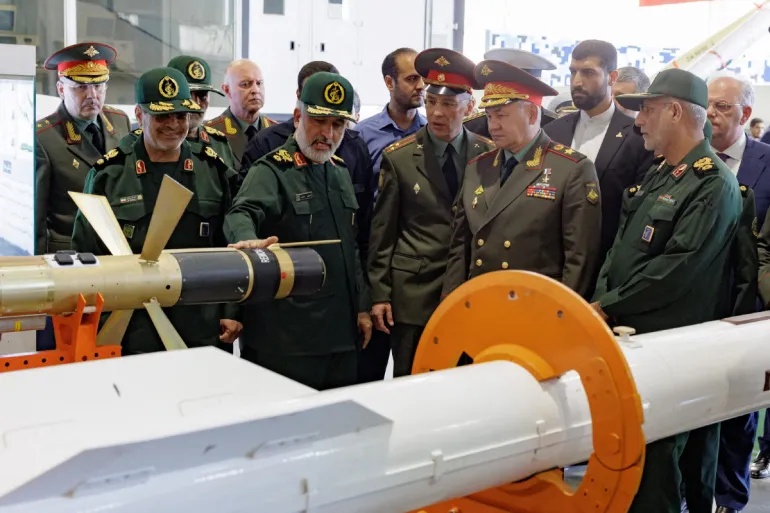
Iran initially emerged as the supplier. From 2022, Tehran provided Russia with Shahed-131 and Shahed-136 one-way attack drones and subsequently helped Moscow establish domestic production, alongside transfers of short-range ballistic missiles.
Russia then adapted Iranian technology to its own battlefield requirements. Russian-produced Geran variants received changes to navigation, communications and warheads, while Moscow developed increasingly sophisticated tactics involving large numbers of attack drones and decoys. That industrial ecosystem is still expanding.
Satellite imagery from early September reportedly shows at least ten new facilities under construction at the Alabuga production complex in Tatarstan. Some of those modifications subsequently appeared in Iranian drones, suggesting that experience accumulated over Ukraine was already flowing back to Tehran.
Some of those modifications subsequently appeared in Iranian drones, suggesting that experience accumulated over Ukraine was already flowing back to Tehran.
“What we are seeing is that military cooperation between Iran and Moscow has not been a one-way street,” Azizi told The New Arab. According to the analyst, Russia has provided Iran with upgrades developed for earlier Shahed variants and information derived from their operational use in Ukraine.
Russian military intelligence cooperation has also contributed to Iranian war efforts, particularly by improving the precision of strikes against US bases in the region.
The missile programme takes this exchange further. Russia is providing expertise accumulated through decades of developing high-speed missiles rather than simply returning Iranian technology in modified form. The specialists involved reportedly included senior Russian engineers working on sea-launched missiles, aerodynamics, ballistics and supersonic ramjet propulsion.
That could have consequences well beyond C430L itself. If Iran masters the propulsion technology, it could potentially incorporate it into later missile designs without requiring Moscow to continuously supply complete weapons. In that sense, the programme points to a broader shift from transactions involving individual weapons systems towards cooperation that can strengthen Iran’s own capacity to design, adapt and manufacture them.
A Partnership With Limits
This does not mean that Russia and Iran have become formal military allies. Their 20-year Comprehensive Strategic Partnership Treaty signed in January 2025 expanded defence cooperation but stopped short of providing mutual defence guarantees. Moscow has also continued to calibrate its support for Tehran against its relationships elsewhere in the Middle East.
Azizi also distinguishes the relationship from Russia’s partnership with North Korea, which has extended to direct manpower support for Moscow’s war. Iran-Russia cooperation, by comparison, remains concentrated on “technology and intelligence rather than direct assistance”.
The slow progress of the Su-35 programme also illustrates these limits. Tehran has sought the fighters for years and, while recent reporting suggests production is now advancing, their prolonged absence from Iranian service shows how slowly some of the most consequential elements of military cooperation have materialised.
“So this all suggests that there has been a qualitative upgrade in military cooperation between Iran and Russia,” Azizi said. “But it also shows that neither side wants to make it public or go beyond a certain threshold, at least for now.”
C430L fits precisely within that model: strategically valuable, difficult to observe, and capable of strengthening Iran without requiring Russian forces to intervene directly.
Beyond Moscow: China and Intelligence
Iran’s wartime cooperation is also expanding beyond Russia. The Financial Times investigation places C430L alongside other reported transfers, including Russian Verba man-portable air-defence systems and Iran’s acquisition of a high-resolution Chinese satellite used to monitor US military facilities.
Washington subsequently sanctioned the Chinese supplier Earth Eye, alleging that satellite imagery had supported Iranian strikes against US forces.
Taken together, these developments suggest Tehran is using different relationships to address specific weaknesses exposed during recent conflicts: Russian experience for missile technology and drone development, intelligence cooperation for targeting, and Chinese capabilities for surveillance and other technological requirements.
This does not amount to an emerging trilateral military alliance. Russia and China have different interests in the Middle East, different relationships with Iran and different thresholds for involvement in Tehran’s confrontation with Washington. What they do show is Iran’s growing ability to draw on separate partnerships for capabilities that its domestic defence sector cannot yet provide on its own.
A Model of Technology Transfer
For Tehran, however, formal alliances may be less important than access. The immediate significance of C430L lies in a missile that could eventually make US naval operations around Iran more dangerous. Its longer-term significance lies in the model behind it.
After years in which Iran supplied Russia with weapons for Ukraine, Moscow is increasingly returning battlefield experience, intelligence, and specialised technological expertise.
If that exchange continues, some of the most consequential Russian weapons transfers to Iran may arrive without a missile ever crossing the border.