
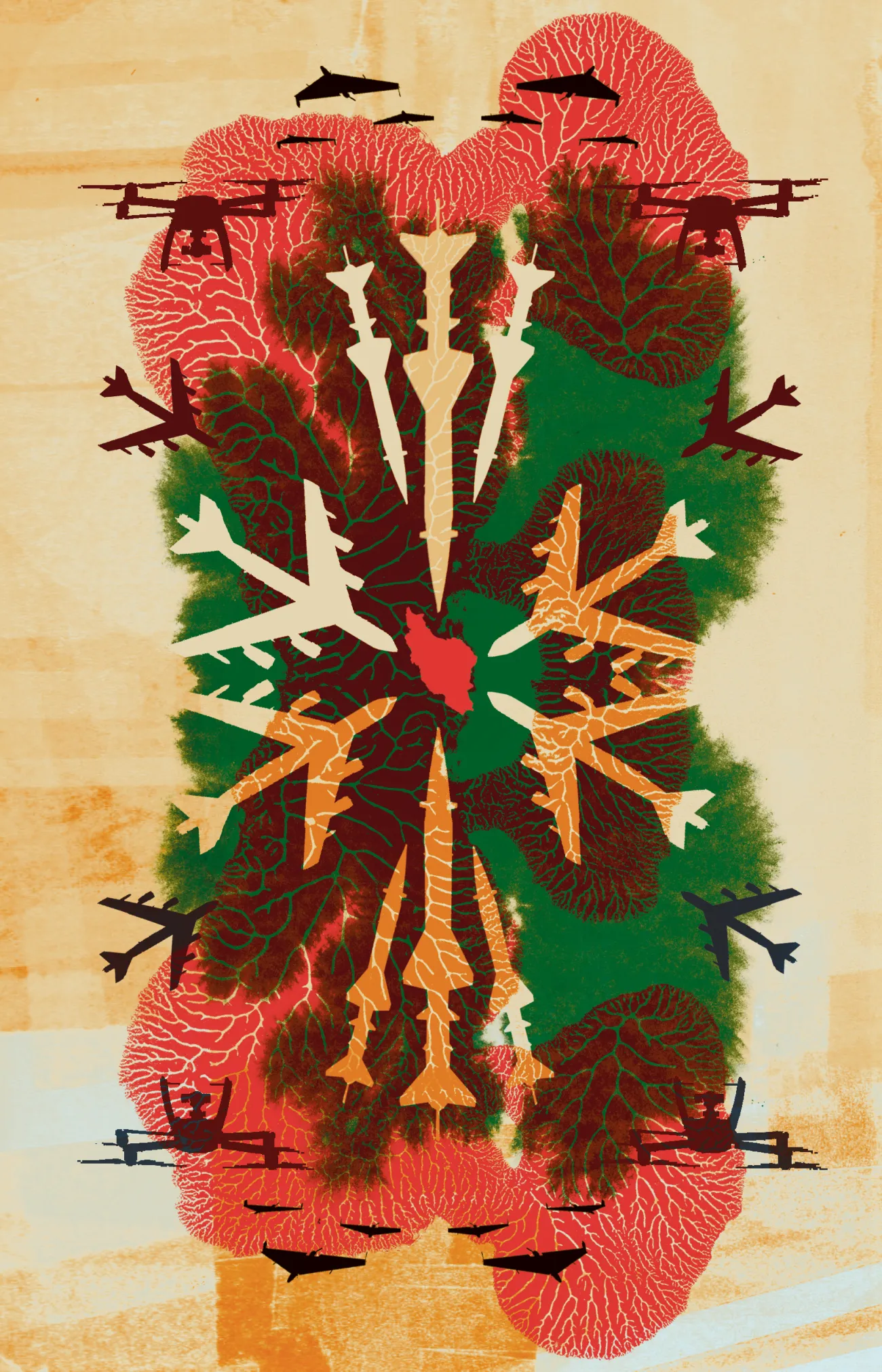
Washington and Tehran cannot win or retreat, so war persists through strikes, sanctions, and failed talks, reshaping Iran and forcing Gulf states to hedge against further disruption while oil prices climb.
The conflict between Washington and Tehran has entered a phase in which neither victory nor defeat appears attainable, yet neither side believes it can safely step back. The Iran War Deadlock rests on a simple asymmetry: the United States can degrade Iran’s military and economy without toppling its government, while Iran can inflict costs on American bases, allies, and commerce without expelling U.S. power from the region. Both governments possess enough resources to sustain the fight and enough distrust to reject any pause that might let the other regroup.
Talks recur, but they function as tactical breathing spaces rather than pathways to settlement. Iran fears that surrendering control over Hormuz, missiles, or nuclear capacity would invite later pressure. Washington fears that sanctions relief would fund Tehran’s reconstitution. Israel fears that restraint today would produce a stronger adversary tomorrow. Because each side sees the status quo as survivable, the Iran War Deadlock persists without a dramatic escalation or a comprehensive resolution. This stalemate is not peace. It is a managed collision that reshapes Iran’s internal power balance, forces Gulf states to hedge, and leaves the world paying higher energy costs while waiting for a break that neither side can afford to offer.
Can Iran War Deadlock Ever End
When will the war in Iran end? American officials claim that the answer is soon. “I think the war is going to end immediately after the [November] election,” declared U.S. President Donald Trump in September. “They can’t hold out any longer.” Iranian leaders agree that the war’s conclusion is near.
Tehran has “brought the most heavily armed army in the history of the world to its knees,” proclaimed Ahmad Vahidi, the commander in chief of the Islamic Revolutionary Guard Corps, in August. Many outside analysts think that the conflict will drag on for longer and end with negotiations rather than with a clear winner. But generally, there is a sense that the fighting will soon be resolved, one way or another.
Such thinking is understandable. All wars eventually end, and after months of rising energy prices, the world is especially eager for this one to stop. Yet the unsettling reality is that the conflict is nowhere near over. The war’s two principal belligerents cannot achieve their desired goals, yet they both feel they are accomplishing enough to make continued fighting through a mix of military and economic tools worth it.
The United States cannot topple the Iranian regime, get it to give up its missile program, force it to abandon its nuclear program, or make it stop supporting its regional partners. But Washington can keep degrading Iran’s military and constricting its economy. Iran cannot evict the world’s only superpower from the Middle East. Yet it can keep damaging U.S. regional bases, bombing the United States’ regional allies, and disrupting international commerce.
Critically, both states have the resources needed to fight indefinitely—and both believe they have no choice but to use them. They think that if their side lets up, the other will press on until it has either humiliated them or achieved its main objectives.
They carry out periodic talks, but there is no mutual trust. In fact, they suspect that their enemy will simply use a cease-fire to regroup and resupply before attacking again. The Iranian government fears that relinquishing leverage, whether over Hormuz, its missile arsenal, or the nuclear program, would leave it exposed to pressure later. Washington, for its part, worries that sweeping sanctions relief would provide Tehran with the resources and time it needs to reconstitute its capabilities. Israel, meanwhile, fears that restraint today would only create a stronger Iran tomorrow. The steps required to escape the war look dangerous precisely because they require each side to temporarily make itself more vulnerable.
The war, then, will carry on as it has. There will not be a comprehensive resolution. There will be no lasting peace deal. But because the status quo is sustainable for each side, and because the parties lack the power to seize the upper hand, there will be no dramatic escalation, either. Tehran and Washington won’t be defeated. Yet no one will win.
NO WAY OUT
For the United States, the war was not supposed to go like this. When it joined Israel in striking the Islamic Republic on February 28, Washington thought that it would quickly prevail. The two countries, after all, had buried or destroyed most of Iran’s nuclear facilities and blown up many of its missile sites in June 2025.
Israel had killed scores of senior Iranian scientists and more than two dozen military leaders, and it had decimated Hezbollah in Lebanon. Syrian President Bashar al-Assad—a longtime Iranian ally—had lost power, and massive protests had just rocked the Iranian government itself. The U.S. military and the Israel Defense Forces enjoyed what seemed like uncontested access to Iranian airspace. The regime, in other words, appeared to be on the precipice.
In the conflict’s opening days, Israel and the United States killed Iranian Supreme Leader Ali Khamenei and many of the country’s top military commanders. But predictions that the Islamic Republic would collapse proved incorrect. The regime quickly replaced lost officials and set about striking back at its enemies, blowing up American jets, missile launchers, and radar systems on bases scattered throughout the Persian Gulf. It took control of the Strait of Hormuz and squeezed commercial flows through the waterway. And Iranian forces attacked civilian infrastructure across the Gulf region, making Washington’s regional partners pay for enabling the U.S.-Israeli assault.
American officials have downplayed these setbacks, promising that the Iranian regime is just one more strike or sanction away from being forced to make concessions. But it is extremely unlikely that Israel and Washington will force Tehran to compromise on anything significant. They have repeatedly tried to bomb the regime’s officials and military programs out of existence, only for Tehran to rapidly rebuild them. It is hard to see how future airstrikes can accomplish what past ones haven’t.
The United States, of course, has added a new dimension to its assault, piling on sanctions to accompany its blockade of Iran’s southern coast and periodic bombings. These measures have succeeded in further constricting Iran’s access to global markets, including its ability to import various wares and export key commodities such as oil. But this, too, is unlikely to persuade the regime. Overland routes and the Caspian Sea conspire against any attempt to hermetically seal Iran, even if the capacity of these passageways cannot compensate for the closing of naval routes and dwindling air links.
China and Russia have provided a variety of goods and valuable military intelligence. The economic effect of the U.S. cutoffs is real, but the government will pass on the damage to its people by reducing subsidies rather than curbing spending on military and security services, which it needs to defend against external adversaries and internal dissent.
The public must contend head-on with a collapsing currency and runaway inflation, and to ordinary Iranians, describing the present situation as sustainable would sound almost obscene. But what might be unsustainable for Iranian society can be perfectly sustainable for the state. The Islamic Republic does not need to protect Iran as a whole from economic deterioration. It must protect only the institutions and constituencies necessary for its own survival.
U.S. officials may hope that as Iran’s population becomes poorer, Tehran will have a change of heart. But Iranian leaders believe they are confronting an existential challenge, and in such circumstances, leaders are unlikely to regard any level of economic hardship as a clear breaking point. Plus, the regime has endured a worse situation without blinking, and for a longer time.
From 1980 to 1988, the country fought a war with Iraq that killed hundreds of thousands of Iranians and left the state with hundreds of billions of dollars in damage. But even that was not enough to make Tehran quit. In fact, even after Iran expelled Iraqi forces from its territory, it invaded its adversary and spent six years trying to topple Iraqi President Saddam Hussein, despite continued domestic suffering. It took Iraqi battlefield advances, growing U.S. involvement in the Gulf, and a perception that the regional balance of power was moving sharply against Tehran to bring the conflict to a halt.
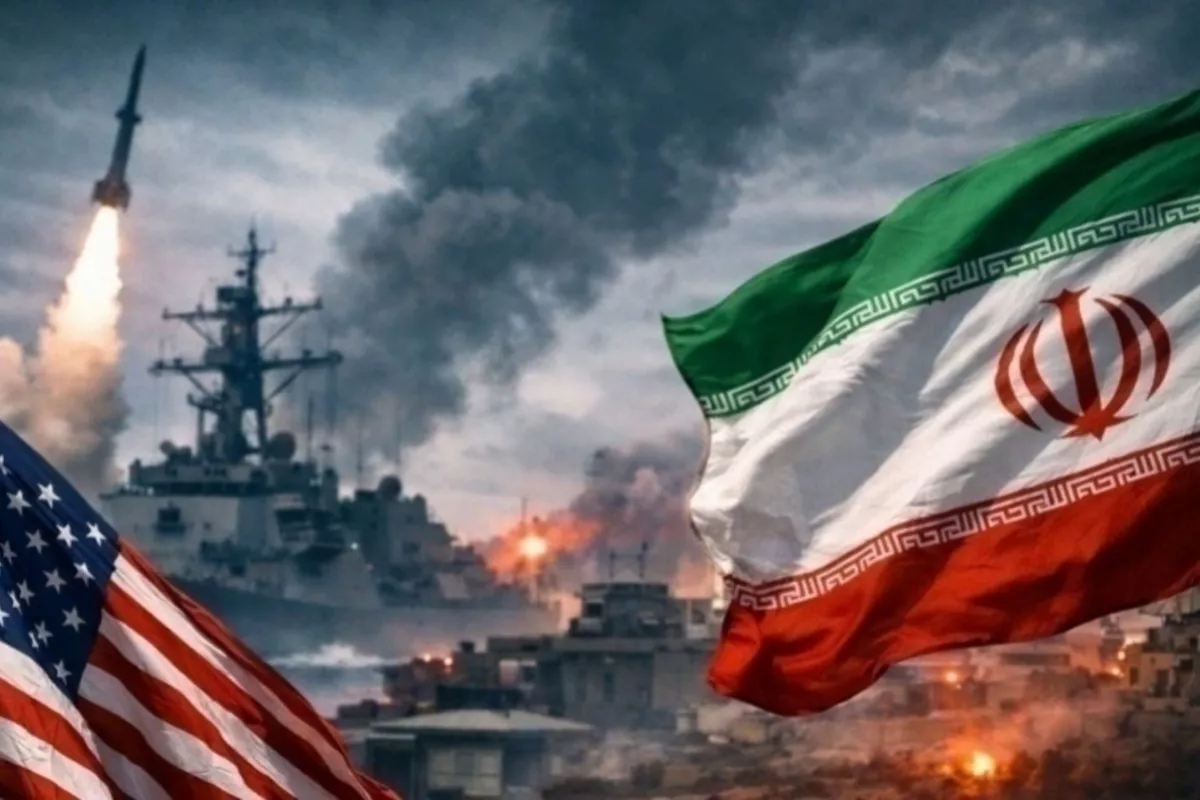
Iran Absorbs Punishment and Strikes Back
The United States, of course, has not played all its cards. It could put boots on the ground. But such operations would probably result in far more U.S. casualties and drive energy prices even higher. For these reasons, they are politically infeasible. Washington could launch airstrikes against major infrastructure targets, causing generational damage to Iran’s energy network, transportation and communications systems, and other facilities. But Tehran would retaliate in kind against American partners in the Gulf, also spiking energy costs.
Iran’s regime has celebrated its resilience in the face of U.S. attacks. But its prospects for defeating the United States look similarly grim. The country cannot easily increase the pressure because its economic distress narrows the margin for strategic recklessness. Iran’s leadership may believe it can survive prolonged hardship, yet another major confrontation with the United States would risk deeper damage amid an already strained social compact.
Just as important, Iranian officials have little reason to believe that dramatic escalation would compel Washington to retreat; it could just as easily trigger a far more destructive response from an impulsive U.S. president. For now, Tehran is therefore likely to prefer imposing calibrated costs on the United States, preserving leverage, and testing American resolve without crossing a threshold that prompts intensive attacks.
And even if Tehran did dramatically escalate, the Islamic Republic is unlikely to triumph. Iran can weaken the United States’ regional footprint, and it has already forced the country to spend enormous sums—over $40 billion and counting—on the conflict. Yet the overall U.S. budget is in the trillions of dollars, and Washington has a large stockpile of less sophisticated bombs it could use to fight back as it runs low on advanced ones. It has lost troops, but only a tiny fraction of what it lost in Afghanistan and Iraq. And it can keep casualties relatively low because it can fight from a distance, lobbing missiles from outside Iranian territory.
STRAIT OF EQUILIBRIUM
At first, the fact that neither Tehran nor Washington can win outright might seem to bode well for peace. When countries realize that victory is unachievable, they sometimes settle. But both Iran and the United States have secondary aims, and they believe that continuing to fight will help achieve them.
Washington, for example, thinks that occasional attacks will ensure that Tehran can never fully regenerate its military or develop nuclear weapons. It wants to strike Iran whenever the regime crosses a particular threshold, such as by rebuilding a particularly concerning weapons system or resuming nuclear enrichment. In so doing, the United States believes that it can keep Iran weak without assuming the political and military risks of attempting to transform it.
Iran, for its part, believes that continued fighting will help it establish the deterrence it has lost. It is mobilizing its regional partners, such as Iraqi militias and the Houthis in Yemen, to keep its adversaries under fire from multiple fronts.
The regime has also become more willing to strike first. In July, for instance, it launched a missile attack on a base in Jordan that hosts U.S. military personnel, even though there was no American strike immediately preceding it. And, of course, it has sought to dominate the Strait of Hormuz. Iranian officials previously regarded shuttering the waterway as a measure of last resort, to be attempted only in extreme circumstances. They therefore waited until an all-out war erupted. But within a day, Tehran proved that it could control the strait by targeting ships with drones and missiles, giving it a new source of leverage.
Iran also seems to think that continued fighting will help it regain and perhaps expand the clout that had waned before the war, when it repeatedly failed to deter rivals and its regional partners lost influence. This explains why, when Israel and the United States hit Iran in February, it responded by immediately widening the battlefield to the entire Middle East—including Gulf countries that had spent recent years rebuilding relations with Tehran. In total, Iran has attacked over a dozen countries across the Middle East. It wants to persuade these states to pivot away from Washington by proving that partnering with the United States makes them vulnerable.
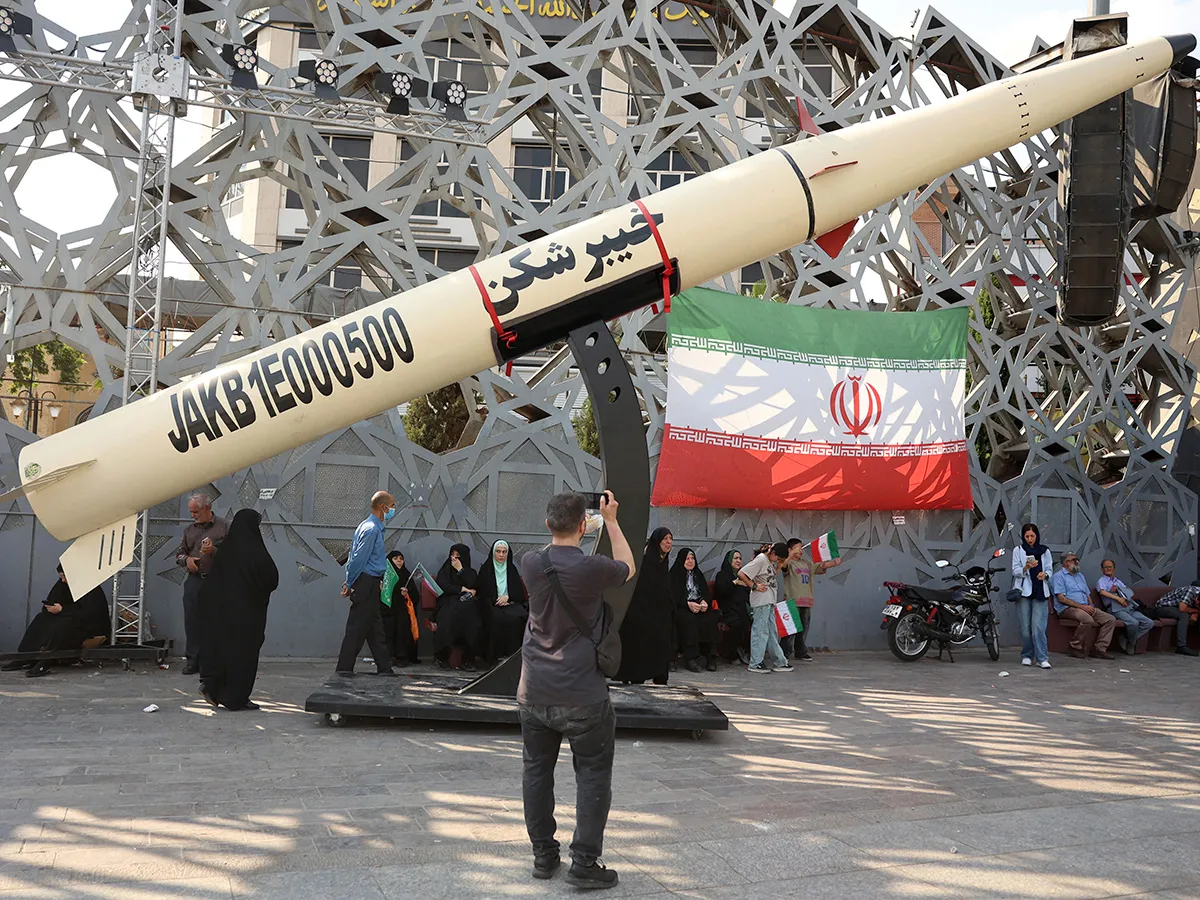
Diplomacy Fails While War Continues
Washington’s and Tehran’s assessments might be right, or they might be wrong. But even if both stand to gain nothing from continued fighting—and even if both realize it—they will struggle to reach a resolution. Because Iranian officials believe that their American counterparts are bent on the destruction of the Islamic Republic, they do not think they can stop fighting even if they wanted to.
Washington is not similarly fearful, but it still believes that it cannot afford to give in. In the eyes of U.S. officials, if the United States offers Iran the things it most wants—sweeping sanctions relief and recognition of the regime’s leverage over the Strait of Hormuz—it will have empowered its adversary and rewarded military coercion.
In theory, Iran and the United States could resolve these concerns via diplomacy. But in practice, neither trusts the other enough to make lasting tradeoffs. Consider, for instance, what happened to the memorandum of understanding the two sides signed in June in hopes of stopping the war. The deal was supposed to address both countries’ priorities by reopening the Strait of Hormuz and setting up negotiations over Tehran’s nuclear program in exchange for widespread sanctions relief and an end to attacks on Iran and its partners.
But it quickly became clear that U.S. and Iranian officials did not agree on the details. Washington argued that the deal meant ships could again pass through the strait in whatever way they wanted, whereas Tehran argued that it could still dictate the manner of transit and impose fees.
It thus fired on ships traveling through the waterway along Oman’s coastline rather than along its own, infuriating U.S. officials. Iran, meanwhile, accused Washington of violating the deal by not immediately releasing the country’s frozen assets and not stopping Israel from striking Hezbollah. Both sides concluded that the other was acting in bad faith, and the conflict resumed.
That failure doesn’t mean Tehran and Washington will not negotiate. They will likely maintain a dialogue, and they may periodically pause the conflict to regroup. But diplomacy and war can happen simultaneously. In the 1950s, for example, North Korea and the United States engaged diplomatically for years before reaching a durable cease-fire. As long as Tehran and Washington remain capable of and committed to hurting each other, the war won’t end no matter how much they talk.
NEIGHBORHOOD WATCH
The war against Iran may have settled into a stasis. But the conflict is transforming both the Islamic Republic and the surrounding region. Traditionally, Iran has been a complex autocracy, with a political order that mixes clerical authority, elected institutions, powerful security and military agencies, competing patronage networks, and a vibrant society.
But the death of Khamenei eliminated the regime’s paramount figure, disturbing the existing balance, and the war is systematically privileging the parts of the state responsible for survival over everything else. Permanent conflict will only further elevate Iranians in uniform over Iranians in suits—and perhaps even over Iranians in clerical garb. The Islamic Republic’s already withered participatory institutions will keep fading, and the power of its military and security elites will be shrouded by a thinning theocratic cloak.
That does not mean the nonarmed parts of the country’s traditional power structure will be unable to exercise influence. Civilian politicians may still debate whether Iran should try to negotiate and how much economic pain the country can tolerate.
But their ideas will be completely at the mercy of the armed elite, who prioritize restoring deterrence and preserving enough offensive capability to hurt Iran’s adversaries. The country is not going to eliminate its civilian institutions, but more and more areas of life are being defined as security issues—telecommunications, foreign investment, universities, the media, economic policy—and are thus coming under the security establishment’s command. The regime’s religious ethos will continue. But a clerical establishment that once cultivated the military to buttress its rule may end up being subordinate to it.
The Arab Gulf states, meanwhile, are reworking their security doctrines. Some of their thinking will please Iran: after decades of trying to keep Washington involved in the region out of fear that a U.S. withdrawal would leave them vulnerable, the Gulf states have concluded that close ties with the United States make them targets. But the Gulf is unlikely to evict Washington. For all its shortcomings, the United States is still the only outside country providing them with some measure of military support, and their distrust of Iran has deepened since the war began. In fact, some Gulf states have even retaliated against the Islamic Republic.
Instead, these countries are likely to hedge. They will create stronger diplomatic and economic linkages to Iran in hopes of persuading it to stop striking them. But they will retain security and economic ties with Washington. At the same time, they will start trying to develop stronger domestic missile defenses, harden their infrastructure, establish alternative energy export routes, and build larger strategic reserves of oil, gas, and arms. The region may also try to use its ties to both Iran and the United States to mediate the conflict.
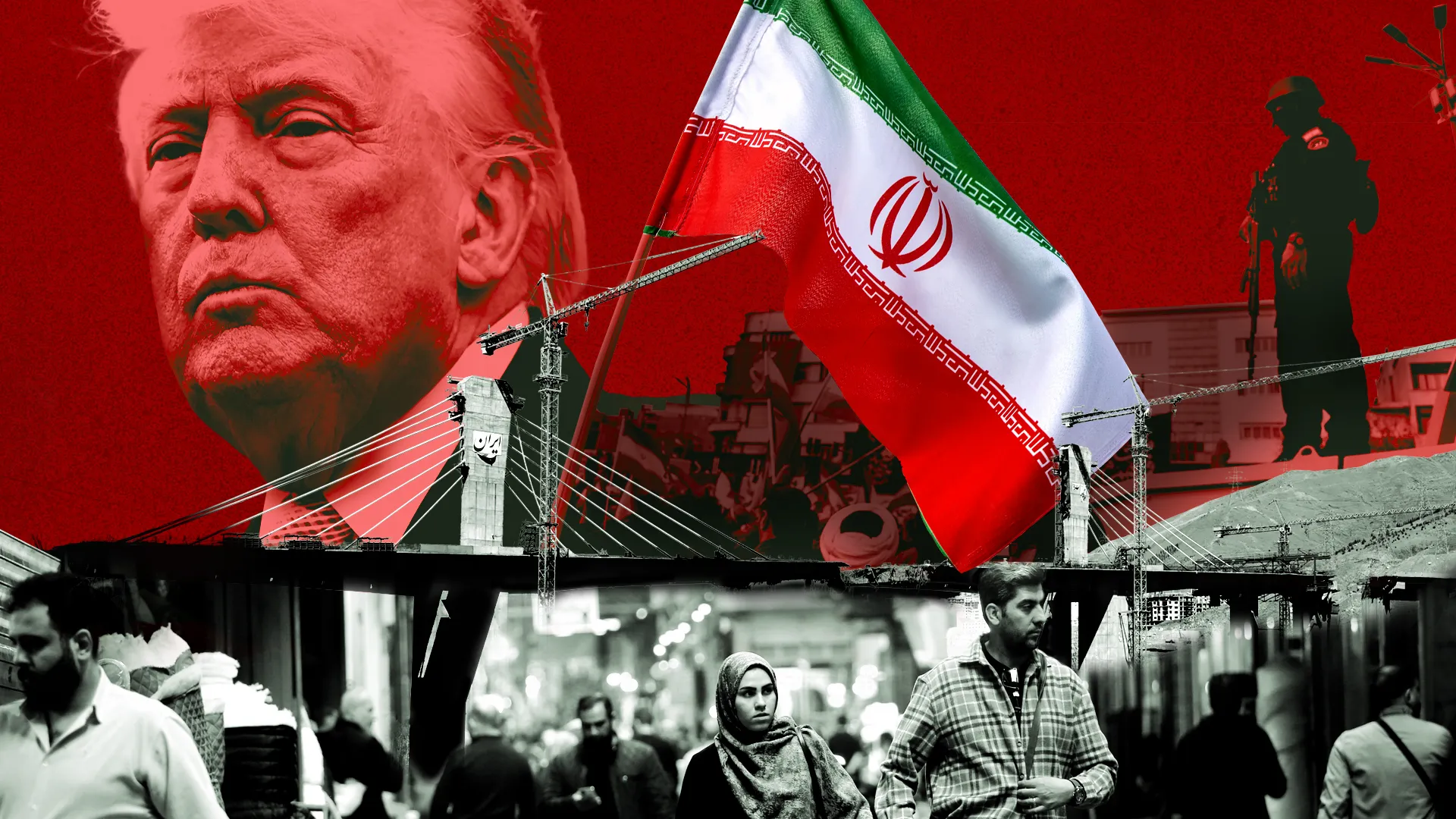
Iran War Deadlock Becomes Sustainable Stalemate
Wars are chaotic by definition, and it is possible that a future attack or event could disrupt the current equilibrium. As both countries become more comfortable with the status quo, they might grow overly confident in their defenses and decide to escalate. Washington, for example, could be tempted to force the regime to buckle with a more fearsome military assault—leading Iran to cause greater market turmoil and damage to the Gulf.
If an Iranian missile kills large numbers of Americans or an Iranian attack shuts down critical Gulf infrastructure, the United States might opt to finally use ground forces or destroy Iran’s electric grid, putting the regime in peril. Tehran could also be wrong to think that it can continue to inflict enormous pain on its people. Cascading goods shortages could prompt renewed mass unrest and elite defections, making it harder for the regime to keep fighting the United States while still maintaining power. An apparently manageable deterioration might become something much more dangerous: a declining capacity to govern, not merely a dwindling capacity to fight.
But for now, the war seems sustainable. Washington has not achieved any of its stated objectives, and it has burned through expensive munitions. Yet the United States can still afford to battle, and it believes that the costs of giving in exceed the costs of continuing. Iranian society is facing years of impoverishment and insecurity. Yet the Islamic Republic itself is stable, and it does not think it can afford to make meaningful concessions.
Such is the paradox of this conflict. Both sides have emerged weaker. Neither can win. But they fight on regardless, because they find the alternatives to be completely unpalatable.