
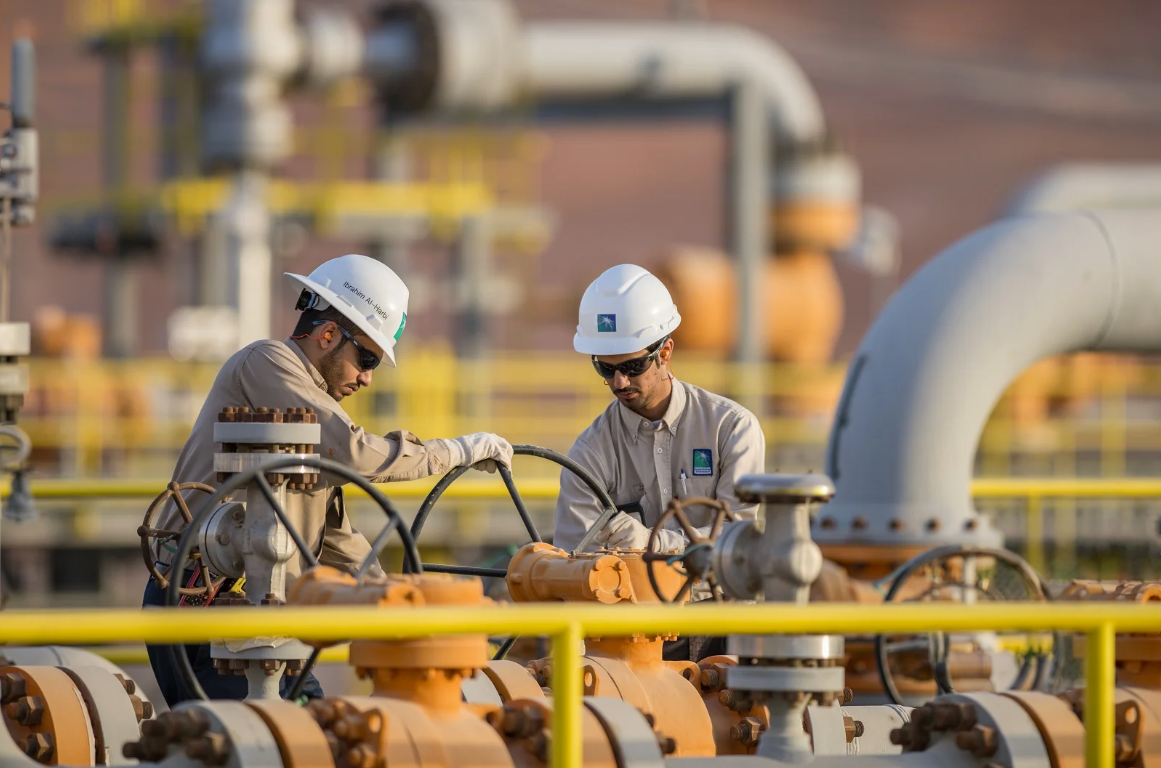
Drone strikes from Iraq shut Saudi Arabia’s East–West pipeline, removing 4 million barrels per day and pushing Brent above $100. Kuwait, Bahrain, and Qatar lack alternative routes, raising unresolved questions about shared capacity allocation.
The expansion of Gulf bypass routes has moved from a theoretical resilience exercise to an urgent strategic necessity, as Iranian attacks and Houthi blockades expose the vulnerability of the Strait of Hormuz. Saudi Arabia’s East–West pipeline, Abu Dhabi’s Fujairah terminal, and proposed corridors through Syria and Egypt now form a patchwork of alternatives, yet no public framework governs how shared capacity would be allocated when demand exceeds supply.
This absence of rules transforms infrastructure built for redundancy into a rationing mechanism controlled by sovereign owners. The recent drone strikes on the East–West pipeline, which briefly removed four percent of global supply and pushed Brent above $100, demonstrated how quickly unilateral decisions by Riyadh can determine which barrels move and which remain stranded.
Kuwait, Bahrain, and Qatar, lacking any route that avoids Hormuz, are left dependent on neighbors whose interests may diverge in a crisis. As investment flows into midstream assets, the question of access becomes contractual and political, not merely technical. Without agreed allocation protocols, firm capacity rights, and curtailment rules, the Gulf bypass routes will remain a hierarchy disguised as resilience, visible only when the barrels start backing up.
Gulf bypass routes face allocation test
In June, Kuwait Petroleum Corporation CEO Sheikh Nawaf Al-Sabah told an Atlantic Council audience that Kuwait was in discussions with Saudi Arabia and the UAE about expanding their pipeline systems to “accommodate Kuwaiti barrels.” His remarks came three months after Kuwait declared force majeure and as Bahrain’s Sitra refinery was being struck repeatedly by Iranian missiles. Iraqi production, meanwhile, fell to 1.41 million barrels a day in April from a 2025 average of 4.79 million. Kuwait, Bahrain, and Qatar have no route to market that avoids the Strait of Hormuz. Saudi Arabia and the UAE do.
Riyadh is in preliminary talks with those same neighbors about adding as much as 2 million barrels a day to the East–West pipeline, a system that carried up to 7 million barrels a day. Abu Dhabi is doubling its Fujairah export capacity. TotalEnergies said it would invest in both that expansion and a new line carrying Iraqi crude through Syria to the Mediterranean. After a decade of treating bypass infrastructure as a slide in a resilience presentation, the region is now building it.

Who decides when capacity runs short
The question is who gets to use that capacity when demand exceeds it. No public framework sets out how shared bypass capacity would be allocated under stress, and in the weeks since Al-Sabah spoke, Saudi Arabia has shown exactly why that matters. A pipeline shared among several dependent producers is not neutral infrastructure. It is a rationing mechanism with a sovereign owner.
On July 20, the Houthis declared a maritime blockade of Saudi Arabia. Within days they claimed strikes on energy facilities at Yanbu and on the Jazan refinery, prompting Aramco to suspend operations. Attacks have continued through August and September, including a ballistic missile that struck a tanker 63 nautical miles west of Yanbu on August 24.
The attacks exposed a dependency that the pipeline debate had largely ignored. Yanbu handled 92 percent of Saudi seaborne crude exports in June, roughly 4.1 million barrels a day, according to Kpler. By the week of August 3, Saudi crude leaving Yanbu through the Bab el-Mandeb had fallen close to 90 percent, to 1.3 million barrels, from 11 million the week the blockade was announced.
Riyadh builds a third export route
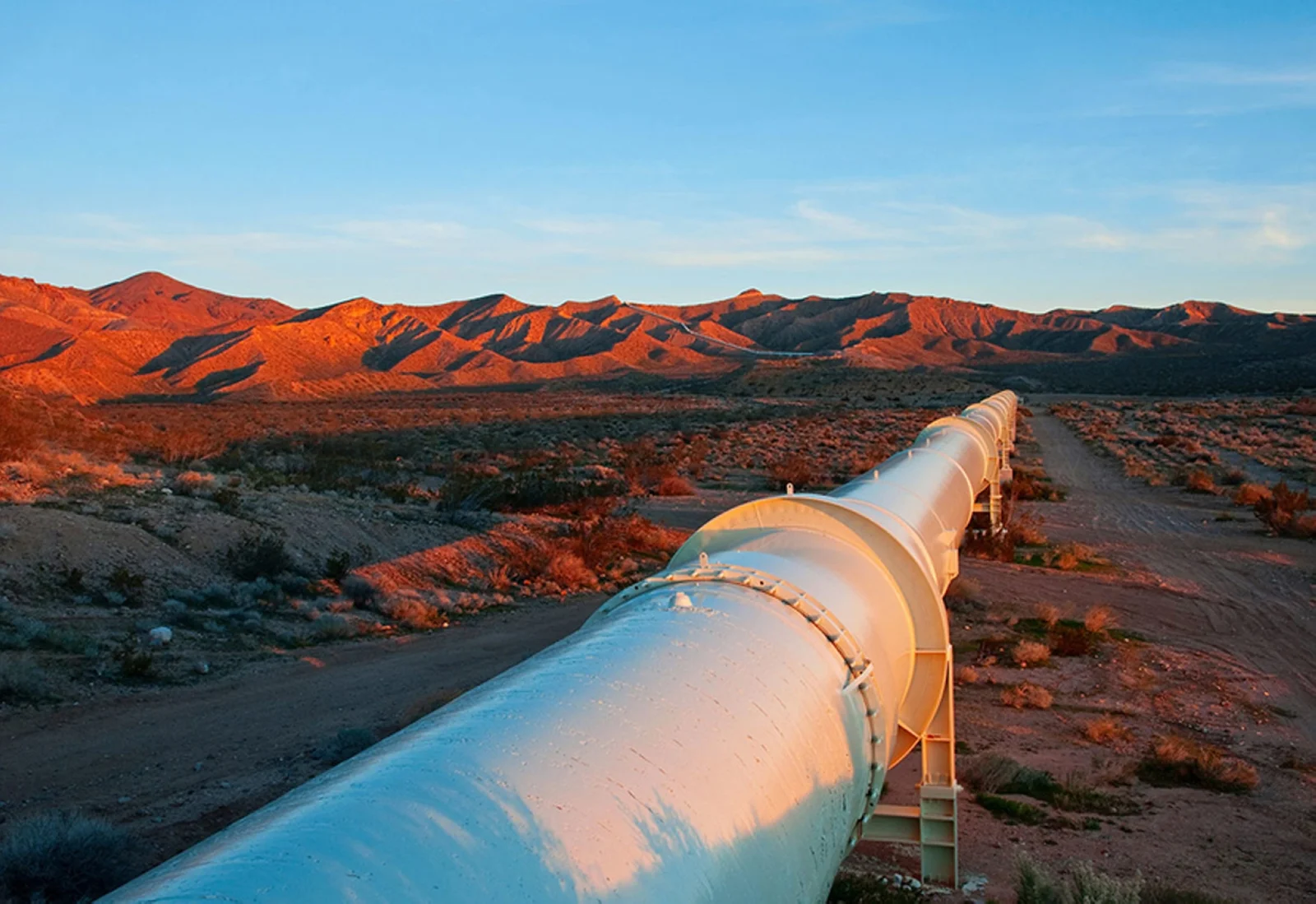
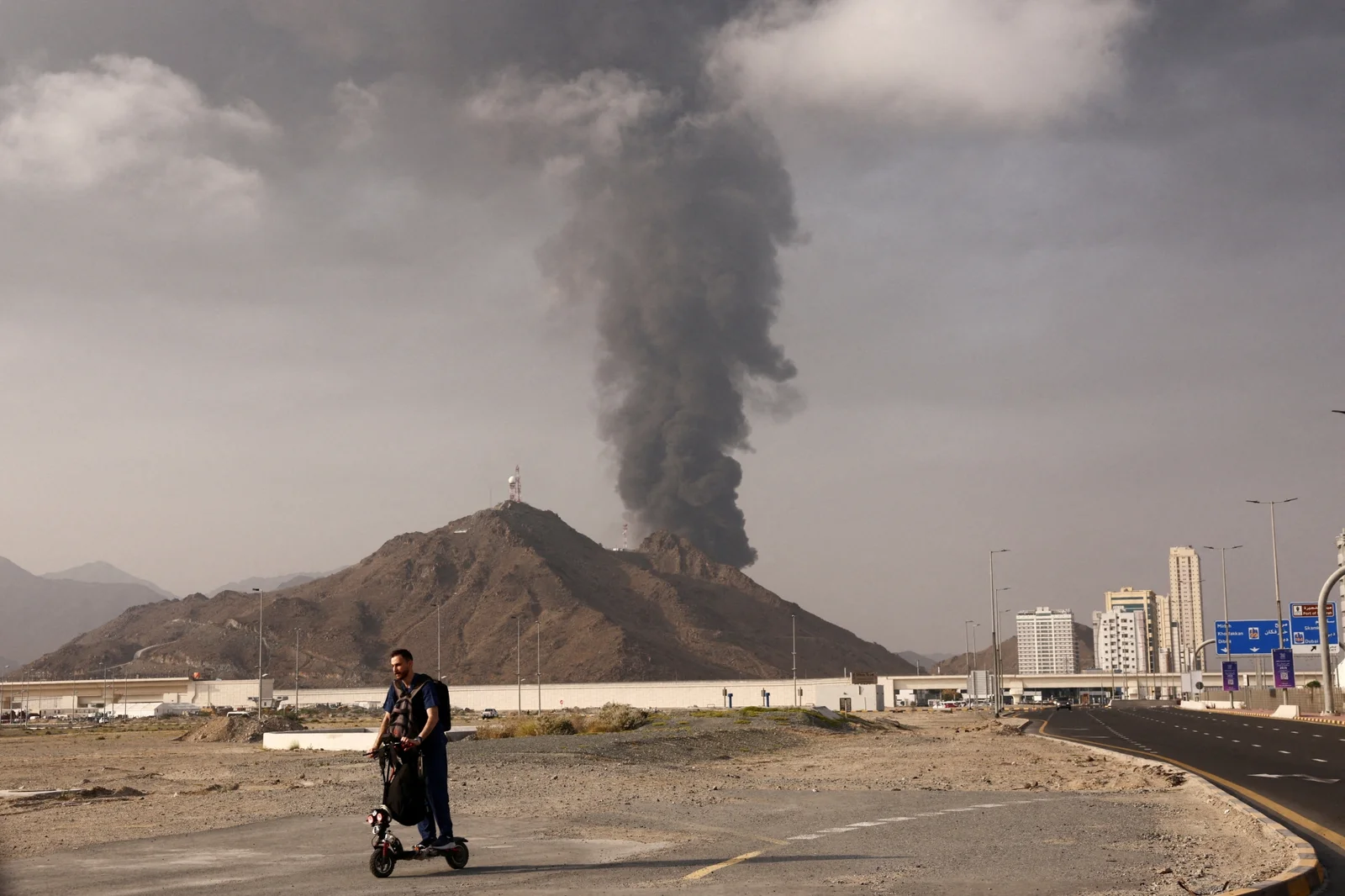
The escalation went further on September 10 and 11, when drones struck the East–West pipeline in the Riyadh and Medina regions. Saudi Arabia shut the line down as a precaution, though satellite imagery showed fires at pumping stations south of Medina. Brent broke $100 for the first time since May, and as much as 4 percent of world supply was taken offline. The drones came from southern Iraq, not Yemen. Baghdad confirmed as much by dismissing the commander responsible for Maysan province, conceding that Saudi Arabia’s main bypass route is reachable from the territory of a neighbor it is not at war with.
Riyadh responded by building a third route. Aramco began shuttling crude north from Yanbu to Ain Sukhna, pumping it across Egypt through the SUMED pipeline and reloading it at Sidi Kerir on the Mediterranean. Loadings there have more than doubled to around 2.3 million barrels a day, the overwhelming majority of which are Saudi crude.
On August 4, Aramco CEO Amin Nasser corrected a common assumption by noting that the company has three export routes, not two, with the third running to the Mediterranean via SUMED and the Suez Canal. That route is now the only one. With the East–West line down, Kpler put Yanbu’s inventories at roughly 15 million barrels, about four days of withdrawals. Egyptian storage provides several days more, but repairs are expected to take weeks.
That episode shows how allocation decisions get made under constraint. Riyadh determined within days which barrels moved and by which route. Those were unilateral decisions over Saudi assets, and no other producer had a claim on them. The Mediterranean route can carry roughly 2.5 million barrels a day, well under half the kingdom’s normal export volumes. There is now no spare capacity for Kuwaiti or Bahraini crude to compete for, and nothing in the arrangements under discussion indicates how it would be shared if there were. The IEA reported Saudi supply at a three-decade low in August, before the pipeline closed.
Gulf bypass routes attract private capital
Capital flowing into Gulf midstream shows how valuable alternative export infrastructure has become. In July, Blackstone, Brookfield and KKR agreed a $16 billion lease-and-leaseback of Kuwait Oil Company (KOC)’s entire pipeline network, taking a 49 percent stake in a joint venture for 20.5 years under a volume-based tariff. KOC retains ownership, operational control, and exclusive use. The investors acquired an interest in 13 existing pipelines with known throughput, one user, and one operator. No allocation question arises.
TotalEnergies’s approach is more revealing. CEO Patrick Pouyanné told the ONS conference in Stavanger that, as the largest trader of Iraqi and Qatari crude, he needed to put “a certain amount of equity to invest in an alternative route.” That is an offtaker buying physical security for barrels it already moves. Fujairah handled 66 percent of UAE crude exports in July, up from 51 percent in June. Once bypass infrastructure carries the majority of a country’s barrels, those financing it have every reason to want access written into the contract rather than left to a future ministerial phone call.
Does transit geography equal political risk
September sharpened that calculation. The drones that closed the East–West line were launched from southern Iraq, the same country whose crude the proposed Syrian corridor is meant to carry. A route’s transit geography is also its political exposure, and an offtaker financing one has every reason to want that priced and documented.
The question of access also has a political dimension. Andreas Krieg has observed that Gulf states recognize the need for collective resilience, while “every state also wants to become the indispensable gateway for the region.” Both are affordable while there is enough pipe to go round. Put Kuwaiti and Bahraini barrels into an expanded East–West line and Riyadh acquires a decision it does not currently have to make, one that arises only when the system is already under strain.
What to Settle Before the Next Closure
The recommendation is narrow and achievable. Allocation architecture should be agreed now, while Riyadh and Abu Dhabi still need partners to justify the capital, rather than during a closure when pipeline owners hold all the leverage. In practice, that means allocation protocols for periods when nominations exceed capacity; firm capacity rights priced into the tariff, with clear pro-rata curtailment rules for interruptible volumes; and crisis, force majeure, and dispute-resolution provisions written into the transportation agreements from the outset.
Chatham House analysts have argued that physical infrastructure alone will not deliver resilience, calling for a framework across the Gulf Cooperation Council (GCC) with common rules and noting that swap arrangements within a shared regional pool could draw on mechanisms that already exist. The GCC already operates cross-border energy systems, from the Saudi–Bahrain crude line to Dolphin Gas. It has simply never had to ration shared bypass capacity during a crisis.
Any framework would have limits, since these are sovereign assets and their owners retain discretion. That is why formal rules matter. Unwritten discretion keeps Kuwait and Bahrain strategically dependent on their neighbors, can make investors more cautious about greenfield corridors, and leaves the region’s expensive redundancy less dependable than its capacity figures imply.
Events have compressed that timeline from years to weeks. Three things are worth watching now: whether the East–West expansion contracts contain third-party access provisions, whether Kuwaiti or Bahraini participation is documented or merely announced, and whether anyone publishes a curtailment rule. If all three remain unresolved, what is being built is a pipe dream with a pecking order slapped on, and that hierarchy will only become visible once the barrels start backing up.