
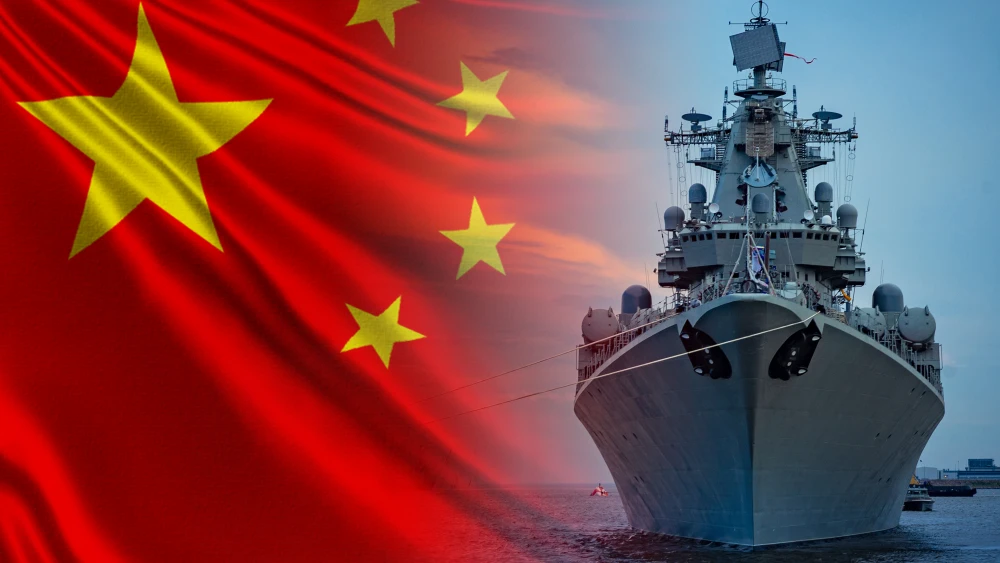
Satellite analysis reveals upgraded signals intelligence facilities at China’s overseas outpost. Coupled with joint flight exercises in Egypt and diplomatic security pacts across East Africa, Beijing establishes integrated operational surveillance along major trade lanes.
The strategic deployment of advanced signals intelligence architecture at the China Djibouti Base represents a fundamental transformation in Beijing’s power projection along vital global maritime corridors. By establishing high-frequency collection arrays and hardened telecommunications infrastructure near Allied posts, military planners are converting commercial investments into an active surveillance shield over the Bab el-Mandeb strait.
This structural shift extends beyond localized collection capabilities, enabling Chinese forces to monitor regional naval traffic, track international troop deployments, and establish operational command over critical shipping lanes. Concurrent aerial combat exercises in North Africa and bilateral security pacts across the Horn of Africa demonstrate a synchronized doctrine designed to control essential maritime chokepoints.
As regional turmoil threatens commercial shipping, Beijing positioning itself as a permanent security actor fundamentally alters traditional balances of power. Western naval commands face mounting counterintelligence challenges as the China Djibouti Base continuously expands its intelligence gathering envelope across Middle Eastern and African waters. Consequently, this persistent intelligence footprint forces international defense planners to recalibrate regional security assumptions and prepare counter-strategies against embedded surveillance systems that directly challenge freedom of navigation.
Upgrading Signals Intelligence at China Djibouti Base
On September 17, new satellite analysis published by the Center for Strategic and International Studies revealed a critical shift in global posture. China’s sole acknowledged overseas military base in Doraleh, Djibouti, has undergone significant technical upgrades. The installation now features high-frequency antenna arrays, advanced satellite communications equipment, and probable 5G telecommunications towers. Located less than ten miles from major American, French, Italian, and Japanese military facilities, these upgrades are assessed to strengthen the People’s Liberation Army’s communications capabilities and enable additional signals-intelligence collection in the region.
This technological expansion exposes a broader reality that Western policy makers can no longer afford to ignore. Beijing is converting its longstanding economic and diplomatic presence around the Red Sea into a far more consequential security and intelligence footprint. For years, Western strategic planning treated Chinese activity in the region through a strictly commercial lens: port concessions, infrastructure loans, and industrial investments. Today, those individual touchpoints are increasingly connected to a broader Chinese maritime and intelligence footprint.
How Beijing Redefines Regional Security Operations
The timing reflects a shrewd response to regional turmoil. Over the past two years, missile and drone attacks by Iran-backed Houthi forces have severely disrupted commercial traffic through the Bab el-Mandeb strait. The instability has simultaneously exposed China’s vulnerability to maritime disruption and created an opening for Beijing to present itself as a provider of maritime security and regional stability. While Western navies expend high-cost interceptors to defend commercial shipping, China is positioning itself as an increasingly permanent security actor across African and Middle Eastern waters.
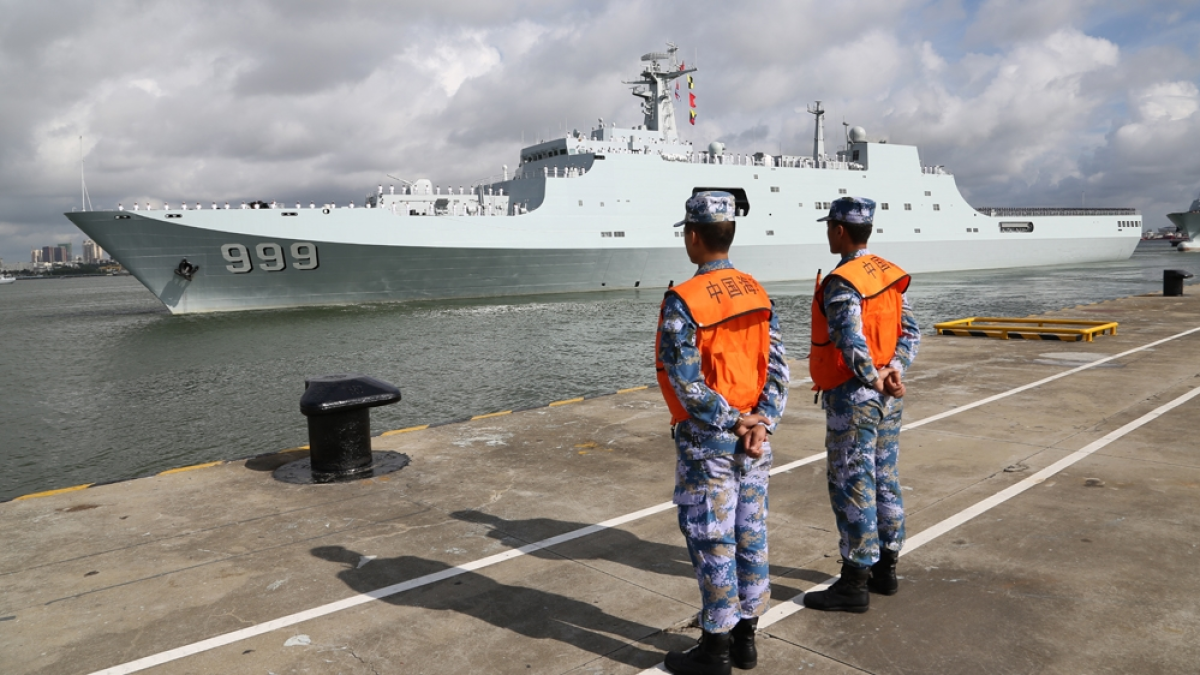
Anchoring Deep Reconnaissance Systems at Doraleh
This strategy rests on a clear three-part foundation: intelligence infrastructure, operational military exercises coupled with high-level diplomacy, and expanding regional defense ties.
At the center of this emerging footprint sits Djibouti, its technological anchor. The new C4ISR (command, control, communications, computers, intelligence, surveillance, and reconnaissance) installations at Doraleh provide Chinese operators with enhanced operational awareness, potentially improving China’s ability to collect information on regional military activity and communications through one of the world’s most critical maritime chokepoints.
Conducting Joint Flight Drills With Cairo
At the northern end of the corridor, Beijing is cementing its relationship with Cairo. Between August and September 2026, China and Egypt conducted their second joint “Eagles of Civilization” air exercise, featuring air-combat tactics and air-superiority maneuvers. Crucially, Xi Jinping’s September 2 visit to Egypt demonstrated that this effort extends far beyond tactical drills or commercial investment in the Suez Canal Economic Zone. During his Cairo visit, Xi called for a new Middle East security framework and agreed with Egyptian President Abdel Fattah al-Sisi to deepen cooperation in security and counterterrorism. The message was significant because Egypt sits at the northern gateway of the Red Sea, while China’s military presence in Djibouti sits at its southern approach.
Formalizing Strategic Treaties Across East Africa
Simultaneously, China is institutionalizing its defense relationships across East Africa. At the fourth China-Africa Peace and Security Forum on September 17, Chinese Defense Minister Dong Jun explicitly called on representatives from the African Union and 41 African nations to deepen strategic coordination, expand joint maritime security operations, and enhance defense capability building. On the sidelines of that summit, Somalia’s defense minister met with Dong Jun to discuss expanded defense and security cooperation, complementing China’s regular naval deployments in the Gulf of Aden and off the Somali coast.
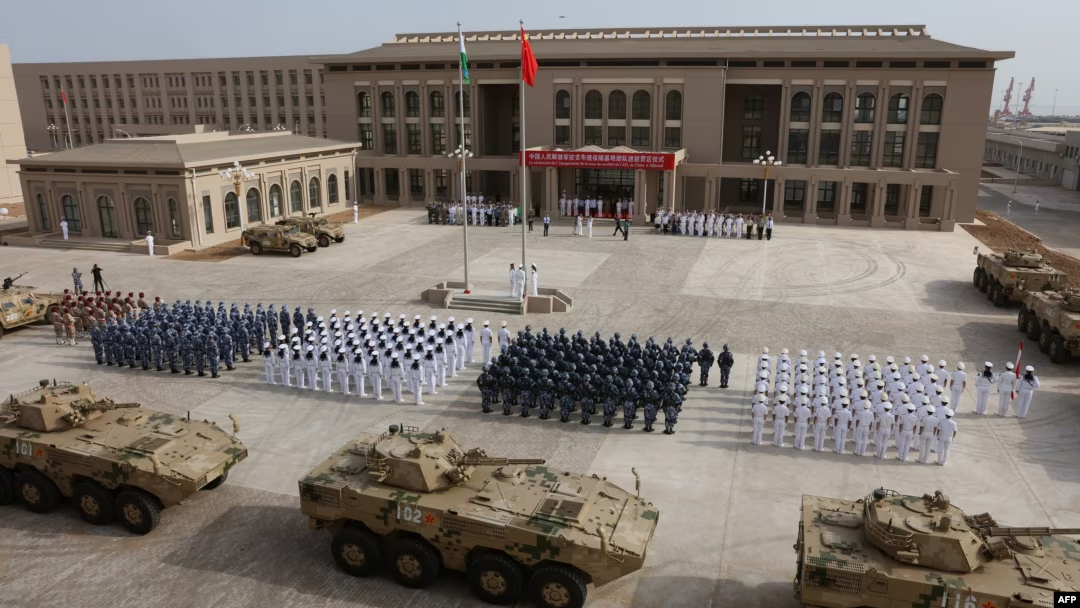
Is China Djibouti Base Threatening Regional Trade
This converging network creates immediate strategic challenges for both Jerusalem and Washington. For Israel, China’s growing presence expands Beijing’s intelligence reach along the vital southern maritime approach leading toward the Port of Eilat and the Gulf of Aqaba. While Beijing maintains diplomatic relations across the region, its expanded surveillance capability near the Bab el-Mandeb could give Chinese intelligence greater visibility into regional security dynamics, potentially complicating Western and Israeli operational security during a crisis.
For the United States, China’s expanding signals-intelligence network raises immediate counterintelligence concerns due to the proximity of upgraded Chinese listening systems to Camp Lemonnier in Djibouti. Furthermore, in the event of a major global contingency, such as a crisis in the Indo-Pacific, enhanced Chinese ISR capabilities around the Red Sea could complicate US force protection, situational awareness, and naval movements across the region.
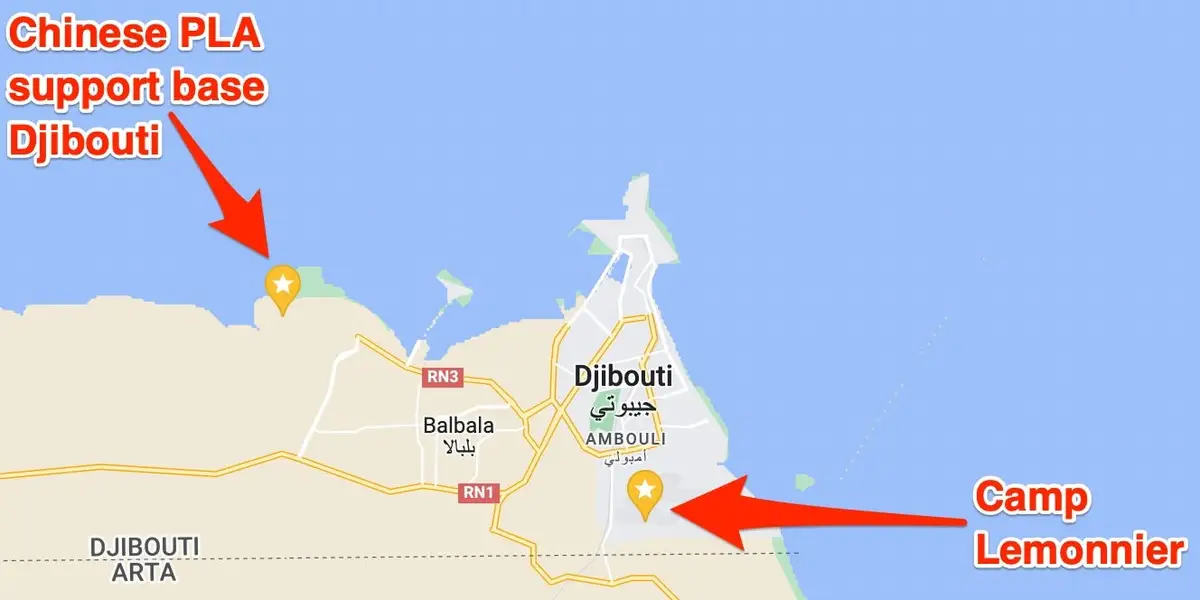
Can Western Allies Counter Beijing Expansion
Washington and its regional allies must stop evaluating Chinese initiatives in isolation. A satellite tower in Djibouti, an air combat exercise in Egypt, a Chinese proposal for a new regional security framework in Cairo, and a defense summit in Beijing are not disconnected events. Taken together, they reveal an increasingly persistent Chinese security footprint around vital global shipping lanes.
To counter this trend, the United States, Israel, and their regional partners must articulate a unified strategy by offering East African nations viable defense and infrastructure alternatives, strengthening multilateral maritime coalitions, and remaining vigilant against Chinese intelligence expansion. If the West remains focused solely on tactical responses to regional crisis points while ignoring Beijing’s steady strategic build-up, the Red Sea will increasingly become an arena in which Chinese power is harder for the West to ignore.