
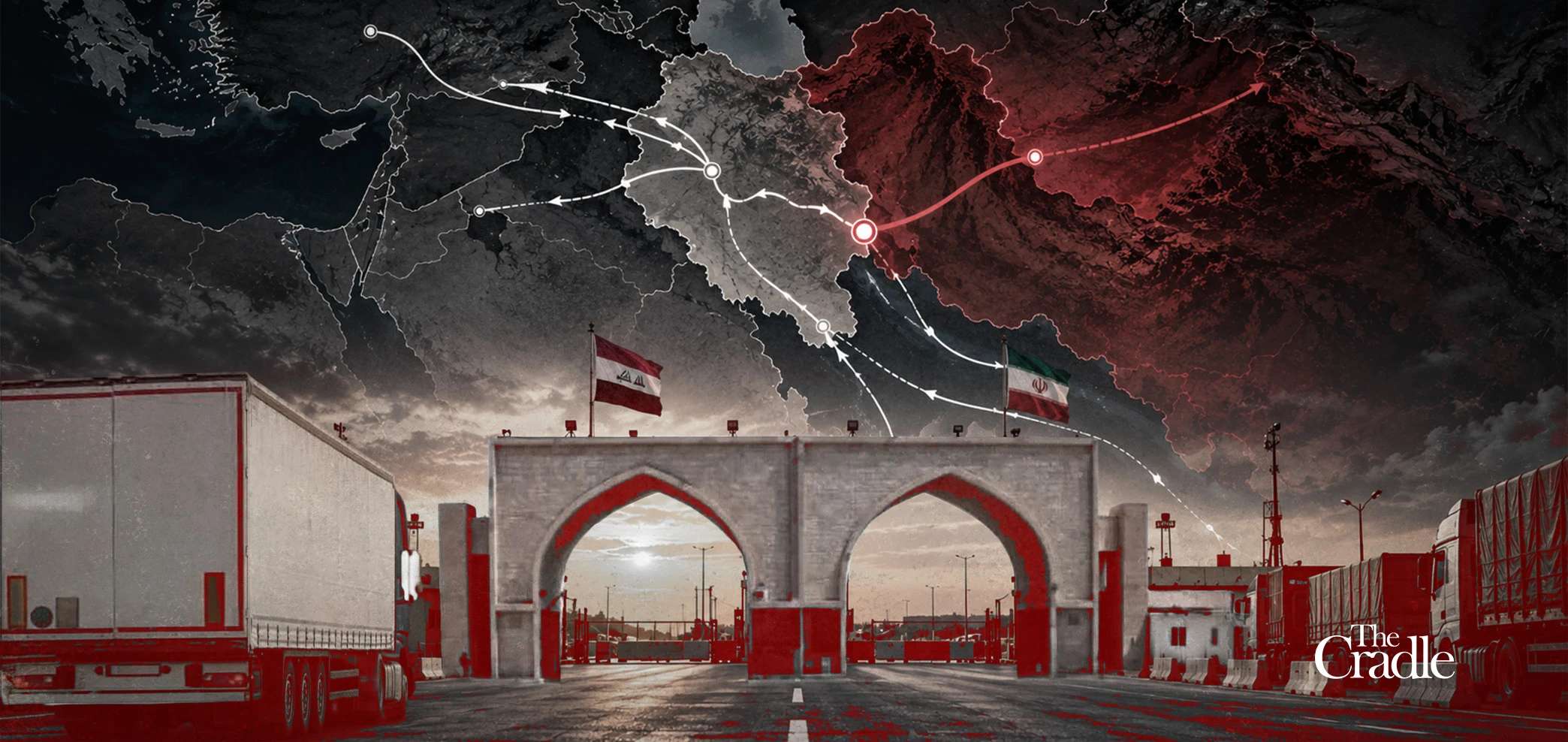
Iraq’s Al-Sheeb closure blends security claims, US dollar pressure, and corridor competition. Baghdad shut one crossing while preserving others, testing Iranian trade, Maysan livelihoods, and the Development Road’s challenge to Hormuz pressure. It shows Baghdad’s limited room.
Al-Sheeb closure tests Baghdad’s balancing
The US-Israeli war on Iran has altered Iraq’s relationship with its eastern neighbor. After two decades as Tehran’s “backyard” and a key arena for the “unity of fronts,” Baghdad is reassessing its ties with the Islamic Republic, beginning with the border crossings that sustain trade, pilgrimage, and the movement of goods and money between the two countries.
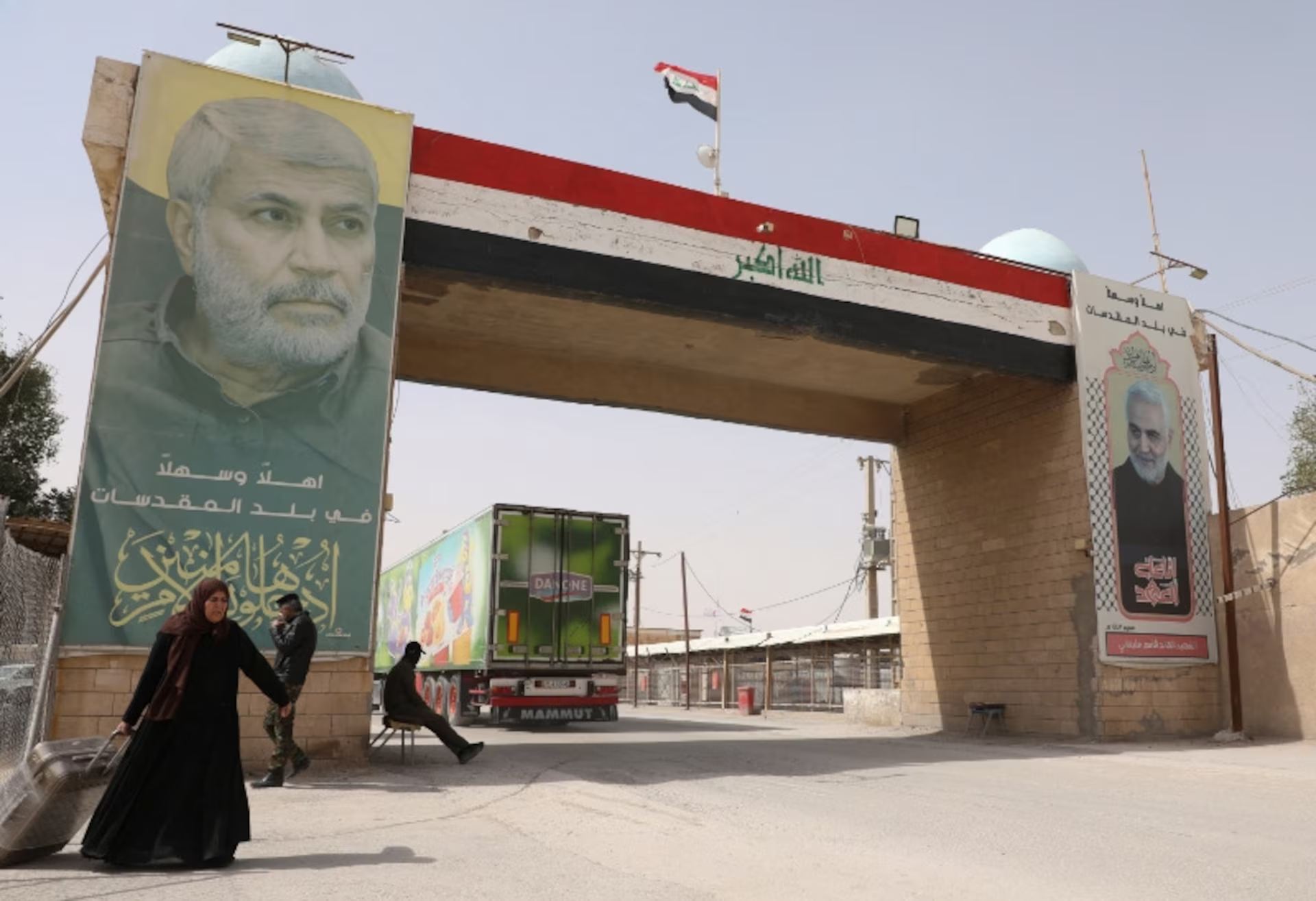
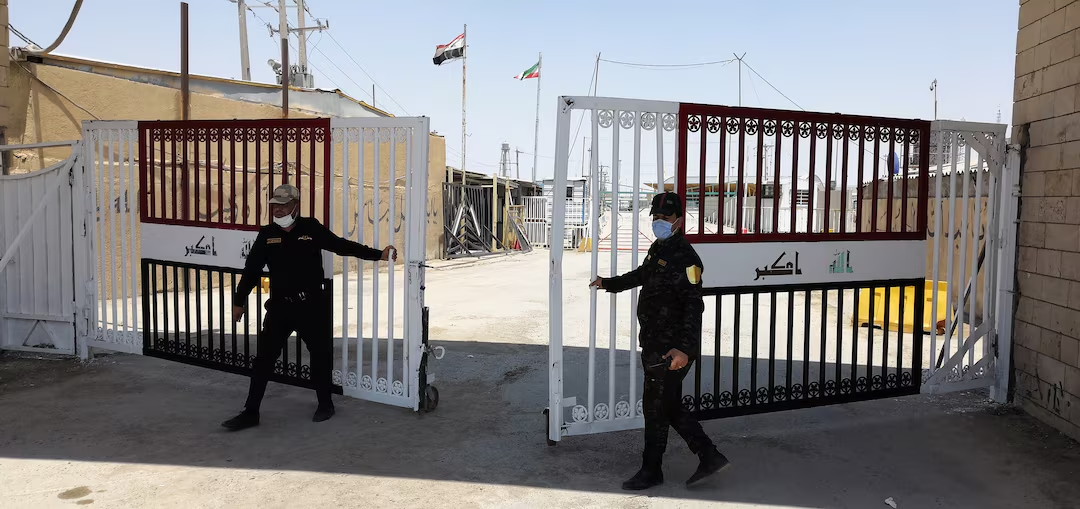
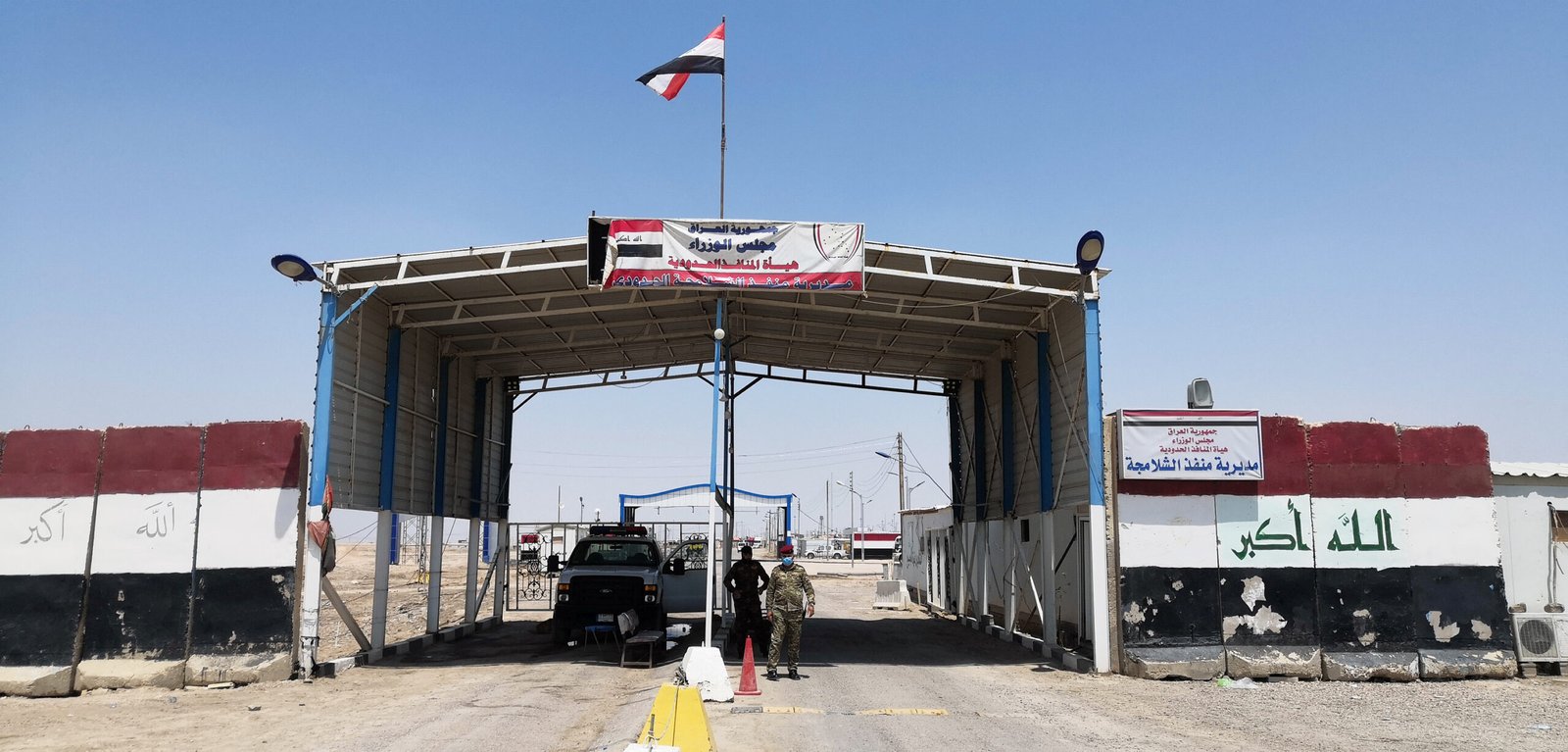
At 6:00 am on 21 October, Iraq closed the Al-Sheeb border crossing in Maysan province, opposite Iran’s Chazabeh crossing in Khuzestan, to travelers, vehicles, and commercial trucks “until further notice.” The decision was reportedly issued on the orders of Prime Minister Ali al-Zaidi.
Was this a technical security measure, or another episode in the larger struggle over who controls the routes linking West Asia?
Several developments preceded the closure. On 10 and 11 September, drones struck Saudi Arabia’s East–West Pipeline, the route through which Riyadh bypasses the Strait of Hormuz. The Saudi Foreign Ministry said the drones originated in Iraq. Baghdad subsequently acknowledged that the attack had been launched from a location in Maysan and dismissed the province’s operations commander.
The Shalamcheh, Al-Sheeb, and Mandali crossings were temporarily closed as a precaution before reopening.
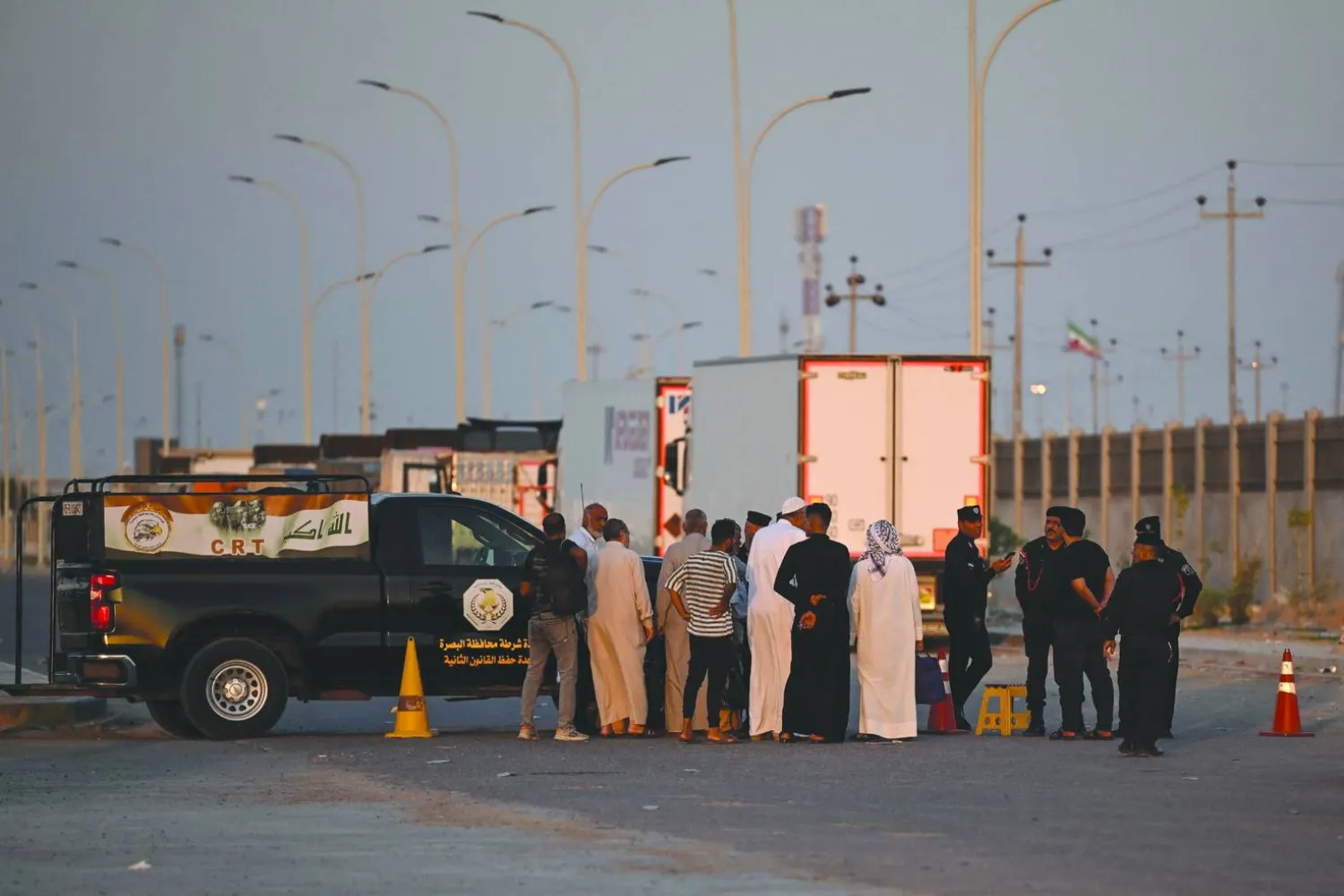
Ahead of the latest closure, an Iraqi Border Ports Authority official told Reuters that security arrangements at Al-Sheeb were inadequate and that detection equipment was needed to prevent smuggling.
Prime Ministerial Advisor Abdul Amir Taiban also warned of drugs and counterfeit currency being smuggled into Amarah and Nasiriyah, describing the threat as “more dangerous than missiles.” Earlier in October, Iraq’s Border Ports Authority had seized more than 48 million counterfeit Iraqi dinars at Al-Sheeb.
Three explanations, one denial
Baghdad’s security justification has been accompanied by several competing explanations.
Government spokesman Haider al-Aboudi attributed the closure to the crossing’s inadequate technical and logistical readiness, describing Al-Sheeb as the weakest of Iraq’s border facilities. Maysan’s operations commander, meanwhile, insisted there would be no reversal of the decision.
The government also ordered improvements to border infrastructure and permitted stranded shipments of perishable goods to enter Iraq.
Security, infrastructure, and smuggling have thus emerged as overlapping justifications. What unites the official explanations is the denial that Washington dictated the closure. Yet reports from Iraqi political sources tell another story.
The UAE-based Al-Ain News reported that Zaidi informed Coordination Framework leaders during a late-night meeting at former prime minister Mohammed Shia al-Sudani’s office that Baghdad had received a US Treasury Department demand to close its crossings with Iran.
According to the account, Baghdad rejected the demand, prompting Washington to propose retaining just two crossings: one in the north and another at Mehran in central Iraq. The same source claimed Zaidi had received information suggesting another US war on Iran was approaching.
Two Iraqi political sources also told AFP that Washington was pressing Baghdad to restrict cross-border trade with Iran. The Treasury Department had reportedly raised the issue during Zaidi’s September visit to New York.
Washington Pressures Baghdad Through Dollars
Washington has long used its control over Iraq’s dollar revenues to exert pressure on Baghdad. That leverage intensified in 2026, when the Trump administration blocked dollar shipments and threatened sweeping financial sanctions to pressure the government into disarming resistance factions and to prevent former prime minister Nouri al-Maliki’s return to power.
Washington subsequently accepted Zaidi as a compromise candidate. US forces completed their withdrawal on 30 September, while the Iraqi premier maintained a 30 June 2027 deadline for disarming the factions.
Was the closure therefore an American decision?
The evidence points to a measure shaped by US pressure but calibrated in Baghdad. Iraq did not close every crossing. It selected one already burdened by security deficiencies and closely associated with Maysan, where the September drone attacks originated.
Zaidi appears to have offered Washington a concession at a manageable price while assuring Tehran that commerce could continue through Shalamcheh, Mehran, Zurbatiyah, and Al-Mundhiriyah.
Yahya Al-e Eshaq, head of the Iran–Iraq Joint Chamber of Commerce, confirmed to IRNA on 25 October that other crossings remained operational despite Chazabeh’s temporary closure.
Why Al-Sheeb, then, and why now?
The price of closing an economic artery
According to the head of the Ahvaz Chamber of Commerce, approximately 600 trucks pass through Al-Sheeb daily, carrying vegetables, watermelons, ceramics, white cement, and reinforcing steel.
During the Iranian calendar year 1404 (2025–2026), it handled some 1.5 million travelers, including 650,000 during Arbaeen alone.
Bilateral trade exceeded $10 billion last year. Figures reported by Donya-e Eqtesad put Iranian exports to Iraq at approximately $11.9 billion during the Iranian calendar year 1403 (2024–2025), making Iraq one of Tehran’s most important export markets.
Al-Sheeb is therefore among the arteries sustaining Iran’s economy under sanctions, facilitating commerce that Washington increasingly seeks to restrict. Its closure, even temporarily, cuts into that trade as the US naval blockade compounds pressure on the Islamic Republic.
Meanwhile, another set of economic routes is taking shape across Iraq.
The war on Iran and the closure of Hormuz, which devastated Iraq’s southern oil exports, have revived an ambition long considered elusive: transforming Iraq from a rentier state trapped behind the strait into a regional transit hub.
Development Road Challenges Hormuz Control
In July, Zaidi announced from Ankara the start of implementation of the 1,200-kilometer Development Road, stretching from Grand Faw Port to the Turkish border, describing the project as Iraq’s “third river.”
The Transport Ministry is pursuing a financing arrangement with Turkiye based on an oil-for-construction formula. Baghdad has also proposed reviving the pipeline to Syria’s Baniyas and reconsidering the long-discussed Aqaba route.
Tehran is watching these developments closely. The Institute for the Study of War and the Critical Threats Project reported that Quds Force commander Esmail Qaani discussed allowing Iraqi oil tankers through Hormuz during an August visit to Baghdad. The researchers viewed the discussions as part of Tehran’s efforts to discourage Iraq from developing alternative oil export routes.
A September report by the Doha-based Middle East Council on Global Affairs, written by Ozge Genc and Berkay Mandiraci, argues that “Iranian suspicion, not acquiescence, is the new baseline.” The authors warn that “Tehran may read the corridor less as an Iraqi development project and more as part of a wider effort to bypass, encircle or contain it.”
During Zaidi’s visit to Ankara on 28 July, Iraq’s transport minister reportedly hesitated to sign the Development Road agreement. Iraqi media linked his reluctance to objections attributed to the Badr Organization. The prime minister intervened publicly, and the document was signed.
Badr’s parliamentary bloc is now among those demanding Al-Sheeb’s reopening, insisting that decisions be made without foreign dictates.
Who controls Iraq’s corridors?
Al-Sheeb is primarily a crossing for trade between Iraq and Iran and for pilgrims traveling between the two countries. It has no direct connection to the Development Road project, nor does it compete with it.
Iran’s more consequential transport link into Iraq is the Shalamcheh–Basra railway, designed to connect the two countries’ rail networks and strengthen commercial and pilgrimage traffic.
An Iranian official said in September that construction had reached approximately 70 percent completion. Baghdad has left the Shalamcheh crossing untouched.
Nevertheless, Al-Sheeb’s closure belongs to the wider contest over regional corridors. The question extends beyond truck movements to control over Iraq’s economic arteries: Hormuz, where Iran retains considerable leverage, or the alternative routes through Faw, Ceyhan, and Baniyas backed by competing regional and international interests.
The September drone strikes against Saudi Arabia’s East–West Pipeline, Washington’s reported support for the Baniyas route to reduce Iranian influence, the Treasury Department’s demands concerning Iraq’s crossings, and Baghdad’s determination to proceed with the Development Road despite Badr’s objections all point toward the same strategic struggle.
Whoever launches drones from Maysan against a pipeline bypassing Hormuz is striking at the viability of alternative corridors, not merely Saudi Arabia.
Maysan pays the price
The immediate justification for Al-Sheeb’s closure is security. Its wider context is the struggle over corridors, while US pressure appears to have influenced Baghdad’s decision. Beneath these overlapping considerations lies a fourth dimension that receives far less attention: the political economy of Iraq’s border crossings.
Al-Sheeb reportedly generates around 6 billion Iraqi dinars in monthly revenues, while local sources estimate that approximately 4,000 families depend on its operations. Armed factions and political parties have long maintained interests in Iraq’s southern crossings.
The economic fallout has provoked an unusually sharp response in Maysan.
Provincial Council Chairman Mustafa Duair al-Mohammadawi threatened civil disobedience and even “separating the province from the body of Iraq” unless the crossing reopened. He gave Baghdad until Thursday to respond.
His anger reflected the concerns of traders, transport workers, and families whose livelihoods depend on cross-border commerce. Maysan’s governor also warned that the closure had raised prices and disrupted commercial activity.
Mohammadawi questioned why Maysan should be sacrificed to satisfy American demands. For Iraq’s impoverished border provinces, the struggle for influence between Washington and Tehran carries a heavy economic price, borne by communities whose livelihoods depend on cross-border trade.
On 26 October, Zaidi ordered an investigation into the provincial council chairman over his threats of civil disobedience and remarks the prime minister’s office deemed inappropriate. The confrontation has now moved beyond the border crossing into a dispute over Baghdad’s authority in Maysan.
Tehran, meanwhile, has understood the message. The Iranian Interior Ministry protested the absence of prior notification, while Iran’s embassy in Baghdad rejected Taiban’s smuggling accusations as false. These reactions reveal sensitivities extending well beyond the crossing’s commercial value.
Zaidi is also testing the limits of his policy of “active balancing.” He has stood beside Trump at the White House, attended former supreme leader Ali Khamenei’s funeral, visited Tehran, and now closed one crossing rather than 10.
The Coordination Framework that brought him to power is discovering that its compromise candidate increasingly governs under conditions shaped by the other party to that compromise.
Al-Sheeb closure Reshapes Regional Corridors
The harder question remains: if Al-Sheeb was indeed Iraq’s weakest crossing logistically, why was it not upgraded while remaining open? Why did its shortcomings become urgent only as US pressure intensified and renewed war with Iran appeared increasingly possible?
Iraq can no longer serve as a gateway between Washington and Tehran, as Zaidi’s advisers like to suggest, without confronting the question of who holds the key.
Between border security and the struggle over regional corridors, the small Al-Sheeb crossing has become a measure of how far Baghdad has moved from Tehran. Whether that distance remains a calculated adjustment or develops into a rupture is a question Iraq, caught between Hormuz and Faw, can ill afford to ignore.