

Republican losses reflect punishment of Trump over Iran war costs and prices rather than endorsement of Democratic programme. Divided government limits legislative change, while Democratic oversight faces vetoes, impeachment math, and key succession battles shaping 2028.
Divided Government Begins
By the morning of 4 November, the US election results pointed to a new balance of power: a Republican president facing Democratic control of both chambers of Congress. Divided government will begin when the new Congress convenes. But did voters give Democrats a mandate, or simply use them to punish Republicans and constrain Donald Trump?
From a political sociology perspective, a change in the congressional majority does not necessarily signal an ideological realignment. Rejection of the incumbent does not imply confidence in the alternative. Voters may know whom they want to punish without trusting those who replace them. The crisis of confidence does not disappear; it moves into a new institutional setting.
Protest Vote Punishes Incumbent Power
Since 2016, successive electoral reversals have raised a question about voter motivation: how far do Americans vote for a programme, and how far do they vote to keep an opponent out?
Protest against the establishment represented by Hillary Clinton helped Trump in 2016. Opposition to his record and rhetoric mattered in 2020, while disappointment with the Biden administration contributed to his return in 2024. None of these elections had a single explanation. Taken together, however, they suggest that rejection can mobilise voters more effectively than allegiance.
The same caution applies to 2026. Democratic gains do not guarantee public support for the party’s entire programme, much less its progressive wing. A coalition united against an incumbent may have little agreement about what should follow. Its majority remains vulnerable if punishment fails to produce improvement.
Fear before accountability
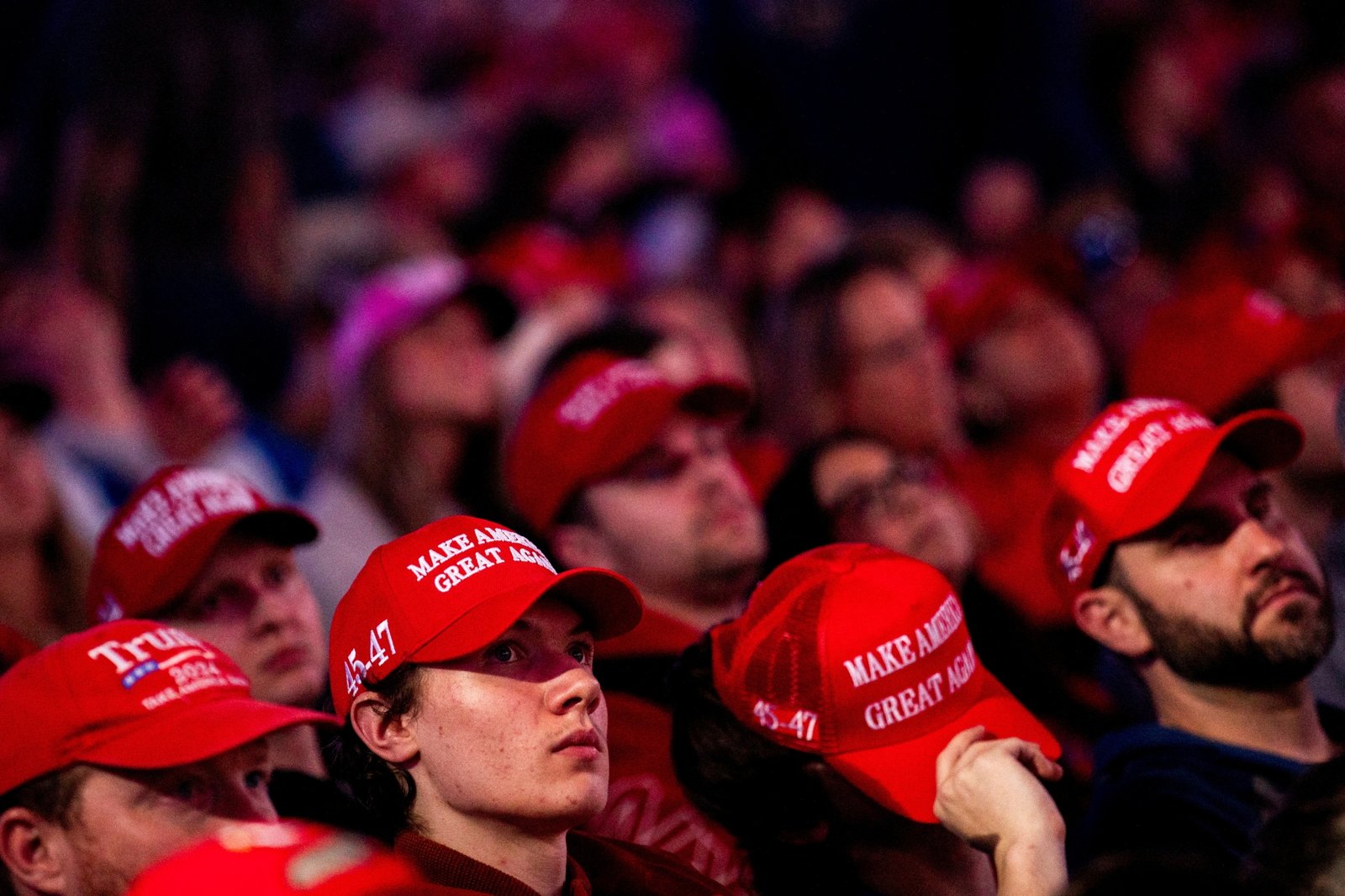
Negative voting also changes the relationship between voters and their preferred party. When defeating the opponent takes priority, reservations about candidates and policies take a back seat.
A conservative concerned about institutional stability may tolerate Trump’s conduct to keep what they regard as the radical left out of power. A moderate Democrat may back a progressive despite disagreements over identity politics or spending because the Republican alternative appears more threatening. In both cases, voters may set aside reservations until they complete the immediate task of defeating the other side.
This weakens incentives for parties to respond to internal criticism. Candidates who expect fear to bring reluctant supporters back have less reason to accommodate them. Electoral victory can then be mistaken for approval of policies that some supporters accepted only as the price of defeating the other side.
The problem is compounded by the fact that many voters hold views that cross party boundaries: socially conservative but supportive of government intervention or concerned about border security while rejecting exclusionary rhetoric. Their choices should not be read as acceptance of an indivisible ideological package. Parties that treat every victory as an endorsement of their full agenda risk widening the gap between what voters want and what they believe their representatives are authorised to do.

Conditional trust
The crisis deepens when hostility to an opponent becomes rejection of their right to govern. What happens when confidence in elections depends on the preferred candidate winning?
Two positions must be distinguished: alleging that voting or counting was fraudulent and accepting the result while fearing the winner’s policies—the first challenges the mechanism that confers power; the second concerns its exercise. Warning about a government’s intentions does not, in itself, deny electoral legitimacy.
When institutions are trusted only after victory, they lose their standing as a shared referee. Democracy requires acceptance of a legitimate winner’s right to govern, not confidence in their intentions. Opposition and constitutional scrutiny remain essential, but they must operate within acceptance of the electoral process.
The war bill
Foreign policy enters domestic politics through its costs. Early Reuters coverage linked the Republican setback to dissatisfaction with the war with Iran, living costs and the administration’s performance. These overlapping pressures do not establish the independent electoral weight of each.
At petrol stations and supermarket checkouts, strategic arguments face household calculations. The war did not have to be the sole cause of rising prices to become an electoral liability for an administration that promised to prioritise domestic prosperity and avoid costly conflicts.
Voters could therefore support Democrats as a restraint on the executive without believing they had a complete answer to rising prices. The demand was for scrutiny of military choices and their financial consequences, not necessarily endorsement of a different foreign policy.
Protest Vote Meets Congressional Limits
Democratic control gives Congress greater scope to investigate and challenge the administration. Immigration, military spending and the president’s financial interests could become prominent areas of conflict. Yet oversight will be judged by what it achieves, not simply how aggressively it is pursued.
Trump retains executive powers and the veto. Overriding a veto requires two-thirds majorities in both chambers; an ordinary congressional majority cannot impose its program on him. Nor can he expect an opposition Congress to enact his own.
Impeachment is a separate question. The House can impeach, but conviction in the Senate requires a two-thirds vote of senators present. If all 100 senators are present, that means 67 votes. Assuming a united Democratic-aligned bloc of 54, conviction would require 13 Republicans. Supporting legislation against a president’s wishes is not the same as supporting his removal.
A veto, by itself, is not grounds for removal. Any impeachment case must rest on separate allegations and evidence. And removal would put Vice President JD Vance in the White House, not a Democrat.

What next?
The midterms open an early contest over 2028. Republicans must decide what to keep of Trump’s ability to mobilise supporters and what to abandon to win back voters alienated by his presidency.
Iran has become central to that argument. Senator John Curtis criticised the war’s planning and economic costs, linking his broader critique of the party to its retreat from fiscal discipline, free trade and limited government. Criticism across conservative media, including Fox News, suggests that the debate extends beyond campaign tactics to the choices made in office.
Vance blamed the war for the defeat, while Trump acknowledged its contribution but defended his decision to fight. Their disagreement matters for the succession. Vance needs room to present himself as an alternative, but he cannot treat the administration’s record as someone else’s responsibility. Criticism of the war does not, by itself, establish a willingness to support Trump’s removal.
If Vance assumed the presidency, he would have a chance to prove himself—and become directly accountable for the administration’s performance. He would inherit its crises, face an opposition Congress, and be judged on governing rather than explaining his predecessor’s mistakes. Entering the White House could strengthen his prospects for 2028 or exhaust his political capital beforehand.
Democrats, meanwhile, must show that they can offer an alternative, not simply oppose the administration. What will they propose on living costs? Where will they compromise? How will they distinguish necessary investigations from battles that consume time without improving lives?
They will not govern alone, but congressional control removes the shelter of opposition without responsibility. If confrontation displaces material concerns, voters who used Democrats to punish Trump may find reasons to punish them next.
The problem extends beyond Republican defeat and Democratic victory. Mobilising voters against a rival is not the same as earning their trust. Until accountability takes precedence over partisan warfare, the US risks staying trapped in a negative voting pattern: majorities change, but the reasons for discontent endure.