
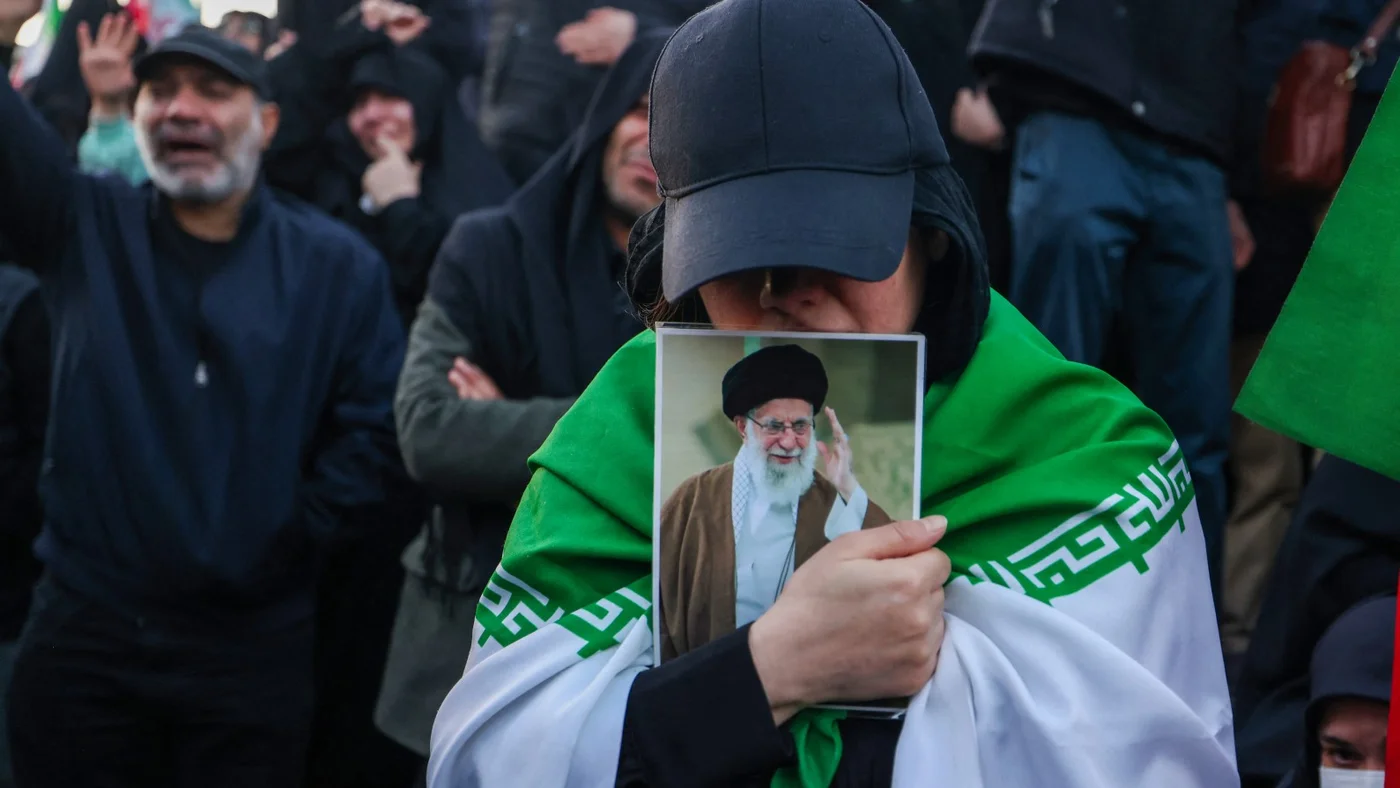
Khamenei’s assassination marks a shift to “regime change war,” eliminating ambiguity. With survival at stake, Iran resists negotiation. Hezbollah may now fully intervene, Gulf states face retaliation, threatening global energy markets. The conflict has crossed a historic threshold.
US President Donald Trump’s description of the US-Israeli attack on Iran on Saturday as a “regime change war” now fits the situation.
The assassination of Ali Hosseini Khamenei, Iran’s supreme leader, marks a shift from pressure tactics to deep structural destabilisation. The conflict has gone beyond signalling or psychological warfare.
Targeting the highest political and religious leader in Iran is a clear escalation toward destabilising the system.
Political rhetoric during wartime typically serves several functions: signalling resolve; shaping public perception; and exerting pressure on the adversary. However, following the assassination of the central pillar of the Iranian system, rhetoric now corresponds directly with operational reality.
The previous ambiguity has been eliminated.
A key question
Regime change can’t happen through symbolic bombings alone. It requires ongoing pressure on the political, security and economic foundations that uphold the system.
The targeting of the supreme leader indicates that this campaign aims to disrupt the continuity of governance, rather than solely degrade Iran’s military infrastructure.
The key question now isn’t whether regime change is the goal, but if removing the leadership will cause the system to collapse.
In the past, killing leaders in well-established systems rarely led to instant collapse. Outside military pressure often strengthens internal unity instead of breaking it.
Iran’s political system is complex, security-focused and built to resist external threats. If Tehran sees the assassination as a fight for survival, it will prioritise mobilising over negotiating.
In that case, survival comes before diplomacy.
Reports that Iran is still launching coordinated missile attacks show its command and control systems are working. A country that can mount retaliatory strikes after losing its top leader is not disorganised.
Removing leadership doesn’t always cause paralysis; it can actually strengthen determination.
This makes a short war less likely. Once killing leaders becomes part of the battle plan, neither side can back down without seeming to lose.
A fight for survival?
Regarding negotiations, the assassination seriously weakens the case for coercive diplomacy. Economic pressure and US sanctions didn’t stop Iran’s missile programme. Indirect conflict didn’t change its regional stance.
Now, direct military action has escalated to targeting leaders. At this point, war is no longer just a tool but a deep structural conflict unless Trump is happy to capitalise on the assassination of Ali Khamenei and asks for a ceasefire.
After all, the initiative of war and peace is in his hands.
Coercive diplomacy works only if the opponent believes they can survive by negotiating. When survival is at stake, resistance replaces capitulation.
Lebanon is the most immediate hotspot. Hezbollah’s decision-making changes drastically after the supreme leader’s assassination. The bar for intervention drops when the conflict is seen as a fight for survival.
If Hezbollah fully joins, it will try to change Israel’s rules of engagement and stop the ongoing pressure on Lebanon.
This would open a second front and greatly expand the war. Lebanon, already fragile economically, would suffer severe damage. Its infrastructure, banks and energy systems can’t handle another big military conflict.
The Gulf region poses a similar risk.
A historic threshold
US bases in Qatar, Bahrain, Kuwait, Jordan, Saudi Arabia and the UAE were heavily targeted in Iran’s retaliation, which will affect the world economy.
Furthermore, any small missile exchanges near Gulf waters might threaten energy facilities and shipping routes. The Strait of Hormuz, a key global energy passage, is especially important.
Ongoing disruption there would quickly affect oil prices, shipping insurance and global supply chains.
A prolonged conflict exposes them to retaliation without corresponding strategic benefits. Energy markets would respond sharply, with oil prices increasing, currency fluctuations intensifying and capital migrating toward safer assets.
The wider Middle Eastern economy would face a serious strain. This goes beyond physical damage to affect investor confidence, government risk, trade, infrastructure security and financial stability.
A long conflict, especially one with the killing of leaders, creates uncertainty that markets struggle to measure.
In short, the assassination of Khamenei removes any doubt about the intent.
This goes beyond heated words and marks a deep conflict focused on keeping the Iranian state intact.
While system collapse is still uncertain, this makes a quick de-escalation much less likely.
When a conflict is framed as existential and leadership elimination becomes normalised, wars seldom remain limited. The escalation ladder steepens, and opportunities for withdrawal diminish.
The pertinent question is no longer whether this constitutes hyperbole, but rather how far both parties are willing to advance in a conflict that has already crossed a historic threshold.