
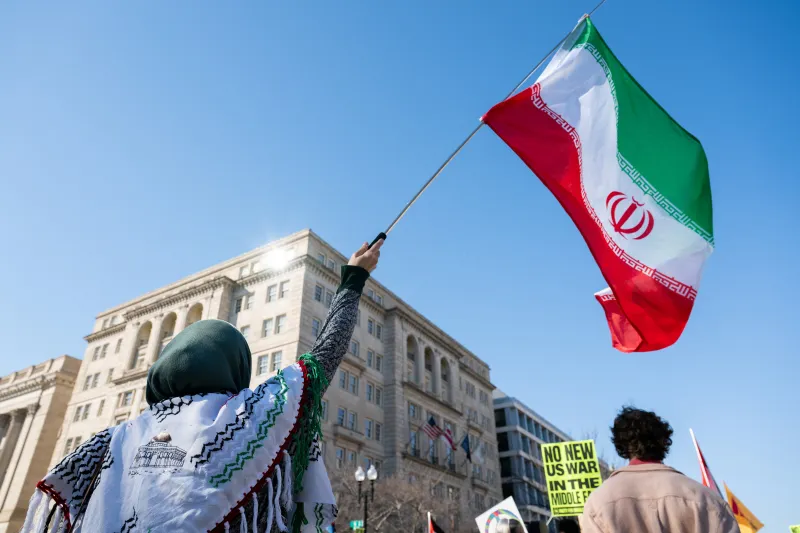
Dueling claims of triumph distort strategic reality: U.S. expectations of decisive regime change clash with Iran’s ability to frame survival and Hormuz leverage as success. These narratives risk hardening positions, weakening U.S. political cohesion, and emboldening Tehran in future nuclear or regional confrontations.
On April 8, the United States and Iran agreed to a two-week cease-fire. But despite two days of negotiations in Islamabad and speculation about a second round of talks, the two sides have so far failed to reach a deal to end the war. This is perhaps because they have each already repeatedly claimed complete victory. When asked, on April 11, about the progress of the Islamabad talks, U.S. President Donald Trump said, “Regardless of what happens, we win. We’ve totally defeated that country.” Several days prior, Iran’s Supreme National Security Council declared that the United States has suffered “an undeniable, historic, and crushing defeat.”
At first, sorting through these competing claims of victory might seem to demand an impartial tally of each side’s material gains and losses. But there is no objective way to judge who wins and who loses a war. Instead, victory is in the eye of the beholder. Material outcomes are just one among several factors that shape wartime narratives of success and failure. Other dynamics, including psychology, optics, and media and political spin, also skew the narrative. The dominant story that emerges about who won and who lost can in turn have powerful political effects. It may even matter more than events on the battlefield.
For Washington, this is unfortunate. The United States may have dominated Iran militarily, inflicting immense damage on the country’s armed forces and suffering relatively few losses in return. But Americans have high expectations for what their military can achieve, and simply bloodying the Islamic Republic is unlikely to impress them all that much. Americans tend to see war as a clear victory only when the United States has deposed the opposing regime and replaced it with a friendly one. And despite all the destruction that Iran has sustained, its government remains very much in charge. Americans, then, will be primed to think of the war as a waste of resources, especially given Trump’s promise that the bombing would conclude with Iran’s “unconditional surrender.”
Tehran, by contrast, is much better positioned to seize the narrative. As a weak power fighting a war it did not begin, it can claim that survival is victory, even amid massive military losses. “When the criminal enemies of Iran began this oppressive war, they imagined they would succeed in complete military dominance over Iran in a short time and force Iran to surrender,” Iran’s Supreme National Security Council proclaimed in an April 8 statement celebrating the cease-fire. “They thought Iran’s missile and drone fire would be quickly extinguished and did not believe that Iran could deliver such a powerful response.”
The war between Washington and Tehran may not be over. Cease-fires are often fragile, and the two governments remain far apart on many issues. But if the perception of U.S. failure and Iranian success sticks, it could have enduring consequences. In the United States, this narrative may weaken the Republican Party and boost Democrats’ chances in the midterm elections this November. It could also empower the Iranian government, which can brag about withstanding Washington’s assault, and tempt Tehran to pursue nuclear weapons. In such a scenario, a scarred and weary United States might not respond.
HIGH BAR
Throughout its campaign against Iran, the U.S. military has displayed remarkable tactical acumen. It helped assassinate high-level Iranian leaders, launched thousands of airstrikes against Iranian military targets, and suffered 13 fatalities, which is extremely low compared with past wars. In fact, when two U.S. planes were downed in Iranian territory, American special forces rescued the crew members in a skillful operation.
But the optics of the war still don’t favor Washington. That is because the American way of war—or how Americans traditionally think about major conflict—does not reward mere tactical dominance. Instead, Americans believe that winning requires decisive success. This means that the United States must totally defeat its enemies, tear down their regimes, and then replace them with friendly—preferably democratic—governments. One reason for this sweeping vision of war is American power: the United States has vast capabilities, and Americans expect results. Moreover, as a result of their idealism, Americans also believe that war should serve a moral purpose. The American model of war is World War II: a campaign of ethical clarity and common purpose that ended in the total defeat of Nazi Germany, fascist Italy, and imperial Japan.
World War II was, of course, not a typical conflict. Most U.S. wars are more limited, and they are often fought for goals short of regime change. Yet even when Washington achieves many of its military objectives, Americans can be unhappy with the results. In the Korean War, for example, the United States successfully defended South Korea from North Korea’s invasion. But when the war ended in 1953, most Americans saw the result as a grim stalemate rather than a qualified success precisely because it was, in large part, a return to the region’s prewar status quo. Four decades later, Americans were again dissatisfied with the result of the 1991 Gulf War, in which the United States and its partners rapidly ejected Iraqi forces from Kuwait but declined to march on Baghdad. According to polls, Americans did not see the war as a victory because Iraq’s leader, Saddam Hussein, remained in power. And even regime change does not guarantee that Americans will decide they triumphed. When U.S. forces overthrew Saddam in 2003, 70 percent of respondents to an ABC News/Washington Post poll agreed that the war was worth fighting. But the U.S. public soon grew weary of nation building and counterinsurgency in Iraq, and just five years after the war began, popular opinion had reversed: in 2008, only 34 percent of respondents to the same poll agreed that the war was worth fighting.
This way of war means that Americans are very unlikely to see themselves as the winners in Iran today. The result has fallen far short of their elevated bar for success. The Iranian government, after all, has not only survived; it is also completely unbowed. The United States and Israel killed then Iranian Supreme Leader Ali Khamenei, but Khamenei was succeeded by his son Mojtaba. The two countries struck Iran’s nuclear infrastructure, but Tehran still has a large, underground stockpile of enriched uranium. The hard-line Islamic Revolutionary Guard Corps—the core branch of Iran’s armed forces—lost its headquarters. But it now exerts greater control over the country than it did before.
Indeed, polling suggests that American observers already view the Iran war as an unnecessary and ill-conceived failure. According to a mid-April survey from Ipsos, only 24 percent of Americans agreed that, considering both the costs and benefits to the United States, U.S. military action in Iran has been worth it. Historically, Democratic leaders have worried that criticizing an ongoing U.S. military campaign would make them look unpatriotic, but this time, they are openly fuming about the operation. “We’ve never seen this level of incompetence in war-making in this country’s history,” said Democratic Senator Chris Murphy in late March. Chuck Schumer, the Democratic Senate minority leader, described the war as “one of the very worst military and foreign policy actions that the United States has ever taken” and a “colossal mess.”
To be sure, negative views about the Iran war also reflect partisanship. The United States is extremely polarized, and opposition to the conflict may be based more on feelings about Trump than information from the battlefield. But partisanship alone does not explain the skeptical national mood. For one thing, partisan bias cuts both ways, and it could, in theory, help boost support for Trump as much as it hurts him. Yet polls find that although Democrats overwhelmingly oppose the war, Republicans are much more divided. According to the Ipsos poll, only 55 percent of Republicans believe that the war has been worth the costs and benefits.
Trump has no one to blame but himself for this predicament. Before the war, he made little effort to convince the American public about the necessity of conflict or to build support for military operations among Democrats and U.S. allies. Such outreach might have softened criticism once the fighting began. Trump also set the yardstick for victory at an impossibly high level. He demanded Iran’s total defeat in the war’s early days and predicted the regime would come crashing down. He then declared that the war was won several weeks later, even though gas prices were rising and Iran’s government had conceded nothing—echoing U.S. President George W. Bush’s premature speech announcing the end of major combat operations in Iraq in 2003, which he delivered in front of an enormous banner that read “Mission Accomplished.”
MARTYRED NATION
In many ways, Iran’s experience of the war is the inverse of the United States’. Unlike Americans, Iranians have endured around-the-clock airstrikes. The country has lost most of its navy and air force and suffered thousands of military and civilian deaths, according to multiple reports. But Tehran will nonetheless have a far easier time declaring that it won. Part of that has to do with the country’s authoritarian system; unlike the United States, Iran can control the war’s narrative, at least at home. But Tehran also benefits from being much weaker than Washington, and observers have far lower expectations for Iran’s performance than the United States’. In fact, for Iran, survival is a kind of victory by itself—proof that the Islamic Republic cannot be taken down by even the mighty U.S. and Israeli armed forces.
Iran would not be the first actor to successfully claim victory by virtue of survival. In 2006, Israel went to war with Hezbollah and inflicted massive punishment on the militant group. But the outcome was seen in both Israel and Lebanon as a victory for Hezbollah because the group endured and was still able to fire rockets at Israel. As one Israeli scholar described it, Israelis experienced “an avalanche of frustration, dissatisfaction, and disappointment.” Even though stopping all Hezbollah rocket fire would have been difficult or even impossible, it was the implicit standard for an Israeli win. Critics of the Iran war today similarly point to Tehran’s capacity to continue firing missiles and drones as evidence of Iranian success, even though ending the attacks entirely would be extremely tough.
Iran can also declare victory thanks to its success at closing the Strait of Hormuz. Tehran’s control of the strait is, to be sure, a bona fide material gain: according to various reports, Iran is charging $2 million per ship for passage. Meanwhile, the flow of Iranian oil to China and elsewhere has continued almost as it did before the war began. But the strait has also become the defining issue of the conflict, which skews the narrative of victory in Tehran’s favor. For many observers, the thousands of U.S. airstrikes on Iran are almost irrelevant to the perceived outcome because Washington has not been able to reopen the waterway to traffic.
There is historical precedent for a single compelling frame driving narratives of victory. In 1962, the United States emerged from the Cuban missile crisis looking like a winner because the Soviet ships sailing toward Cuba suddenly stopped in the face of a U.S. blockade, giving the impression of retreat. “We’re eyeball to eyeball, and I think the other fellow just blinked,” Secretary of State Dean Rusk famously remarked to a colleague. The truth, of course, was more complex: the crisis ended after U.S. President John F. Kennedy pledged not to invade Cuba and then secretly offered to pull U.S. missiles from Turkey if Moscow removed its missiles from the island. But the missile trade was revealed years later, whereas the blockade was public. Both American and Soviet audiences saw Washington as the victor, even though the settlement terms were more like a draw or even favorable to the Soviets.
To avoid perceptions of failure, Trump could opt to restart the war, or decide to put troops on the ground in a bid to achieve the total victory he promised. But U.S. escalation could be a recipe for disaster. Americans have high standards for victory, but this does not mean that they favor total war against Iran: most Americans are wary of their country getting embroiled in more conflicts in the Middle East. Before handing out the laurels of victory, Americans must see a war as both grandiose in its outcome and worth fighting in the first place. For many of them, though, the campaign in Iran is neither glorious nor imperative. Taking down the Iranian regime via an invasion would not be easy, and success could come at a very high cost. As a result, even if the Iranian government was somehow toppled, Americans would probably still be unhappy with the result—much as they were in Iraq. “If you like this war, enjoy this first part, because this is the best part,” retired U.S. General Stanley McChrystal told The New York Times in late March. “Everything after this will be harder.”
ACTIONS HAVE CONSEQUENCES
How Americans, Iranians, and others remember the war’s outcome may have profound political consequences. In the United States, a perceived U.S. defeat could divide the MAGA coalition and damage the Republican Party’s prospects in the midterms. Trump promised to end the era of forever wars and inaugurate an epoch of continuous winning; losing a war of choice is damaging to his core brand. Republican politicians, such as Representative Thomas Massie and former representative Marjorie Taylor Greene, and conservative commentators, such as Tucker Carlson, Alex Jones, and Megyn Kelly—all of whom have voiced support for Trump in the past—have sharply criticized the military operation against Iran, and some of them have even called for the president to be removed from office.
Perceptions of victory among Iranians could also have dramatic consequences. If Iranians see Tehran as having lost, the result might be an internal coup or a renewed wave of protests that threatens the regime. But if the Iranian public concludes that Tehran won, the regime could become more entrenched, hardened, and radical. Even Iranians who despise the government might rally around the flag, and the regime might feel emboldened to grow more aggressive. After all, its prior diplomatic engagement with the United States did not prevent attack, whereas military resistance produced results.
These stories of winning and losing will reshape how the two countries treat each other. Should a narrative of American failure become widely accepted, the United States may develop a kind of “Iran war syndrome” akin to the Vietnam war syndrome, in which Americans see the Iran war as a debacle that should never be repeated. As a result, Washington might fail to act if Iran dashes to develop a nuclear weapon. At a minimum, an Iran war syndrome would make it harder for the United States to credibly threaten to use force against Tehran.
Iran surely has a healthy respect for the United States’ battlefield acumen. During its six weeks of fighting, the American military displayed impressive tactical skill. But the U.S. bar for victory—the toppling of the Islamic Republic and the creation of a pro-American, democratic government (ideally as Iranians celebrated in the streets of Tehran)—was simply not achievable at a reasonable cost. The war was doomed from the start.