
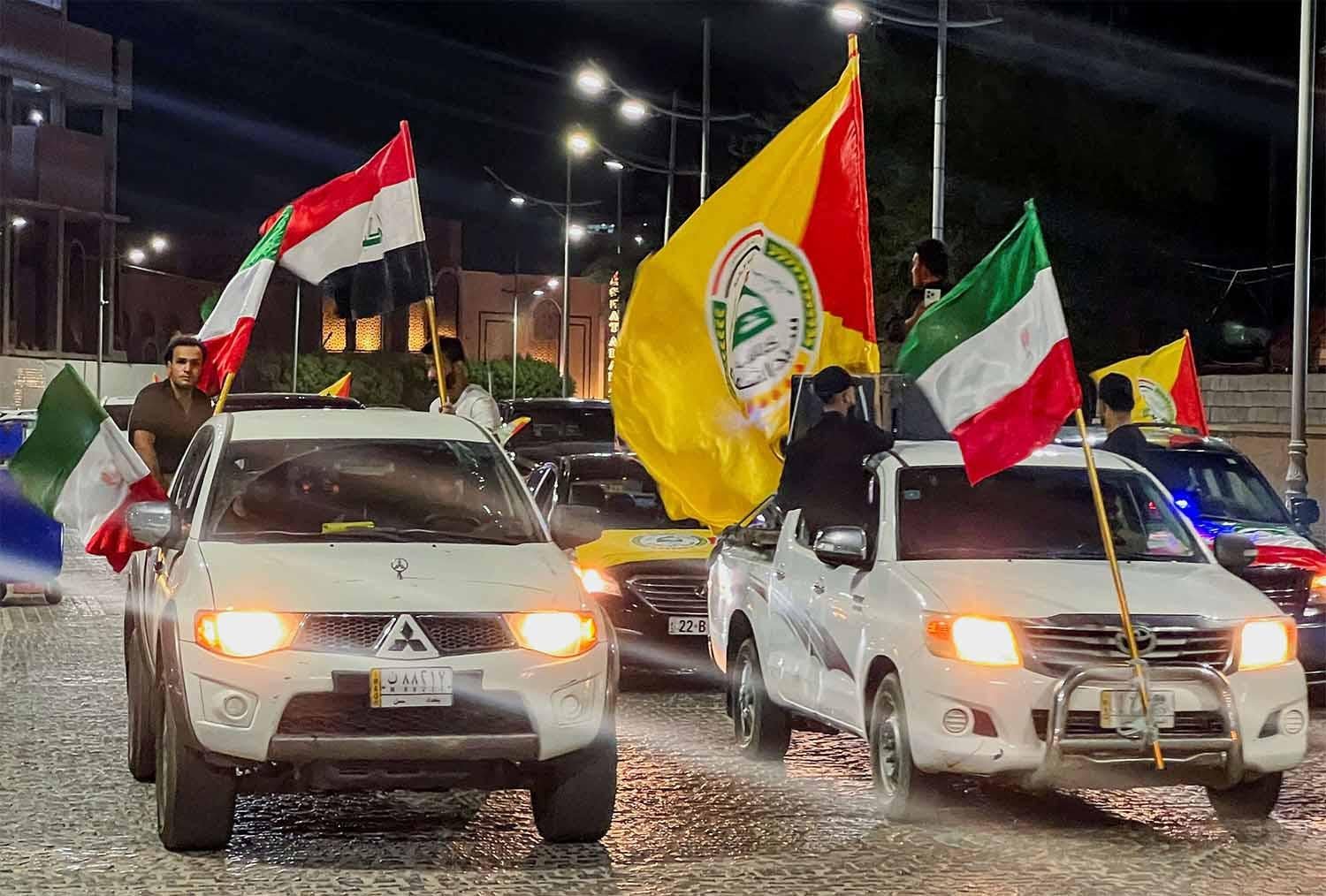
Iran’s proxy network—Hezbollah, Iraqi militias, Houthis—has largely failed to retaliate after US-Israeli strikes. Despite pre-war threats, they remain muted due to degradation, disrupted command, and strategic caution, exposing vulnerabilities in Tehran’s asymmetric warfare model.
Tehran’s network of proxy militias — often dubbed the “Axis of Resistance” — appears more fractured than formidable, leaving Tehran to fight largely alone in one of the Middle East’s most perilous confrontations.
LONDON – In the aftermath of devastating joint US-Israeli airstrikes on Iran’s nuclear facilities, military installations, and key leadership targets Saturday, Tehran’s network of proxy militias — often dubbed the “Axis of Resistance” — issued fiery vows of retaliation.
Groups like Hezbollah in Lebanon, Kataib Hezbollah in Iraq, and the Houthis in Yemen proclaimed readiness to strike back against American and Israeli interests, framing the attacks as an existential threat to the Iranian regime. Yet, as the dust settles on what President Donald Trump described as “Operation Epic Fury,” these proxies appear to have largely talked the talk without walking the walk — delivering limited or no action amid Iran’s own direct missile barrages on Israel and US bases in the region.
Pre-Strike bluster and proxy posturing
For months leading up to the strikes, Iran’s allies had ramped up rhetoric in response to escalating US military buildup in the Middle East. Kataib Hezbollah, a powerful Iraqi Shiite militia backed by Tehran, explicitly threatened US bases if Washington launched large-scale attacks on Iran. Similarly, the Houthis in Yemen signaled intentions to resume disruptions in Red Sea shipping lanes, while Hezbollah’s media outlets echoed calls for unified resistance against perceived American-Israeli aggression.
These warnings painted a picture of a coordinated, multi-front retaliation that could engulf the region in broader conflict. Iranian officials, including those from the Islamic Revolutionary Guard Corps (IRGC), had long touted the proxies as an extension of Tehran’s deterrence strategy — capable of inflicting asymmetric costs on superior foes through guerrilla tactics, rocket attacks, and maritime sabotage.
The narrative was clear: Any strike on the Islamic Republic would trigger a cascade of proxy-led responses, amplifying Iran’s reach without direct escalation from Tehran itself.
A Subdued reaction on the ground
Despite the bravado, the proxy response has been notably restrained in the initial hours following the strikes. Hezbollah, Iran’s most formidable ally, remained largely silent, issuing a condemnation of the attacks but stopping short of committing to direct involvement. The armed Lebanese group, already weakened by intense Israeli operations in southern Lebanon over the past year, has calculated that injecting itself into the fray would not serve its interests — especially with Lebanon’s political leadership publicly distancing the country from the conflict.
In Iraq, Kataib Hezbollah briefly vowed retaliation after claiming US strikes hit its positions, but subsequent actions were minimal. Another key Iranian proxy, Asaib Ahl al-Haq, explicitly called on the Iraqi state to handle any response rather than escalating independently — a rare move signaling hesitation amid Baghdad’s efforts to avoid being drawn into a wider war. Even in Yemen, while the Houthis have resumed threats against shipping, concrete attacks have been limited, with experts noting their capacity to complicate regional dynamics but not decisively alter the balance against US-Israeli forces.
Iran itself has borne the brunt of retaliation, launching over 170 ballistic missiles and drones at Israel and US facilities in Bahrain, Kuwait, Qatar, the UAE, Jordan, and Saudi Arabia — resulting in isolated casualties and damage but no overwhelming proxy surge. Iran’s network stood by and watched as the regime suffered punishing blows, highlighting a gap between proxy rhetoric and reality.
Why the hesitation? Weakened networks and strategic calculus
Several factors explain the proxies’ muted walk despite their talk. First, many groups have been significantly degraded by preemptive US and Israeli actions over recent months. Hezbollah, for instance, has lost key commanders and infrastructure to Israeli targeted killings and airstrikes, reducing its operational readiness. Iraqi militias face internal divisions and pressure from Baghdad to avoid provoking a US backlash that could lead to troop withdrawals or sanctions.
Second, the strikes’ scale — potentially including the reported death of Supreme Leader Ali Khamenei by Trump — may have disrupted command chains, leaving proxies uncertain about Tehran’s directives. Iran’s focus on direct retaliation, such as closing the Strait of Hormuz and targeting US bases, suggests a shift toward centralized response rather than dispersed proxy warfare.
Finally, regional dynamics play a role: Gulf states hosting US bases have activated defenses and condemned Iranian strikes, while broader Arab sentiment leans against escalation that could further destabilize the area. As one expert noted, even if senior Iranian leaders fall, the IRGC’s proxy networks remain “down but not out” — yet their current restraint indicates a pragmatic avoidance of all-out war.
Regional stability
The proxies’ limited engagement could signal a turning point in Iran’s influence, exposing vulnerabilities in its asymmetric warfare model. If sustained, this hesitation might embolden US and Israeli forces to press advantages, potentially leading to regime change calls as echoed by Trump and Netanyahu. However, the risk remains: A prolonged campaign could provoke desperate proxy actions, such as Houthi maritime attacks or militia strikes in Iraq, broadening the conflict.
As an emergency UN Security Council meeting convenes to address the crisis, the world watches whether Iran’s allies will finally mobilize — or if their threats were mere posturing in the face of overwhelming firepower. For now, the Axis of Resistance appears more fractured than formidable, leaving Tehran to fight largely alone in one of the Middle East’s most perilous confrontations.