
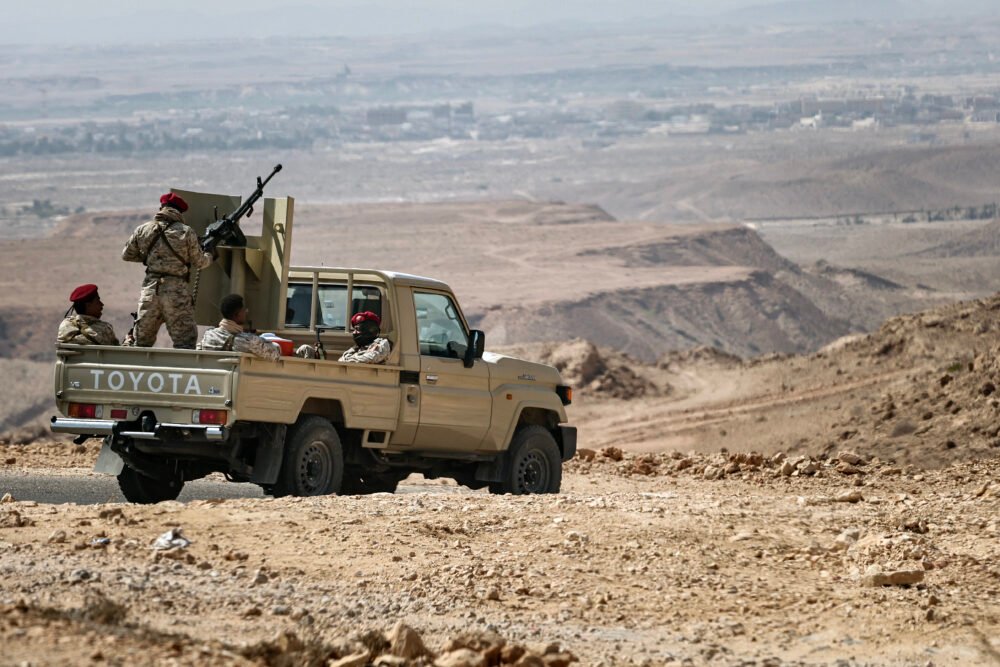
Saudi Arabia has stepped up its efforts to unify and restructure Yemen’s anti-Houthi forces after the rapid expansion and sudden implosion of the United Arab Emirates-backed secessionist Southern Transitional Council (STC) following Abu Dhabi’s military withdrawal from the country. Although Saudi Arabia’s leading role in Yemen is now uncontested, Riyadh faces several pressing military and political challenges there at a time of great uncertainty in the wider region. For now, Yemen’s anti-Houthi forces remain fragmented, but with Riyadh’s assistance the Saudi-backed internationally recognized government is working to coopt and potentially integrate formerly UAE-supported groups under its unified national command. In January, Riyadh announced the formation of the Southern Dialogue Conference, which would, in its words, bring together “all southern factions to discuss just solutions to the southern cause,” given long-standing regional aspirations for self-determination and self-governance. But this Saudi-sponsored forum has yet to be organized.
Amid this evolving shakeup in the internal balance of power in Yemen, tensions between the United States and Iran remain high, as Washington proceeds with a renewed military buildup in the region to put pressure on Tehran should their resumed talks fail. Another outbreak of hostilities between the two sides could have serious implications for Gulf security more broadly and Yemen itself, considering the Houthis’ military and ideological alignment with the Islamic Republic. These factors, therefore, will likely push Saudi Arabia and the Yemeni government to buy time before choosing how to confront the Iran-backed Houthis, as they focus on carrying out key military reforms first.
After Hadramawt and Mahra: Yemen’s changing domestic and external balances
The political-military balance in southern Yemen has changed rapidly over the past several months. In early December 2025, UAE-backed STC forces seized the eastern governorates of Hadramawt and Mahra from Yemen’s internationally recognized government to further their long-held ambitions of southern secession, announcing plans to organize a referendum on independence in two years’ time. The Presidential Leadership Council (PLC) — the eight-member executive body exercising presidential powers for Yemen’s internationally recognized government — and Saudi Arabia asked the secessionists to withdraw, blaming Abu Dhabi for the STC’s territorial advances. The kingdom, which shares a roughly 700-kilometer-long border with Hadramawt, perceived the STC’s moves as a national security threat. Tensions continued to escalate, and at the end of December Riyadh struck two Emirati ships in the southern port of Mukalla that were reportedly carrying weapons for the STC. The UAE rejected the allegations but moved to end its counterterrorism (CT) mission in Yemen and pull out its remaining military advisors and assets.
The secessionists were then forced to withdraw from the positions they had seized, including those in Mukalla and Aden, due to ultimatums from the PLC and airstrikes by Riyadh. In early January, government forces and the Saudi-led coalition carried out an operation to retake control of STC-held military sites. The STC’s leader, Aydarous al-Zubaidi, expelled by the PLC and charged with treason in early January, escaped from Yemen to the UAE via Somaliland. After Saudi Arabia proposed to hold a Southern Dialogue Conference in the kingdom, the STC announced it was dissolving itself, with one wing of the movement joining preliminary talks in Riyadh. But other STC officials still in Yemen rejected the move, and thousands rallied in Aden in support of the secessionist movement. In an effort to strengthen state institutions after the crisis in Hadramawt and Mahra, the PLC’s chairman, President Rashad al-Alimi, chose a new prime minister, reshuffled the government, and appointed two new PLC members to fill the STC’s now-vacant seats. The new members are General Mahmoud Ahmed Salem al-Subaihi, the former minister of defense, who was held hostage for eight years by the Houthis, and Salem Ahmed Saeed al-Khanbashi, the governor of Hadramawt, who led the operation to retake control of the STC’s camps in the governorate. Building on these efforts, the PLC announced the formation of a new and larger 35-member cabinet on February 8.
Military reorganization: Initial efforts and early indications
Against this backdrop, a series of Yemeni and Saudi decisions, rooted in the new military-political balance, are now laying out the parameters for military reform. On January 10, President Alimi announced the establishment of the Supreme Military Committee to reorganize, equip, and command all military forces in government-held areas. The committee does not operate under Yemen’s authority, however; it is controlled by the Saudi-led coalition, namely by Riyadh. The kingdom foots the bill for all salaries as well. The PLC’s chairman stated that Saudi Arabia had paid “all military formations that were previously supported by Abu Dhabi,” including funding “tens of thousands of STC fighters,” after the UAE’s withdrawal, as well as the National Resistance Forces (NRF) led by Tareq Saleh, the nephew of the former Yemeni president.
Pro-government forces have begun relocating military installations outside of cities, with a strategic and symbolic focus on Aden, the provisional capital and former STC stronghold. On January 20 the Giants Brigades, a previously UAE-backed militia that shifted its allegiance to Saudi Arabia during the eastern crisis, handed over the Jabal Hadid Camp in Aden to government forces. The goal is to gradually de-militarize urban centers, keeping only police and facility protection units inside the city.
All Riyadh’s partners: The new Saudi power formula in Yemen
With the STC’s territorial setbacks and the reduction in Emirati influence in the country, Saudi Arabia’s power formula in Yemen is now taking shape, affecting political appointments and the military reform process. Riyadh’s formula brings together a host of disparate actors: the Saudi-backed National Shield Forces (NSF) militia, armed factions from tribes (particularly the Subaiha), armed Salafi elements, and the Islah Party and its military affiliates. In this framework, the Giants Brigades — whose loyalty to their new Saudi patron has yet to be tested — may be the wild card that can give Riyadh an upper hand in Yemen’s complex and shifting landscape, given the militia’s size and combat experience in different areas of the country.
The Saudi-backed NSF played a key role in seizing and securing the STC’s existing and recently acquired territories in early 2026. Established by Saudi Arabia in 2022 and paid directly by Riyadh, the NSF was formalized by Alimi in 2023 as a reserve military unit under his direct control. The NSF’s commanders come from the Subaiha tribe of Lahj, a southern governorate close to Aden, with enlisted fighters also coming from other southern governorates, while the militia’s Hadramawt division is mostly made up of local Hadhramis and combatants from neighboring Shabwa.
Among the armed tribal factions, the Subaiha appear to have a major role in the Saudi network in Yemen. This extends well beyond the leadership of the NSF: One of the two new appointees to the PLC is a member of the tribe, as is Brigadier General Hamdi Shukri al-Subaihi, a commander of the Giants Brigades who recently survived an assassination attempt in Aden city, underscoring how loyalties and affiliations can be complex and intersectional in Yemen.
Salafis are a growing presence at all levels in both the NSF and other Saudi-backed forces. The NSF’s commanders are part of this conservative Sunni religious movement and have recruited tribesmen with a similar orientation; in Hadramawt, the NSF has reportedly established “major bases for military training and Salafi indoctrination.” Before the STC’s escalation in late 2025, the NSF was already enrolling Salafi fighters from the UAE-supported Security Belt Forces militia in Aden and Abyan as well as from the Giants Brigades, providing more regular and higher cash salaries than their Emirati-backed rivals — exactly the opposite of the trend from a few years ago.
The Islah Party, the membership of which includes both Muslim Brothers and Salafis, remains under heavy Saudi influence in Yemen and is over-represented in the army, although it has been significantly weakened compared to the pre-war period.
The Giants Brigades: A transformative force for the Saudis?
Saudi Arabia’s potentially game-changing player in the south, however, is the 30,000-strong Giants Brigades, which has gradually joined the Saudi camp after the UAE’s complete withdrawal from Yemen. The group emerged from the resistance against the Houthis in Aden and has often been deployed to push them back. The Giants, which are made up of both tribal and Salafi fighters mostly from the Yafa’a area in Abyan in Yemen’s southwest, are not part of the internationally recognized government’s army, but are instead affiliated with Tareq Saleh’s Joint Western Command, based in Mocha, close to the Bab el-Mandeb Strait.
The leader of the Giants Brigades is Abdulrahman al-Muharrami (aka Abu Zaara), a Salafi from Yafa’a who studied at the religious institute in Dammaj. He has been a PLC member since 2022 and was appointed vice president of the STC in 2023; as the latter affiliation suggests, he used to be closer to Abu Dhabi than to Riyadh. In the first weeks of the recent crisis in eastern Yemen, he signed a document with STC head Zubaidi denouncing President Alimi’s “unilateral decisions.” He later traveled to Riyadh to meet Saudi Defense Minister Khalid bin Salman and was ultimately tasked by the Saudi-backed NSF with overseeing security in Aden, underscoring his political shift.
Challenges for Saudi-led military reform: The local factor
Against this backdrop, the new foundations of Saudi power in Yemen are not based on the army or the Ministry of Defense, but rather on armed groups that either answer to the PLC’s chairman, such as the NSF, or to Tareq Saleh’s Joint Western Command, like the Giants Brigades.
The groups the UAE backed until early 2026 were made up primarily of former South Yemen veterans and sympathizers, and were staffed according to regional criteria, also including Salafis. In fact, all of the forces recruited, trained, and paid for by the UAE in the southern regions were organized on a local basis, such as the Security Belt Forces in Aden and Abyan and the Elite Forces in Shabwa and Hadramawt. Thus, one of the key challenges the Saudi-led Supreme Military Committee now faces is not only that it has to integrate various armed groups into the military but specifically that it has to integrate formerly Emirati-backed regional groups under a national chain of command. For this reason, the challenges related to military reform are largely intertwined with the outcome of the Southern Dialogue Conference. Riyadh and the PLC will have a greater chance of bringing former UAE-backed groups under their control if the conference is inclusive and oriented around specific goals, such as outlining a credible horizon for addressing the southern issue. Recent developments in the Shabwa region, in which “hundreds” of pro-STC protesters attempted to seize control of the governorate headquarters on February 11, killing 6 people and injuring 23, as well as in Aden, where a person was killed as STC demonstrators tried to storm the gates of the Presidential Palace on February 20 after the new Saudi-backed government held its first cabinet session, highlight just how important the local factor is in the landscape in which the Saudis are now operating.
When he announced the establishment of the Supreme Military Committee, PLC President Alimi stated that the body would also support the “readiness” of the military “for the next phase should the militias reject peaceful solutions” — a warning to the Houthis, but also to the STC’s former affiliates in the event that political disagreements prevail at the conference.
In Yemen as elsewhere, the formal integration of armed groups does not necessarily translate into real control by the state. For instance, the UAE-backed Hadhrami Elite Forces (HEF) have been formally part of the army, under the Second Military Region, since 2017, even though they have continued to answer primarily to Abu Dhabi and the STC. Therefore, Riyadh may now see other forms of cooptation, such as the regular payment of salaries and provision of tribal patronage, as complementary and perhaps even more effective ways of instilling loyalty than legalization per se, as it seeks to build long-term alliances in the southern regions.
In such an effort, Saudi Arabia will have to pay special attention to Hadramawt. The governorate, which borders the kingdom and is home to 80% of Yemen’s oil and natural gas resources, has historically had a strong local identity and aspirations for autonomy from the central government. These do not necessarily overlap with the idea of a southern state along the pre-1990 borders of South Yemen (officially known as the People’s Democratic Republic of Yemen), with many locals instead pursuing Hadramawt’s own independence. In January 2026, the Hadramawt Tribal Alliance (HTA), a framework of local tribes seeking self-governance, refused to join the Saudi-backed government if Hadramawt was not considered as a third geographical party alongside the North and the South.
The HTA is a key player in the local balance of power. Its former leader is Amr bin Abrish, whose fighters supported the PLC’s battle against the STC in the governorate and have moved closer to Riyadh since 2024; at the same time, at least some of the fighters that joined the UAE-backed forces in Hadramawt are part of the HTA. Therefore, the alliance’s backing would be useful for the government and help facilitate the broader Saudi-led military reorganization.
The need for a cohesive government front
Within this complicated framework, Yemen’s government forces must decide what their posture will be vis-à-vis the Houthis, who continue to hold onto most of the country’s northwest. Inevitably, much will depend on the strategic choices of Saudi Arabia. Faced with a choice between restarting cease-fire talks with the Iran-backed group or potentially launching a new military offensive against it to regain at least the key port of al-Hudaydah and/or the capital of Sana’a, Riyadh is likely to buy time before moving ahead with either, for three reasons.
The first is military fragmentation: Yemen’s anti-Houthi forces are still far from forming a cohesive front, despite the Emirati withdrawal. Riyadh will probably be able to unify these groups over time, but at present their differences remain problematic, and to some extent, the Saudis may be forever “herding cats” in Yemen.
Second and of greater importance, the factors responsible for the long-time military entropy are not going to be solved through military integration alone. Concrete political steps are also needed. In this regard, the Southern Dialogue Conference proposed by Riyadh will be a strategic test for the kingdom. From selecting participants to crafting a final, joint statement, the conference will determine whether the Saudis are able to consolidate and even to expand their influence among formerly UAE-backed groups or, conversely, whether their leadership will achieve less than expected, leaving room for spoilers and alternative southern political projects.
The third reason pushing Saudi Arabia to buy time with the Houthis is related to the uncertain regional scenario. With rising tensions and the possibility of new US and/or Israeli strikes on Iran, Riyadh will likely want to refrain from making important choices in Yemen for the near term. As long as a conflict involving Tehran is a possibility, Saudi Arabia will presumably prioritize national defense and border security, including with regard to Yemen, to prevent or at least minimize retaliatory attacks by the Iran-aligned Houthis against the kingdom or Red Sea shipping.
Restructuring while operating: CT and counter-smuggling risks
Finally, Yemen’s military restructuring must not slow or complicate CT and counter-smuggling operations — this is a big test for Saudi Arabia. For Western partners, mainly the United States and the United Kingdom, the withdrawal of the few remaining UAE military advisors and intelligence personnel and their affiliated forces from Yemen altered the “security equation” that worked for a decade. The Emirati mission and support to local armed groups in southern Yemen allowed Yemeni, Gulf, and Western partners to dismantle the coastal fiefdoms of al-Qaeda in the Arabian Peninsula (AQAP), like that in Mukalla, while preventing a major build-up in safe havens in the interior. Since 2015, the Emirati CT model has proven effective thanks to a combination of territorial organization, strategic planning, military capabilities, and a “by, with, through” approach of partnerships with local forces to maximize community buy-in and long-term results.
In this context, the Saudi-backed NSF’s capabilities in CT operations still need to be tested. The first-ever direct attack by AQAP against NSF forces took place in al-Abr, close to the border between Hadramawt and Saudi Arabia, in February 2025. Moreover, the change in the military balance in Yemen is occurring at a time when the Houthis are showing, according to the United Nations, signs of “increased collaboration” with AQAP and “intensified” cooperation with al-Shabaab. These variables constitute a destabilizing factor for regional and maritime security in the medium to long term and will require careful monitoring.
Alongside CT, UAE-backed forces have also played a key role in counter-smuggling activities. Since early 2025, the Yemeni Coast Guard and affiliated forces have succeeded in intercepting a significantly larger number of cargo vessels and dhows illegally carrying military supplies from Iran to the Houthis, with Tareq Saleh’s forces seizing over 750 tons of Iranian munitions and hardware in July 2025 alone. In Yemen, CT and counter-smuggling have become two faces of the same security strategy aimed at countering the Houthis and AQAP in support of bolstering both Yemen’s own stability and broader regional security.
As Yemen’s internationally recognized government tries to reorganize the military and integrate disparate units under a shared command structure, Saudi Arabia — now alone in the driver’s seat — will need to address Yemen’s chronic and emerging military challenges if it wants to consolidate its influence and shore up its own security.
Eleonora Ardemagni, an analyst focused on Yemen and the GCC states, is a Senior Associate Research Fellow at the Italian Institute for International Political Studies (ISPI), a Teaching Assistant at the Catholic University of Milan, and an Adjunct Professor at the Graduate School of Economics and International Relations-ASERI. She is also an MEI affiliate.