

Iraq’s digital development risks replacing Saddam’s informants with algorithmic surveillance. Citizens generate data through searches, chatbots and platforms, while weak oversight and absent data protection law let AI profile political and sectarian affiliations cheaply and wrongly.
AI in Iraq Echoes the Old Mukhabarat
In the 1990s, an independent, functioning civil society in Iraq was almost unimaginable. Under the dictator Saddam Hussein, the state’s extensive intelligence apparatus, the mukhabarat, penetrated almost every corner of daily life. Informants were integral to its machinery of political control, where even the most ordinary interactions were treated with suspicion.
One extraordinary artifact from those years is a mass-produced thank-you card in Arabic distributed in Sulaymaniyah. It thanked citizens for providing information to the authorities and encouraged them to keep going, offering a dedicated telephone line to report anything about the Kurdish peshmerga that the state considered useful. Something about it was chillingly mundane. Informing on one’s neighbors had become so routine that it warranted a printed expression of official gratitude.
Twenty years after Saddam Hussein’s execution in 2006, the card remains a relic of an era when even girls as young as 13 in Iraqi Kurdistan were recruited as informants, illustrating how deeply the intelligence apparatus had penetrated society, including the lives of children.
Citizens Now Generate Their Own Surveillance
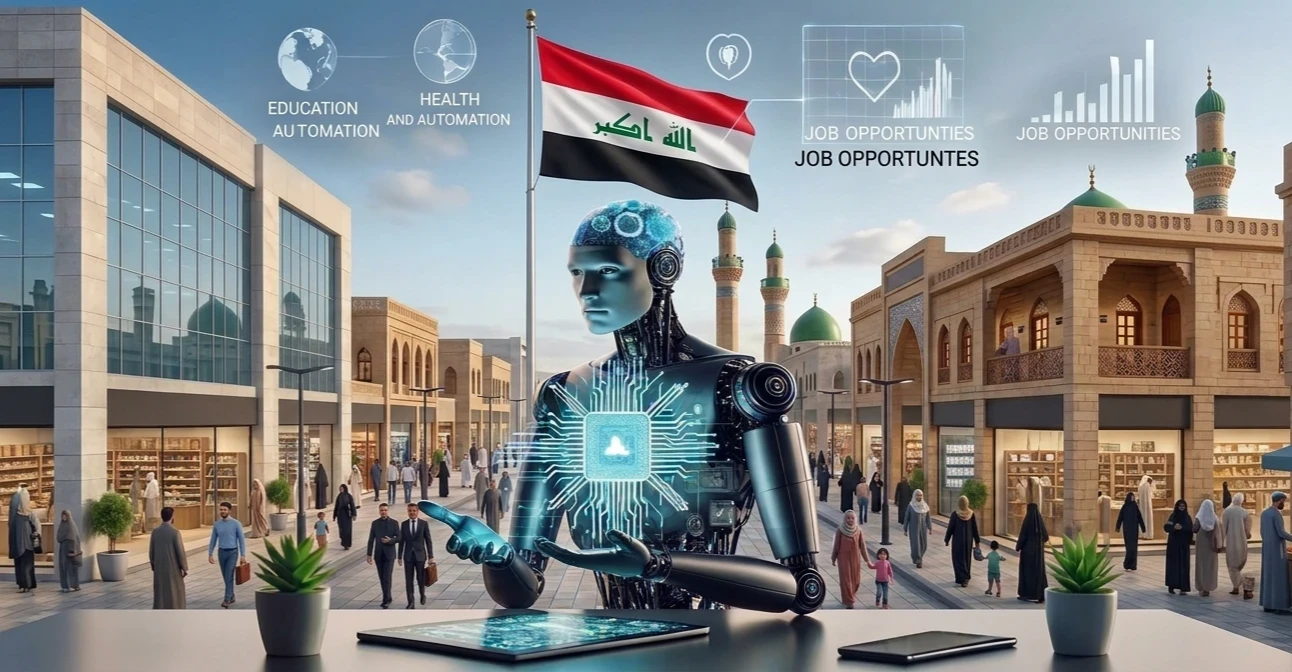
In Arabic, intelligence agencies are known as the mukhabarat, literally meaning “agents who deliver news or information.” The mukhabarat collected data based on human (moles and informants) and signals (radio and satellite) intelligence. Tech firms collect data using artificial intelligence. An intelligence agent collected data. Today, an AI program is called an “agent” serving the role of the human agent.
AI is evolving how news and information are delivered. If the technology has changed, the questions remain pertinent. Who is collecting information now, and what are they doing with it? These questions were among those raised at an international conference on children and youth held in Sulaymaniyah on November 4–5, jointly organized by Kurdistan Save the Children and the University of Sulaimani.
Artificial intelligence has introduced a new dimension to these concerns, raising the possibility of a digital mukhabarat for the 21st century. In this increasingly unregulated digital environment, informants are no longer needed to report what they see and hear. Citizens generate the information themselves, often without understanding where it goes, who has access to it, or how it might ultimately be used. While control over digital infrastructure and the flow of information is arguably a matter of national security, Iraq must not trade one form of surveillance for another, replacing the old machinery of state control with a digital version worthy of a futuristic dystopia.
What Happens After Data Collection
Iraqis, for example, may no longer be recruited as informants in the traditional sense, but they may still generate information about themselves and others without realizing it. This is now a global phenomenon beyond the Ba’athist police states of Iraq or Syria of the past. Tech firms have created a global police state in the sense that we willingly trade intelligence for more intelligence tailored to our demands.
Through online searches, conversations with AI chatbots, photographs, location services, educational platforms, and social media, civil society has become a digital society, leaving behind an increasingly detailed digital intelligence. Much of what citizens share may seem innocuous at the time, but it can be collected, stored, analyzed, and used to build profiles of their interests, behavior, and vulnerabilities. Unlike past informants, people no longer need instructions to observe or report on those around them. Everyday digital interactions can do much of that work for them. We unwittingly supply the big data used to monitor, profile, and potentially influence citizens.
Dr. Hasan S. Alkhatib, who advised the Iraqi prime minister on digital affairs, warns that the biggest gap in Iraq’s digital development lies in what happens after data is collected.
Profiling Cheaper and Faster, Often Wrong
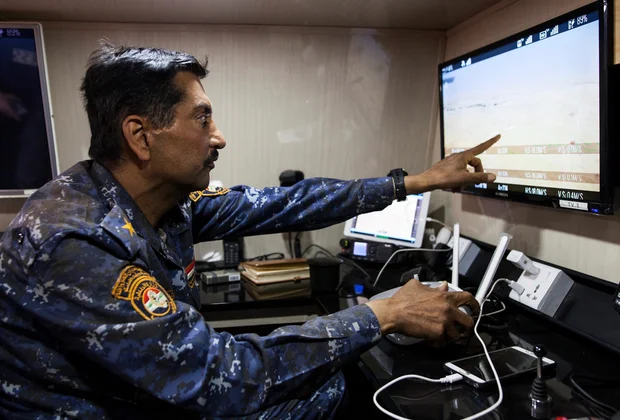
“A ministry may need an address or identity number to deliver a public service,” he explained to the authors, “but when these records are combined with information from other databases, they can reveal relationships or support inferences about political or sectarian affiliation. Artificial intelligence can make this kind of profiling cheaper and faster, even when the conclusions drawn are wrong.”
In states with little AI oversight, surveillance possibilities are unparalleled in history. In its August 2023 interim report on AI governance, the British House of Commons Science, Innovation and Technology Committee identified challenges around bias, privacy, misinformation, transparency, and accountability.
The implications are far-reaching as AI systems can present inaccurate or biased information as fact, reinforcing stereotypes and influencing how young people understand the world. Conversations, photographs, and personal details may also be collected and used in datasets that train or improve AI systems. Manipulation is also a risk. AI-generated images, videos, and text can misrepresent individuals and make disinformation more convincing and easier to circulate.
Can Iraq Build Safeguards Before Infrastructure
In a politically fragmented society such as Iraq, these capabilities could exacerbate existing divisions and erode public trust. After decades of conflict, Iraq remains vulnerable to extremist mobilization, injecting a serious security dimension to these risks. AI can be used to produce and circulate extremist propaganda, target vulnerable individuals with tailored messaging, and amplify narratives that encourage radicalization.
For Iraq, where the consequences of extremist recruitment and mobilization are all too familiar, as in the case of ISIS, the potential for these tools to be exploited by terrorist groups should be a particular concern. Worse, these risks are not confined by national borders. Consider that Iraqis may be using a platform developed, hosted, and governed in a country thousands of miles away, beyond the reach of local safeguards.
For Dr. Dennis-Kenji Kipker, research director and Founder of the Frankfurt-based Cyberintelligence Institute, the challenge is ultimately one of power, not technology. “Governments can prevent AI from becoming an instrument of surveillance and control,” he said to the authors in an interview, “only by establishing binding limits on data collection and retention, requiring independent judicial authorization for state surveillance, and giving individuals the right to challenge automated decisions.”
Crucially, he argues, these safeguards are meaningless without independent oversight bodies, insulated from executive interference, with their own budgets, investigative powers, and the authority to impose sanctions.
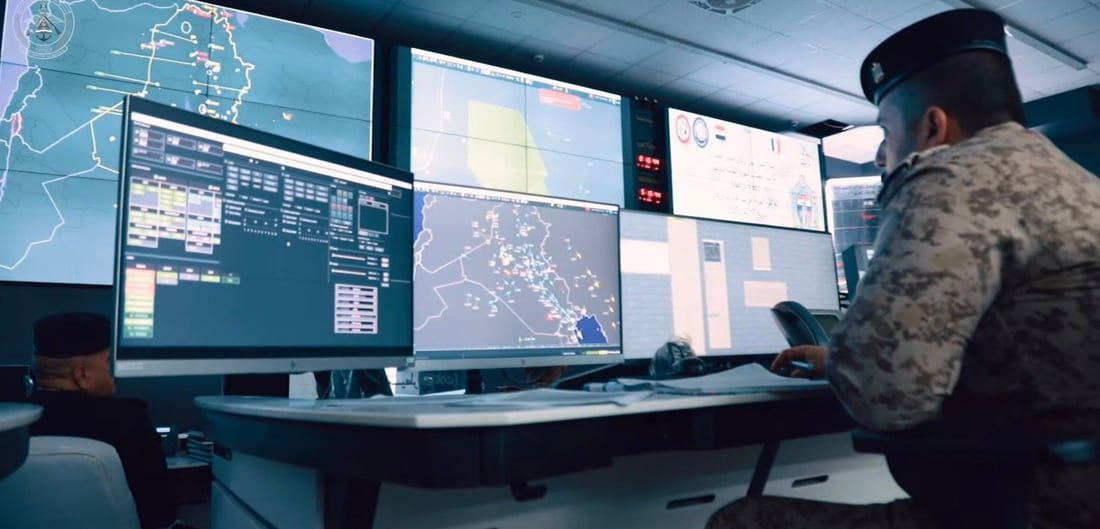
However, most Middle Eastern states are not only hesitating to create such bodies, but are actively implementing artificial intelligence to monitor citizens.
AI in Iraq Needs Law, Not Vendors
As argued in an earlier examination of Iraq’s digital sovereignty, a country may retain its formal legal authority while becoming dependent on infrastructure and services it cannot fully oversee. The same dilemma applies to personal data. When platforms outside the country’s jurisdiction collect and process information about Iraqi citizens, national institutions’ ability to protect that information becomes far more complicated.
To be fair, Iraq is not standing still in the rapidly expanding digital landscape of the Middle East or the wider technological race. Companies such as iQ Group, alongside other Iraqi firms, are pursuing strategic partnerships with regional heavyweights, while politicians and business leaders are taking steps to bring investment, expertise and technological know-how into the country. Efforts also aim to build technological skills from an early age. For example, in early November, a new robotics and engineering workshop opened in Ranya, northeast of Sulaymaniyah city, under Armenia’s Armath program.
Established in partnership with the Raparin Regional Development Agency, the initiative introduces local schoolchildren to coding, robotics, and practical engineering, showing how international cooperation can help develop the next generation of Iraqi innovators. The stakes are considerable because artificial intelligence will determine which countries can compete economically, scientifically, and technologically, and which risk falling further behind.
The challenge, therefore, is to ensure that technological progress is accompanied by the institutions and safeguards needed to manage the consequences.
Kipker argues that Iraq should resist the temptation to import comprehensive regulatory frameworks designed for European institutions. Instead, he suggests beginning “with a narrow, enforceable law governing the state’s own use of personal data, [establishing] an independent data protection authority accountable to parliament, and requiring impact assessments before surveillance technologies are imported or deployed.”
“Transparency in public procurement is equally important,” he points out, since many risks may come through ready-made systems purchased from foreign vendors. He warns that legal and institutional safeguards “must be built before the surveillance capabilities themselves become entrenched because once such infrastructure exists, it is rarely dismantled voluntarily.”
Technology Must Not Erase Hard-Won Freedoms
Iraq and the Kurdistan Regional Government need clearly designated bodies responsible for artificial intelligence, science, and technological innovation, with coordination across education, communications, environmental, and human rights institutions, to develop policy and monitor implementation.
Alkhatib notes that Articles 17 and 40 of the Iraqi Constitution already protect personal privacy and the confidentiality of communications. However, he argues that these constitutional provisions do not mitigate the risks posed by collecting and processing personal data across government and private platforms. In his assessment, “the safeguards are insufficient,” and Iraq still lacks a comprehensive personal data protection law covering data processing in both the public and private sectors.
Iraq can learn from the British parliamentary experience, but it must develop a framework suited to its own institutions and circumstances. Responsible governance means ensuring the benefits of technological innovation while properly addressing its risks.
The contrast with the 1990s is striking. Where independent civil society was once difficult to imagine, Iraq and the Kurdistan Region today have vibrant organizations whose role in public life should not be taken for granted. But technological progress must not turn back the clock and erode hard-won freedoms and individual rights.