
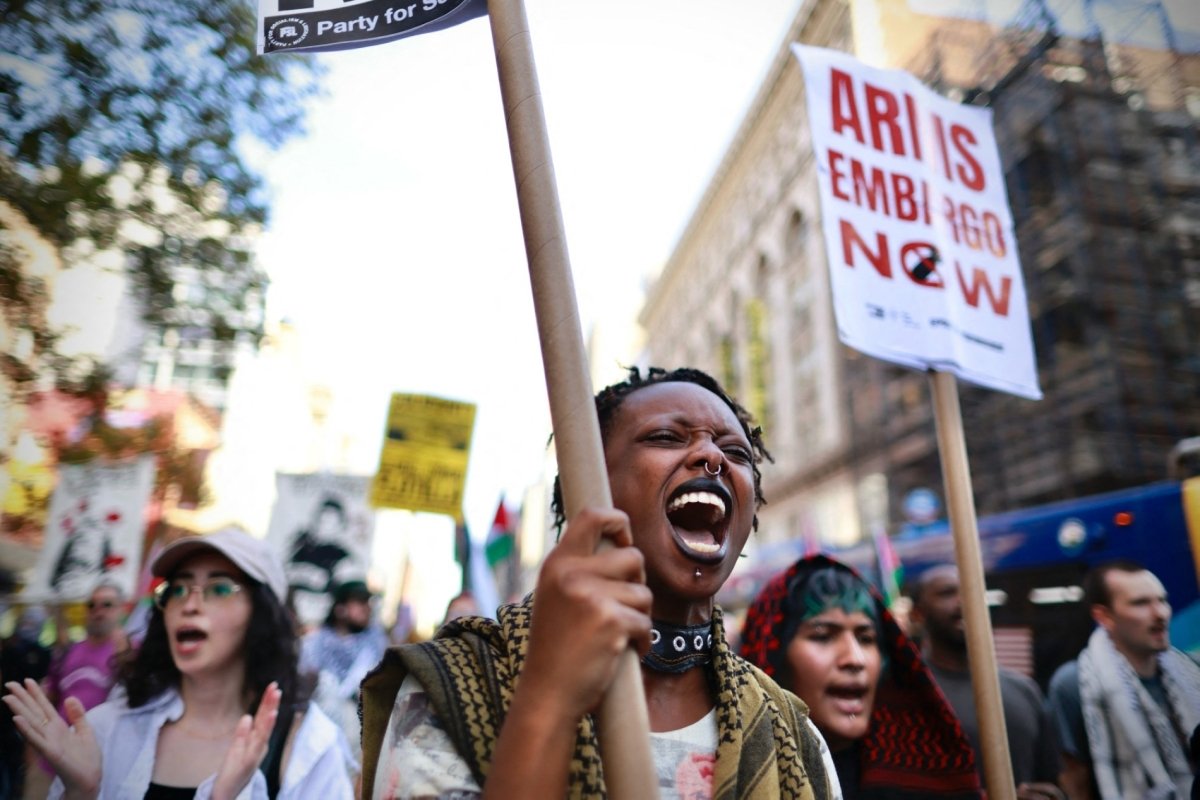
An analytical assessment of the breakdown in bipartisan American support for Israel, tracking shifting electoral trends, primary outcomes, and Israel’s multi-million-dollar public diplomacy defensive strategies ahead of the November midterm elections.
The geopolitical paradigm undergirding Washington’s strategic architecture is experiencing an unprecedented structural fracture as US public opinion turns decisively against its traditional ally. This rapid erosion of domestic political capital indicates that US public opinion is no longer a guaranteed asset for long-term bilateral defense initiatives.
US public opinion shifting tectonic realities
US public opinion is turning ever more sharply against Israel, a country that for decades has enjoyed a special place in American society and government and long relied on US support for its security and survival.
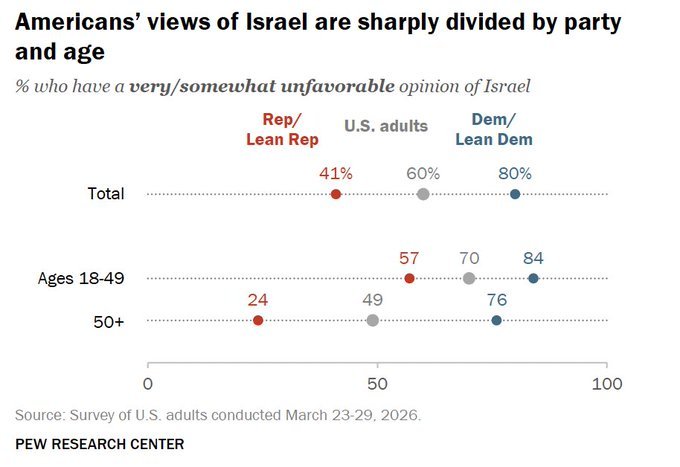
This shift is most evident in opinion polls. This month, a poll by The New York Times/Siena found that roughly three-quarters of Democratic Party-aligned voters oppose US military and economic aid to Israel, a significant rise from roughly 45% three years earlier. In April, a survey conducted by the Pew Research Centre found that 60% of American adults have an unfavourable view of Israel, up from 53% the previous year, reflecting growing unease over the country’s conduct and prompting renewed debate over the rationale behind the US’s unlimited support of Israel. This trend threatens to erode one of Israel’s most important strategic pillars: sustained US political and public support.
This dramatic reversal is most keenly felt among younger generations, while anti-Israel sentiment appears to be spreading across different strands of American society, including political, religious, and ideological constituencies. This is despite intensive propaganda campaigns launched by Israel to confront growing hostility, with $730mn allocated to public diplomacy efforts in the 2026 budget.
Resentment is also intensifying toward Israeli Prime Minister Benjamin Netanyahu, whose standing among Americans has fallen to a record low in recent polling. For many Americans, the war in Gaza and the humanitarian catastrophe it has caused appear to have accelerated the erosion of Israel’s standing in the US, and will undoubtedly be among the main factors shaping voter choices in the November midterm elections.
The Pew Research Centre survey indicates that 59% of Americans have little or no confidence in Netanyahu to do the right thing regarding world affairs, compared with 52% in 2025. Among Democrats, the figure climbs to 76%. Around half of Democrats (52%) now say they have no confidence at all in Netanyahu, up from 37% last year. Republicans, meanwhile, are divided in their assessment of Netanyahu: 45% say they have a lot or some confidence in the Israeli prime minister, while 44% say they have little or no confidence in him at all.
Domestic fractures reshape US public opinion trajectories
Deepening dissatisfaction Dissatisfaction with Israel has also deepened among Democrats and Democratic-leaning independents, with eight in 10 having an unfavourable view of Israel, up from 69% last year and 53% in 2022. Among Republican voters, dissatisfaction with Israel has also increased, especially among those aged 18 to 49, with 57% viewing Israel negatively, up from 50% last year. However, large majorities of Republicans over 50 remain favourably disposed towards Israel.
A majority of Jewish Americans and white evangelical Protestants continue to align with Israel, at 64% and 65%, respectively. Favourable views of Israel, however, are much less common among white non-evangelical Protestants (39%), Catholics (35%), black Protestants (33%), and the religiously unaffiliated (22%). Among Muslim Americans, only 4% view Israel positively. This loss of confidence extends to US President Donald Trump, with 55% of Americans lacking confidence in Trump to make good decisions when it comes to the relationship between the US and Israel. Around three-quarters of Republicans (73%) and 16% of Democrats believe Trump is capable of making sound decisions on US-Israel relations.
According to the survey, the conflict between Israel and Hamas is of personal importance to around 53% of Americans, Republicans and Democrats alike. That figure rises to 91% among Jewish Americans, approaches 70% among Muslim Americans, and reaches 65% among white evangelical Protestants.
Israelis are well aware of this decline in positive opinion. A 2024 survey by the Pew Research Centre found that 58% of Israelis believed their country was little respected internationally amid the war in Gaza—a figure that remained unchanged in 2025, although the share who said Israel was “not at all respected” rose markedly.
Institutional elite response to US public opinion
Signs of strain For many Israelis, this shift represents a profound strategic threat, particularly as the long-standing wall of bipartisan support in Congress—one of Israel’s strongest pillars of support in Washington for decades—begins to show signs of strain.
Some aspiring candidates in the midterm elections have grown bold enough to raise a question that until recently belonged to the realm of political taboo: Should the US stop selling weapons to Israel? Candidates, including Representative Chris Rabb, who recently won a high-profile Democratic primary in Pennsylvania, and Saikat Chakrabarti, running in California, have advocated ending or restricting military aid to Israel, while openly criticising pro-Israel lobbying groups, especially the American Israel Public Affairs Committee (AIPAC).
As the pro-Israel consensus collapses in both parties, Democrats, angered by the war in Gaza, are aggressively criticising Trump for endorsing the joint US-Israeli strikes on Iran, accusing him of allowing Netanyahu to drag the US into an unauthorised war. In April, Senator Bernie Sanders introduced resolutions to block specific arms sales to Israel, with 40 Democratic senators voting to halt the sale of armoured bulldozers and 36 backing a separate measure to block bomb shipments. Unified Republican opposition prevented the resolutions from passing.
US public opinion driving electoral re-alignments
Political liability In states such as Michigan, where Democrats hope to gain ground in Congress, ties to pro-Israel lobbying groups such as AIPAC have increasingly become a political liability. Democratic candidates such as Abdul El‑Sayed and Mallory McMorrow have criticised rivals for accepting AIPAC support, while seeking to position themselves at some distance from the party’s traditional approach to Israel.
On the Republican side, Trump faces fierce discontent from his MAGA base over the war on Iran, which many see as a breach of his promise to put ‘America First’. He has sought to marginalise conservative voices critical of Israel, most notably the broadcaster Tucker Carlson and Kentucky Representative Thomas Massie, who in mid-May lost his primary following a concerted campaign backed by AIPAC-aligned groups after opposing US strikes on Iran and criticising support for Israel. Conceding the contest, Massie took a swipe at his opponent: “I would have come out sooner, but it took a while to find Ed Gallrein in Tel Aviv.”
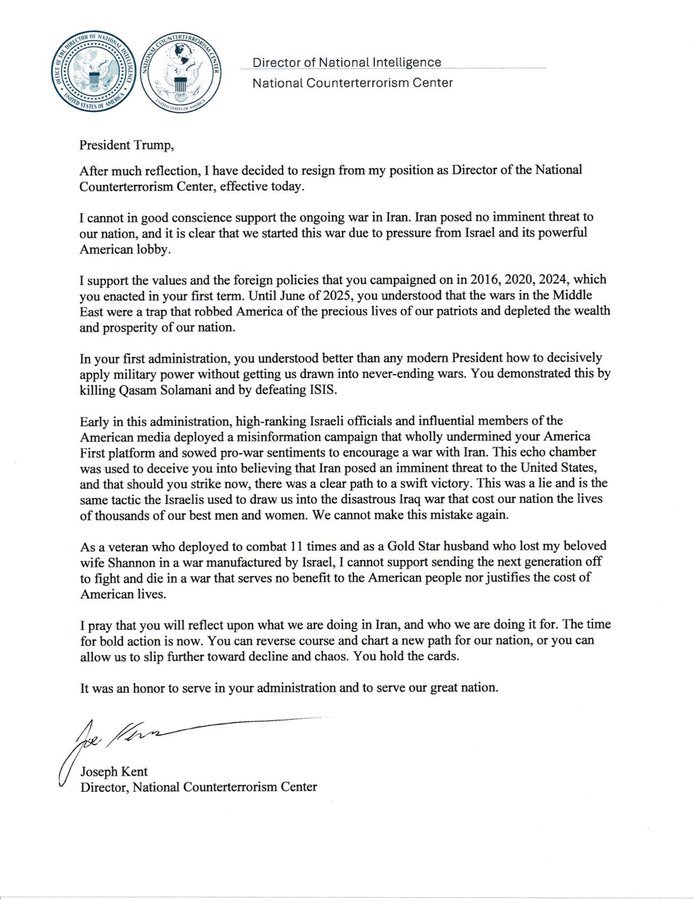
Elsewhere, Joe Kent, the head of the National Counterterrorism Centre, resigned in protest at the war on Iran, arguing that it had been launched under pressure from Israel and its American lobby. Similar criticism has been voiced by former Republican congresswoman Marjorie Taylor Greene.
Some ambitious Republican candidates, among them James Fishback, who is running in the Republican primary for governor of Florida against Trump‑backed Byron Donalds, are campaigning on an anti-Israel platform that calls for the US to stop fighting wars on Israel’s behalf.
Politicians recalibrate Pro-Israel Democrats, however, continue to argue that Middle East issues are not a priority for most American voters and that the party should therefore avoid alienating supporters of Israel. Progressive Democrats counter that the issue now extends beyond pro-Palestinian activism, helping some candidates project independence from established political interests and a willingness to confront vested interests. Faced with these shifting political currents, some candidates have begun to revise their positions.
There is growing evidence that Democratic contests across the country are becoming a referendum on Israel. From San Francisco, where candidates competing for the seat once held by former House Speaker Nancy Pelosi have taken increasingly critical positions on Israel, to Pennsylvania, where Rabb has drawn support among progressive Democrats in part because of his firm and uncompromising criticism of Israeli policy, contenders have described events in Gaza as genocide. In a statement, Rabb argued that Democrats lost the 2024 elections because they failed to listen to their grassroots base, stressing that voters need bold leadership willing to confront injustice and oppose what he described as unjust wars.
McMorrow, a Michigan state senator and candidate for the US Senate, has described events in Gaza as genocide. She had previously accepted invitations to conferences and trips organised by pro-Israel groups, including AIPAC, and long avoided using the term before publicly changing her position last October. She has also accused Netanyahu of dragging Trump into a war with Iran “without any justification”.
Strategic narratives countering hostile US public opinion
Waning influence Pro-Israel lobbying groups continue to fund campaigns against opponents of Israel, yet their political influence is increasingly being tested in some Democratic races. This was evident in New Jersey, where Analilia Mejia, one of Israel’s fiercest critics, won the special election for the seat vacated by Mikie Sherrill after pro-Israel groups failed to prevent her rise in the Democratic primary. At the same time, pro-Israel Democrats continue to argue that campaigns should focus on the economy and local concerns.
On the Republican side, insurgent candidates face a different dilemma. In Ohio, YouTuber and gubernatorial candidate Casey Putsch, who lost the Republican gubernatorial primary to Vivek Ramaswamy, campaigned on an America First platform critical of US support for Israel, opposing the state’s holdings of Israeli bonds and laws that critics argue risk conflating antisemitism with criticism of Israeli policy. In South Carolina, Republican Senate candidate Mark Lynch attacked Senator Lindsey Graham for what he portrayed as excessive loyalty to Israel “and not to the United States”.
Even among Republicans, there are signs of recalibration. In January, Graham suggested shortening the timetable for US aid to Israel, while Ramaswamy has argued that military assistance should eventually end. Damage control Israelis are rushing to contain this wave of anti-Israel sentiment, initially fuelled by the war in Gaza and now intensified by the US-Israeli war on Iran.
The $730mn approved by the Knesset to fund what Israeli Foreign Minister Gideon Sa’ar called the global war to win hearts and minds is five times larger than last year’s propaganda budget. Sa’ar said the effort was no less important than funding the production of fighter jets, bombs, and missile interceptors. The foreign ministry has also established a dedicated public diplomacy unit. Of the total budget, $50mn was allocated to pro-Israel material on Google, YouTube, X, and Outbrain, and $40mn will fund visits by foreign lawmakers, clerics, influencers, and university presidents.
A ‘media war room’ has also been created to monitor 250 media outlets and 10,000 websites publishing material about Israel. The Israeli government has also retained the services of Republican digital strategist Brad Parscale, who managed Trump’s election campaign, through his company Clock Tower X. The company has been tasked with creating digital content and websites aimed at influencing how AI models like ChatGPT respond to prompts about Israel and the war in Gaza.
A further $4mn has been allocated to evangelical churches, and nearly $1mn to enlist a network of social media influencers. It remains unclear whether Israel can use this media and propaganda arsenal to repair the reputational damage caused by its war on Gaza and by the US’s involvement in the war on Iran, particularly among younger generations who have watched in real time as Israel committed genocide in Gaza.