
Arab diplomacy offers Washington a smarter Middle East path through burden-sharing. Gulf funding, Egyptian depth, and Jordanian intelligence form coalitions while the US steps back from the front line, not off the field.
Arab Diplomacy offers Washington a smarter path in a Middle East it appeared ready to leave behind. At the beginning of 2026, the 2025 National Security Strategy and the defense strategy that followed ranked the homeland and the Indo-Pacific above the Middle East. The Iran War did not produce that ranking; it resulted from a decision already made. Yet the United States has not abandoned the rules-based order in the region. It now asks the region’s governments to co-sign it.
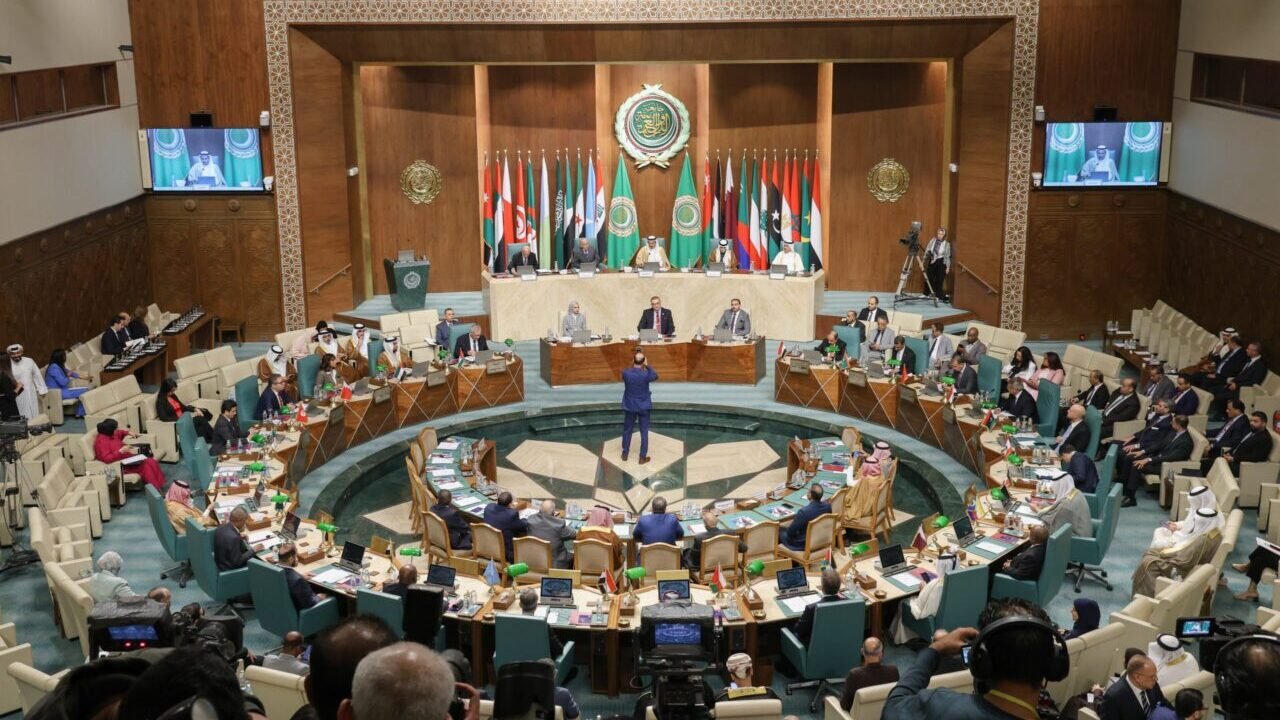
Arab Diplomacy has stepped into the space Washington vacated, with Gulf oil wealth funding coalitions, Egypt providing strategic depth, and Jordan offering legitimacy and human intelligence. The Mecca Joint Defense Agreement, signed on August 7, brings Turkey and Pakistan into a pact where an attack on one is an attack on all. Riyadh’s Multinational Maritime Defense Alliance for the Red Sea answers Houthi blockades without waiting for American task forces. Washington should participate in these structures rather than resent them.
America steps back from the front line, not off the field. The Abraham Accords succeeded because they avoided land swaps and hidden side deals. Gaza and the West Bank offer no such easy bargains, but incremental diplomacy with clear benchmarks can still deliver. Humanitarian de-escalation must come first, followed by economic measures and then security. The machinery already exists through Security Council Resolution 2803.
Washington Steps Back From the Front Line
At the beginning of 2026, Washington had appeared to have moved on from the Middle East. The 2025 National Security Strategy and the defense strategy that followed ranked the homeland and the Indo-Pacific above the Middle East. The Iran War did not produce that ranking. It resulted from a decision already made.
The United States has not abandoned the rules-based order in the Middle East; rather, it asks the region’s governments to co-sign it. The United States will still guarantee Israel’s defense, keep energy markets supplied, protect the shipping lanes, and hunt the people who plan attacks on Americans. It should remain the last line of defense, supplying intelligence, systems such as THAAD, and deterrence against threats no regional army can absorb alone. Everything else—the borders, the money, the bargaining with Hamas—is the region’s.
US leadership will endure through burden-sharing. Arab governments used to follow Washington with no stake in the outcome. That has changed. Thanks to their oil wealth, the Gulf states can provide funding and buy advanced weaponry. Egypt offers strategic depth and a professional army. Jordan has legitimacy, human intelligence, and a capable force. Their interests overlap enough, whether on Iran, refugee flows, or energy stability, to form a working coalition. No Western envoy ever had the rapport with Palestinian factions that the other Arab states enjoyed to make an agreement stick.
Gulf States Build Their Own Coalitions
Another round of Palestinian refugees, Iranian proxy attacks, or even an ISIS comeback would hit their cities before American hometowns. When fighting between the United States and Iran resumed between July 8 and July 24, Iran answered American strikes by hitting facilities in Jordan, Bahrain, and Kuwait. Riyadh, Abu Dhabi, Cairo, and Amman now view Tehran’s proxy network as one of the region’s biggest threats—as Washington once did ISIS.
Self-interest will move these governments where American pressure never could. That shift is no longer theoretical. When the Houthis blockaded Saudi Arabia’s Red Sea shipping in July, Riyadh did not wait for an American task force. It established a Multinational Maritime Defense Alliance for the Red Sea and the Gulf of Aden, with Egypt, Jordan, Kuwait, Bahrain, and Qatar among the founding members.
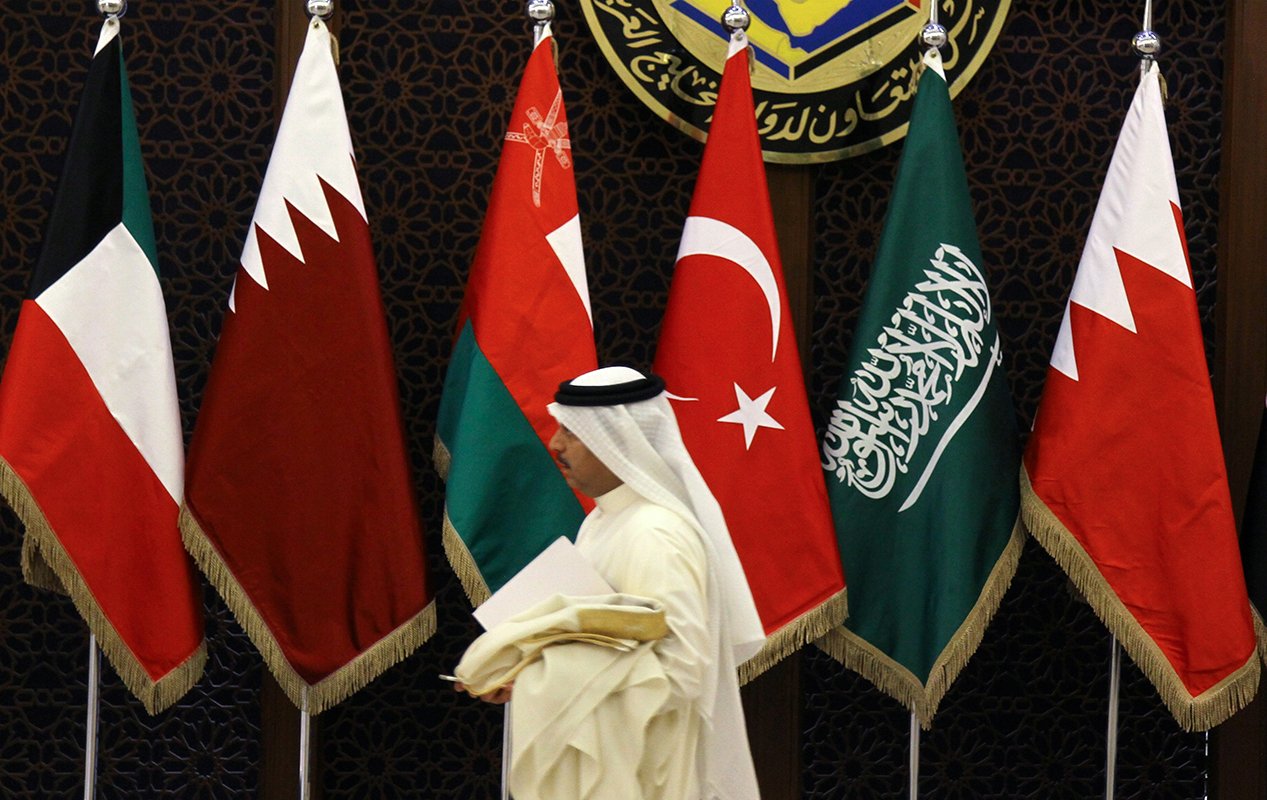
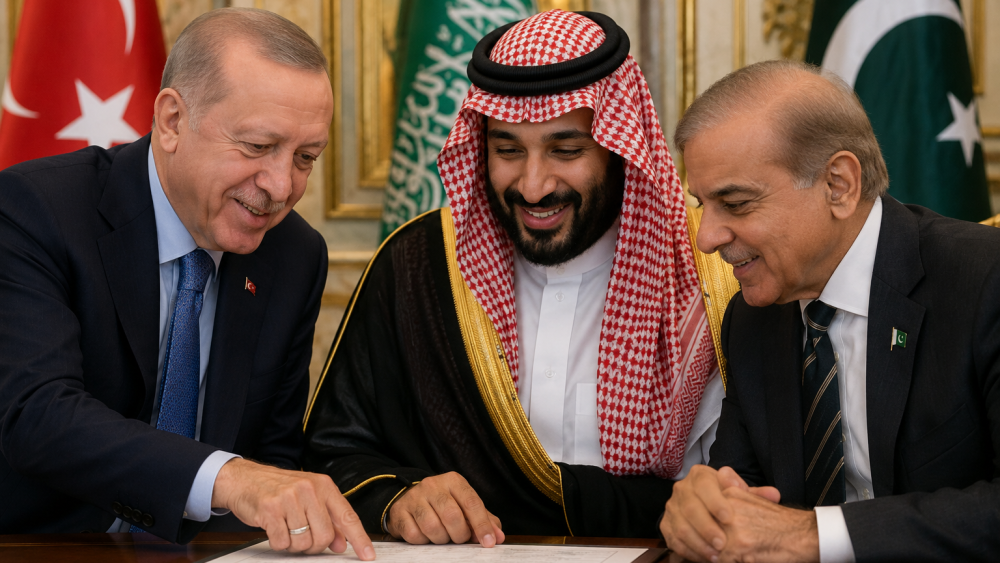
On August 7, Saudi Arabia signed the Mecca Joint Defense Agreement with Turkey and Pakistan, establishing that an attack on one is considered an attack on all. Mecca brings together two non-Arab powers and serves as a hedge against a potential US absence. This is the cost of stepping back, and instead of resenting these structures, Washington should participate in them. America steps back from the front line, not off the field, with fewer guarantees, and more leverage.
Arab Diplomacy Reshapes Regional Security
The Abraham Accords were successful because they did not involve land swaps or hidden side deals. They also made no demands on the Palestinian question. Each pact achieved the signatories’ objectives: stronger security cooperation, investment, and direct flights. Gaza and the West Bank offer no such easy bargains. The Israeli occupation continues in both, and a two-state solution remains well out of reach. What is left is incremental diplomacy with clear benchmarks, penalties for missing them, and steps that cannot be reversed.
Humanitarian de-escalation should come first. Then come the economic measures that benefit both sides. Only after that comes the security file. Henry Kissinger’s shuttle diplomacy worked the same way, one disengagement line at a time. None of it starts while Israel is still taking ground: no further expansion of its control inside Gaza, no strikes during the ceasefire, and no new settlement or annexation in the West Bank.
Each stage should be verified and documented through signed commitments. The machinery already exists. Security Council Resolution 2803, adopted in November 2025, endorsed the Comprehensive Plan to End the Gaza Conflict. In the current plan, the Board of Peace acts as the transitional authority, the National Committee for the Administration of Gaza oversees civil administration, and the International Stabilization Force provides security and demilitarization.
Their mandates run through 2027, and despite its fragile state, the ceasefire has persisted. The plan needs parties close enough and exposed enough to advance it.
The Iran War began on February 28, 2026, when American and Israeli planes struck Iran and killed Ali Khamenei in the opening hours. His son Mojtaba, who became the supreme leader the following month, now rules a country without a navy or missile production. Since then, Gulf capitals have distanced themselves from Tehran, and Israel has shown it can strike on its own.
On June 17, the United States and Iran signed the Islamabad Memorandum, a 14-point agreement that stopped the heavy fighting. Washington undertook to lift the naval blockade and reopen the Strait of Hormuz; both sides had 60 days to reach a final agreement. Sanctions relief and $300 billion in reconstruction money were on the table.
The 60 days ran out on August 17. The blockade held, and the strait stayed shut. Tehran now wants reparations and an American withdrawal before it will discuss the waterway, and no one has extended the deadline.
Hormuz is moving anyway, without Washington. On August 25, in Tehran, Iran and Oman discussed a temporary joint corridor through the strait and a joint mine-clearing project, with technical talks to follow on permanent arrangements, traffic management and the strait’s administration. Both ministers said the Gulf littoral states should be part of those discussions. That invitation should be taken. Riyadh’s maritime coalition gives these governments a command of their own, and the Mecca Pact gives it weight; they should arrive together and treat the corridor’s terms, verification, and cost as a regional file.
Sanctions have never hindered Iran’s nuclear development and will not now. What they can do, supported by deterrence and by neighbors holding the same line, is raise the price of the next escalation high enough that Tehran hesitates.
Gaza Ceasefire Hangs by a Thread
Gaza cannot wait for any of this. Since the October 10 ceasefire, the enclave’s health authorities have counted more than 1,300 dead and 4,300 wounded. Famine has receded, but the UN still classifies two-thirds of the population as acutely food insecure. Rubble sits where hospitals should be reconstructed. Gulf money and Egyptian logistics are the only things holding the ceasefire together. Washington is occupied with Iran, and the Board of Peace issues statements it has no means of enforcing.
Pressure on Iran does not survive a Gaza where Hamas and Palestinian Islamic Jihad rearm at will, or where Israel delivers a fraction of the 600 aid trucks a day it agreed to. Israel and Egypt can settle with the Board of Peace on the essentials: keep Rafah open, clear the debris, get the Salah al-Din corridor running. Gulf money can pay for what the war destroyed. One rocket, or one tunnel discovered, and the whole thing stops, which means Hamas holds a veto over the reconstruction of Gaza, and nobody has yet taken it away.
Rafah Reopens Under European Supervision
Rafah reopened to people on February 2 under EU supervision. Egypt and Israel should set up a joint operations hub at the crossing to run convoys on a daily schedule—water purification units and medical supplies first—rather than the ad hoc arrangements that now deliver a fraction of what was promised.
Several countries have committed to funding Gaza’s first planned community in southern Rafah, built to house an initial 25,000 people. The next step is a dedicated fund for hospitals and schools. The National Committee for the Administration of Gaza should publicly audit every dollar. Money that can be traced is money that keeps coming.
Arab Diplomacy Must Lead West Bank Reform
In the West Bank, the Arab states with credibility must lead efforts to build effective Palestinian security forces, ensure accountable governance, and end official incitement. What has been missing is accountability: consequences for non-performance, enforced by the states with the most to lose. Jordan, which has trained Palestinian Authority security personnel before, should lead these efforts. Israel must stop all measures that sabotage a future two-state solution and adhere strictly to the ceasefire.
Private Investment Requires Priceable Risk
Private money will not move until investors can price risk, which is why the first projects have to be small, visible, and quick, like solar, desalination, and greenhouse installations. There is also the possibility of corridors between Gaza and the West Bank, pooled investment vehicles, and reduced tariffs on a published schedule. The wager is that an engineer drawing a salary has less use for a Hamas tunnel and a farmer with a buyer has less appetite for a militia. Changed economic conditions won’t create stability and certainty immediately, but they offer better odds than the alternative: aid with no end date and no successor.
The Arab governments with standing in Ramallah should use it. The Palestinian Authority needs reforms it has avoided for a decade before it can govern Gaza, and the Board of Peace should name them, date them, and say who certifies each one. Those states then have to back the result publicly, which is the part they have always declined to do. The Board of Peace’s mandate expires at the end of 2027, so the schedule is not theirs to set. And if Israel will not lift the restrictions that make Palestinian governance impossible, none of it matters—that is not a caveat; it is the first condition.
There will be no ceremony in New York, no grand declarations or perfect maps that partition areas of influence. What holds will be built piece by piece, by governments that pay for it. The war made that necessary. The 2027 deadline makes it urgent.