
Trump announced a Pentagon-backed Venezuela Oil Deal involving intermediaries and a 35 percent stake in a private firm. Legal challenges are likely, and production timelines mean no near-term gas price relief.
The announcement of a massive U.S.-Venezuela oil arrangement represents a sharp departure from conventional foreign policy, blending military power, corporate intermediation, and direct Pentagon financial involvement. The Venezuela Oil Deal raises immediate constitutional questions, given that Congress authorized neither the invasion nor the creation of a government-backed oil venture.
Trump’s decision to route the agreement through the Pentagon’s Office of Strategic Capital, rather than through private American energy companies, signals both the uninvestable nature of Venezuela’s decrepit infrastructure and the administration’s willingness to bypass traditional legal and commercial channels. Even if the scheme survives judicial scrutiny, practical obstacles remain substantial.
Retrofitting American refineries to process Venezuela’s heavy crude and rehabilitating long-neglected oil fields will require years, not months. The Venezuela Oil Deal therefore cannot deliver the rapid reduction in gasoline prices that Trump has promised. The arrangement also entrenches a criminal regime that Washington recently claimed it sought to replace with democratic governance. The moral contradiction is stark: an operation launched under the pretext of law enforcement and liberation now culminates in a century-long partnership with the very leadership the administration once denounced.
Trump Announces the Venezuela Oil Deal
So, it was a war for oil after all.
President Trump announced in a social media post on Friday that the United States and Venezuela have struck an agreement for “THE BIGGEST OIL DEAL IN WORLD HISTORY.”
The whole thing is appalling, starting with the all-caps.
I have no love for the Venezuelan regime, run by, in Trump’s words, “the Highly Respected Interim President” Delcy Rodriguez. But this is a “deal” that Rodriguez couldn’t refuse. We invaded her country, abducted her criminal dictator boss, Nicolás Maduro, and made her our satrap.
Meet the Intermediaries
According to the Wall Street Journal, Venezuela and the U.S. will work through two intermediaries to get the oil flowing. The Venezuelan partner is Alejandro Betancourt, head of North American Blue Energy Partners. He’s been investigated, though not charged, for money laundering in Spain and Switzerland. He’s also one of the most famous “Bolichicos,” a nickname for the young businessmen who’ve gotten rich off of their ties to the socialist, murderous, criminal dictatorship (it’s a portmanteau of “Bolivarian” and “bourgeois”).
And who is the American partner? Well, the Pentagon, of course. Trump couldn’t get American oil companies to invest billions in Venezuela’s decrepit oil industry. (At a White House meeting in January, Darren Woods, the CEO of ExxonMobil infuriated the president by describing Venezuela as “uninvestable.”) So, the commander in chief tapped the Pentagon’s Office of Strategic Capital to take a 35 percent stake in Betancourt’s firm, securing the right to buy 20 percent of all production “at cost.” Created in 2022, the OSC was intended to use loans and loan guarantees to help develop vital industries. Now, it’s the primary backer of the “history’s biggest oil deal.”
Can the Pentagon Legally Do This?
We’ll see how legal this is. You can be sure someone will be going to court over it. After all, the U.S. government will be working with a criminal regime, under implausible statutory authority, to buy oil at below market rates while undermining our own oil producers.
I won’t shed many tears for the oil companies, even if the administration pulls this off. Then again, I don’t think it will, at least not any time soon. Trump boasts that this will help lower gas prices. Maybe. Someday. But even this scheme’s biggest boosters acknowledge that if it all goes swell, it will still take years to get the relevant oil fields producing, and years to retrofit American refineries to take Venezuela’s subpar oil. So, if Trump thinks prices at the pump are coming down before the midterms, or even during his presidency, he should think again.
Constitutional Problems Become Clear
But my primary objections to this imperial smash-and-grab are constitutional and moral. The constitutional problem is pretty straightforward. Trump lied to Congress and to the public about this scheme from the get-go. He claimed Operation Absolute Resolve was a mission by law enforcement to capture Maduro. The same indictment for Maduro and his wife included members of the regime. We left them in place, because law enforcement was merely a pretext.
Roughly 11 hours after apprehending Maduro, Trump boasted that the U.S. was going to “run the country” by working with the criminal regime. Did Congress authorize that? Congress definitely didn’t authorize the Pentagon to get into the oil business.
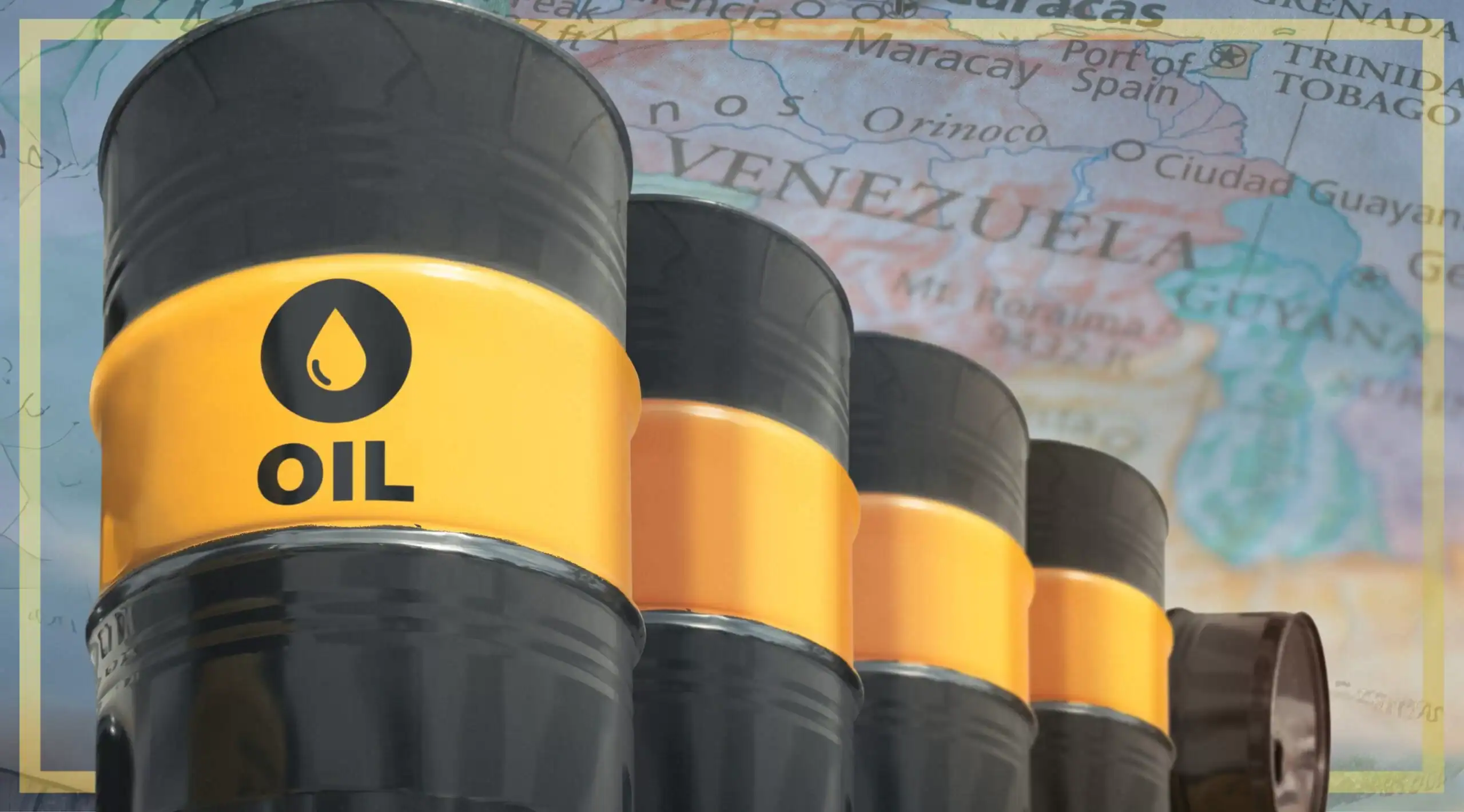
Venezuela Oil Deal as Spoils of War
Trump has a long, long history of claiming that America should “take the oil” from countries we go to war with. And months before this deal, he bragged that oil revenues from Venezuela have “paid for the attack many times over. … I always used to say, ‘To the victor belong the spoils.’”
Ironically, this phrase comes from a defense of the corrupt spoils system in U.S. politics, not some time-(dis)honored rule of war.
The Constitution does not empower the president to unilaterally launch wars, even brief ones, for the purpose of seizing or extorting a nation’s wealth. It’s worth noting that while the fighting in Venezuela was brief, the Iran war is dragging on. And that was his plan for Iran, too.
“If I had my choice, what would I like to do? Take the oil. Because it’s there for the taking,” Trump told reporters in April. He also posted on social media: “With a little more time, we can easily OPEN THE HORMUZ STRAIT, TAKE THE OIL, & MAKE A FORTUNE.”
Moral Objections Grow Louder
Then there’s the whole democracy thing. The administration vowed to restore Venezuelan democracy, eventually. We were supposed to be liberators bringing Venezuela freedom, according to the White House. Now, we’ve signed a “century-long” agreement with a corrupt, unelected, murderous regime. Do you think Trump is going to be in any kind of hurry to bring democracy to Venezuela now?