
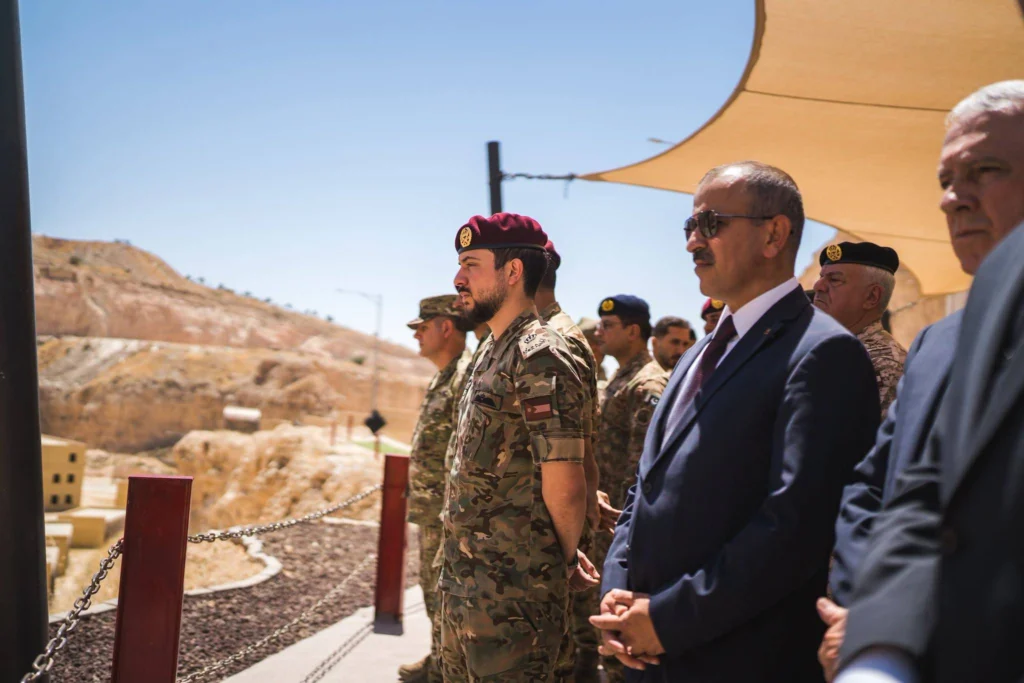
Iran fired hundreds of drones and missiles at Jordan since February. The JAF did not retaliate, raising doubts about its actual interception role. Amman faces eroding sovereignty and domestic pressure over U.S. presence.
The Hashemite Kingdom’s armed forces have long been presented as the bedrock of national sovereignty and dynastic legitimacy, yet repeated Iranian attacks since February have exposed a critical erosion of that institutional credibility.
Jordanian Military Deterrence now appears more rhetorical than real, as the Jordanian Armed Forces have refrained from any retaliatory action despite hundreds of drones and ballistic missiles, dozens of civilian injuries, and a deadly strike on Azraq base that killed three American soldiers. The kingdom’s leadership justifies this posture as purely defensive, but even that claim is contested by U.S. officials who credit American forces, not the JAF, with key interceptions. Iran has clearly concluded that Jordan will absorb strikes without response, making the kingdom a convenient target whenever Tehran seeks to punish Washington without directly attacking Israel.
Domestic sensitivities, particularly the large Palestinian-origin population and opposition to the U.S. military presence, constrain Abdullah’s options. However, the result is a visible hollowing of Jordanian Military Deterrence, undermining the sovereign message the king himself articulated when he declared Jordan would not become a battleground. The gap between past martial rhetoric and present passivity now defines Amman’s strategic dilemma.
A Military Ethos Under Strain
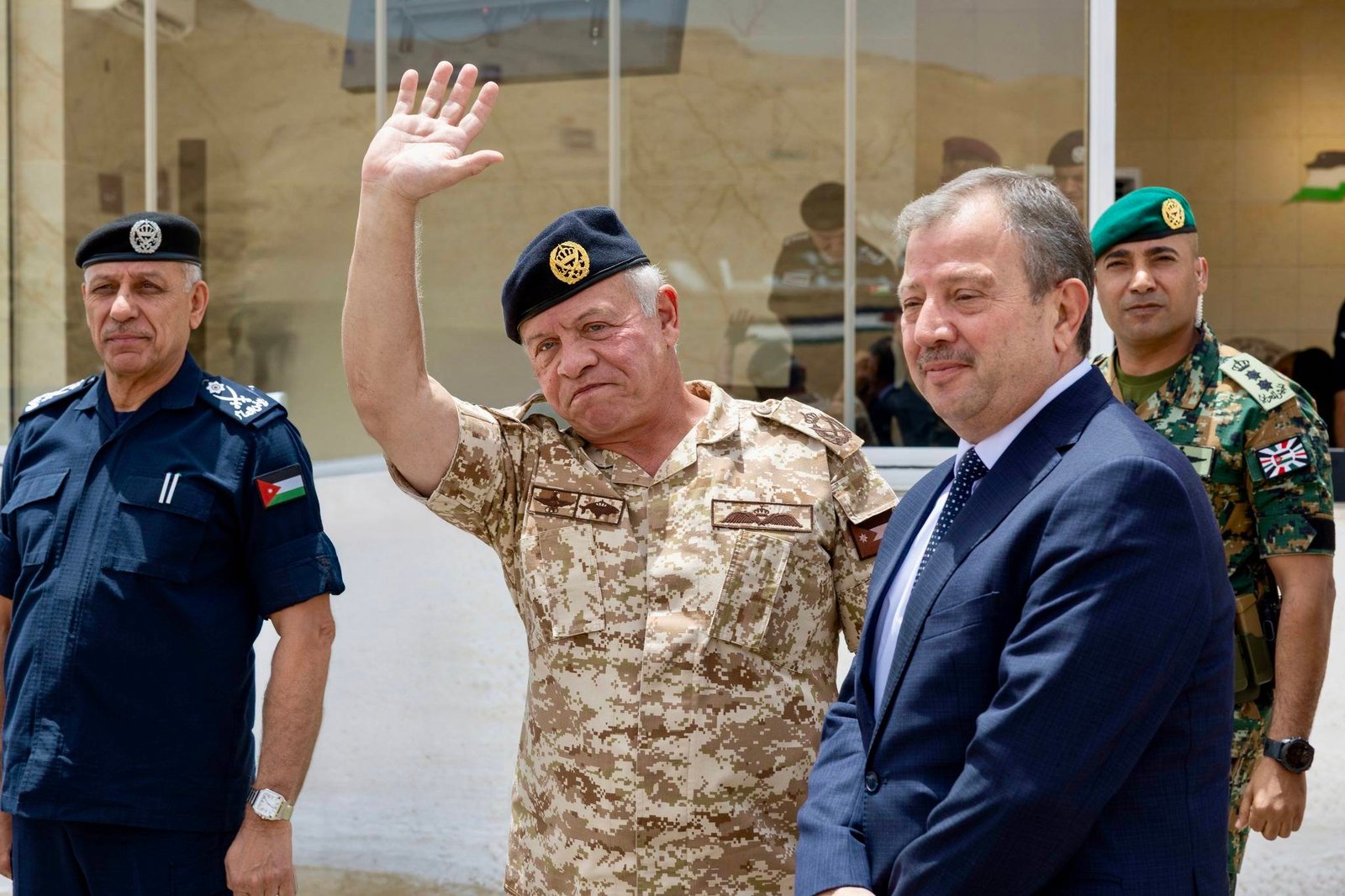
For decades, Jordan’s leaders have showcased the military’s importance to the national ethos. After joining the British military and deploying to West Germany, King Abdullah II enlisted in the Jordanian Armed Forces (JAF). He spent over fifteen years in uniform and later said that JAF service is an “honor to be proud of, a great responsibility, and a sacred national duty.”
The king’s eldest son, Crown Prince Hussein, is also a JAF officer and was promoted to major in 2024 after serving as an infantry platoon commander. Last year, the heir apparent announced mandatory national conscription with the goal of a “stronger” Jordan that would be “self-reliant.” As a major non-NATO ally of the US, Amman regularly acquires advanced weapons to strengthen its military capabilities.
Jordanian Military Deterrence Goes Quiet
But now, as Jordan faces the most significant attack by a foreign government since Abdullah ascended the throne in 1999, its long-lauded military is playing a minor public role. Iran’s Islamic Revolutionary Guard Corps (IRGC) attacked Jordan with ballistic missiles overnight Sunday, an incident that has become all too common. The IRGC has fired hundreds of drones and ballistic missiles at the Hashemite Kingdom since February, including a July attack on an Azraq military base that killed three US soldiers. The IRGC attacks have weakened the kingdom’s vital tourism sector, and dozens of Jordanians have been injured by falling debris after interceptions. And yet, the JAF has not announced a single retaliatory strike against Iran.
Abdullah Once Pledged Earth-Shattering Response
Abdullah was not always so restrained in his deployment of military force. In 2015, the Islamic State of Iraq and al-Sham (ISIS) brutally executed Jordanian first lieutenant Muath al-Kasasbeh, burning the kidnapped pilot alive while he was trapped inside a cage. Amman pledged an “earth-shattering response” to al-Kasasbeh’s gruesome murder; Jordan’s Air Force launched over fifty strikes against ISIS training camps and weapons depots in Syria and Iraq. The king understood that not retaliating militarily after such a significant attack on Jordan would send a problematic message to the country’s adversaries.
Is JAF Taking Credit for US Interceptions?
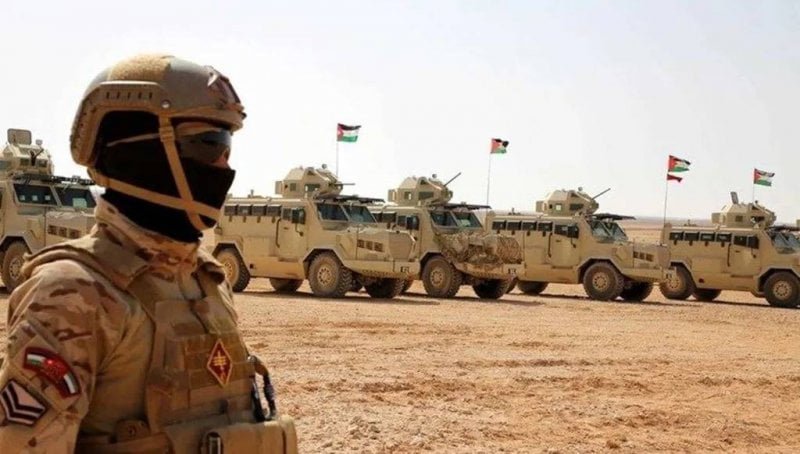
Although Amman has portrayed this year’s military measures as defense-focused, even this depiction may be misleading. A senior JAF officer asserted that the military successfully intercepted hundreds of Iranian projectiles as part of “Operation Jordan Shield.” Yet, President Donald Trump told Fox News in July that US forces were the ones who shot down Iranian ballistic missiles in Jordan and did not cite any JAF role.
The following month, the New York Times reported on strategies Iran used to evade American air defenses in earlier attacks on the Hashemite Kingdom, with no mention of the JAF. On Monday, the JAF said that it had intercepted eight ballistic missiles from Iran’s latest barrage. Still, it is unclear how many Iranian missiles Jordan has actually downed, or whether Amman is merely taking credit for US actions in its territory to make the interceptions more politically palatable in a country where the US presence remains controversial. (Jordanian government spokesman Mohammad Momani did not respond to a request for comment.)
Why Iran Selected Jordan as Target
It is no coincidence that Jordan was one of the IRGC’s prime targets in the second wave of attacks this summer and not Israel, its primary ideological foe. Iran likely feared striking Israel in July as the Israeli military had already assassinated then Supreme Leader Ali Khamenei, along with scores of other senior officials.
While Tehran claimed that it attacked Jordan because the country hosted US military installations, Israeli Defense Minister Israel Katz revealed that US fighter jets flew from bases in Israel to target Iran. Nevertheless, the IRGC avoided attacks on Israel this summer. Jordan was a convenient target as Tehran evidently did not fear that Abdullah would respond militarily after the Hashemite Kingdom refused to do so following earlier March and April attacks.
The Logic Behind Amman’s Restraint
Jordan has credible reasons not to launch retaliatory strikes. Given that roughly half of Jordan’s population is of Palestinian origin, Abdullah does not want to be viewed as protecting Israel in any way by joining the military campaign against Tehran. While there is no good polling data on Jordanian public opinion toward the US military presence, former minister Amjad al-Majali led a letter signed by hundreds of Jordanians demanding the expulsion of the US forces.
Abdullah condemned the Iranian strikes this year but has not discussed a Jordanian military retaliation. (The sole interview Abdullah has given since the Iran war began in February was with Chinese state media; he was not asked about the Iranian strikes.) The king could be concerned that if he approves military action against Iran, the IRGC would escalate its attacks on Jordan. Amman may have also decided that outsourcing offensive operations against Iran to Washington was preferable.
Jordanian Military Deterrence Becomes a Punching Bag
At the same time, Jordan could credibly argue to a domestic audience that the IRGC’s provocations have crossed a new threshold and deserve retaliation. This year, Iran has targeted both US military forces and Jordanian civilian sites, damaging citizens’ homes and vehicles. By contrast, Iranian attacks on Jordan in 2024 and 2025 were merely crossing through Jordanian airspace without permission as they targeted Israel.
It is difficult to definitively determine whether and how Iran would respond to a potential Jordanian strike. But the end result of Abdullah’s inaction in the face of Tehran’s assault is already clear: a considerable erosion of Jordanian military deterrence.
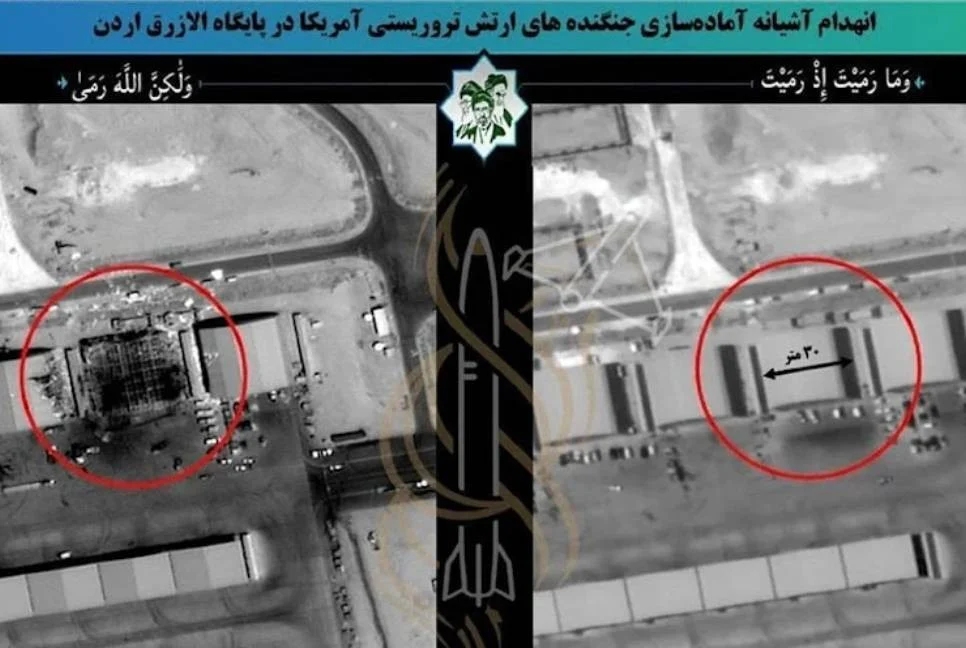
By hosting thousands of US troops and not responding militarily after Tehran strikes, Amman risks the perception of a loss of its sovereignty and becoming Iran’s punching bag whenever it lashes out at Washington. This happened when the IRGC launched a July 28 “surprise attack” against US forces in Jordan, not the Gulf countries, after Trump paused strikes on Iran several days earlier, and Sunday night when Jordan came into the crosshairs when Iran wanted to retaliate for a US strike on an island in the Strait of Hormuz.
In October 2024, Abdullah met Iranian Foreign Minister Abbas Araghchi following an earlier round of attacks. The king told Araghchi that “Jordan will not be a battleground for regional conflicts.” Nonetheless, Iran has indeed turned the Hashemite Kingdom into a battleground with its numerous attacks this year. And Jordan’s lack of response speaks louder than Abdullah’s hollow rhetoric.