
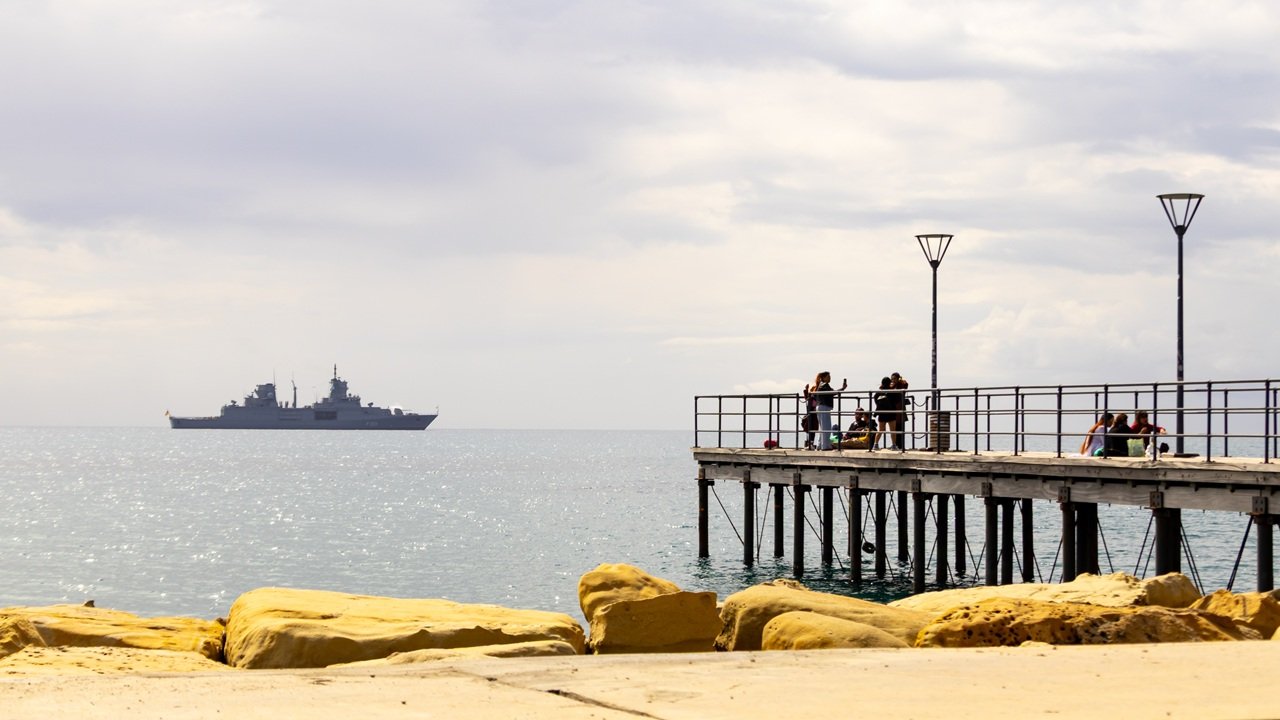
The Iran war has made Cyprus a vital US logistics hub. EUCOM is funding heliport and airlift upgrades at two Cypriot bases. No permanent US presence is planned, but contingency access is assured. RAF Akrotiri remains关键的 British asset with Cypriot approval for offensive operations.
Though US forces are not stationed at either of the two Cypriot bases, they could be in the event of a future contingency.
The war in Iran has highlighted the importance of a previously ignored location for the US military. Cyprus, the small island nation in the eastern Mediterranean, is proving to be a vital strategic location for US combat operations in the Middle East. And in order to facilitate the island’s increased support role for US military operations, the Pentagon is spending millions on improving its military infrastructure.
Why Is the US Navy Strengthening Another Country’s Military Bases?
US funds will go toward improving the infrastructure and facilities of two Cypriot bases, the Evangelos Florakis naval base and the Andreas Papandreou air base.
The Evangelos Florakis naval base, the largest on the island, will receive a new heliport that will be able to accommodate heavy lift helicopters like the CH-47 Chinook. The base is located about 145 miles from Lebanon, and the new heliport will allow it to receive evacuees airlifted out of nearby conflict zones.
The Andreas Papandreou air base will be expanded to include new facilities to host dozens of heavy-lift military transport aircraft that can support military and humanitarian missions in the region.
The exact dollar amounts that the US European Command (EUCOM) will spend on the two facilities have not been released yet. The improvements will cost at least a few million dollars each.
There is no indication of a permanent presence of US forces on the island, but Cypriot forces would almost certainly allow the US military to use the two bases in the event of an emergency, making improvements to their condition a US national security interest.
In addition to the two Cypriot bases, the island also plays host to the RAF Akrotiri air base operated by the United Kingdom—a relic of the island’s colonial past.
RAF Akrotiri is one of the most important military bases in the eastern Mediterranean and the Near East, providing fighter jets, unmanned aerial systems, air tankers, and early warning aircraft capabilities for allied forces in the region. The British military and NATO have used the air base to support operations in the region, including both the counterterrorism fight against the Islamic State and previous rounds of conflict against Iran.
The Cypriot government, however, maintains the ability to approve or deny offensive operations out of RAF Akrotiri. In the ongoing conflict with Iran, for example, the British military has been allowed to take only defensive action—defending US and British targets in the Middle East from Iranian missile and drone attack, but not launching retaliatory attacks inside Iran proper.
Regional Powers Have Focused on Cyprus for Centuries
Cyprus’ strategic location between the Mediterranean and the Middle East has made it a vital location in regional geopolitics for millennia. A Greek colony during ancient times, Cyprus changed hands dozens of times over the centuries, with the Persians, the Romans, the Arabs, the Crusaders, the Byzantines, and the Ottomans all claiming control of the island at various points in its history. At heart, however, the island has retained its Greek identity and culture.
In 1925, following the collapse of the Ottoman Empire and the emergence of Turkey as a democratic state, the United Kingdom assumed control of the strategic island. London ruled Cyprus as a crown colony. Then, in 1960, a successful guerrilla campaign and the retreat from the Empire that began in the years after World War II forced the UK to give Cyprus its independence.
However, centuries of Ottoman rule had given the island a sizable Turkish minority in addition to its Greek majority. The ancient animosity between Greeks and Turks finally erupted in 1974 when Turkey invaded the island, forcibly dividing it into two parts. The modern Republic of Cyprus is essentially the Greek portion of the island, located in the south. The northern part of the island, the “Turkish Republic of Northern Cyprus,” is under Turkish military occupation and recognized as a state only by Turkey. Efforts to reunite the island over the past half-century have failed.
However, despite the internal divisions in one of the most strategic locations in Southern Europe, the US military recognizes the value of Cyprus to peace and stability in the region and invests in the island’s military infrastructure.