
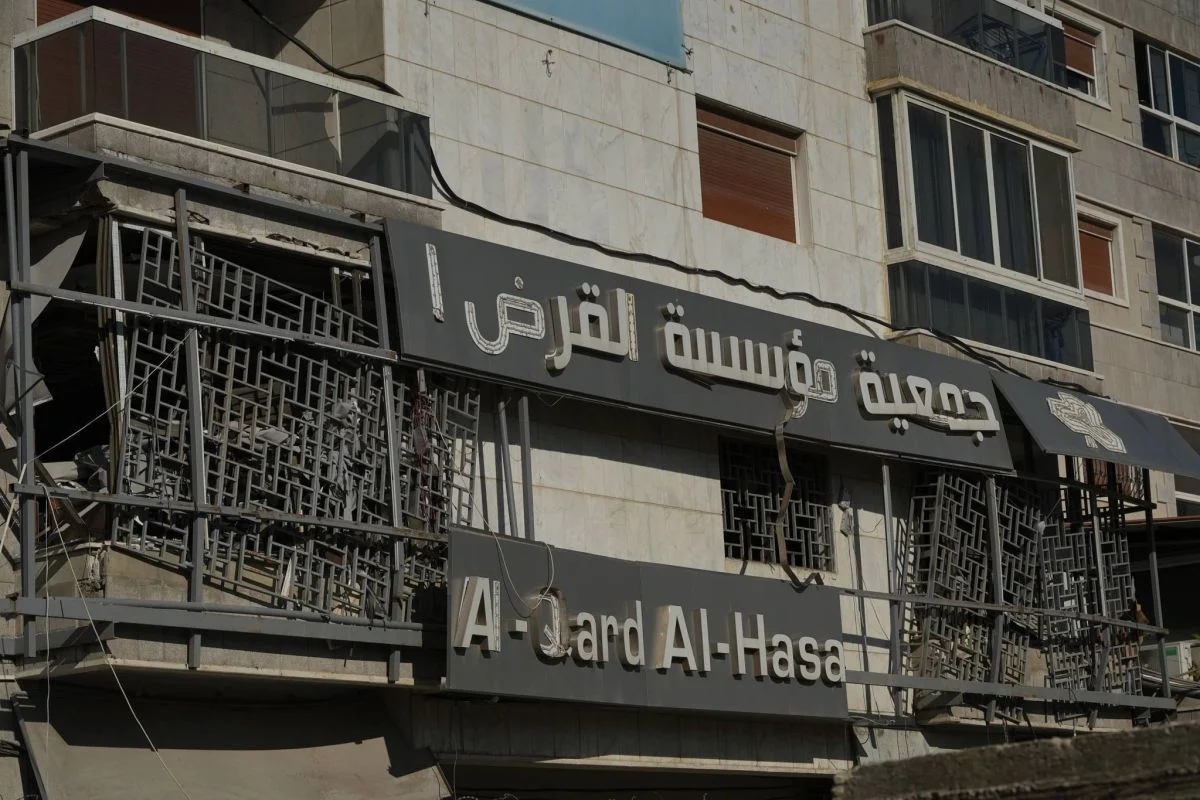
This strategic brief analyzes the post-war survival of Hezbollah, emphasizing that dismantling its parallel financial institution, Al-Qard Al-Hassan, is more critical to neutralizing the group than targeting its conventional military arsenal.
Monetary sovereignty requires the systematic dismantling of parallel financial networks to protect national banking systems from systemic contagion. The longevity of non-state actors depends heavily on their capacity to deploy alternative economic mechanisms during reconstruction phases. Disrupting these illicit parallel structures effectively severs the financial lifelines that sustain insurgent networks.
Al-Qard Al-Hassan and Base Preservation
If President Trump has his way, the Third Lebanon War, which Hezbollah began by attacking Israel on October 8, 2023, will soon end. But even as the group’s most intense fight against Israel comes to a close, its struggle for survival will just be starting. The war has galvanized many non-Shiite Lebanese against Hezbollah and its arsenal and — more problematically for the group — has wrought significant damage upon the country’s predominantly Shiite areas. If left unaddressed, this could lead Shiites to abandon Hezbollah, depriving the group of its decades-long deterrent against disarmament by Beirut.
It was, therefore, welcome news when June 14 reports claimed Lebanon’s Justice Ministry had opened an investigation into al-Qard al-Hassan (AQAH) — one of Hezbollah’s main financial arms, whose funds it will use to placate its Shiite base. Hezbollah’s “day after” entities — that is, its sprawling social services network — will prove critical to retaining Shiite support and therefore will matter more than its arsenal for ensuring the group’s survival. But the reports remain unverified, while Lebanon’s track record on enforcing such decisions is discouraging.
Probing Al-Qard Al-Hassan Infrastructure
According to the reports, the Justice Ministry is seeking to determine three things: whether AQAH is exceeding its governmental license by illegally conducting banking or quasi-banking activities under the cover of an association license; whether its funding sources and financial mechanisms violate Lebanese law; and whether AQAH’s subsidiary entities like Jood SARL function as a workaround. The ministry’s investigation, if confirmed, follows naturally from the Lebanese central bank’s (known in French as Banque du Liban, or BDL) July 14, 2025, Circular 170, which barred licensed institutions from transacting with AQAH and similar sanctioned and/or unlicensed entities.
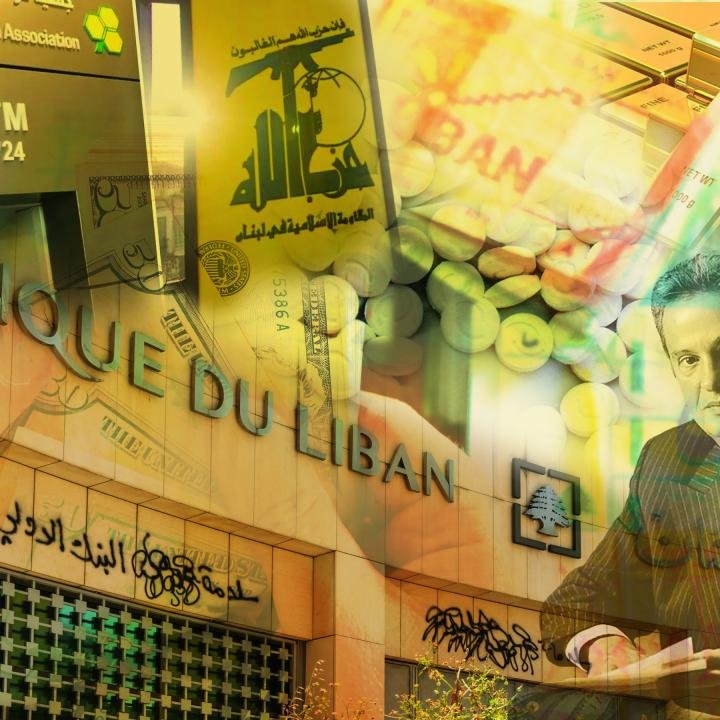
These entities, including AQAH, create a parallel Lebanese financial infrastructure outside BDL’s licensing and supervision and are therefore not subject to anti-money laundering or terrorism-financing controls or sanctions compliance. The existence of this infrastructure and the shadow economic ecosystem that orbits it undermines Lebanon’s financial integrity, deterring foreign banks from working with the Lebanese banking sector for fear of contamination by sanctioned or unregulated activity.
Unsanctioned Networks Shielding Al-Qard Al-Hassan
AQAH operations rely on an extensive ecosystem of entities and individuals in Lebanon that remain either unsanctioned or undeterred by U.S. sanctions. The sanctioned entity Jood SARL, apparently AQAH’s mechanism for monetizing its vast gold collateral holdings, is one example. Some Jood SARL managers and shareholders remain unsanctioned, while the likely affiliated Jood South SARL — managed by two AQAH employees — is registered under a different license, insulating it from sanctions.
Additionally, leaked AQAH documents identify relationships with additional undesignated entities, including the Center for Developmental and Statistical Studies (CDSS). Open-source reporting has connected former CDSS director Ramez Yassin to Arch Consulting, a Hezbollah-linked company that the U.S. Treasury Department sanctioned in 2020. CDSS also appears to be connected to the Consultative Center for Studies and Documentation, effectively Hezbollah’s official think tank.
Al-Qard Al-Hassan Funding Channels
Money is then moved around within this ecosystem by ostensibly charitable or nongovernmental entities that sit just outside Hezbollah’s organizational hierarchy. One example is WaTaawanou, whose founder, Afif Shouman, has said he founded the entity in response to former Secretary-General Hassan Nasrallah’s 2019 call for the group’s support base to “help each other,” which lent the organization its name. WaTaawanou, which has an AQAH account, crowdsources funding to help needy Lebanese but then feeds that money back into — primarily, but not exclusively — Hezbollah-run or -linked hospitals and other businesses.
Target Al-Qard Al-Hassan Affiliates
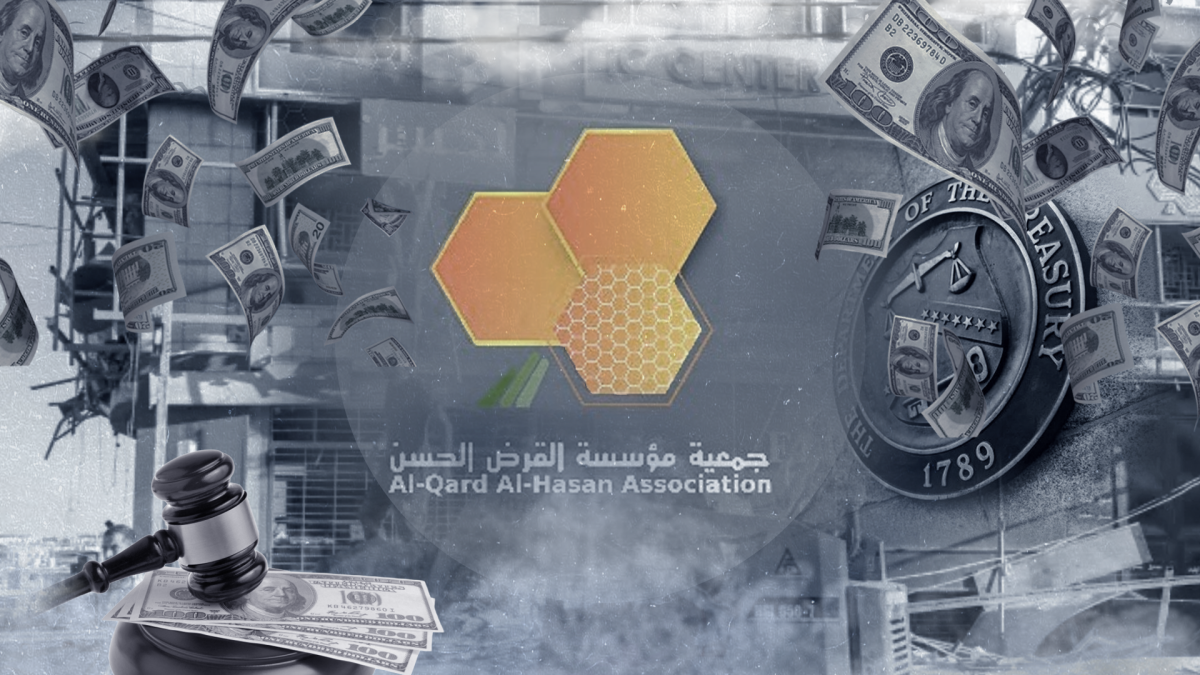
Washington should pressure Beirut to squeeze and ultimately shut down AQAH while expanding sanctions to cover the entirety of the financial ecosystem orbiting AQAH. That effort should begin with AQAH branch managers and senior officials whom the United States has not yet designated and extend to AQAH subsidiaries and affiliates and their employees and leadership, like Jood South. Finally, sanctions should target entities that maintain ties or accounts with AQAH, like CDSS and WaTaawanou, and their respective directors, Ramez Yassin and Afif Shouman.