
An elite intelligence assessment evaluating Egypt’s precarious mediation stance during the US-Israeli-Iran war, analyzing its severe fiscal vulnerabilities, widening friction with Gulf patrons, and the acute systemic risks to Middle East stability.
The escalating confrontation across the Middle East has shattered traditional security assumptions, forcing Cairo to navigate an increasingly treacherous geopolitical landscape. As regional dynamics shift rapidly, maintaining a credible Strategic Balance has become the primary preoccupation of Egyptian statecraft, even as external pressures threaten to dismantle this long-standing diplomatic doctrine. This delicate Strategic Balance is being severely tested by the competing demands of economic survival and the preservation of sovereign strategic independence in a fragmented regional order.
Strategic Balance Tested by Regional Firestorms
The U.S.-Israeli war with Iran has put Egypt in a difficult spot. On one hand, the Egyptian government wants the war to end as soon as possible. It is wary of what a weakened or collapsed Iran could mean for Middle East stability and its own security, nervous about an emboldened Israel on its north-eastern border and jittery about the conflict’s economic repercussions.
These concerns have led it to position itself alongside Pakistan and Türkiye as a mediator in the conflict. (Saudi Arabia, also part of this group, is widely understood to be coordinating closely with other Gulf Arab states.) Egyptian officials point to myriad ways in which they have expressed sympathy and support for their Gulf Arab partners, but Cairo’s position continues to rankle in these capitals. The Gulf states see the war as posing an existential threat to their economies and, despite having different views about how to approach negotiations over a settlement, they almost uniformly believe that Egypt and their other Arab neighbours need to side more firmly with them.
Economic stakes make walking this tightrope particularly dangerous for Egypt. Gulf Arab investment has become a mainstay of the Egyptian economy, in effect keeping the state solvent as it struggles with debt and other longstanding problems.
Saudi Arabia and Kuwait have deposited $5.3 billion and $4 billion with the Egyptian central bank, respectively, while the United Arab Emirates has injected $35 billion into the country through a major real estate acquisition and Qatar has committed to investing $29.7 billion in another massive property deal. Given the leverage these investments give the Gulf states, the space available to Egypt to keep pursuing a calibrated approach to the conflict may narrow. Yet if Gulf criticism of Cairo’s balancing act translates into pressure, putting Egypt’s stability on the line, the result could be highly counterproductive.
The Geopolitical Tightrope and Cairo’s Strategic Balance Imperative
Mediation and “Strategic Balance” Since the U.S. and Israel set off their war with Iran, Egypt has been looking for an off-ramp. Cairo has used diplomatic and intelligence channels to help establish indirect communication between Washington and Tehran, which the parties have used to relay red lines, messages and de-escalation proposals. Its mediation attempts are part of efforts by a loosely coordinated bloc that includes Türkiye, Pakistan and Saudi Arabia in support of a durable ceasefire arrangement that is acceptable to both sides. Per Tehran’s request, Islamabad has emerged as the lead broker, hosting talks and proposing ceasefire frameworks, while Cairo and Ankara have provided political backing and shuttled between the sides.
Cairo has chosen to position itself as a mediator in an effort to advance three goals: containing the crisis; supporting its Gulf Arab allies; and strengthening intra-Arab cohesion that could counterbalance Israel. It particularly dreads the prospect of the Islamic Republic falling apart under fire, however unlikely that scenario seems right now, for fear that it would trigger years of Middle East instability, harm Egyptian national security and further encourage Israel to pursue what Cairo sees as expansionist aims.
Cairo also has an agenda vis-à-vis Tehran. After decades of estrangement, Egypt and Iran had begun to draw closer prior to the war’s outbreak – even if they had not yet restored full diplomatic ties. As part of this rapprochement, Cairo facilitated discussions between Iran and the International Atomic Energy Agency about Tehran’s nuclear program in late 2025.
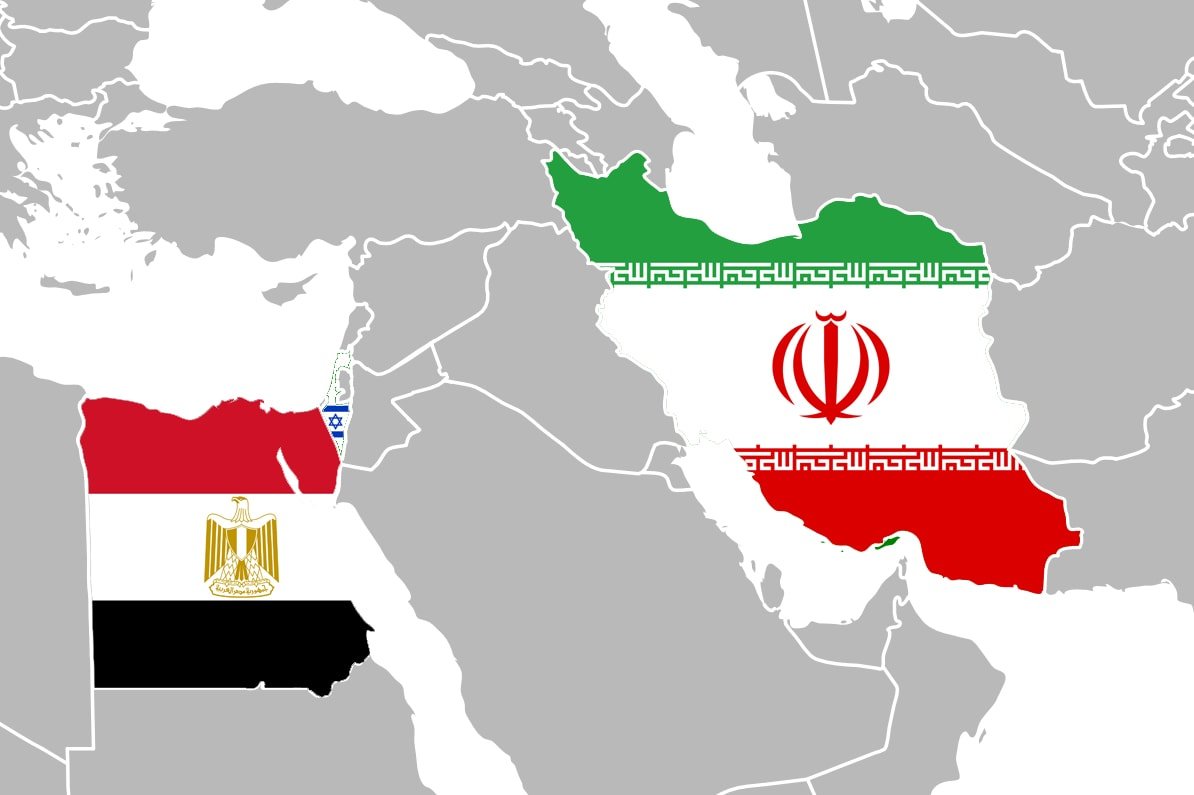
Egyptian policymakers viewed this tack as a strategic necessity rather than evidence of alignment. Engaging Tehran provided Cairo with access to regional de-escalation efforts that it would otherwise lack, including those involving Iran-backed non-state actors like Hizbollah in Lebanon and the Houthis in Yemen. Having its own channels for influence and insight is particularly important to Cairo, given what it sees as inconsistency in the way that Gulf capitals and Washington have approached Tehran and its non-state clients.
Navigating Constraints to Preserve the Historic Strategic Balance
Egypt’s stance is informed by an awareness of the limits of its influence. The most populous Arab country, with more than 118 million inhabitants in 2025, and sitting on the hinge of Asia and Africa, it is too large and centrally located to ignore chaos around it. But it is also too cash-strapped to project its power in regional affairs. Unlike some of its Gulf Arab partners, Türkiye or the U.S., it lacks the financial and political leverage, or the military muscle, to shape the behaviour of non-state actors through inducement, co-optation or coercion. A sober assessment of these constraints reinforces Cairo’s preference for cautious diplomacy as the most effective tool of statecraft.
At the same time, integral to what Cairo describes as its “strategic balance” doctrine is avoiding alliances that alienate other parties while diversifying its partners. In practice, this strategy aims to insulate the country from external shocks and eschew the pursuit of military engagement, even when under pressure from close partners to join them in coalitions. Cairo has largely adhered to this approach, even when doing so has strained relations with critical economic supporters. In 2015, for example, Saudi Arabia pressed to no avail for an Egyptian troop deployment to bolster its military campaign in Yemen – aimed at ousting the Houthis – even as it continued to throw the Egyptian government an economic lifeline.
Beyond its current constraints, Egypt also justifies its restraint by referring to past traumas. Officials often talk about the legacy of the costly military intervention in Yemen in the 1960s and successive wars with Israel. For Egypt’s leadership, these experiences underscore the limits of the country’s military power in shaping regional outcomes and also help provide external audiences with a readily intelligible rationale for its inward-looking policy.
To be sure, Cairo has occasionally taken a more interventionist approach, namely when it perceived direct threats to Egypt’s national security, particularly along its borders. In both Libya and Sudan, Egypt has acted assertively, threatening military action to counter a Turkish counteroffensive against its allies in eastern Libya in 2020 and allegedly carrying out drone strikes to support the Sudanese army. Amid tensions with Addis Ababa, it has also unofficially floated rumours about potential Egyptian airstrikes on the Grand Ethiopian Renaissance Dam. But these have been exceptions to what, by and large, has been a non-interventionist rule.
Strategic Balance Shielded from Domestic Turbulence and Fiscal Shocks
Domestic considerations reinforce this overall posture of restraint. Egyptians would largely oppose getting involved in the present war, which most attribute to U.S.-Israeli aggression. But while anti-Israel sentiment is widespread and, in some quarters, accompanied by expressions of unusual sympathy for Iran, it is economic anxiety that dominates public concern.
Rising fuel prices, persistent inflation and fears of further economic deterioration weigh far more heavily on Egyptian society than geopolitical alignments. The war is hurting an economy that had been showing tentative signs of recovery from the doldrums of COVID-19 and the consequences of wars in Ukraine and Gaza. In July-December 2025, real GDP growth was 5.3 per cent, up from 3.9 per cent in the same period of 2024; inflation fell to 11.9 per cent in January 2026, down from a peak of 38 per cent in September 2023; tourism revenues hit a record high of $16.7 billion in 2025; and foreign reserves reached $53.8 billion in March 2026, up from $40.3 billion in March 2024.
Now, however, the outlook appears to be worsening. Suez Canal revenues went down by 38 per cent in the first quarter of 2026, due to the Houthis’ brief resumption of the attacks on shipping in the Red Sea and Bab al-Mandab that they mounted during the Gaza war. Many tourists are likely to stay away from Egypt, fearful of getting anywhere near the war zone in and around the Gulf. Remittances from Egyptians working in the Gulf are also liable to decrease due to economic disruption there.
At the same time, energy costs have surged, forcing the government to raise fuel prices and adopt austerity measures, including electricity cuts and restrictions on business operating hours, that have plunged once bustling cities into unsettling darkness. The Egyptian pound has come under renewed strain, depreciating sharply from around 48 to 55 to the dollar since the war began, thus driving up the cost of imports. The result could be a new inflationary spiral. Foreign currency reserves remain under pressure, while Egypt is having trouble with energy supply, prompting a scramble for imported oil, for example from neighbouring Libya.
Walking a Tightrope Yet the biggest economic worries may be yet to come, and Egypt’s ability to handle them may depend to a great extent on support from Gulf states, some of which do not appreciate how Cairo has positioned itself in the conflict, notwithstanding its efforts to show solidarity without becoming entangled. Egyptian officials underscore the pains they have taken to express sympathy for Gulf Arab partners suffering Iranian drone and missile strikes.
To this end, President Abdelfattah al-Sisi visited several Gulf capitals in March, while, according to Egyptian officials, the foreign minister has made seven trips to the region since the war began. Statements from the foreign ministry and presidency have repeatedly castigated Iranian attacks on Saudi Arabia, the UAE, Qatar and others, while affirming Egypt’s “full solidarity” with the Gulf states and its concern for their security.
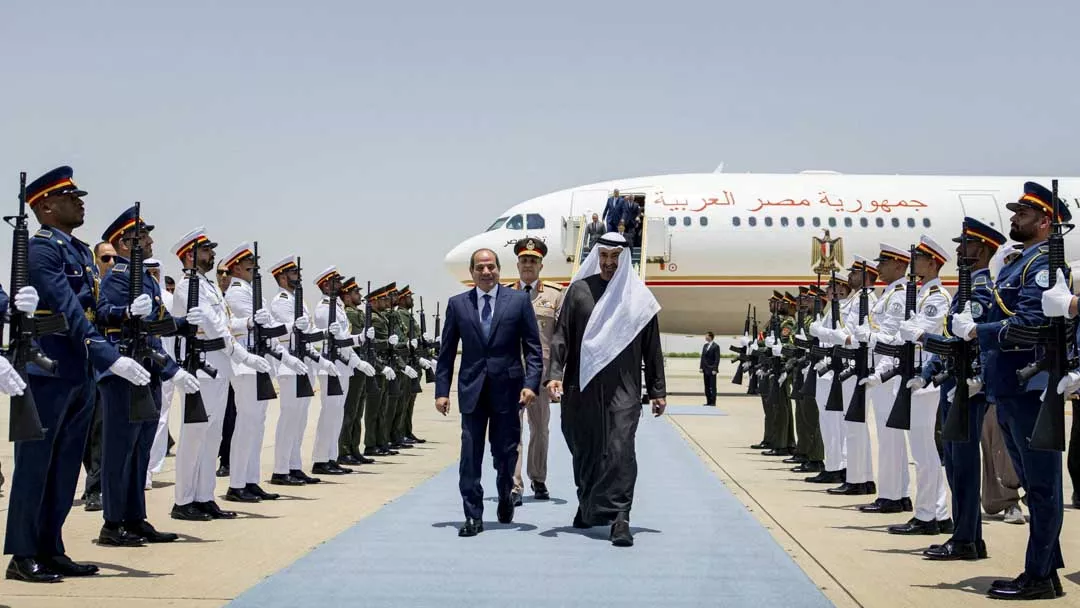
Along with Morocco, Egypt has also sent fighter jets and personnel to the Gulf – though, in a war where the primary threat comes in the form of drones and ballistic missiles, this move may have been seen as somewhat symbolic. In an apparent effort to smooth relations with Abu Dhabi – whose financial support has been particularly important to Cairo – Sisi went to the UAE in May and was photographed with the Emirati president in front of the Egyptian jets.
But hard feelings remain. Several prominent Gulf Arab commentators and people in policy circles have aired complaints hinting at Cairo’s stance. Indeed, and despite the UAE being the most vocal, from the perspective of most Gulf Cooperation Council members, albeit to different degrees, the Egyptian position looks ambiguous at best. Particularly at the war’s onset, as Iran fired hundreds of missiles and drones at Gulf states, including civilian sites, Gulf capitals expected Cairo to direct its ire more firmly at Tehran (whose actions some Egyptian officials described as “retaliatory”) rather than at the U.S. and Israel (whom Cairo criticised for instigating the war).
Assessing the Future Fractures in Egypt’s Strategic Balance Paradigm
Cairo and its Gulf Arab partners have had other tensions over the years, but the gap in positions at present is nevertheless worrying to the former, which over the past decade has relied on Gulf support to get through a succession of crises.
This reliance deepened considerably as a result of the debt and dollar liquidity crisis that began in 2022, when shocks triggered by Russia’s full-scale invasion of Ukraine exposed Cairo’s dependency on external capital to finance its structural current account deficit and public debt, triggering a major financial outflow. The resulting exchange rate decline fuelled a sharp increase in inflation, which eroded many Egyptians’ purchasing power. A further blow came with the Gaza war beginning in October 2023, which cut into revenues from natural gas exports, tourism and (because of concern about Houthi attacks) Suez Canal transit fees.
These crises could have been catalysts for economic reform. Indeed, when Egypt first turned to the International Monetary Fund (IMF) for urgent relief in 2022, it sought to impose conditions that would have moved the country down that road.
But Cairo deemed them too politically costly – objecting in particular to a requirement that it reduce the military’s outsize economic footprint, which would have antagonised a key Sisi constituency. Then the Gaza war began, and the situation changed again. As Israel began to talk of displacing millions of Palestinians from the strip into Egypt, Cairo started a vigorous and, to some extent, effective campaign to persuade donors and investors to shore it up for such a contingency. IMF pressure to make economic reforms faded. Fear of possible mass migration to Europe led the European Union to step in with a €7.4 billion package for Cairo, including loans, grants and investments.
Even larger contributions came from Gulf Arab states worried about Egypt becoming destabilised. Unlike in the past, however, their help came in the form of direct investment rather than cash deposits in the central bank or other financial aid. Doubting that Cairo could reform its economy and fearing what might happen to their money if they offered it up for general budgetary support, they put it into projects that they thought might generate returns.
Large-scale real estate development along the Mediterranean and Red Sea coasts, as well as infrastructure projects across the country, took centre stage. A prime example was an Emirati investment deal in 2024, valued at $35 billion, for a Mediterranean mega-resort. The size and swiftness of the cash infusion was enough to reassure investors that the risk of insolvency had subsided by replenishing Egypt’s hard currency reserves, despite the absence of economic reform. Yet it also fostered additional reliance on Gulf Arab investors and reinforced an imbalance in which open divergence from Gulf Arab states’ political positions carries greater risk for Cairo.
Higher Stakes, Greater Discord In some ways, friction between Egypt and Gulf Arab states over the Iran war is different from friction that Cairo has had with these partners in the past, when relations seemed more resilient to disagreement. Among other things, Cairo refused to send troops in support of the Saudi-led intervention in Yemen, and it distanced itself from Gulf backing of rebels fighting to oust Bashar al-Assad in the early days of the Syrian war. It has also remained sceptical of Saudi and Qatari engagement with Syria’s new Islamist leadership, which it regards with suspicion.
Most prominently, Egypt and the UAE have butted heads in Sudan since the onset of civil war there in 2023: Cairo has aligned with the Sudanese army under Abdel Fattah al-Burhan, seeing it as a buffer against state collapse, while Abu Dhabi is credibly reported (though denying it) to be supporting the paramilitary Rapid Support Forces (RSF) led by Mohamed Hamdan Dagalo, which earlier fought alongside Emirati contingents in Yemen. Yet, in all these cases, Cairo and its Gulf counterparts have shielded their broader relationship from the dispute in question.
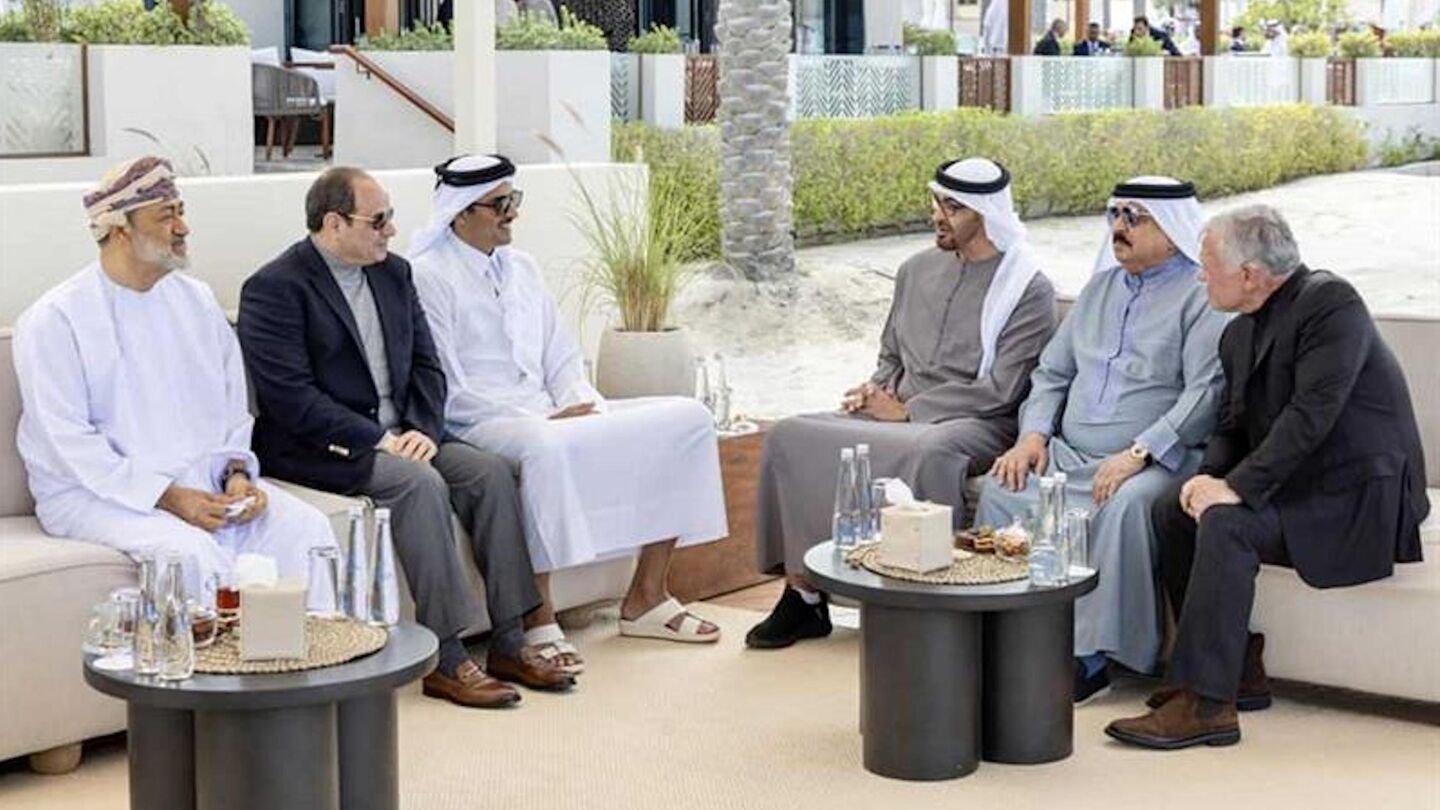
The U.S.-Israeli war with Iran threatens to alter this pattern. The discord is more visible than before on social media, suggesting that tensions are widening and more consequential. For example, Anwar Gargash, foreign policy adviser to the UAE president, put up a post on X that was widely perceived as hinting that Egypt’s backing for Gulf states has been insufficient.
In particular, he wrote that “some brotherly and friendly nations have distinguished themselves with positions of firm support while others have been content with empty statements”. As a result, he said in a later post, Abu Dhabi needs to “reassess its regional and international relations with great care”, a phrase that still reverberates even though he subsequently appeared to walk back his comments by praising Egypt’s support of the UAE.
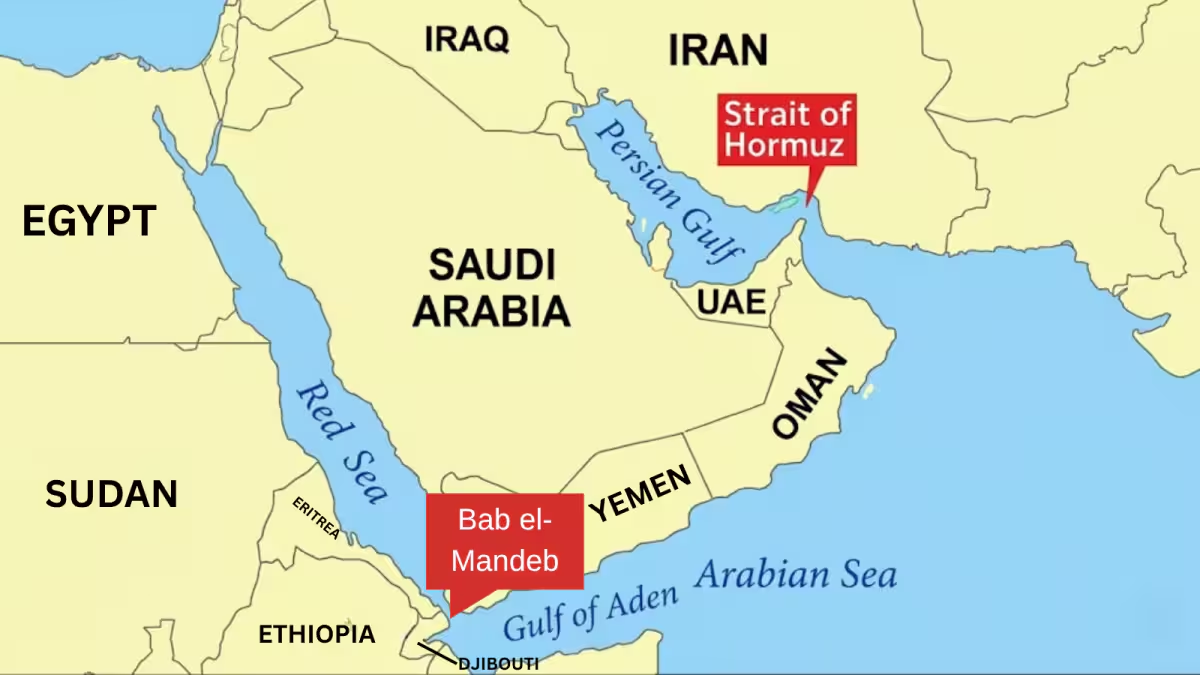
As for why this situation departs from the past, the core of the answer is that Egypt’s Gulf Arab partners see the stakes as existential. The prospect that Iran may emerge from the war controlling passage through the Strait of Hormuz would imperil their basic political-economic model, and they are determined to try to stop that from happening.
They are deeply disquieted by Iran’s demonstrated capacity not just to strike critical infrastructure but also to depress tourism and foreign investment, as well as by the threat posed by what they claim are Iranian sleeper cells. Even if the war were to end soon, the Gulf states would come out of it with greatly amplified threat perceptions regarding Iran. Against this backdrop, the pressure they put on Cairo to shift its posture to one that is more assertively opposed to Iran is only likely to intensify.
Egypt knows this. It has not escaped notice in Cairo that Abu Dhabi has asked Pakistan, which has assumed a lead mediation role, to promptly repay a $3.5 billion Emirati loan, threatening to drain its central bank reserves and jeopardising an IMF bailout agreed to in 2024. While Pakistani officials deny any link between the repayment request and the war, many in Islamabad see it as punishment for Pakistan’s choice to play mediator.
Egypt’s Vulnerabilities in the Post-war Regional Order Tensions between Cairo and its Gulf partners linger, even though the position of most of these states toward the conflict appears to have evolved toward a more pronounced desire to end the war.
While there is a range of views about how to end it – from those that favour diplomacy to stop the fighting as soon as possible (Qatar, Saudi Arabia, Oman and Kuwait) to those that are much more sceptical about a negotiated truce that does not comprehensively address Iran’s threats to the Gulf (Bahrain and the UAE) – there is consensus in the Gulf states that a major Arab country like Egypt should back them more explicitly. Thus, Egypt finds itself in a bind, continuing to believe that its mediation posture best serves its interests in this conflict, but also conscious that its dependence on Gulf investment limits its ability to stray too far from its partners’ preferences.
If the conflict persists or escalates further, Egypt may find it increasingly difficult to maintain its current posture. Gulf frustration could translate into greater political pressure and even frozen financial support, notably from the UAE. At the same time, a flagging economy could stir domestic discontent.
Egypt might also find itself unable to stay out of the conflict if the current ceasefire collapses and amid the ensuing escalation Houthis close the Bab al-Mandab – which would have enormous implications for Suez Canal traffic – or Iran delivers further blows to Gulf Arab states that cause mass casualties or major damage to critical infrastructure. in one of those scenarios, it could be squeezed into joining a military coalition against Iran and/or the Houthis.
Even if the current ceasefire holds, the war’s aftermath may leave Egypt in a more vulnerable position. Strained relations with the UAE and others of its Gulf Arab partners, persistent economic difficulties and diversion of Gulf capital toward reconstruction at home could have lasting repercussions for Cairo and across the region. The very strategy that Cairo has adopted to avoid entanglement – caution, ambiguity and flexibility – risks leaving it without the support it will likely need to weather whatever storms lie ahead.
But Gulf Arab states should think twice about the implications of exerting pressure on Egypt. A big drop in their support for Egypt could have consequences – from political turmoil to economic collapse – that result in significant domestic and regional instability. That would pose far greater danger to Gulf security than Cairo’s posture of “strategic balance”. Instead, Gulf capitals should recognise the strategic value of a major Arab state keeping channels open to all sides and attempting to mediate an end to the war.