
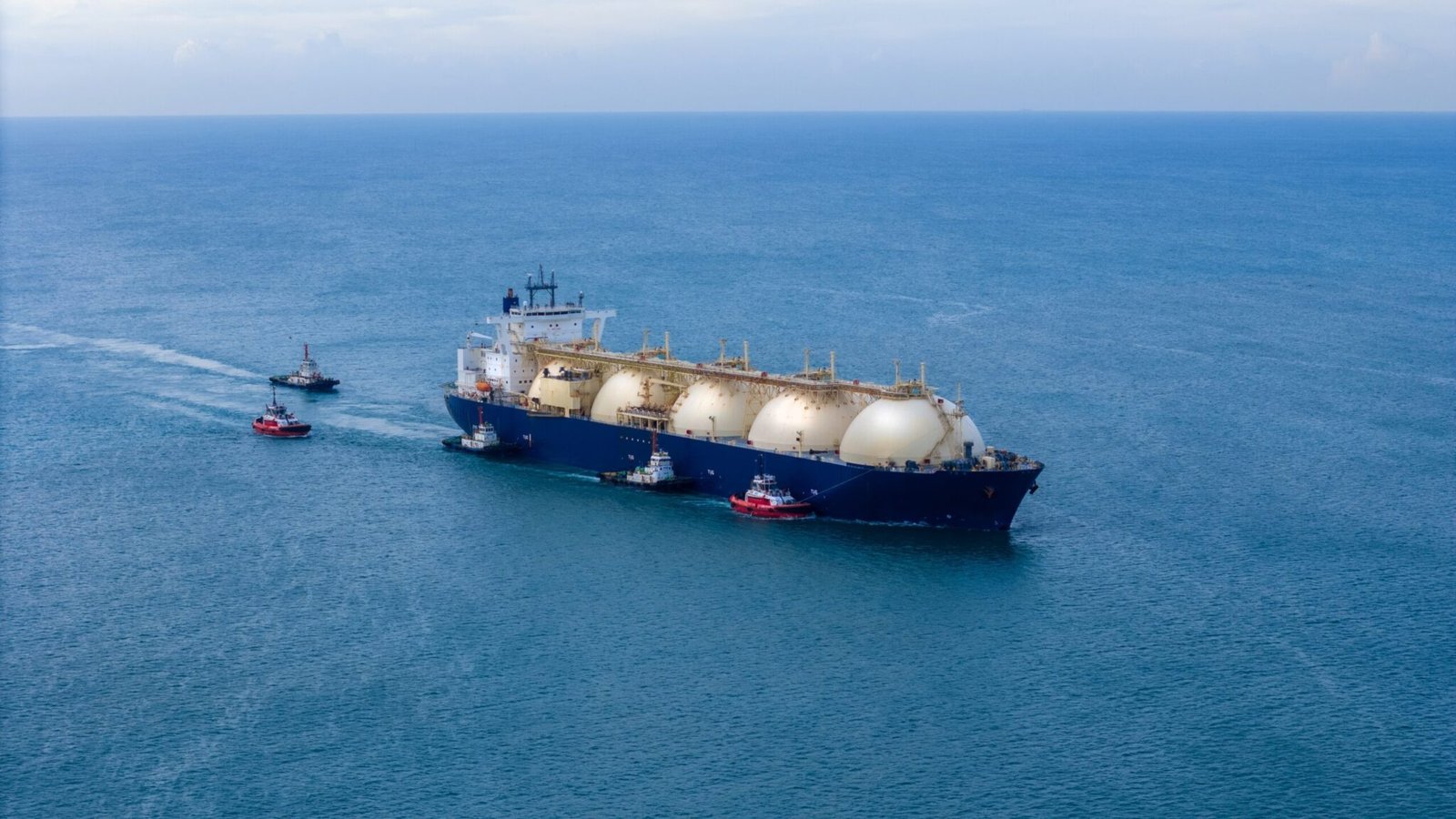
The Strait of Hormuz closure exposes LNG’s structural vulnerability: unlike oil, no strategic reserves, spare capacity, or alternative pipelines exist. Qatar’s LNG cannot reroute. LNG’s celebrated flexibility fails under chokepoint pressure, leaving markets captive, fragmented, and exposed.
The Global LNG supply network has reached a Pivotal and Intense breaking point as maritime disruptions reshape the energy landscape. While often touted as a flexible alternative to pipelines, the Severe reality of Global LNG supply concentration has left major economies in an Urgent race for resource security. This crisis proves that Global LNG supply is not just a commodity but a Strategic weapon that can redefine regional stability in an instant.
Global LNG supply faces a massive stress test
Liquefied natural gas (LNG) has long been presented as the flexible counterpart to pipeline gas, capable of tapping multiple supply sources, avoiding transit countries’ risk, redirecting supplies to markets in need, and enhancing energy security.
This was evident in 2011, when LNG cargoes were redirected to Japan following the Fukushima accident, and again in 2022, when significant additional LNG volumes flowed to Europe to replace dwindling Russian pipeline gas supplies. By contrast, oil has often been viewed as geopolitically exposed, particularly to maritime chokepoints. Yet, the closure of the Strait of Hormuz suggests this conventional wisdom is being challenged. LNG systems are not only exposed to maritime chokepoints but also structurally captive to them.
The past two months have demonstrated that when the Strait of Hormuz is closed, LNG trade is unable to reroute and consequently stalls. Finally, the current crisis exposes the limits of LNG’s much-celebrated flexibility.
Concentration risks in the Global LNG supply
More Gas at Sea but Greater Supply Concentration LNG is a growing pillar of global gas markets. Since 2000, global LNG trade has more than quadrupled, reaching almost 600 billion cubic meters (bcm) in 2025. Over the same period, the number of LNG exporters has doubled, and most importantly, the number of LNG importing countries has almost quintupled. Meanwhile, LNG’s share in global gas consumption has increased 2.5 times, reaching 14 percent as of 2025.
This may appear as a modest share of global gas consumption; however, disruptions to LNG flows are transmitted instantly across global markets to the growing number of LNG importers, both directly through physical supply losses and indirectly through the redirection of LNG flows and sharp price movements in spot-dependent markets, particularly in Europe.
The dependence of global LNG flows on the Strait of Hormuz is expected to increase in the medium term, in line with the planned near doubling of LNG export capacity in Qatar and the United Arab Emirates (UAE). However, the conflict has delayed construction of new LNG trains and damaged two LNG trains at Ras Laffan—leaving them offline for several years.
Still, the Strait of Hormuz is not the only chokepoint impacting LNG flows: the Panama Canal and the Suez Canal also play critical roles.
The former was constrained by drought-induced low water levels two years ago, while LNG cargoes had been avoiding the Bab el Mandeb Strait due to Houthi attacks through most of 2024 and 2025. Similarly, geographically concentrated liquefaction capacity is vulnerable to natural disruptions: in March 2026, several LNG plants in Western Australia were impacted by Tropical Cyclone Narelle, with LNG production at the almost 9 million tonnes per annum (Mtpa) Wheatstone project impacted for weeks. US LNG plants in the Gulf of Mexico are similarly exposed to hurricanes: in August 2020, Hurricane Laura shut down the Cameron LNG facility for more than a month and Sabine Pass for one week.
Fragmentation of the Global LNG supply chain
LNG supply is also far more concentrated than oil. As of 2025, 62 percent of LNG supply originated from three different countries: the United States, Qatar, and Australia (with the United States and Qatar alone accounting for 44 percent). Based on projects under construction or having taken a final investment decision, further supply concentration is expected, with the United States and Qatar projected to represent almost 48 percent of global LNG export capacity by the early 2030s, and likely over 50 percent of supply.
Crucially, some of the buffers that once smoothed the global gas system have disappeared. This is particularly true in Europe, which used to play the role of the global balancing market thanks to the interaction between pipeline gas and LNG, the interaction between coal and gas in the power sector, and the presence of significant storage capacity in Europe.
However, Russian pipeline gas to Europe no longer plays its key flexibility role in absorbing LNG shocks, while coal-fired generation in Europe has collapsed. LNG’s “Chokepoint Fragility” Is More Absolute Than Oil When the Middle East conflict erupted, many analysts noted that similar shares of oil and LNG were disrupted: around 20 percent of oil and oil product flows (or around 20 million barrels per day [mb/d]), and around 20 percent of LNG trade(about 110 bcm), transit through the Strait of Hormuz. At first glance, this symmetry suggests that risks are comparable; however, this comparison is misleading.
Alternatives for the Global LNG supply are limited
LNG’s chokepoint fragility lies in the absence of significant supply-side alternatives. Oil can often be stored or rerouted; in this specific case, LNG cannot.
First, oil markets have long recognized chokepoint risks and have developed mitigation strategies, particularly since the late 1970s, and the aftermath of the Iranian Revolution. Saudi Arabia can reroute crude exports via the 7 mb/d East-West pipeline to Yanbu, while the UAE can bypass Hormuz through the 1.8 mb/d Habshan-Fujairah pipeline.
Meanwhile, Iraq and Kurdistan have agreed to restart exports through the Kirkuk-Ceyhan pipeline, with plans to reach 0.25 mb/d. Even Iran may be able to use the alternative 1 mb/d Goreh-Jask pipeline, designed to bypass the Strait of Hormuz. Although the construction of the terminal is not complete, a loading test was conducted in 2024. In contrast, no comparable redundancy exists for LNG. Qatari gas cannot currently be rerouted by pipeline to export terminals outside the Strait. While a pipeline connects Qatar to the UAE and Oman, Oman’s LNG facilities are already operating at capacity, leaving no significant buffer.
Unlike oil, there is no equivalent mechanism to release global gas stocks in the way the International Energy Agency coordinates the release of strategic petroleum stocks. Underground gas storage is primarily designed to manage seasonal demand fluctuations in colder countries.
Facilities are refilled and drawn down seasonally and are not designed to respond to large-scale geopolitical shocks. Only a few countries (Italy and Hungary) have existing strategic underground gas storage, but these volumes are limited relative to the current disruption (4.6 bcm and 1.2 bcm, respectively). In Asia, Japan, South Korea, and Taiwan lack suitable geological sites for underground storage and rely instead on LNG storage, which typically covers between 10 and 30 days of consumption. Japan holds around 12 bcm, while South Korea has around 7 bcm. But LNG storage is costly, and less suitable for long-term strategic buffering.
Reassessing the Global LNG supply security model
Finally, there is no equivalent to the spare production capacity that theoretically underpins resilience in oil markets. High gas prices since late 2021 have pushed LNG facilities to operate at or near maximum levels. For example, Qatar’s LNG trains operated above nameplate capacity in 2025, as did many others worldwide. LNG facilities currently running at below capacity—for example, in Algeria,
Trinidad and Tobago, and Egypt—are facing upstream production issues. In practice, the global gas system is already stretched, leaving little room for LNG supply to increase to face this new crisis. Some incremental capacity exists—such as the Plaquemines LNG project, which received authorization to increase exports to non-free-trade-agreement countries, but these remain marginal rather than transformative.
LNG’s Flexibility Reflects Willingness and Ability to Pay During previous crises, LNG has been praised for being everything pipeline gas was not: flexible, decoupled from a fixed supply country, destination-agnostic, and not subject to transit countries. However, in crisis times, this flexibility can also be understood as the ability to redirect cargoes to the highest bidder, those willing and able to pay the highest price, leaving others exposed. Paradoxically, this reinforces security of supply for some countries while exposing others.
In 2022, European Union (EU) countries attracted an incremental 50 bcm of LNG supply, but this happened at the expense of Southeast Asian countries, including some with long-term LNG contracts. Still, even wealthy countries suffer. That year, the EU’s LNG bill quintupled to reach €118 billion (approximately $139 billion), while LNG imports increased by only 60 percent.
Such dynamics could have important geopolitical consequences, especially when LNG is in extreme structural scarcity—which has never been the case but may well be in 2026. Rather than stabilizing the system, flexibility can amplify fragmentation, dividing the market into competing regional blocs. Shipping logistics may partly constrain this fragmentation.
Unlike oil, LNG shipping relies on a relatively small fleet, slightly over 800 active LNG tankers. Redirecting a significant number of cargoes from Europe to Asia—especially from the United States—would significantly increase voyage time, creating “ton-mile shocks” that effectively reduce available shipping capacity. Ironically, the countries best placed to arbitrage between Europe and Asia with the minimum impact on shipping are located in the Middle East.
Finally, LNG markets have been increasingly geopolitical. The United States has pledged to supply allies, but is simultaneously pressing them to increase LNG imports, highlighting how LNG has become an instrument of geopolitical and commercial influence. However, this political promise to enhance energy security may prove unreliable as US LNG exports are in practice in the hands of private offtakers making commercial decisions, and therefore, often delivering LNG to the highest bidder.
The Limits of LNG Energy Security Taken together, these dynamics suggest that the current conflict in the Middle East is not just testing LNG supply; it is testing the flexibility of the LNG system itself. It also raises a deeper question: whether a system built on concentrated infrastructure, critical chokepoints, and price-driven allocation can truly deliver the energy security it promises.