
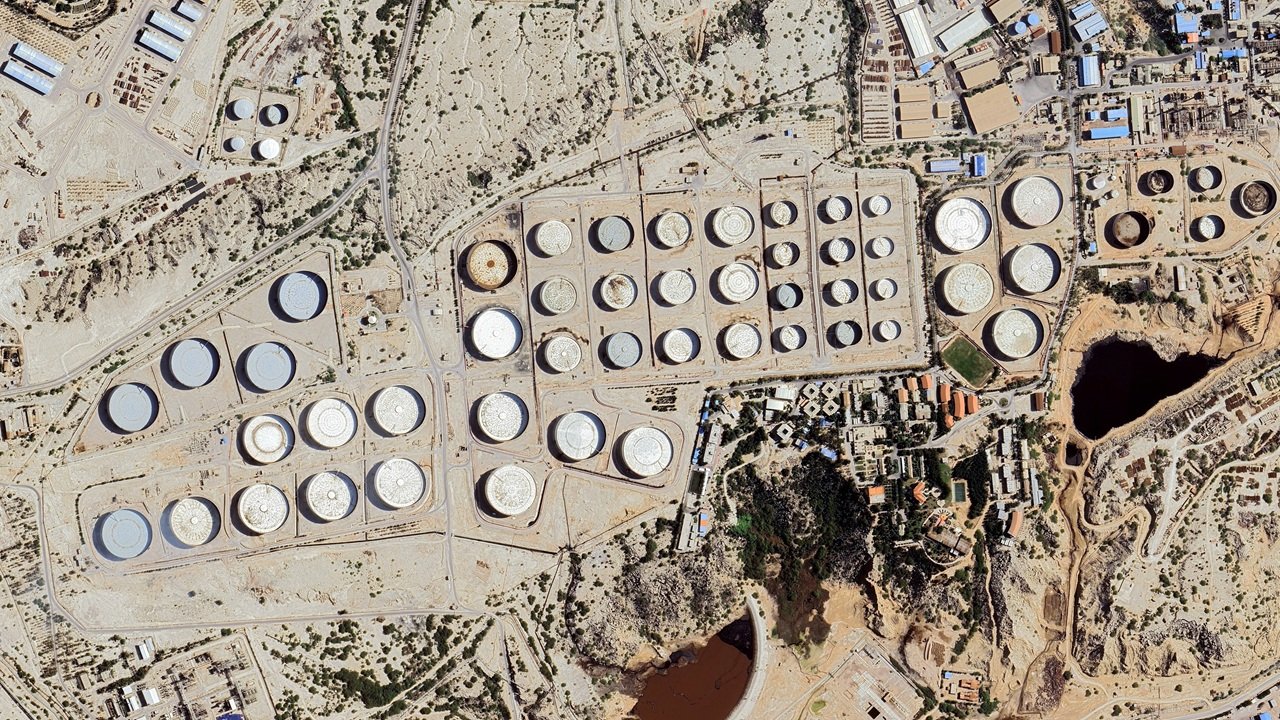
A credible threat against Iran’s Kharg Island oil terminal offers Trump a surgical alternative to ground war. This phased pressure strategy breaks Washington’s political gridlock, forces Tehran to sign the MOU, and reopens the Strait of Hormuz without endless conflict.
Kharg Island offers the Trump administration a surgical economic lever against Tehran without committing to a ground war. By threatening this single point of failure for Iranian oil exports, Washington can force a diplomatic breakthrough on the Strait of Hormuz. A credible Kharg Island pressure campaign transforms vague war rhetoric into a disciplined, phased strategy that Iranian leaders cannot bluff their way around. Executed correctly, Kharg Island becomes the pivot that compels signature on the stalled one-page memorandum of understanding.
Kharg Island Pressure: First Move
The United States and the free world stand at a critical juncture that demands realistic decision-making based on the political and military realities of today. Following America’s entry into the Iran war on February 28, the current conflict has exacted a punishing toll on the American public. Voters have already endured $29 billion in direct munitions expenditures, alongside a $25 billion spike at the gas pump and surging prices across 6,000 petroleum-based products. Despite these high costs, the fragile, temporary ceasefire is teetering, and the urgent priority of reopening the Strait of Hormuz is nowhere in sight.
Iran’s Kharg Island Negotiation Mistake
That Iran, with its vastly inferior conventional military, can stand toe-to-toe with the United States is a direct result of a calculated gamble its leaders made at the start of the war. Tehran is counting on the assumption that President Donald Trump’s threat of a larger war—“go in for two more weeks and do every single target”— will never actually be executed.
The American public has no appetite for a lingering air war, let alone for “boots on the ground” inside Iran itself. The saving grace of the air campaign is that US casualties have so far been remarkably few, with only 13 US servicemembers killed since February 28. A ground war against Iran would lead to a far higher toll, and far greater negative consequences for the Trump administration.
With little danger of an existential threat to its rule via an American ground invasion, the regime believes it can safely refuse to negotiate because time is on its side. With skyrocketing oil prices from the prolonged Hormuz closure, Trump’s approval ratings floundering, and the November midterm elections approaching, Tehran expects American political gridlock to intensify, paralyzing decision-making in Washington. By waiting, Iranian officials reason they can extort massive concessions from the United States—such as the return of billions of dollars more in frozen assets, unchecked control over the Strait of Hormuz, and more room to continue developing nuclear weapons under the guise of a peaceful program.
Target Kharg Island
As I wrote on May 21, a US negotiation framework that prioritizes reopening the Strait of Hormuz over longer-term nuclear issues would provide a sensible first-things-first approach to resolve both Hormuz and the nuclear issue. Under this framework, the immediate priority is breaking the economic stranglehold by reopening the Strait of Hormuz to stabilize global markets, immediately followed by a negotiation window to reach a settlement on Iran’s nuclear program. But this phased framework must be anchored before talks can even begin by forcing Tehran to execute the administration’s long-promised one-page memorandum of understanding (MOU)—a document so deeply stalled that Iranian negotiators recently admitted that “no one can claim that the signing of an agreement is imminent.”
The obstacle to forcing Iran’s signature is a paralyzing debate in Washington over how to threaten Tehran if it stalls or refuses to sign. Many defense analysts and domestic politicians are understandably afraid to use escalation as such a threat. They argue that a massive, uncalibrated war threat or a troop-heavy ground invasion to seize oil assets, or operations aimed at destroying nuclear facilities and removing nuclear-weapon materials, would backfire catastrophically.
Setting aside the costs of a boots-on-the-ground scenario—costs the United States learned painfully in Afghanistan and Iraq—the existential threat to the Islamic Republic would eliminate any remaining incentive for restraint from Iranian leaders, triggering asymmetric drone and missile retaliation against Iran’s pro-American neighbors and their vital energy infrastructure.
Kharg Island: The Real Lever
On the other extreme, the short-sighted war powers resolution that passed the House on June 3 seeks to strip executive war powers altogether, forcing Trump to step back from the conflict. If passed by the Senate, it would amount to an American surrender—wasting tens of billions in taxpayer dollars already spent on the current deployment and inviting a rapid, unmonitored Iranian nuclear breakout in the future.
Why Kharg Island Is Iran’s Achilles Heel
The Trump administration has one all-important pressure point to use against Iran: the threat of an attack on Kharg Island, its main oil export terminal in the Persian Gulf. A credible threat against Kharg Island can pressure Iran to sign the all-important MOU now in order to save its Achilles heel—an asset the regime has no choice but to continue to rely on for its survival. At the same time, Iran’s signing of the MOU would allow for the immediate opening of the Strait of Hormuz.
Applying Kharg Island Pressure
To understand why Kharg Island is the ultimate economic chokepoint, one must look at the structural vulnerability of Iran’s energy sector. The island acts as the single, irreplaceable artery for the regime’s economic survival, handling roughly 90 percent of all Iranian crude oil exports. Such exports make up 50–60 percent of Iran’s annual government budget, serving as the primary financial pillar to pay bureaucrats and fund the Islamic Revolutionary Guard Corps (IRGC), the regime’s dominant military and security power. Without this bottleneck, the state would instantly lack the funds to sustain basic functions.
Kharg Island’s location is uniquely irreplaceable because Iran’s major oil fields are heavily concentrated near the northern Gulf, feeding directly into the terminal through a specialized network of undersea trunk pipelines. This complex infrastructure took decades and enormous sums of money to construct; if disabled, it cannot be easily repaired or replaced. Furthermore, because maritime supertanker shipping from Kharg’s dedicated deepwater berths is exponentially cheaper and higher in volume than land transport, and because alternative overland export routes bypassing the single chokepoint of Hormuz are operationally minute, the island represents a fatal single point of failure, as most of the oil export has to go through this bottleneck.
Deploying a credible threat against Kharg Island breaks the ongoing Washington gridlock by transforming Trump’s broad war rhetoric into a highly disciplined escalation ladder. Instead of rushing headlong into an indiscriminate campaign, the United States should lay out three distinct, time-bound phases of pressure before reaching all-out war. This justifiable format forces Iran to realize that the costs rise incrementally and credibly at every step, making the final threat of total war far more believable.
It also provides America and its allies with a defensible, step-by-step path of retaliation that is directly proportional to Iran’s unrelenting disruption of Hormuz’s oil traffic and the mounting damage to the global economy. Each progressive step gives Tehran a clear choice to stop the clock on more and more damage:
Week 1: If Iranian negotiators refuse to sign the one-page framework within one week, the United States begins precision stand-off bombing of specific export infrastructure on Kharg Island—forcing Tehran to witness the beginning of the end for the single hub that controls 90 percent of its crude exports.
Week 2: By week two, the operational intensity increases further.
Week 3: By week three, the timeline for Iran’s economic destruction becomes a matter of sole US military discretion before the ultimate threat of total war is unleashed.
The particular targets should be left at the discretion of the White House and the Pentagon, but the ladder format is a logical mechanism helping Iranian leaders to see that their optimal solution is to sign the MOU as quickly as possible. Crucially, it is a credible threat: Tehran understands that while a threat to invade Iran proper is almost certainly a bluff, damage to Kharg Island is something that is well within the United States’ ability to carry out, and the Trump administration has the political will to follow through.
Once the United States adopts this explicit countdown framework, it transforms the regime’s internal calculus by presenting a stark cost-benefit equation. Signing the one-page MOU immediately becomes a cheap diplomatic concession for Tehran compared to the infinite, irreversible cost of watching its irreplaceable economic lifeline being systematically dismantled.
Faced with a disciplined countdown, Iranian leaders and IRGC commanders will realize it is far more rational to preserve their economic crown jewel by signing the framework now than to witness the piecemeal or total destruction of the oil terminal they cannot survive without. This strategy holds the remainder of Iran’s economy hostage, while simultaneously deterring Tehran from attacking its neighbors because doing so would automatically trigger the unrestricted phase of the US campaign.
Bombing Kharg Island Is Politically Feasible in Washington
This strategy also mends the United States’ domestic political fractures. It provides lawmakers with a cohesive, troop-free alternative built on three phases of high-leverage retaliation—none of which involve a ground war. Furthermore, by establishing a clear ladder of escalating economic punishments, the United States avoids defaulting to a congressional surrender while still demanding full accountability for Iran’s disruption of the global oil supply. Armed with this credible deterrent, Trump can confidently hold the line, reject the House’s short-sighted war powers resolution, and protect consumers at home and abroad.
True deterrence does not require choosing between the paralysis of an endless war and the humiliation of a premature surrender. By weaponizing Tehran’s economic reliance on Kharg Island through a transparent, time-bound countdown, Trump can project unshakeable resolve. This disciplined ladder turns Washington’s political divisions into a position of strength because it provides an open, step-by-step framework that hawkish defenders of executive authority, anti-war lawmakers, and international allies can all support as a transparent and measured alternative to total war. Ultimately, this precision bombing threat delivers a response that is both militarily and ethically justifiable to the world, while ensuring that Tehran clearly understands the devastating economic downside of refusing to negotiate in good faith.