
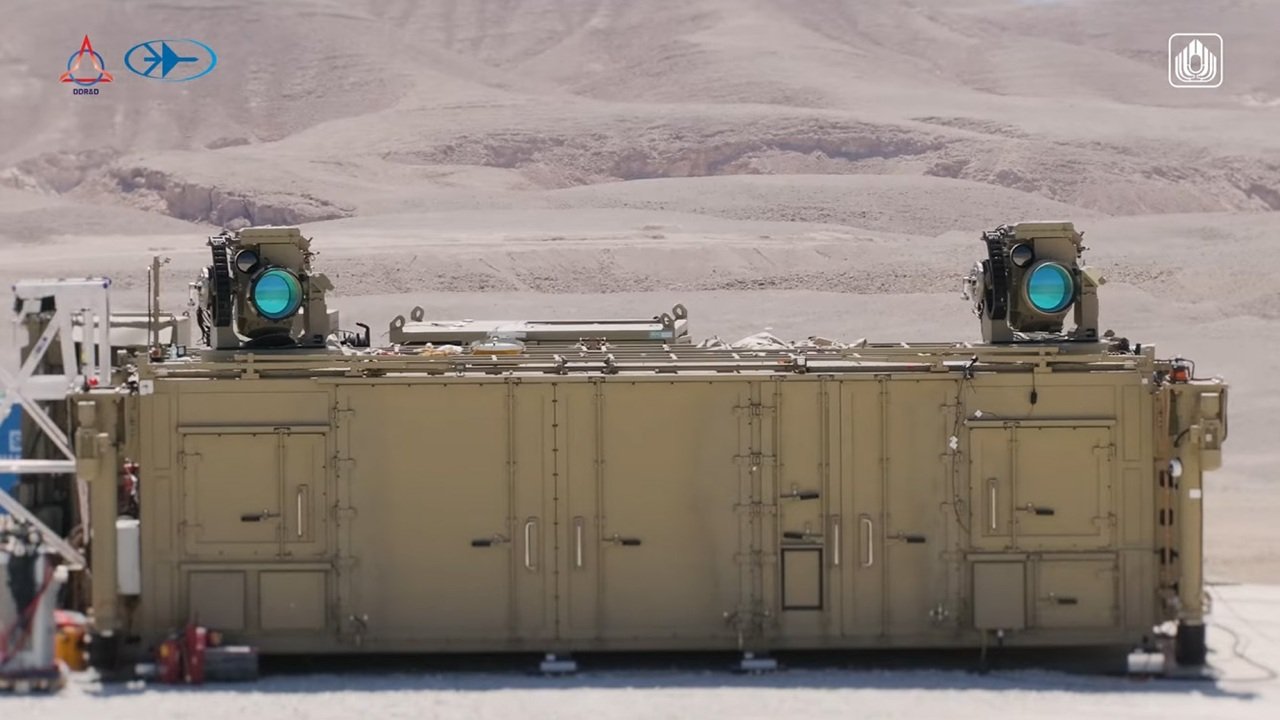
The Iron Beam shifts air defense economics from expensive interceptors to $2 laser shots, challenging drone swarm tactics. Weather and range limit it, but complementing the Iron Dome creates a layered, cost-effective shield against low-cost aerial threats.
The economics of intercepting cheap drones with million-dollar missiles has long been air defense’s Achilles’ heel, but Israel’s new laser weapon—the Iron Beam—directly attacks this cost asymmetry. A single Iron Beam shot costs roughly $2, making swarm defense financially viable for the first time. While critics question its weather dependence, Israel’s new laser weapon may fundamentally alter how nations calculate defensive ROI against low-cost aerial threats.
Iron Beam’s Laser Weapon Limits and Strengths
The ongoing Iran war will likely prove to be one of this century’s most technologically interesting wars. The US has utilized artificial intelligence (AI) at every stage of the kill chain. Conversely, the Iranian use of drones has laid to rest any lingering notions that drones will not be as relevant in other theaters of war as they have been in Ukraine. But the war may also be remembered as the first war in which another, less-talked about technological innovation was used, which could prove to revolutionize the battlefield: Israel’s new Iron Beam, an air defense system built on lasers.
Israel’s air defense system is already world-renowned for its successes and innovations. The most famous element of this system is the Iron Dome, which, since its first operational deployment in 2011, has accomplished over 10,000 interceptions with a success rate of at least 90 percent. Israel’s system is also composed of the “David’s Sling” and “Arrow” systems, which protect against missiles of greater distances and power than the Iron Dome.
Together, Israel’s air defenses have been highly effective in preventing the various threats Israel faces from all angles from laying waste to the country. However, as the costs of producing small but lethal drones has plummeted, economics has favoured the offensive, and Israel’s air defense system has been challenged on a cost basis.
Rafael Advanced Defense Systems, the company that produced the Iron Dome, has now built laser technologies to close this gap. Whereas the old Iron Dome sends missiles to neutralise incoming rockets, the Iron Beam sends a high stream of energy to fry the rockets midair. No longer a Cold War sci-fi trope, Israel began systematically and formally deploying the technology at the end of last year.
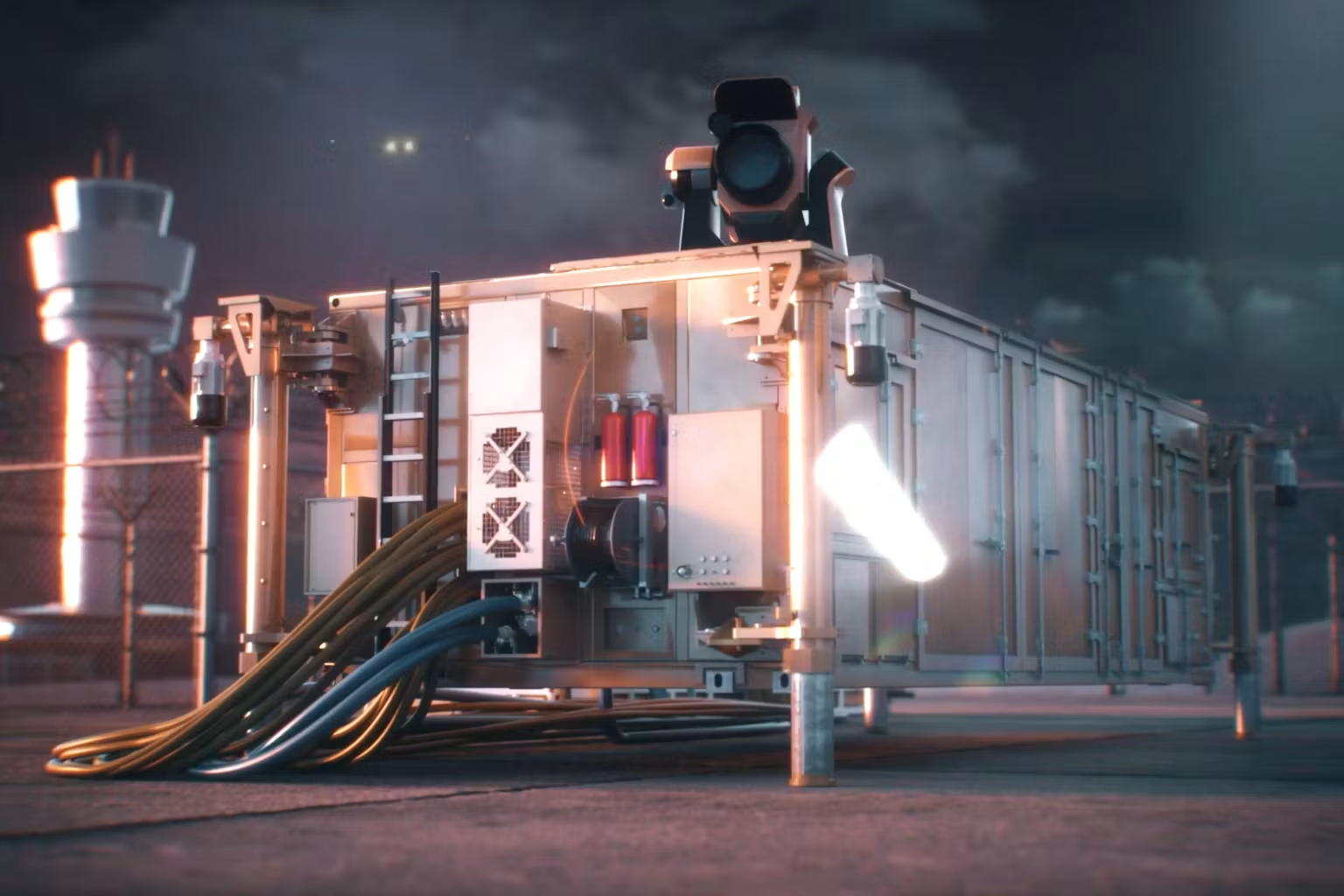
Understanding the Iron Beam Laser Weapon
The Strengths and Weaknesses of Anti-Drone Lasers
Like the Iron Dome, the initial cost of the Iron Beam is in the tens of millions, but the lasers promise to radically cut variable costs. Whereas each Iron Dome missile costs tens of thousands of dollars, the Iron Beam’s cost once the system is in place is simply the cost of the energy sent towards the missile—which could be as little as $2 per shot. Moreover, the laser has an essentially endless magazine, as long as it is connected to a reliable power supply. Fewer personnel are needed to man the systems, and the broader constraints in producing the interceptors are also bypassed.
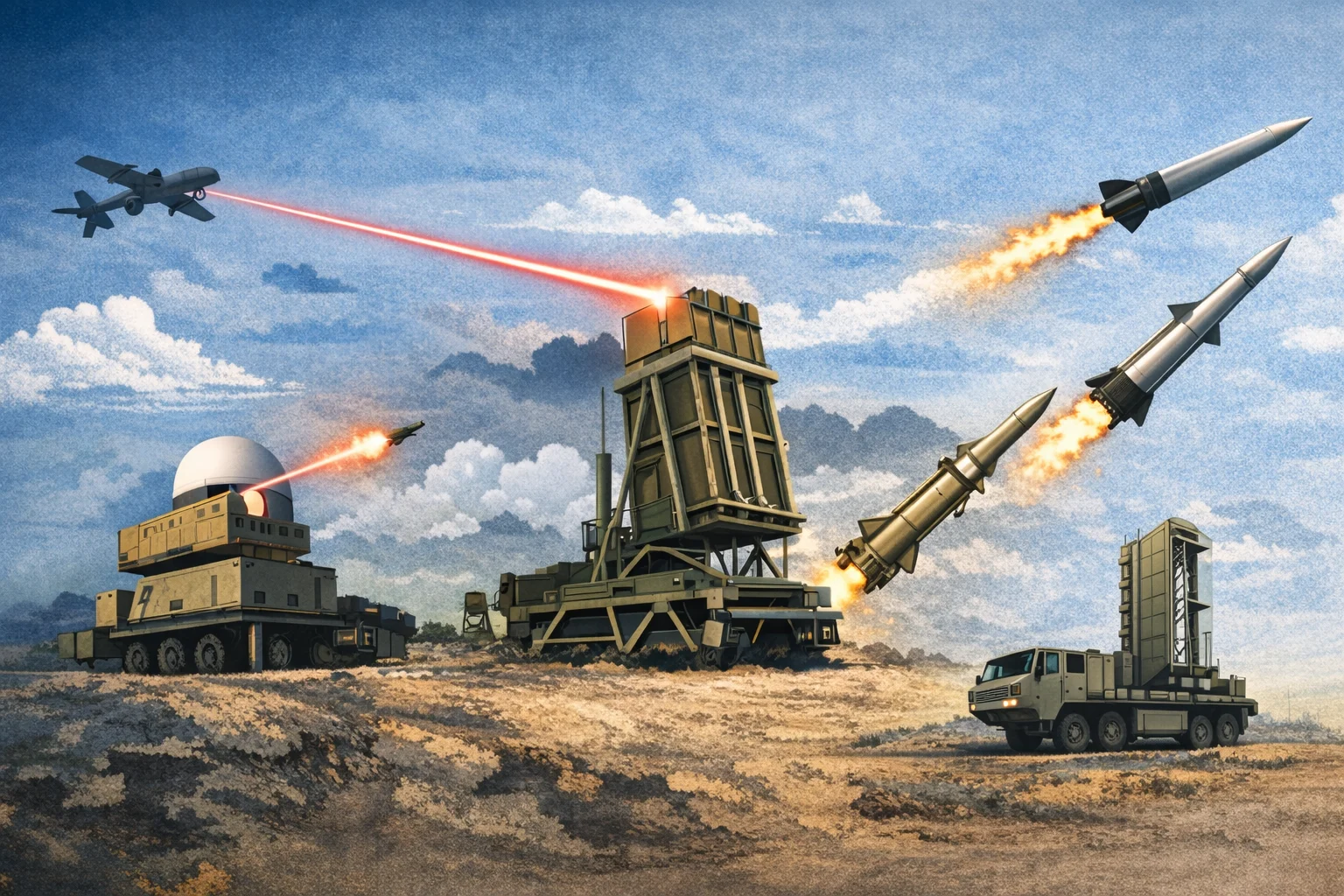
There are clear theoretical limits to the Iron Beam’s effectiveness. Heavy rain, thick low clouds, dense fog, or sandstorms scatter the laser beam, whereas an Iron Dome missile functions under all weather conditions. A laser can also only point at one target at a time, which a simultaneous swarm of drones or rockets could exploit. It is also limited to an operational range of around 7–10 km (4.3–6.2 mi), compared to the roughly 70 km (43.4 mi) range the Iron Dome can reach. At best, the lasers will complement the existing Iron Dome system rather than overhaul it.
Directed Energy Weapons as Laser Weapon
Directed Energy Weapons Could See Low-Level Battlefield Use, Too
Outside of the Israeli context, this technology has clear promise in defending smaller compounds. American bases in the Middle East, for example, are frequently subjected to drone attacks and would benefit from such a system. Perhaps the greatest theoretical possibility of these laser defense weapons is as a response to the domination of the battlefield by drones. An estimated 90 percent of battlefield casualties in Ukraine now stem from drones, and there is no easy means by which to defend against them. With the age of armor now in its final stages, rapid dispersion and mobility appear to be the only solutions—however meager that option is.
If the Israeli lasers are found to be able to effectively deal with drones, the pendulum could swing back again. Drones, too, are limited by weather conditions, so the main hurdles facing the lasers from significantly altering the battlefield are their costs of production and general reliability. Should these be addressed, armor equipped with mounted laser defenses could prove to be the best defense against drones. In fact, Rafael has already realized this, and is producing so-called ‘Lite Beam’ lasers to be placed on vehicles.
Iron Beam’s Laser Weapon Testing Gaps
The Iron Beam’s bread and butter are close-range, low-cost threats. In other words, the ongoing war with Iran, fought overwhelmingly with larger over-the-horizon drones, has been the wrong field to test its performance. But the resumption of violence on Israel’s northern border against Hezbollah can give us an insight. Moreover, Israel sent the Iron Beam to the United Arab Emirates as part of an effort to protect the Emiratis against the Iranian bombardment. Whilst some anecdotal reports suggest underwhelming results so far, the data has not been made public, and no detailed picture of the system’s effectiveness has yet emerged.
Israel is not the only country attempting to develop laser technologies. The United Kingdom, for example, is developing DragonFire for the Royal Navy, while America’s fleet has begun using the HELIOS system. What remains is to produce smaller, land-based versions ready for the post-Ukraine battlefield. There is a clear defensive need for such technologies—and the West should be following Iron Beam’s performance attentively.