
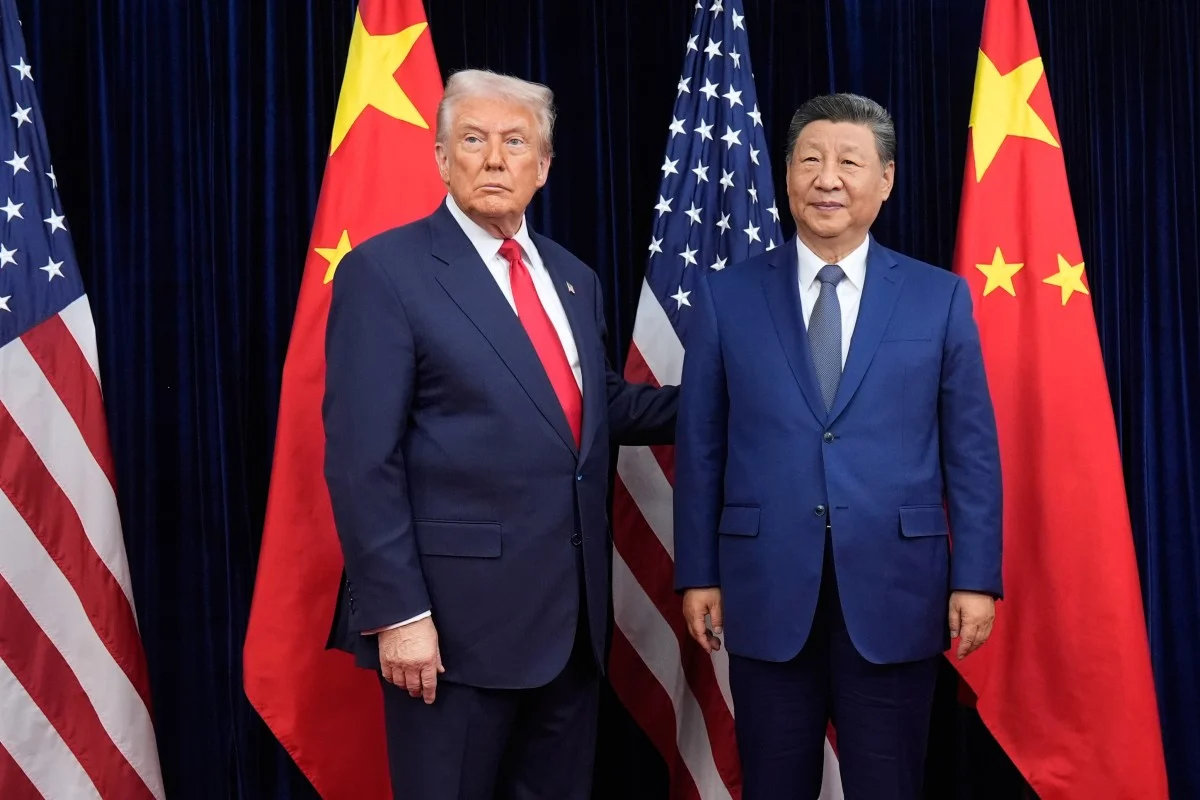
Trump-Xi Summit discussions are expected to be heavily influenced by the ongoing military strain on American resources. Analysts suggest the Trump-Xi Summit comes at a time when Beijing holds significant leverage over hi-tech supply chains. The Trump-Xi Summit will likely focus on the urgent need to replenish missile interceptors. Ultimately, the Trump-Xi Summit could redefine the geopolitical hierarchy between the two superpowers.
Geopolitical Leverage at the Trump-Xi Summit
The US-Israel war on Iran could bolster Beijing’s leverage on issues such as hi-tech supply chains and Taiwan during the coming Trump-Xi summit, according to American experts.
US President Donald Trump is expected to meet his Chinese counterpart, Xi Jinping, next week. “He’s not going to move to reschedule it,” US Treasury Secretary Scott Bessent said during an interview with Fox News on Sunday, after Trump confirmed on Friday that his visit would take place as scheduled.
Military Readiness and the Trump-Xi Summit
The summit, expected to begin on May 14, would be the first visit by a US president to China in more than eight years and Trump’s first overseas trip since the United States and Israel attacked Iran on February 28.
The trip has not yet been officially confirmed by Beijing.
Discussing the Iran war would likely be one of two “pressing imperatives” when the leaders met in Beijing, said Ali Wyne, a senior research and advocacy adviser on US-China relations at the International Crisis Group. The other priority would be extending the trade truce the leaders agreed on last October, he added.
Resource Scarcity Facing the Trump-Xi Summit
The war had severely depleted US stores of missile interceptors, Wyne said at a webinar on Sunday about Trump’s visit to China. “The United States is going to need exports of gallium from China to replenish its stockpile of missile interceptors,” he said during the event, which was organised by the non-profit organisation ReThink Media.
While China banned exports of the metal to the US in December 2024, it later suspended the measure along with similar restrictions on four other minerals after Trump and Xi’s October meeting in South Korea. China dominates global production of gallium, which is key to producing semiconductors. Wyne also said the US had been forced to withdraw military assets from Japan and South Korea to support operations against Iran.
Strategic Asset Shifts and the Trump-Xi Summit
“I think that transfer of assets is welcome from Beijing’s perspective,” he noted.
He also expected that “President Trump will try to prevail upon President Xi to play a role in bringing Iran back to the negotiating table”.
Still, he said, long-term disruption in the Strait of Hormuz could be more problematic for China than the US, given that the United States was the world’s biggest producer of both oil and gas.
Wyne added that Beijing could be worried about damage to its relations with Gulf countries if the conflict dragged on indefinitely. “I think that the United States and China both have reasons for wanting to talk about Iran,” he said.
Trade and Regional Tensions at the Trump-Xi Summit
China would probably bring the Iran war up “as an issue to press Trump on”, Jake Werner, director of the East Asia programme at the Quincy Institute, said at the webinar.
“I think it would be more a matter of finding places that they can build leverage against Trump,” he added. Still, Werner said, the outcome of the discussion over Iran would “have more to do with the US-China relationship than it will with resolving the war”.
The US’ dwindling munitions stockpile was one reason that “the Chinese really hold the military cards” when it came to any potential conflict with Washington over Taiwan, noted Lyle Goldstein, director of the Asia Programme at Defence Priorities.
Taiwan and the Final Agenda of the Trump-Xi Summit
Goldstein, who is also director of the China Initiative at Brown University’s Watson Institute for International and Public Affairs, added that the island would “probably” come up in the summit.
He also said he suspected Trump would ask Xi to “twist some arms” in Tehran.
Beijing sees Taiwan as part of China to be reunited by force if necessary. Most countries, including the US, do not recognise Taiwan as an independent state, but Washington is opposed to any attempt to take the self-governed island by force and is committed to supplying it with weapons.