
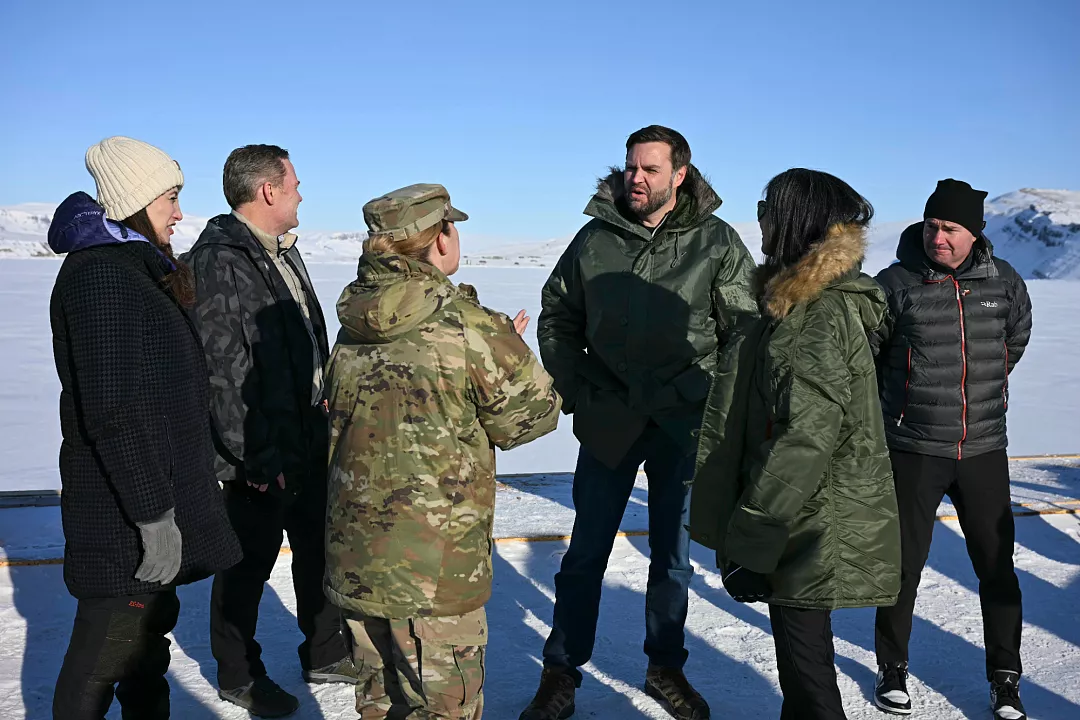
Trump’s Iran strategy collapsed not in the Strait of Hormuz but in the Arctic. By threatening Greenland, the president destroyed European trust, fractured NATO unity, and handed Tehran a strategic victory without capitulation.
The chain of command in modern geopolitics often breaks not on battlefields but in Arctic council chambers. When Trump’s Iran gambit required European trust, the absence was fatal; Trump’s Iran strategy collapsed because a prior threat to Greenland had already melted alliance credibility.
Trump’s Iran Fracture Begins Early
As Iran and the United States edge toward some resolution of the war, what is already clear is that there will be no capitulation in which Iran gives up its nukes, its missiles and its proxy militias while undertaking democratic reforms at home. All President Donald Trump is even hoping for is a reopening of the Strait of Hormuz, which was open before the war, and a deal no better than Barack Obama’s on the nuclear issue.
If it indeed plays out that way, then we’re looking at a monumental scaling back of the original goals of the war—when there was hope even for a collapse of the regime—and an Iranian strategic victory. And in part, it happened because when Trump needed Europe during the Iran crisis, Europe simply was not there for him. And that was critical.
After six-odd weeks of being pummeled, its key leadership killed and its military degraded, Iran entered negotiations with surprising confidence and stubbornness. This is because Iran discovered that closing the vital Strait of Hormuz—which was eminently predictable, and clearly not adequately planned for—could be a stunningly effective asymmetrical maneuver.
It sent the world into a tailspin, but did not unite the world against it. As Iran’s leadership looked across the table, it saw not global isolation but a fractured Western alliance. European governments looked distrustful of Washington and unwilling to fully align behind an American escalation strategy. Gulf allies looked nervous and exposed. Tehran saw division and adjusted its calculations.
Now, the outlines of the emerging arrangement with Iran reflect that weakness. The deal taking shape appears likely to leave Iran’s remaining missile infrastructure untouched, avoid serious confrontation with Tehran’s proxy architecture across the region and bypass the internal democratic question entirely. At the same time, Iran may gain substantial sanctions relief and access to frozen assets worth tens of billions of dollars. Tehran absorbed punishment and still positioned itself to preserve core instruments of power.
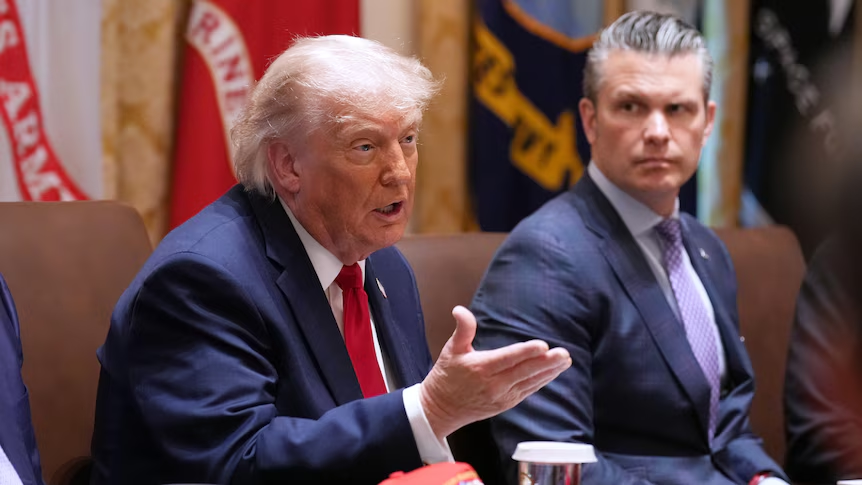
Greenland Shifts Trump’s Iran Calculus
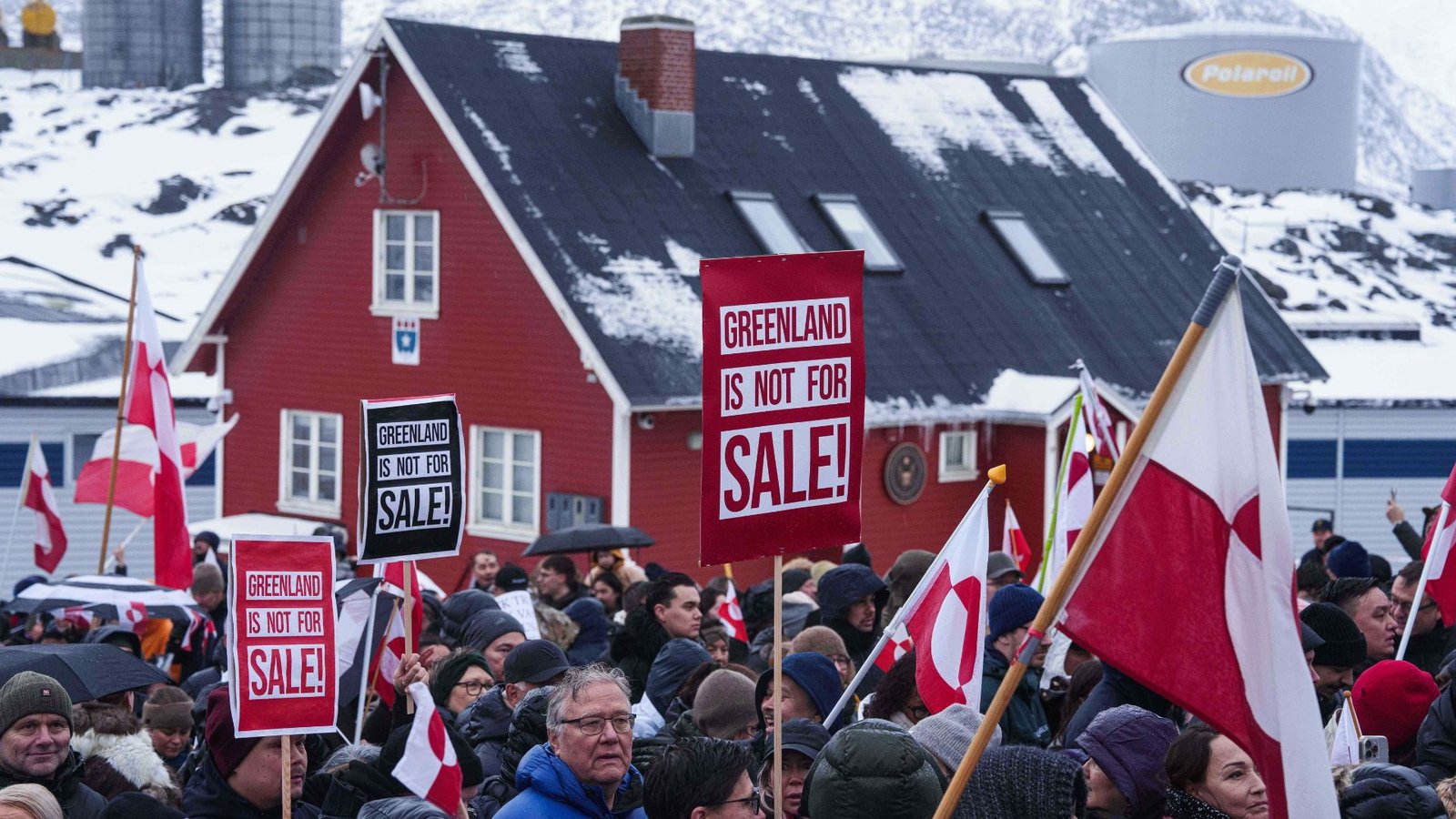
The roots of this devastating Western disunity trace back not to Tehran, Hormuz or oil markets, but to Greenland.
Trump’s threats to use force to seize Greenland, whether for its mineral wealth or access to the Arctic, marked the moment many European governments fundamentally decided that the U.S. was no longer an ally—at least not while Trump’s around.
The issue was not really about whether America would literally invade Danish territory. European officials mostly viewed those threats as Trumpy theater, but they also considered it evidence that this White House does not understand the political foundations of the Western alliance. That shift had enormous strategic consequences.
At several strategic gatherings this year, including the World Economic Forum Annual Meeting and the Munich Security Conference, Greenland hovered over private discussions among diplomats, ministers, military officials and policy analysts. The same applied to several conferences I attended in Europe recently about geopolitics and strategy. The issue carried unusual intensity because it touched a central postwar assumption: NATO allies do not threaten one another territorially, even as a joke.
That’s because weakening the alliance carries very real consequences regarding their main concern, which is deterring Russia and, to a lesser degree, China, on the issue of Taiwan.
Europeans expected difficult arguments with Trump over tariffs, burden-sharing and trade policy. Those disputes fit within familiar alliance politics. Greenland, coming after a year of being belittled and hectored by Trump, entered a different category entirely.
Anatomy of Trump’s Iran Failure
The mistake reflected a deep strategic failure: not seeing the essence of American influence. American power after World War II rested partly on economic and military dominance, but also on the belief that Washington operated within a stable framework of alliance rules and mutual respect among allies.
Via NATO—which actually costs the U.S. taxpayer only about a half-billion dollars a year—America secured huge weapons exports, access to dozens of bases in Europe and beyond, and leadership of the free world. Yet Trump seemed not to know it, or care.
Trump’s Iran Isolation Grows
The complete shock over this shaped Europe’s approach to Iran.
From Washington’s perspective, Greenland and Hormuz existed in separate files. From Europe’s perspective, they became connected. A government willing to openly pressure Denmark over territory could no longer automatically expect allies to trust its judgment about escalation in the Gulf.
That does not mean European governments supported Iran. Quite the opposite. Most European governments remain deeply concerned about Iran’s nuclear ambitions, regional destabilization and threats to maritime security. They share many of Washington’s objectives. But trust matters in alliance management. And trust vanished after Greenland.
The misunderstanding was clear when the administration appeared genuinely surprised by the caution and reluctance it encountered from European governments during discussions around a joint response to the closing of the Strait of Hormuz. It may have been a mistake by the Europeans—indeed, NATO chief Mark Rutte seems to think so—but European leaders viewed every American request through a new lens: the administration is a rogue player.
So while European governments still wanted maritime stability and deterrence in the Gulf, they sought only the narrowest commitments, legal limitations and vaguely described operational autonomy from Washington. Some governments began discussing ways to reduce exposure to escalation scenarios shaped primarily by American decision-making.
Iran noticed. And it also understood that Gulf states, who mostly hate the Islamic Republic regime, felt the U.S. had not prepared to protect them from missiles fired from a few dozen miles away on the Iranian mainland. Iran’s current leadership understood that Washington was looking for an exit ramp and that Gulf nations had given up on regime-change aspirations for now, seeking the quiet that is critical to their business model: attracting Western business to a gleaming oasis, not a war zone.
A united Western position might have produced a different outcome. A cohesive NATO alliance could have increased pressure on Tehran diplomatically and economically while strengthening deterrence in the Gulf. Instead, Iran faced a divided strategic landscape and exploited it skillfully.
There were three ways for this to go at the current juncture:
Resume the war: Massive and merciless strikes to truly cripple the regime, this time open-ended and including oil infrastructure, so the regime does not think it can wait out the assault—whatever damage Trump suffers in the midterms as a result.
Continue the blockade: The regime would eventually be suffocated, yes, but it could take many months, if not a year, and the global economy would enter a recession marked by possibly permanent supply chain disruption.
Agree to Iran’s terms: A deal on the nukes in exchange for massive sanctions relief and unfreezing of assets that will give the regime life, devastate the Iranian opposition and amount to no improvement over the 2015 deal Trump walked away from under Israeli pressure.
Europe Sees Trump’s Iran Cul-de-Sac
This is the strategic cul-de-sac Trump walked into, and he appears to be choosing the last option as a result, hoping to spin it as a win among enough gullible people. This capitulation might not have been needed if Iran perceived itself to be facing all of NATO. All of this stems from a needless error, because the administration possessed legitimate strategic interests in the Arctic without threatening Greenland.
Something is certainly rotten, but it is not in Denmark.