
Turkey’s accession to the Mecca Joint Defence Agreement makes calming Pakistan-Afghanistan border tensions a vital strategic imperative, compelling Ankara to balance intelligence mediation over TTP militancy against rivalry from Russia, China, India, and Iran while preserving credibility in Kabul.
Why Turkish Diplomacy in Afghanistan Faces Tests
Turkey’s formal entry into the Mecca Joint Defence Agreement this month has spurred discussion about Turkish interests in defending Saudi Arabia. But the implications of the Mecca Pact don’t end there. The pact treats an external armed attack on one member as an attack on all three. For Ankara, one of its most consequential tests may come not in the Middle East, but along Pakistan’s western border. The continuing confrontation between Islamabad and Afghanistan’s Taliban authorities makes Turkish mediation more than a diplomatic gesture but a matter of strategic interest for Ankara.
The agreement gives Ankara stronger reasons to prevent a crisis involving Pakistan from escalating. A serious cross-border clash could raise difficult questions about the scope of Turkey’s commitments, although any deployment of Turkish troops would require a separate parliamentary decision. Direct involvement against Afghanistan would also jeopardize Ankara’s longstanding engagement with Kabul. Preventive diplomacy therefore offers a way to protect its partnership with Islamabad without sacrificing its position in Afghanistan.
Intelligence Shuttle Diplomacy Targets TTP Border Crisis
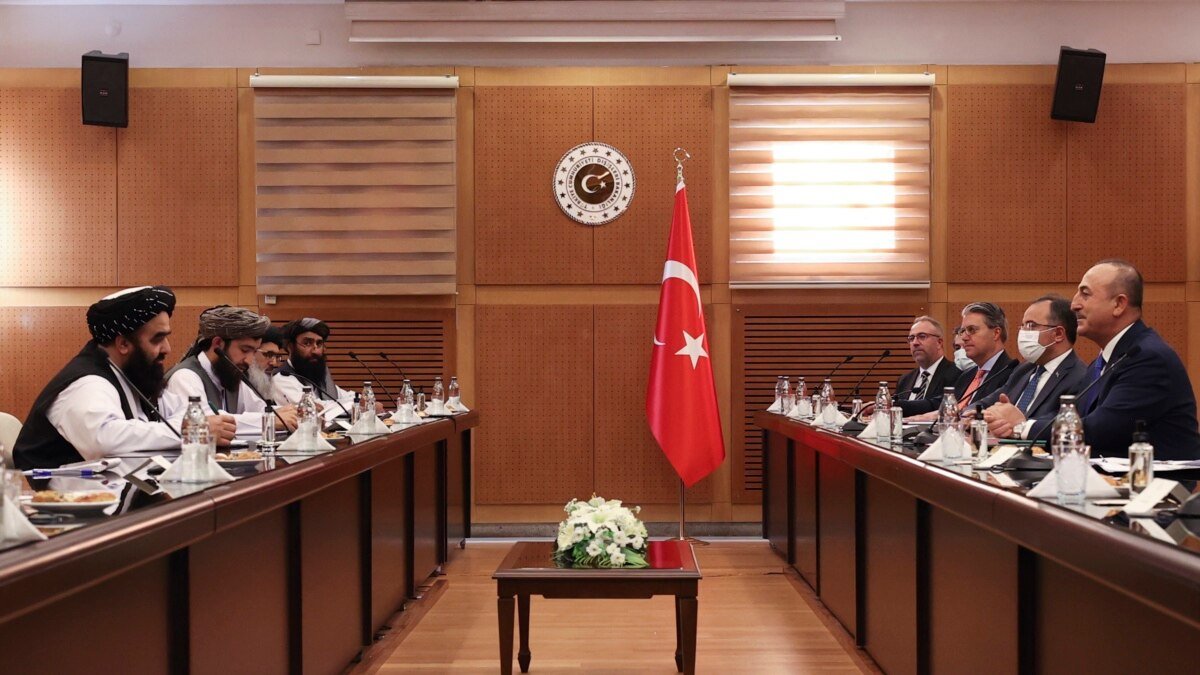
That calculation helps explain the September mission of İbrahim Kalın, the director of Turkey’s National Intelligence Organization (MİT). In Kabul, Kalın met Taliban Defense Minister Mohammad Yaqoob, Interior Minister Sirajuddin Haqqani, intelligence chief Abdul Haq Wasiq, and other senior officials. He also traveled to Kandahar for talks with Governor Mohammad Shirin Akhund, who is close to the Taliban’s supreme leader, Hibatullah Akhundzada.
Kalın then went to Islamabad, where he met Prime Minister Shehbaz Sharif, army chief Asim Munir, and intelligence director Asim Malik. Turkey and Qatar had already mediated a ceasefire between Kabul and Islamabad in October 2025. But the breadth of Kalın’s meetings suggests that Ankara was looking beyond the immediate task of restoring calm. It was also consolidating direct access to the people who make and implement security decisions on both sides.
The Tehreek-e-Taliban Pakistan (TTP) remains the central obstacle. Islamabad accuses the Taliban authorities of allowing the group to operate from Afghan territory. Kabul rejects the accusation and has raised its own concerns about Islamic State-Khorasan Province (ISKP). With insurgent activity, border strikes, and mutual allegations feeding the confrontation, diplomatic assurances alone are unlikely to suffice. Intelligence-to-intelligence contact may be particularly useful for discussing incidents, identifying red lines, and exploring mechanisms to prevent renewed escalation.
Russian Recognition and Chinese Corridors Complicate Influence
Yet mediation is only one layer of Turkey’s policy. Ankara is also responding to competition for political influence, transport routes, investment, and access to Afghanistan’s northern communities. The central question is not simply whether Turkey can help end the Afghan-Pakistani crisis. It is what kind of regional role Ankara can build if it does.
Russia presents one challenge. In May 2026, Moscow and Kabul concluded a military-technical cooperation arrangement focused initially on maintaining and repairing Soviet- and Russian-made equipment. Moscow had already become the first state to formally recognize the Taliban government in July 2025. In October 2026, Russian foreign intelligence chief Sergey Naryshkin met his Afghan counterpart, Abdul Haq Wasiq, in Kabul. Together, these steps give Russia new channels into Afghanistan’s security establishment.
Still, Russian influence has limits. In their November 5 analysis for The National Interest, Eldaniz Gusseinov and Andrew C. Kuchins argue that Moscow’s immediate priorities are counterterrorism and commerce, while its more ambitious plans for transport corridors and mediation depend heavily on Beijing’s preferences. They also see Ankara as better placed than Moscow to help broker peace between Kabul and Islamabad. Their assessment highlights an important distinction: diplomatic access does not automatically translate into regional leadership.
For Turkey, the Russian opening matters less as a direct contest for control of Afghanistan than as another sign that Kabul is diversifying its security partnerships. Relations between Ankara and Moscow have long combined competition and selective cooperation in other theaters, including Syria. Afghanistan could become another arena in which the two countries pursue overlapping interests without sharing the same strategic objectives.
China is a more formidable competitor because its political engagement rests on much greater economic leverage. The possible development of the Wakhan Corridor could eventually give Afghanistan a direct land connection to China, while a proposed extension of the China-Pakistan Economic Corridor would further integrate the region’s trade networks. Both projects face major security and infrastructure obstacles, but their strategic significance is clear.
Beijing is also trying to contain the Afghan-Pakistani confrontation. In April 2026, Chinese officials hosted Afghan and Pakistani representatives for talks in Urumqi. This creates a parallel to the Turkish-Qatari mediation channel. The two efforts need not be mutually exclusive; a durable settlement would benefit all three mediators. Nevertheless, success would allow the mediator to convert diplomatic credibility into influence over the region’s future economic and security arrangements.
India Outreach and Mining Race Reshape Balance
Afghanistan’s improving ties with India add another dimension. The more pressure Islamabad places on Kabul, the stronger the Taliban’s incentive to cultivate New Delhi as an alternative partner. For Ankara, whose close relations with Pakistan have often put it at odds with India, this trend complicates the regional balance. India’s main connectivity initiatives, including the International North-South Transport Corridor and the India-Middle East-Europe Economic Corridor (IMEC), also do not place Turkey at their center.
Pakistan, meanwhile, cannot easily afford simultaneous tensions to its west and east. A collision of Indian and Pakistani naval vessels in the northern Arabian Sea on September 15 illustrated how even limited incidents can produce diplomatic friction. Reducing pressure along Pakistan’s Afghan frontier would therefore serve an immediate Turkish interest: strengthening the position of a treaty partner without intensifying Ankara’s disagreement with New Delhi.
Economic competition is equally important. Afghanistan’s deposits of copper, lithium, and other minerals attract interest from governments seeking new supply chains. China has secured significant positions in the mining sector, but Kabul is seeking a wider pool of investors. In August, Taliban Foreign Minister Amir Khan Muttaqi publicly welcomed potential American investment in mining and infrastructure. Former US envoy Zalmay Khalilzad subsequently discussed investment opportunities with senior Afghan officials during a September visit.
For Ankara, a possible American economic return would create opportunities as well as risks. Western investment could diversify Afghanistan’s external partnerships and reduce dependence on any single investor. But direct Washington-Kabul engagement could also lessen the value of Turkey’s intermediary role. Ankara therefore has an incentive to position its companies, infrastructure expertise, and diplomatic networks within any future opening, rather than merely observe it.
Iranian Transit Leverage and Central Asian Railways
Iran is another indispensable part of Afghanistan’s economic geography. As Afghan-Pakistani tensions disrupt southern transit, routes through Iran become more valuable to Kabul. Tehran maintains extensive political and commercial relations with the Taliban authorities, even though it has not formally recognized their government. Formal recognition, should it occur, could deepen Tehran’s political influence, but geography already gives Iran considerable leverage.
Turkey has an interest in preventing Afghanistan from becoming excessively dependent on any one outlet, whether through Iran, Pakistan, or China. Helping preserve access to Pakistan’s ports would broaden Kabul’s options and indirectly constrain the influence of rival transit routes. That need not require confrontation with Tehran; it requires a regional environment in which Afghan trade has multiple viable directions.
Central Asia makes this agenda still more consequential. The proposed Trans-Afghan railway linking Uzbekistan to Pakistan depends on stability, predictable border procedures, and substantial financing. Persistent fighting between Kabul and Islamabad raises the costs of every proposed corridor and discourages the investment needed to build it. The problem is not simply engineering a railway across Afghanistan. It is creating a political and security environment in which that railway can operate. If Ankara can contribute to sustained de-escalation, it could offer Central Asian governments something more tangible than cultural affinity or diplomatic declarations.
How Turkish Diplomacy in Afghanistan Balances Alliances
Ankara also possesses a distinctive long-term asset: ties with Afghanistan’s Uzbek and Turkmen communities. Through the Turkish Cooperation and Coordination Agency (TİKA) and the Turkish Maarif Foundation, Turkey has maintained educational and humanitarian networks, including schools in Mazar-i-Sharif, Sheberghan, and Aqcha. Such institutions create durable personal relationships and a social presence that no single negotiating round can produce.
These ties, however, are politically sensitive. Turkey’s historical contacts with members of Afghanistan’s Uzbek political elite, and the presence in Turkey of figures such as opposition leader Abdul Rashid Dostum, offer channels to influential northern constituencies. They may also generate suspicion among Taliban leaders. Ankara must therefore balance its cultural connections with an approach that treats Kabul as the essential partner in any nationwide settlement.
Neutrality Remains Vital for Lasting Regional Order
Turkey’s ambitions also face a basic constraint: Islamabad and Kabul must believe that Ankara can engage both without becoming an instrument of either. The Mecca Pact strengthens Turkey’s relationship with Pakistan, but that very closeness could complicate its credibility in Afghan eyes. Ankara’s intelligence contacts, economic engagement, and humanitarian programs will matter only if they sustain confidence across this divide.
Turkey’s Afghan strategy thus extends well beyond mediation. It seeks to manage alliance risks, preserve access to Kabul, compete for economic opportunity, support Central Asian connectivity, and maintain influence through cultural and educational ties. Success will not be measured simply by whether Ankara hosts the next round of talks. It will depend on whether Turkish diplomacy can turn a fragile ceasefire into a more stable regional order—and make Turkey an indispensable, but not overbearing, participant in Afghanistan’s future.