
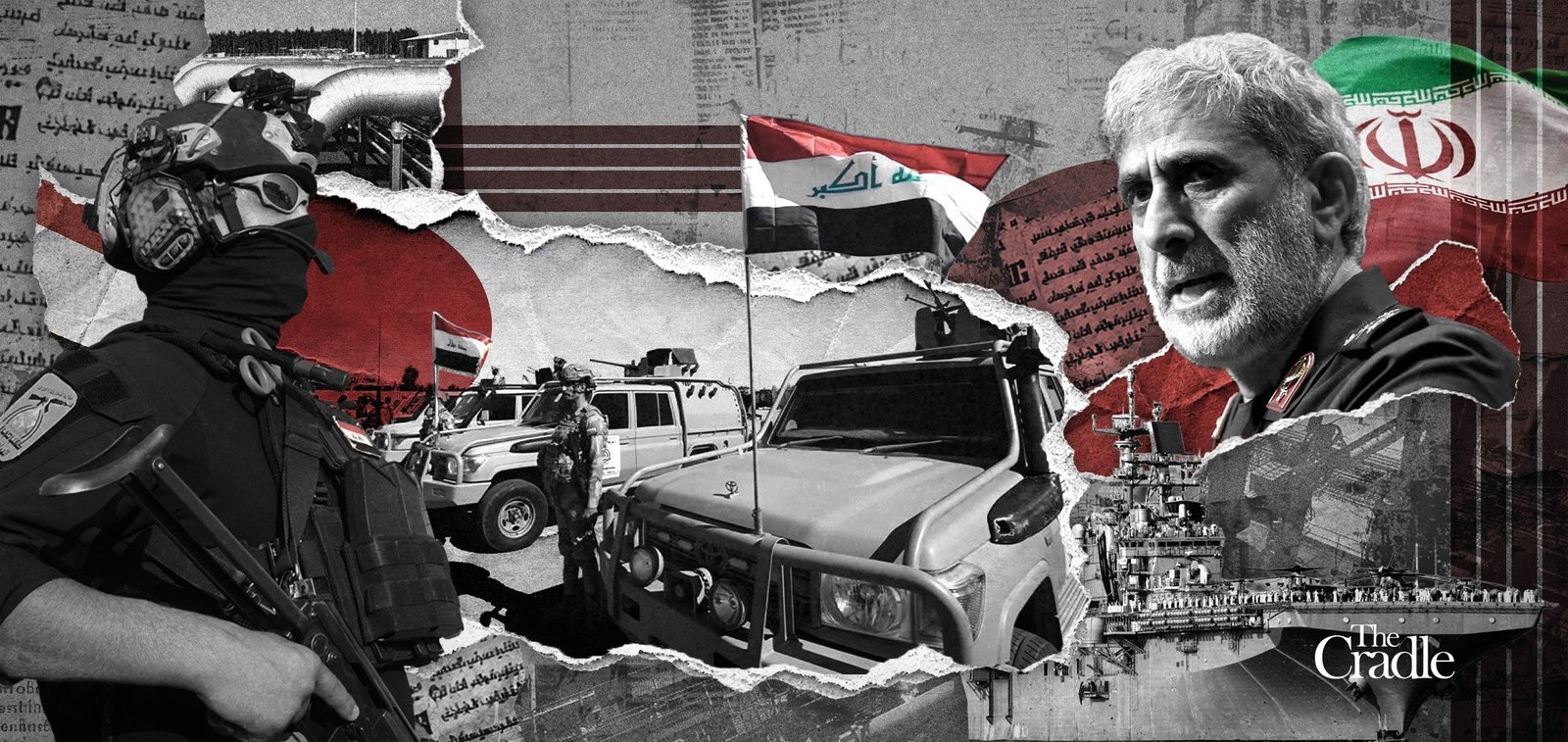
Esmail Qaani brokered a phased handover of Jurf al-Nasr after pipeline smuggling probes pushed Prime Minister Zaidi and Kataib Hezbollah toward clash. Yet allied replacement PMU brigades and unresolved disarmament leave Baghdad’s sovereignty and U.S. pressure unresolved.
Why Esmail Qaani Intervened in Jurf al-Nasr
On 20 November, Iraqi security forces entered Jurf al-Nasr, south of Baghdad, under an agreement that averted a confrontation with Kataib Hezbollah. Days earlier, the government had given the Iraqi resistance faction a deadline to leave the area it had held since driving ISIS out in 2014.
By the time Federal Police units arrived, the two sides had agreed to a handover brokered with the help of Esmail Qaani, commander of Iran’s Islamic Revolutionary Guard Corps (IRGC) Quds Force.
The confrontation began with an investigation into suspected oil smuggling. But the dispute over who could enter Jurf exposed deeper divisions within Baghdad over who commands the forces stationed there, and who decides when and where the resistance factions can use their weapons.
Baghdad’s push to disarm the resistance
After Iraq’s November 2025 elections, bringing factional weapons under state control became a priority in the government program of Prime Minister Ali Faleh al-Zaidi. The prime minister had been in contact with the factions through two channels, The Cradle has learned.
A committee from the Coordination Framework (CF) relayed proposals between the two sides, and Zaidi held talks with faction leaders directly. The government wanted the factions to hand over their weapons and formally sever their organizational ties with the Popular Mobilization Units (PMU) as part of a process that would allow their members to join state institutions.
Asaib Ahl al-Haq publicly backed the government’s arms plan, and sources familiar with the talks say Jund al-Imam was among the factions receptive to the proposal. Kataib Sayyid al-Shuhada also took part in discussions, according to the same account, though it had previously rejected handing over its weapons.
Disagreements persisted over the terms of integration, particularly the requirement that factions relinquish their weapons.
Kataib Hezbollah and Harakat al-Nujaba remained outside any final agreement. They maintained that they would keep their weapons so they could come to Iran’s aid if it came under attack. Intermediaries remained in touch with their leaders, even as discussions appeared to stall. Zaidi was also under pressure from Washington to disarm the resistance, a factor that would come to dominate the factions’ public response when the dispute over Jurf broke out.
The town the factions took back from ISIS
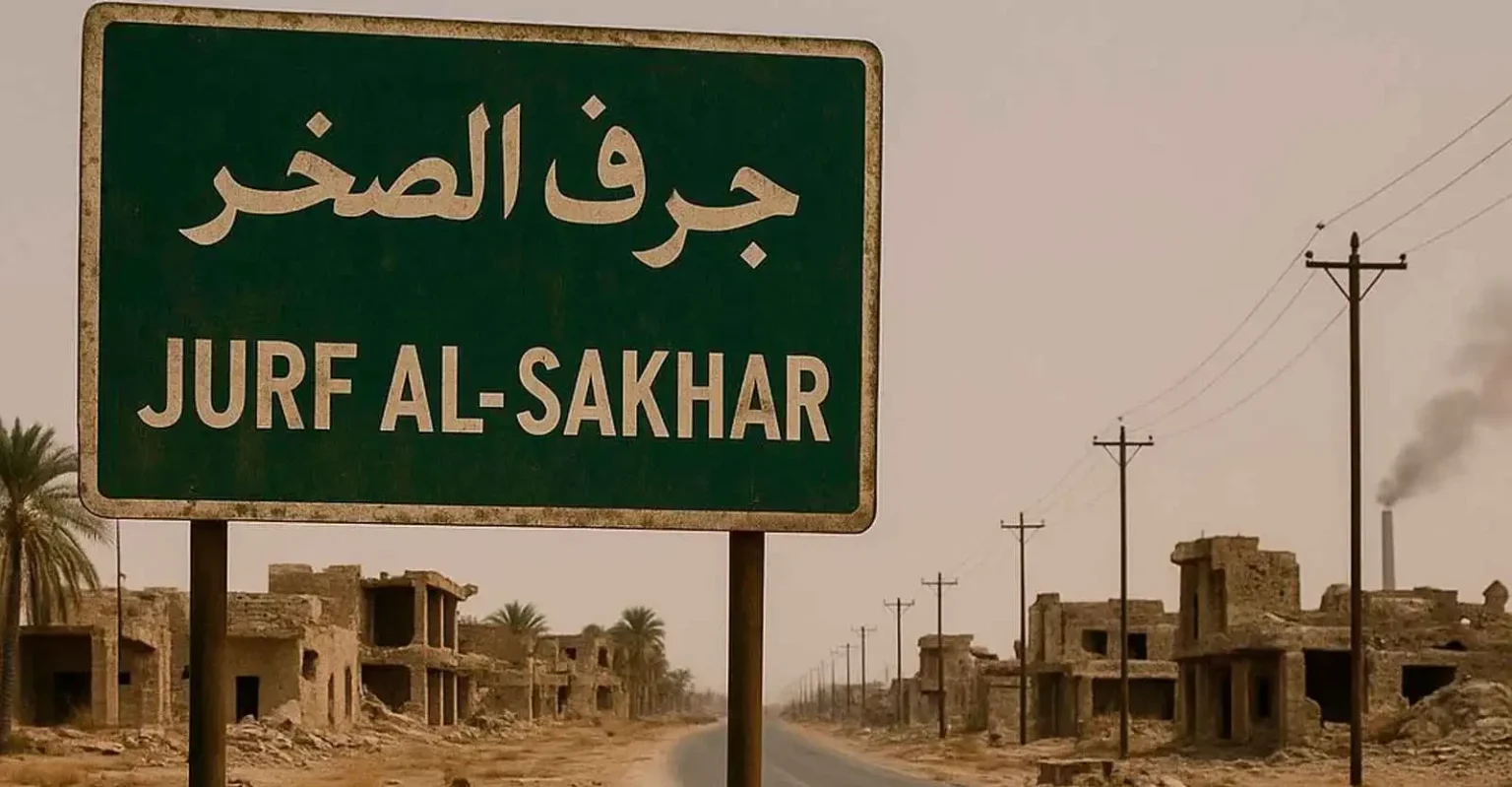
Jurf al-Nasr is the official name of the Babil subdistrict Iraqis knew as Jurf al-Sakhar before its liberation. The area links northern Babil with routes toward Anbar, Baghdad, and Karbala. Successive Iraqi governments had struggled to secure it after the 2003 US-led occupation.
Al-Qaeda and other armed groups operated there before ISIS took control, carrying out attacks against civilians and Iraqi security forces.
In October 2014, Iraqi troops and resistance factions drove ISIS out of Jurf. The offensive came four months after ISIS seized large parts of the country and major Iraqi army units collapsed. The factions brought fighters with experience confronting the group at a time when government forces were still recovering from the June offensive.
Jurf’s recapture secured an important approach to the capital, while the factions regarded their continued presence as necessary to prevent the return of ISIS.
As the PMU took shape and was incorporated into the Iraqi armed forces, three brigades affiliated with Kataib Hezbollah took over security in Jurf.
That arrangement outlasted the war against ISIS and became a recurring point of dispute. Iraqi political figures blamed Kataib Hezbollah’s hold on the area for keeping displaced residents from returning. The faction argued that returns should depend on security screening and that control of Jurf should stay outside political bargaining.
The Ministry of Migration and Displacement says more than 6,000 families were displaced from the area. After the November redeployment began, the ministry said it had sent teams to contact families and find out who wanted to return. It cautioned that the arrangements could take time.
Oil smuggling allegations ignite a crisis
The immediate trigger was an Iraqi intelligence investigation into suspected oil smuggling. Investigators alleged that crude had been siphoned from pipelines running through the subdistrict as part of an operation involving individuals, companies, and officials. Iraqi media obtained parts of the intelligence report, which described repeated tanker movements and suspected storage sites. The Office of the Commander-in-Chief of the Armed Forces ordered an inquiry.
The intelligence report drew on satellite imagery and tanker activity tracked between 2021 and 2026. It identified several sites near oil pipelines frequented by tankers, including what investigators believed to be a small refinery. The report warned that the activity could be costing the state substantial oil revenue.
The first attempt to send a security force into Jurf ran into resistance. Kataib Hezbollah insisted on prior coordination before allowing it to enter, according to sources who spoke to The Cradle.
Within hours, Badr Organization Secretary-General Hadi al-Amiri was at the prime minister’s office to defuse the standoff. PMU Chairman Faleh al-Fayyadh and PMU Chief of Staff Abdul Aziz al-Muhammadawi, better known as Abu Fadak, took part in the talks.
A high-level committee headed by the PMU, with representatives from 11 security, intelligence, and technical bodies, entered the area on 13 November. After the inspection, Zaidi said the committee had confirmed violations and that the government would extend state authority to Jurf. Officials cited evidence of interference with the oil pipelines and the presence of two refineries.
Kataib Hezbollah rejected the committee’s findings and disputed the government’s account of the inspection. The government announced that nine security and administrative officials had been relieved of their posts and that it had referred people implicated in the case to the judiciary.
Kataib Hezbollah security official Abu Mujahid al-Assaf and senior figure Abu Talib al-Saidi led the faction’s public response. According to The Cradle’s sources, Saidi called the inquiry a pretext to go after the resistance’s weapons and accused Zaidi of advancing the agenda of US envoy Tom Barrack.
He ruled out a withdrawal. At a briefing in Jurf, he said the committee had been free to visit the sites it wanted to inspect. He described one of the facilities at issue as a rudimentary plant that had been used to process fuel for generators and vehicles during shortages. Kataib Hezbollah invoked its part in the battle for Jurf, arguing that the government was putting forces that had fought ISIS together on a course toward armed confrontation.
As local mediation faltered, Kataib Hezbollah stepped up its media campaign against Zaidi. In posts on X, Assaf raised allegations concerning the prime minister’s business activities before taking office, as well as those of his brother Hassan, other relatives, and associates. Assaf also insinuated a possible connection to attacks on the Khor Mor gas field in Sulaymaniyah.
Zaidi’s office and government spokespeople defended the operation as a constitutional duty and signaled that the government would move within days. The deadline was 20 November. As it approached, the Iraqi military was placed on its highest level of alert, while Kataib Hezbollah put its fighters on alert and released images of its forces and drones. Political delegations moved between faction leaders and party offices as preparations for a possible government entry gathered pace.
Qaani intervenes before the deadline
Iraqi mediation continued through Amiri, former prime minister Nouri al-Maliki, Fayyadh, and Abu Fadak, who came from Kataib Hezbollah before joining the PMU. Their immediate concern was to keep talks going while forces on both sides prepared for an order that could bring them face to face.
According to sources familiar with the discussions, Zaidi chose to contain the dispute despite having told CF leaders that he was prepared to press ahead. The CF reportedly did not convene again for 28 days. With local mediation unsuccessful, Zaidi turned to Qaani and presented him with two intelligence files that, he argued, could change the course of the crisis if disclosed.
The first concerned allegations about weapons transfers and the risk of a US military intervention. Zaidi warned that Washington could invoke the allegations to justify airstrikes. The second concerned suspected oil smuggling and refining operations and a network of businesses across several Iraqi cities, details of which were included in the intelligence report.
Government sources say the prime minister sought to impress upon Qaani the seriousness of the crisis and the potential political repercussions for Kataib Hezbollah if the allegations became public.
Qaani, who heads the Quds Force of the IRGC, held talks with Iraqi officials in Najaf on 17 November and in Baghdad the following day, according to The Cradle’s sources. He also reportedly met with Zaidi.
Shafaq News reported that Amiri, Fayyadh, and Abu Fadak were tasked with conveying proposals to Kataib Hezbollah after senior CF figures spoke with Qaani.
The final meeting brought together Qaani, Kataib Hezbollah Secretary-General Abu Hussein al-Hamidawi, Fayyadh, and Amiri. Kataib Hezbollah subsequently confirmed the outcome of the talks, with Hamidawi instructing his fighters to stand down and announcing that outstanding disputes with the government would be handled through private channels.
Phased Rotation Deploys Joint Command Under Federal Police
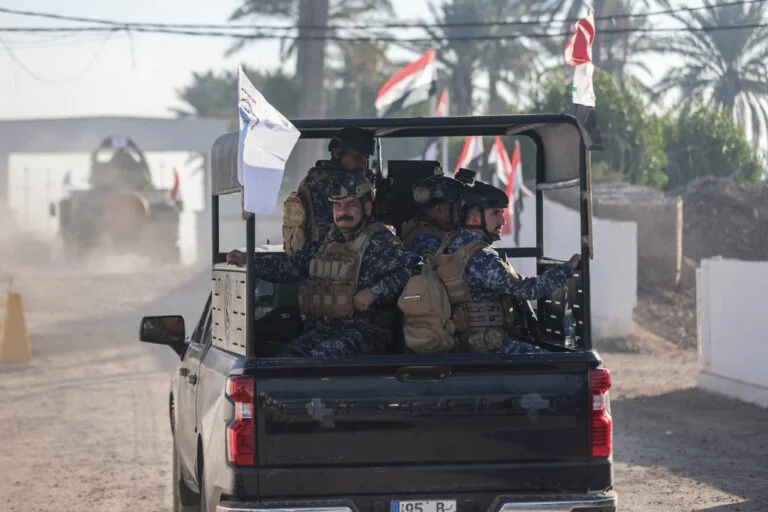
The proposal that emerged called for Kataib Hezbollah’s 45th, 46th, and 47th Brigades to hand over their positions in Jurf. Under the arrangement described to The Cradle, the rotation was to take place over a month from 20 November.
The incoming PMU units were the 72nd Brigade, led by Mohammed Sami al-Ashour, and the 79th Brigade, led by Taif al-Mihyawi. The outgoing brigades would remain part of the PMU, whose operations command said they would continue to take orders from the prime minister.
The joint deployment plan gave the PMU brigades one part of Jurf and assigned other areas to the Iraqi army and Federal Police. Energy Police took responsibility for the oil pipelines. A joint headquarters under the Federal Police command would oversee the deployment, with deputies responsible for army and PMU affairs.
Zaidi met the headquarters leadership ahead of the handover and ordered the reopening of closed roads. On 21 November, military spokesman Sabah al-Numan said the army and Energy Police had completed their deployments, while Federal Police and PMU units continued to take up their positions.
He said the plan would extend security coverage across the subdistrict and its surroundings, including areas that had previously been left unattended, to allow work on roads and services to begin.
Zaidi presented the entry of joint forces as the beginning of a broader effort to bring arms under state authority. For Kataib Hezbollah, the settlement preserved the outgoing brigades’ place in the PMU and kept other PMU formations in Jurf.
Sources familiar with the negotiations describe the initial handover as limited in scope. In their account, the agreement gave Zaidi a visible demonstration of state authority while leaving Kataib Hezbollah with a substantial presence pending the agreed rotation.
The struggle over Jurf’s future
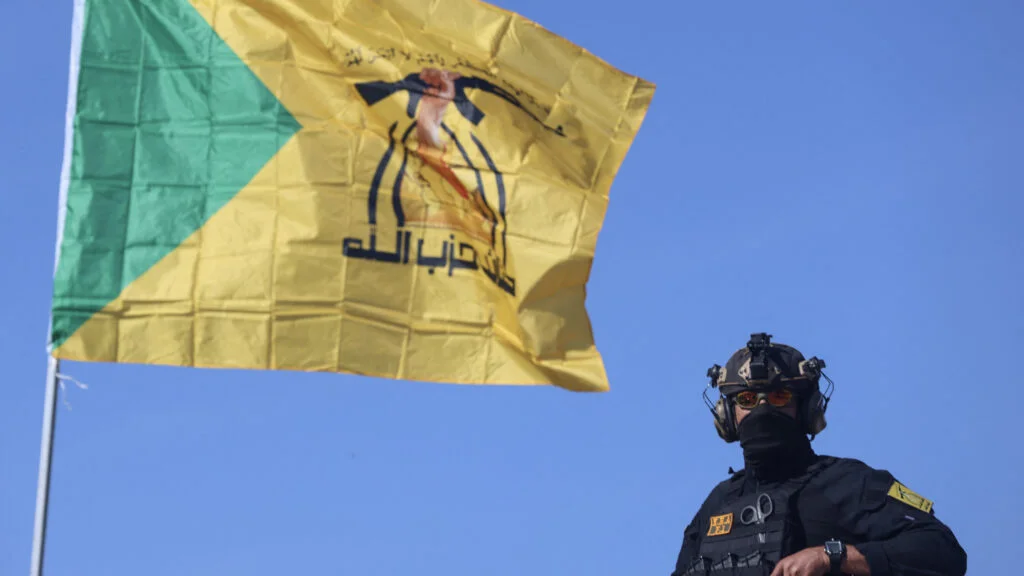
The oil investigation brought renewed scrutiny to Kataib Hezbollah’s military presence in Jurf. Washington has accused Kataib Hezbollah of attacking US forces, and US strikes on the faction have killed senior figures.
One of them was Abu Baqir al-Saadi, who was killed in a US strike in Baghdad in February 2024. During the war on Iran this year, the US also bombed PMU positions across Iraq. Kataib Hezbollah also belongs to the Islamic Resistance in Iraq (IRI), which has claimed attacks on Israeli targets.
Sources close to the Iraqi government say the area has been used for missile and drone launches and has hosted Iranian and Ansarallah advisors. Other government sources tell The Cradle that joint operations involving those parties were launched from Jurf.
Baghdad now has a joint command in an area where Kataib Hezbollah had long decided who could come and go. For displaced residents, the practical question is when roads will reopen, and families will be allowed back. A Babil provincial council member told Rudaw that Kataib Hezbollah had cooperated with the incoming forces and called for a committee to organize returns.
Reopening the roads would restore access to neighboring provinces, but the return of displaced families also depends on how the authorities handle security screening and whether basic services are restored.
Within the PMU, the significance of the rotation lies in the identity of the incoming forces. Sources familiar with the settlement tell The Cradle that the two brigades assigned to replace Kataib Hezbollah in its sector are themselves allied with the faction.
The agreement has allowed Zaidi to assert state authority in Jurf without settling the wider dispute over the resistance’s weapons. That dispute remains central to Baghdad’s relations with the factions amid continued pressure from Washington to disarm them.