
UAE invokes international law on Hormuz navigation but violates it through hosting US war assets, strikes on Iran, and complicity in Yemen, Sudan, and Gaza. Pattern of facilitating aggression undermines credibility—law as theatre, not obligation.
The intersection of state behavior and UAE international law configurations highlights a profound structural contradiction at the center of modern Middle Eastern geopolitics. When assessing how UAE international law operates in practice, observers must increasingly look past smooth diplomatic declarations to evaluate the concrete actions of regional states.
The formal framework of UAE international law cannot merely serve as a convenient rhetorical shield while a state’s sovereign territory actively supports aggressive external operations. Ultimately, a critical examination of UAE international law reveals the deep frictions that emerge when an absolute monarchy attempts to reconcile transactional power projection with a global legal order built on accountability, constraint, and reciprocity.
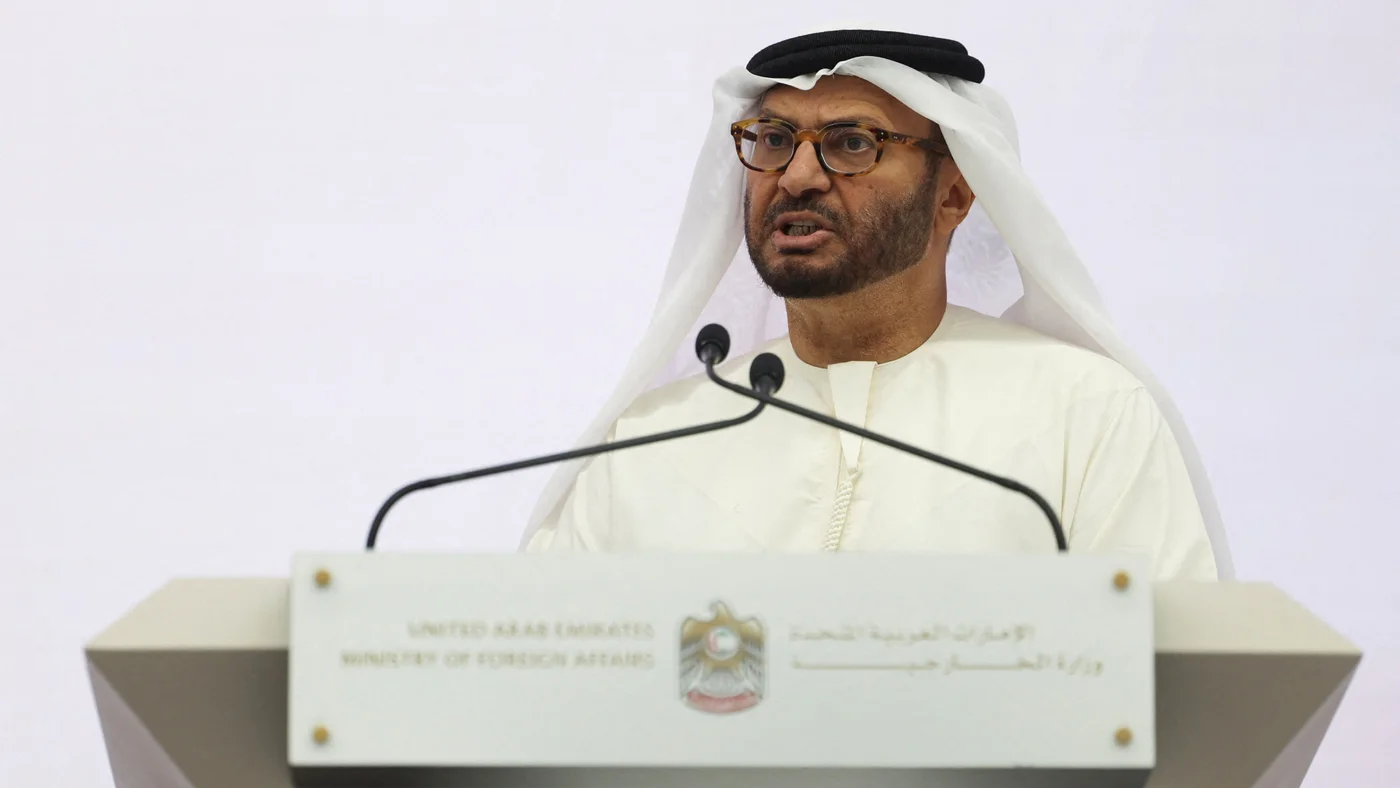
Quoted in Al Arabiya on 1 May 2026, Anwar Gargash, diplomatic adviser to United Arab Emirates President Sheikh Mohamed bin Zayed Al Nahyan, invoked “the collective international will” as the guarantor of freedom of navigation in the Strait of Hormuz. It is a familiar register – smooth, assured, and curiously detached from the record of those who deploy it. International law is not a decorative language to be summoned when convenient and shelved when inconvenient. It is a system of obligations that binds most tightly those who claim to speak in its name. The difficulty here is not subtle.
The UAE cannot plausibly present itself as a custodian of lawful order while permitting its territory to function as part of the infrastructure of an unlawful use of force, including through the hosting of US military assets used in the war on Iran and its own strikes on Iranian territory – or, in different theatres, in Sudan and Yemen. The prohibition on aggression is not an aspirational norm. It is the organising principle of the United Nations Charter, and to facilitate its breach is complicity. At some point, accumulation matters. Conduct ceases to be episodic and begins to define character.
A state that repeatedly aids, assists, or facilitates internationally wrongful acts risks crossing a more serious threshold. In ordinary language, it begins to resemble what might fairly be described as a rogue actor under international law, because the pattern of conduct aligns with the very violations the legal order is designed to restrain. The International Law Commission’s (ILC) framework makes clear that responsibility extends to those who knowingly assist in wrongful acts. The UAE’s conduct, therefore, cannot be dismissed as an isolated inconsistency. It reflects a broader pattern.
Yemen and the Structural Contradictions of UAE international law
Patterns of complicity In Yemen, the UAE’s role within the Saudi-led coalition has been widely documented, including allegations of indiscriminate attacks, support for proxy militias, and the operation of detention facilities associated with torture and enforced disappearances.
Amnesty International reported that detention facilities in southern Yemen, including those run by UAE-backed forces, were associated with enforced disappearance and torture amounting to war crimes, while Human Rights Watch has detailed arbitrary detention and abuse by UAE-supported security units. An Associated Press investigation documented at least 18 clandestine detention sites in southern Yemen run by the UAE or by UAE-trained Yemeni forces, with accounts of torture and abuse from former detainees, families, lawyers, and Yemeni officials. The humanitarian consequences were catastrophic, leading the UN to describe Yemen as one of the world’s worst humanitarian crises.
African Interventions Defying UAE international law Principles
In Sudan, reporting has similarly traced UAE-linked support to armed actors implicated in atrocities, underscoring the regional entanglements that have deepened the conflict. Reuters reported that cargo flights connected to the UAE were suspected by UN experts and diplomats of supplying arms to the RSF. The UAE’s alignment with Israel – which has included the deployment of Israeli Iron Dome batteries and troops on Emirati soil, direct military coordination throughout the war on Iran, and a secret visit by Israeli Prime Minister Benjamin Netanyahu to Abu Dhabi – amid mounting allegations of international crimes in Gaza, continues under increasing legal and factual scrutiny.
Humanitarian Scrutiny and UAE international law Commitments
The International Court of Justice has further recognised the plausibility of claims under the Genocide Convention and ordered provisional measures. The UN Office for the Coordination of Humanitarian Affairs continues to document the scale of civilian harm and destruction. Major human rights organisations, including Amnesty International and Human Rights Watch, have issued detailed reports on violations of international humanitarian law, including genocide and its consequences. None of this sits comfortably alongside sudden appeals to the sanctity of international law.
Domestic Political Frameworks and UAE international law Compliance
Law as theatre The domestic political structure from which these pronouncements emerge does not inspire confidence. A hereditary system insulated from public accountability and organised around the preservation of ruling authority is not naturally aligned with a legal order premised on responsibility, reciprocity, and constraint. Independent assessments continue to note severe restrictions on political rights and civil liberties, as well as migrant worker abuses and related concerns.
Power Asymmetries and the Future of UAE international law
What we are left with, then, is not an argument but a contradiction. International law is treated as optional when it touches one’s own conduct. The language of obligation is recast as an instrument of positioning. But law, when taken seriously, does not distinguish between convenient and inconvenient breaches. It does not excuse participation because it is indirect or politically expedient. None of this is to suggest that Iran’s conduct is beyond scrutiny. But scrutiny is not a monopoly. It is a discipline, and it must be applied consistently if it is to retain its meaning. The deeper problem is one of credibility.
When states entangled in multiple theatres of conflict and gross human rights violations suddenly discover a reverence for legal order, they expose their crass hypocrisy. The vocabulary of law begins to reveal, rather than conceal, the asymmetries of power and the selectivity of its application. At a certain point, the performance falters, and the words themselves begin to lose authority.
And that is where the argument must land: on the reality of conduct. A state that persistently enables unlawful force, underwrites proxy violence, and aligns itself with sustained violations of international humanitarian law cannot credibly cloak itself in legality. Instead, it comes to resemble a malign actor operating at the edges of the rules-based order, invoking law as theatre while steadily eroding it in practice.