
The US-Saudi nuclear agreement before Congress would open the kingdom to Westinghouse AP-1000 reactors, allow a two-year enrichment feasibility study with a US-controlled black box, and substitute bilateral safeguards for the IAEA Additional Protocol.
The US-Saudi nuclear cooperation agreement before Congress represents a defining test for American nuclear exports in an increasingly competitive global market. After decades of dormancy, US nuclear exports face rivals like Russia and China that offer state-financed packages and operational support America cannot easily match.
For US nuclear exports to remain viable, Washington must manage the risks of uranium enrichment on Saudi territory, including a two-year feasibility study and a proposed US-controlled “black box” framework around any enrichment plant.
The agreement also raises safeguards questions since it substitutes a bilateral inspection regime for the IAEA Additional Protocol, though IAEA Secretary General Rafael Grossi has indicated similar verification authority can be achieved. Congressional approval would open the Saudi market to Westinghouse’s AP-1000 reactors while enabling cooperation with South Korea on engineering and construction. Rejection would cede the kingdom, and potentially the broader small modular reactor market, to geopolitical rivals. The stakes extend beyond Saudi Arabia to the future governance of emerging reactor technologies and American leadership in the global nuclear energy order.
US nuclear exports face rising competition
If the Kingdom of Saudi Arabia wants to build a nuclear energy program, the reactors and related technology should be American. The alternative opens the door to Russia, or more likely China, an outcome that would undermine global security, degrade US influence over the rapidly evolving global nuclear energy landscape, and offer geopolitical rivals a difficult-to-dislodge foothold in a critical country and sensitive region.
The US-Saudi nuclear cooperation agreement that now sits before Congress will open a critical nuclear market to American nuclear technology at a time when Russia, the global nuclear export leader, is already constructing reactors in the region in Turkey and Egypt.
After over 40 years of moribund US nuclear exports, America is facing a more active, diverse, and competitive global market than the one it dominated through the 1980s. The price for capturing this market is steeper than in the past, and it will surface new risks.
The bilateral pact contains provisions that create concerns about potential future security hazards. But America’s nuclear security standards, technology, and institutions have a history of effectively adapting to new challenges. In this new nuclear world, effective competition requires managing risks, not avoiding them.
US Nuclear Exports Face Competition in Saudi Arabia
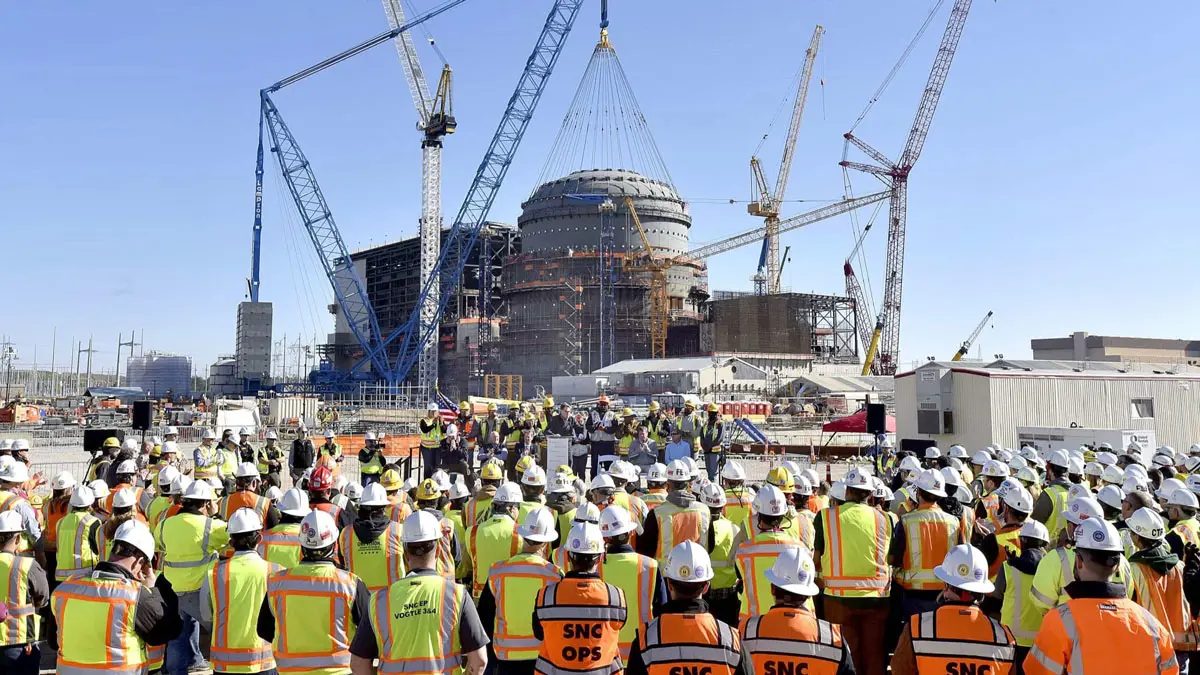
The United States has not constructed any power reactors in the Middle East. Westinghouse, the American nuclear power company, was once excluded from the Saudi’s reactor bidder list because of bilateral political tension. China, the largest purchaser of the kingdom’s oil, has been actively pursuing the Saudi’s nuclear business, having previously submitted a bid for the nation’s reactors. South Korea has inked several bilateral nuclear energy agreements with Saudi Arabia, and they work together on the small System-integrated Modular Advanced Reactor (SMART) reactor. This history underscores the market opportunity competitor nations see in the region and the challenges for America to enter it.
Gold standard fails as a precedent
In 2009, the United States and United Arab Emirates (UAE) reached a “gold standard” bilateral nuclear agreement that some suggest the US-Saudi deal should mimic. But the gold standard conditions are not the norm for US nuclear cooperation agreements. And this agreement did not guarantee commercial success for American nuclear suppliers, as the contract for the three reactors did not go to US companies and instead was awarded to South Korea.
Recently, the United States has done a good job of selling its reactors in Eastern Europe in the wake of Russia’s invasion of Ukraine and the resulting rush to remove dependence on all types of Russian energy. But it can’t limit its focus only to countries in the European Union when non-OECD nations decide they want to add nuclear power to their energy mix.
The US-Saudi Nuclear Deal Is a Test for American Nuclear Exports
The US nuclear cooperation agreement with Saudi Arabia is a litmus test for American political leaders’ commitment to the national nuclear energy resurgence that has been a bipartisan political priority for the past decade.
International nuclear market competition is intense, and China and Russia have a head start and inherent advantages. These authoritarian governments use an effective package of state capital and lenient policy that provides easy credit for reactor purchases and construction, in-country operational support, and waste management solutions. The United States cannot match that sweetheart deal.
The implications of the congressional decision on the Saudi deal will extend beyond the sale of Westinghouse AP-1000s to the kingdom and impact control of the future international nuclear market for Small Modular Reactors (SMRs) and microreactors.
The US government and private investors have poured billions of dollars into these new types of reactors, and because their fuel, coolant, and operation don’t conform to existing reactor standards, they will not be governed by the old rules. The United States can’t lead this nuclear governance evolution from behind.
These small reactors are increasingly of interest to emerging economies, most of which possess little nuclear experience. Managing the inevitable operational and security challenges will require evolving nuclear cooperation agreements, developing new technologies, and updating policies. Numerous policy changes have already been implemented domestically to advance the development of these reactors. That evolution needs to extend to nuclear exports.
Congress Weighs the US-Saudi Nuclear Cooperation Agreement
US-Saudi nuclear negotiations date back to the George W. Bush administration, and two controversial issues have been at the core of the contentious consultations for decades. One is uranium enrichment on Saudi territory, and the other is a US-centric safeguards system that will substitute for the International Atomic Energy Agency’s (IAEA) intrusive Additional Protocol.
Saudi Uranium Enrichment Raises Nuclear Security Concerns
Uranium enrichment is the most difficult issue for Congress to adjudicate. America and its allies have spent decades developing barriers to the export of sensitive dual-use nuclear fuel technologies to prevent the potential production of nuclear weapons in countries with peaceful nuclear power programs.
The US-Saudi agreement seems to acknowledge the sensitivity and history of the uranium enrichment issue and seeks to provide air gaps around the desire for an in-country uranium enrichment plant, its construction, and its operation.
It requires a two-year-long study of the feasibility and economics of uranium enrichment up to 5 percent U-235 (standard for light water reactor fuel). A further joint assessment would determine whether to pursue High-Assay Low Enriched Uranium (HALEU) enrichment up to 20 percent. HALEU fuel is used in many SMR designs, and it is in short supply outside of Russia. So, this option may be a hedge to ensure adequate production in the future. But it is potentially dangerous, as it is a short path from 20 percent enrichment to weapon-grade 90 percent.
If the initial assessment determines that the enrichment plant can move forward, the bilateral agreement calls for a US-controlled “black box” to be built around the facility.
Can the black box safeguard uranium
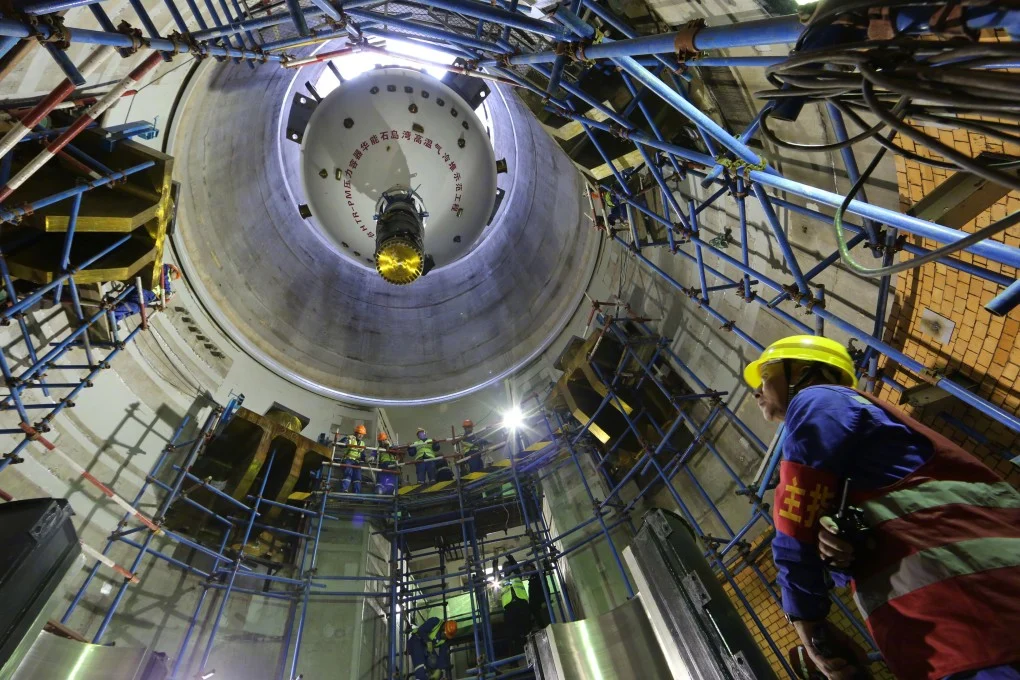
US control of the uranium enrichment plant is designed to protect sensitive technology and ensure that the enrichment is for peaceful purposes. While there are many questions about how the “black box” framework will work, the United States has extensive technical experience monitoring uranium enrichment levels both domestically and in Russia as part of the Megatons to Megawatts program. And it certainly has advanced intelligence-related technologies that will be used to monitor a Saudi enrichment plant or any change in political intent related to its nuclear activities.
Assuming the green light is given after the joint assessment and the modalities of the “black box” can be agreed, a commercial uranium enrichment plant can be constructed in three to five years.
Congressional consideration of the uranium enrichment provision cannot ignore previous statements by Saudi Crown Prince Mohammed bin Salman and other high-level officials that the kingdom will seek nuclear weapons if Iran produces them. These are troubling comments that were directly linked to Iran’s escalating nuclear activities.
Iran’s program has now been dramatically degraded due to US and Israeli bombing. And for the first time in 20 years, the IAEA referred Iran to the United Nations Security Council for “noncompliance” with its nonproliferation obligations. Those are major hindrances to Iran’s once-torrid nuclear activities. But the future of the program is unclear, and the Saudi’s should seize the high ground against their damaged rival and set a precedent for never enriching uranium for nuclear weapons.
US-Saudi Nuclear Safeguards and the IAEA
The other major concern raised by the agreement is safeguards and security. The agreement requires IAEA safeguards at declared nuclear facilities in Saudi Arabia, in compliance with its comprehensive nuclear safeguards agreement. But it does not include the Additional Protocol, which allows snap inspections at undeclared facilities.
The Additional Protocol would be supplanted by a bilateral US-Saudi inspection regime. There has been criticism of this arrangement, but the reality is that the US national laboratories are deep repositories of safeguards expertise. And America has for 50 years been transferring technology and expertise to the IAEA to strengthen its safeguards program. It also shares intelligence information with the IAEA in support of its mission. So, US safeguards inspectors and technology are at a minimum equally capable to their international counterparts.
The bilateral safeguards arrangement may concern some nations that rely on the international legitimacy of the IAEA in nuclear matters. But the agency’s Secretary General, Raphael Grossi, has stated that while the Additional Protocol would be the “ideal setup…it has been possible to introduce a number of provisions to the bilateral agreement that will give the agency additional verification and monitoring authorizations.” This includes activities for uranium conversion, enrichment, and spent fuel reprocessing. Grossi notes, “we are going to have authorizations and capacities which are very, very similar to those that you may find in an Additional Protocol.”
US-South Korea Nuclear Cooperation in Saudi Arabia
It would be a disservice to this important debate to compartmentalize the US-Saudi agreement to the bilateral relationship. There is global context that is important to take into consideration.
Should the agreement be approved, the United States will not be going it alone in Saudi Arabia. The construction of the Westinghouse AP-1000 reactor has many partners, and none more important than South Korea.
South Korea’s success in constructing the UAE reactors could be an example Saudi Arabian leaders want to replicate, and South Korean industry could therefore play a major role in the engineering, procurement, and construction (EPC) of the Saudi reactors. The country’s nuclear industry also provides significant component content for the AP-1000, and South Korean companies could expect to receive up to 20 percent of the scope of the 2-reactor project.
This collaboration between the United States and South Korea in a third country would be the culmination of a goal that was set several years ago, and it would set the stage for expanded bilateral cooperation on new nuclear projects as part of the tariff agreement under which South Korea will invest $350 billion in US energy and other projects.
The United States is also sensitive to how the agreement with the Saudi’s may impact other countries in the region. After the agreement was signed and on its way to Capitol Hill, President Donald Trump tacked on a last-minute obligation that the kingdom normalize relations with Israel before the agreement can be implemented.
Congress must decide America’s nuclear future
Overall, the US-Saudi deal is a harbinger of a shift beyond past nuclear cooperation precedents. It is a response to an evolving nuclear technology and export landscape that requires effective adaptation to new risks. It is a challenge to American political leaders that requires them to determine whether they want the United States to lead the new nuclear energy order or stay on the sidelines.