
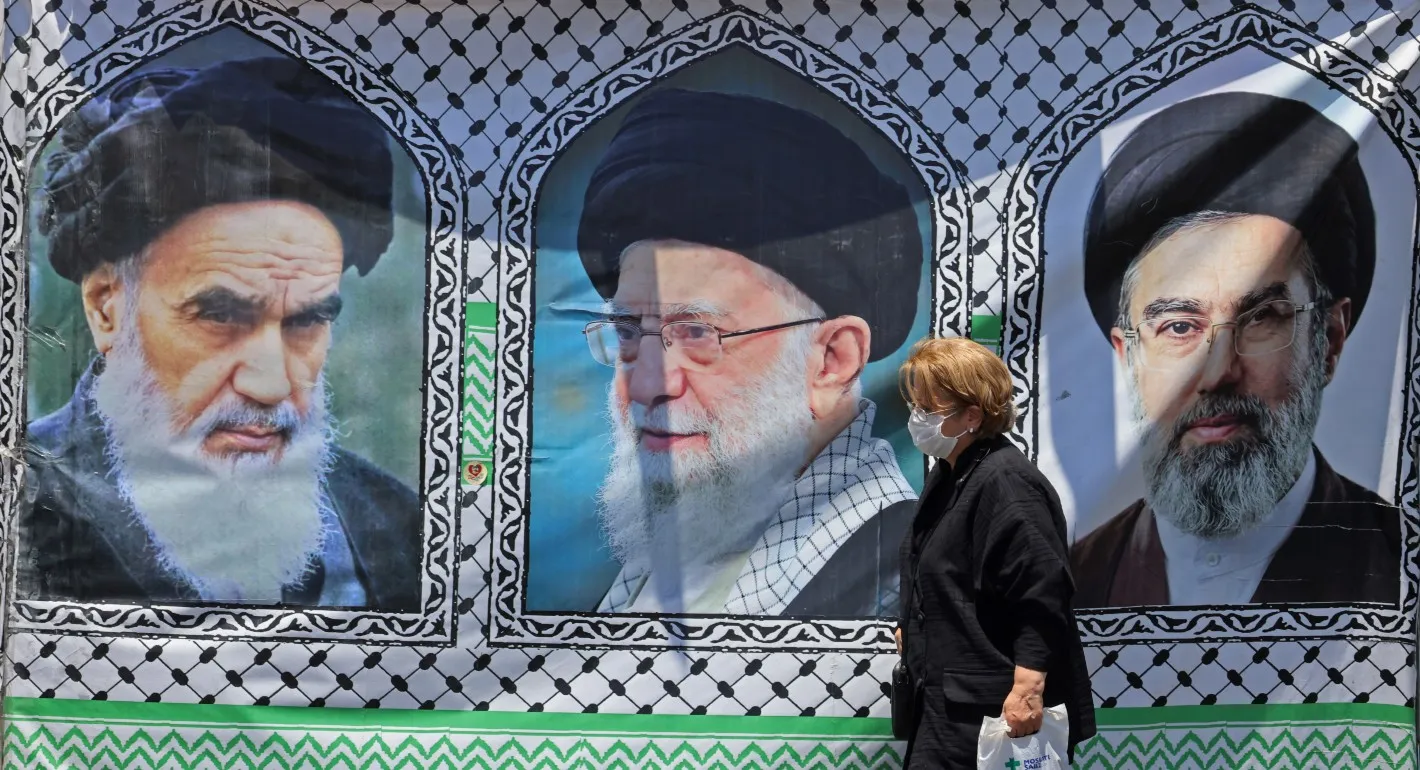
A masterclass evaluation of the shifting military and diplomatic doctrines in Tehran following leadership decapitation strikes, illustrating why traditional U.S. pressure campaigns fail against institutional consensus frameworks.
The structural architecture of contemporary Middle Eastern geopolitics is undergoing an absolute reordering as asymmetric warfare and institutional adaptations upend traditional deterrence models. The current escalation trajectory indicates that Washington’s strategy of targeted decapitation has failed to yield tactical capitulation, primarily because it misjudges the collective, institutional nature of Iranian decisionmaking. To navigate this highly fluid operational landscape, global market participants and defense strategists must look beyond individual figureheads and analyze the broader structural resilience, economic realities, and long-term socio-political transformations that define Washington and Tehran’s Dangerous Moment. To ignore these deeper transformations is to fundamentally misinterpret how regional power dynamics are being reconstructed amidst Washington and Tehran’s Dangerous Moment.
Washington and Tehran’s Dangerous Moment unfolds
The U.S.-Iran negotiations feel like a rapid-fire game of ping-pong. How are you keeping track of where things stand?
It is indeed a rapid-fire game of ping-pong, except the players keep changing the rules of engagement: one jumping on the table, one scoring under it, both chasing each other around it, each with a paddle in one hand and a whip in the other. And somehow, the audience keeps getting hit.
Following events on the ground, and the various actors’ intentions and strategies, is simply impossible. The volume of information coming out of Iran alone, even during the internet blackouts, has been staggering. Analyzing it against what is happening in the United States, Israel, and Lebanon, and understanding how they all interact, is a game unto itself. Yet somehow, it appears that far more is happening on the Iranian side, where the Islamic Republic is simultaneously juggling a military, economic, and internal war.
Fragmentation during Washington and Tehran’s Dangerous Moment
What’s the mood in Iran right now?
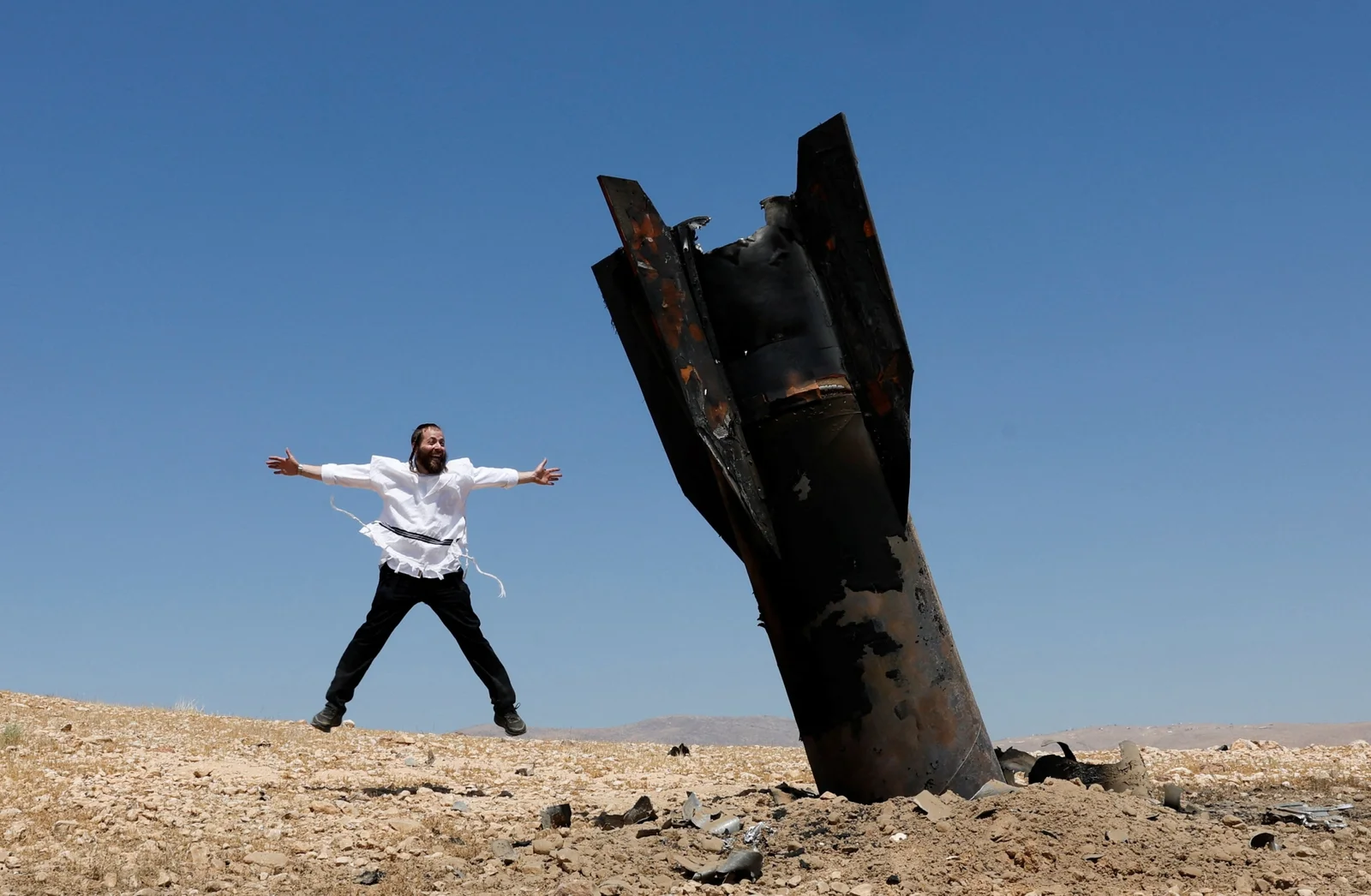
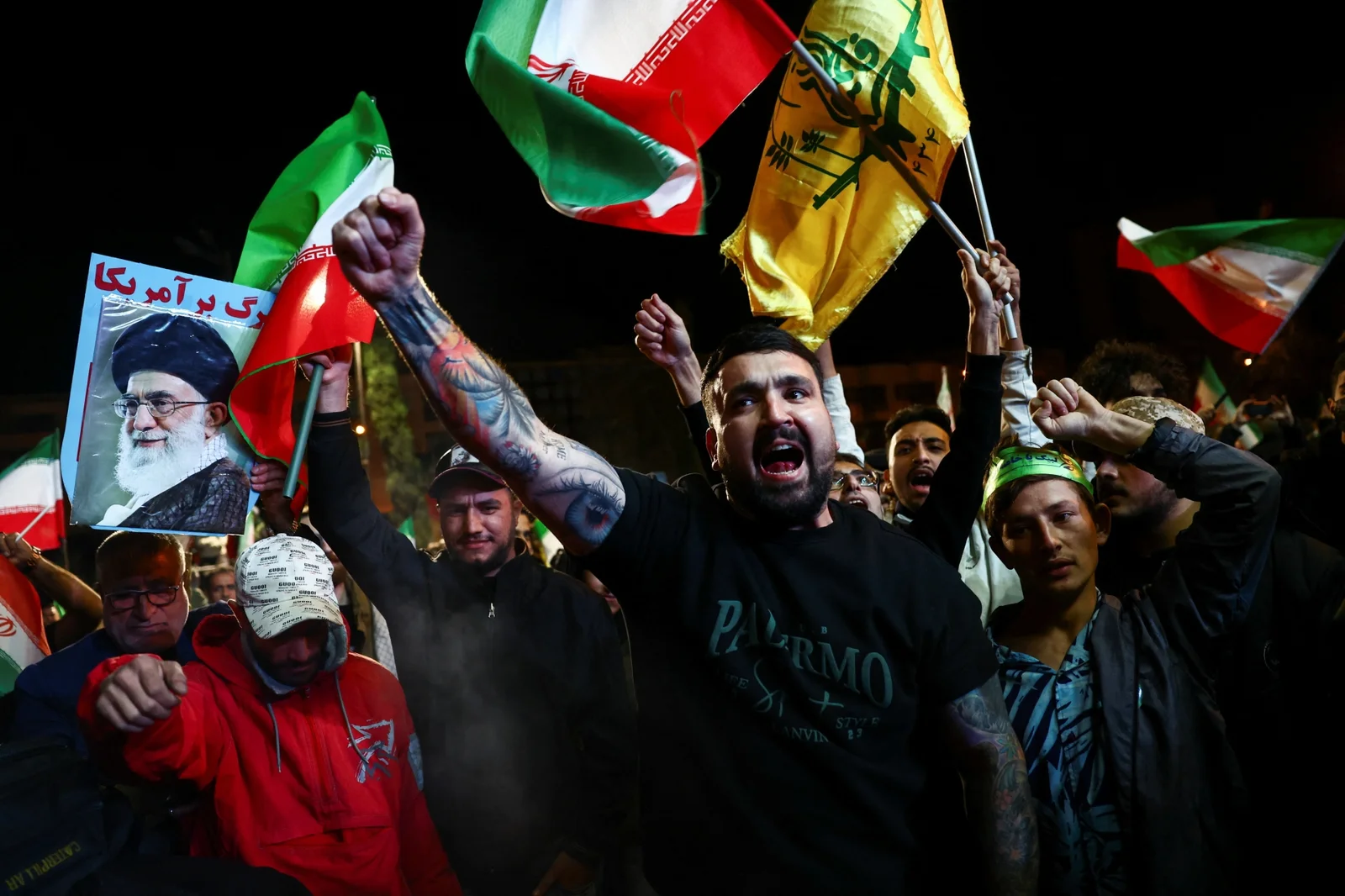
Iranian society appears deeply fragmented. Many are angry yet remain at home in the aftermath of the protests and massacres earlier this year. In the current wartime environment, repression has become less costly for the government, and a new round of protests seems unlikely anytime soon. Others are taking to the streets in pro-government rallies that increasingly resemble carnivals designed both to control public space and to endorse both resistance against the United States and the continuation of the war itself.
And then there are those in between, navigating daily life amid triple-digit food inflation, caught between fear for their personal safety and a broader fear of state collapse. There is a growing sense that, rather than weakening the Islamic Republic, the conflict may have given it a new lease on life while locking in chronic confrontation with the United States as the new normal.
What is harder to capture in day-to-day observation is the deeper transformation underway beneath the surface. Iranian society has changed more in the past five years than in the previous fifty—a secular shift in values and behaviors that tends to get lost when the country is viewed purely through the lens of geopolitics.
Yet this rapid transformation is not occurring in a vacuum. Iran is a civilization with a long memory: Its history, literature, and collective experience have provided a reservoir of resilience, a sense that political orders come and go, that the Islamic Republic is one chapter in a much longer story, and that foreign invasions, from Alexander to the Mongols to Saddam Hussein, have been absorbed before.
Reflecting on societal and ideological fault lines, the Iranian poet Hafez wrote seven centuries ago:
Give pardon to all the seventy-two warring sects It is because they didn’t see the truth, that they went by the way of fables
The long view has not disappeared, yet the fundamental question remains unresolved: whether to work with the Islamic Republic against foreign invasion, align with external forces against the regime, or resist both simultaneously.
Institutional leadership during Washington and Tehran’s Dangerous Moment
Who’s leading Iran?
Officially, the Islamic Republic is currently led by Mojtaba Khamenei, the son of Ayatollah Ali Khamenei, who was killed in the opening hours of the U.S. and Israeli attack on Iran on February 28. Mojtaba was reportedly present with his father and survived the attack, though injured.
Since then, he has largely remained out of public view, reportedly out of concern for his personal security. Ironically, the war accelerated his rise while reinforcing his preference for operating in the shadows. Long a divisive figure behind the scenes, he had rarely appeared in public beyond a handful of photographs and videos. Nonetheless, he has effectively led the country through public statements and through the Islamic Revolutionary Guard Corps (IRGC), which is increasingly consolidating control over the Iranian state.
Following the decapitation of the old guard through U.S. and Israeli strikes, U.S. commentary has portrayed Iran as either paralyzed and fragmented or as governed by a cohort of fanatical, inexperienced younger IRGC commanders. This narrative is then used to explain why Iran has become more risk-prone and less inclined toward diplomacy.
But Iran is not run by a handful of visible figures, nor are ideology or generational change the primary drivers of decisionmaking. The country is governed by a broad cadre of actors across institutions and age groups, far less visible individually, but collectively as influential as those who appear to be leading the state. That is why the decapitation strategy has not worked.
The decisions made by the supreme leader and senior IRGC commanders tend to reflect a consensus emerging from these institutions rather than any single individual’s convictions. In this sense, ideology—whether Islamism, anti-Americanism, or nationalism—often functions less as a driver of policy than as a product of internal deliberation shaped by accumulated experience and institutional learning.
Washington and Tehran’s Dangerous Moment redefines warfare
You recently wrote in Foreign Affairs that Iran’s strategy “is not to merely survive and outlast the United States” but to “fundamentally alter how Tehran is dealt with” by Washington and the wider world. What led you to this conclusion?
Both the words and actions of the Islamic Republic suggest that it has changed its approach to both diplomacy and war. Iran’s leadership appears more comfortable confronting the United States directly than engaging in bilateral negotiations. Underlying this shift is the experience of two recent wars, during which Iran came under attack while diplomatic channels remained nominally active.
That experience has hardened into a doctrine: diplomacy, in Tehran’s view, is an extension of war by other means for Washington. The prevailing belief within the Islamic Republic today is that the United States and Israel will strike the moment they detect signs of weakness or vulnerability, and that diplomacy and negotiations are among the tools Washington uses to gather precisely that kind of information.
Iranian leaders also believe that Washington systematically underestimates the regime’s resilience while overestimating U.S. technological and military superiority. In Tehran’s view, the United States expects Iran to capitulate in negotiations or surrender in war. This perception has pushed Iran to accept the risks of escalation despite the immense destruction inflicted on the country. Tehran appears to believe it can survive the conflict, correct U.S. misperceptions about its resilience, and ultimately secure a more stable strategic balance.
There is also a paradoxical frustration in Tehran. Iranian officials argue that despite American and Israeli claims of having penetrated Iranian networks and decisionmaking structures, neither country has developed an accurate understanding of Iran’s strategic thinking—hence, in the Iranian leadership’s telling, the failure of the two U.S.-Israeli wars to achieve their objectives in forcing Iran to surrender.
The United States and Israel rely heavily on signals intelligence and advanced technology that can locate Iranian officials physically but yield little insight into the Islamic Republic’s resolve. This informational advantage, Tehran believes, comes at the expense of analytical depth, leading the United States and Israel to assume repeatedly that additional sanctions, strikes, or blockades will produce capitulation or regime collapse within days or weeks.
War, the regime believes, can disabuse its adversaries, and the wider world, of that assumption once and for all.
All of this brings us to a very dangerous moment.
Mitigating risks during Washington and Tehran’s Dangerous Moment
What would you tell U.S. officials, in light of Iran’s new calculus?
Returning to the ping-pong analogy: The first task is to reestablish rules of engagement, and, more importantly, to adhere to them. The players need to put down the whips and play with paddles, even if that means continuing to play on the table rather than by it. And even when your adversary resorts to foul play, it is crucial to maintain the moral high ground or, as former U.S. first lady Michelle Obama once put it in a different context: “When they go low, we go high.”
Capabilities should serve strategy, not the other way around. It is like social scientists who are method-driven rather than problem-driven. Launching a war simply because one possesses the ability to locate and assassinate leaders may provide a sense of immediate satisfaction, but it can also unleash forces that haunt policymakers for decades. War creates extreme conditions and emotions that lower the political barriers to actions that would otherwise be considered too risky, costly, or unacceptable.
U.S. officials should recognize that Iran may no longer operate according to assumptions of delayed retaliation that shaped earlier periods of confrontation. Tehran has adopted a rapid-response posture, as we have seen in the most recent military engagements with the United States and Israel, which increases the risks of inadvertent escalation and narrows the window for crisis management.
And, finally, Washington should not assume that its longstanding pivot to Asia will proceed uninterrupted. The Middle East may continue to demand significant diplomatic, military, and political attention for the foreseeable future. We may be entering a new era of protracted conflict—with Iran at the center of it.