
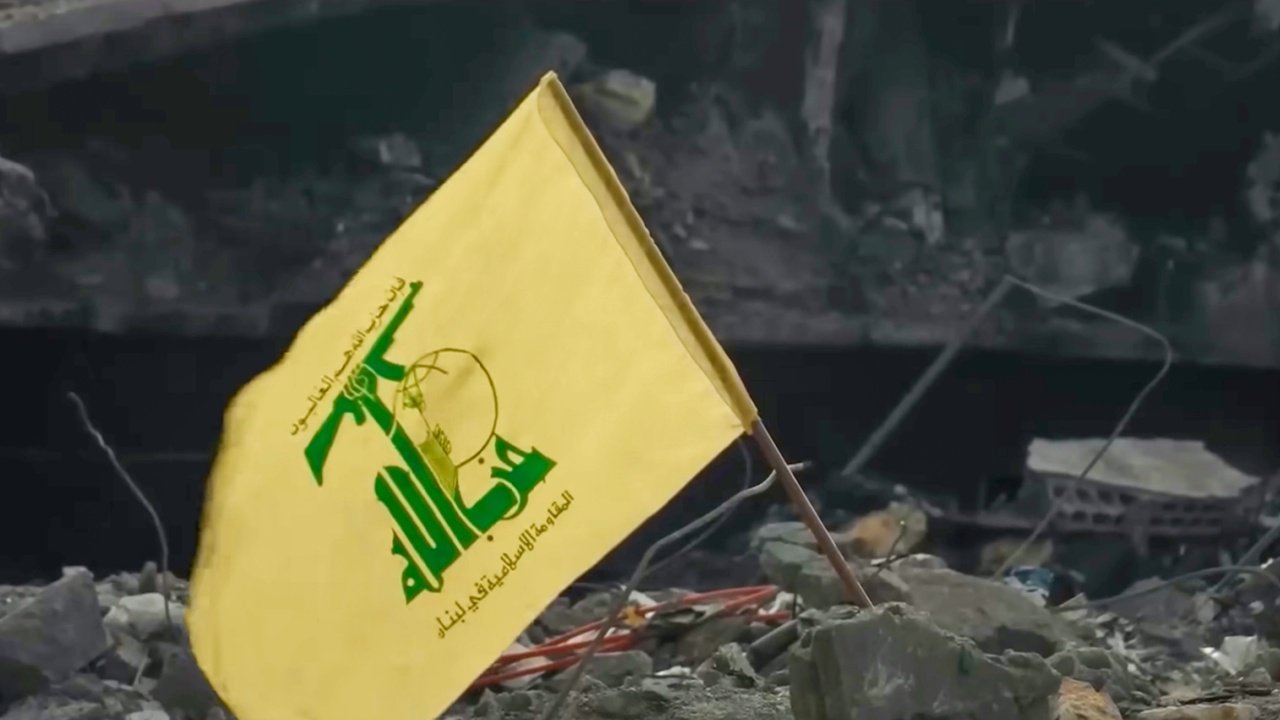
Unlike isolated Hamas, Hezbollah is embedded in a functioning Lebanese state with growing public support for disarmament (79%). Degraded Iranian supply lines and UNSCR 1701 offer a framework. However, Israel’s buffer zone presence strengthens Hezbollah hardliners. Incentive-based integration into the LAF is possible—but the window is narrow.
Lebanon still has a unique opportunity to accomplish the disarmament of the country’s infamous terrorist paramilitary.
The fragile US-brokered ceasefire between Israel and Lebanon that took effect on April 16 is already showing signs of strain. Following ambassador-level talks in Washington this week that secured a three-week extension of the truce, efforts are now focused on implementing UN Security Council Resolution 1701, which at its core requires Hezbollah’s effective disarmament north of the Litani River and the restoration of Lebanese state sovereignty south of it. At the same time, Hamas continues to reject phased disarmament proposals from the Trump administration’s Board of Peace in Gaza, stalling reconstruction and prolonging uncertainty.
Both groups are Iranian-backed militant organizations that have survived major Israeli military campaigns. Both claim the mantle of “resistance” to the United States and Israel. Yet Hezbollah and Hamas cannot be regarded as interchangeable proxies. Their disarmament challenges are structurally distinct—a difference that gives Lebanon a narrow yet real window for progress that Gaza currently lacks.
The surface similarities are obvious. Both are battle-hardened, ideologically committed, and deeply rooted in their respective societies. Both have rebuilt after previous rounds of conflict and long received Iranian weapons, training, and funding. But the differences are more consequential.
Hezbollah is deeply embedded in Lebanon’s political system and the Shia community. It holds parliamentary seats, provides extensive social services, and commands genuine popular legitimacy in the south and in Beirut’s southern suburbs. While coercive disarmament is politically delicate for the state-within-a-state that Hezbollah represents, integration into the Lebanese Armed Forces remains feasible if the government can provide credible security assurances and economic incentives.
Hamas, for its part, faces greater isolation. Even if the Palestinian population did not turn en masse against the group, the October 7, 2023, attack and the subsequent conflict have diminished its legitimacy. Its decentralized tunnel structure makes it resistant to leadership losses but difficult to integrate with future governance. Unlike Hezbollah, Hamas does not have a functioning state partner able to manage or oversee its fighters; the Palestinian Authority in the West Bank is neither willing nor capable of taking on this role in Gaza.
The external backing has diverged sharply since the Iran war. Hezbollah’s rearmament pipeline relied heavily on Iranian supply lines, which have now been severely degraded. Hamas retains more autonomous funding channels and a looser organizational model, enabling it to adapt more quickly to sanctions or isolation.
The domestic incentive structures are even more divergent. In Lebanon, a growing cross-sectarian consensus, including among parts of the Shia community weary of endless conflict, favors restoring the state’s monopoly on force. The current Lebanese government has already taken initial steps toward enforcing Resolution 1701. The three-week extension has opened a narrow window for concrete progress on Resolution 1701.
The Lebanese Armed Forces have moved closer to the Litani River, with some southern municipal leaders considering ways to incorporate mid-level Hezbollah fighters into government structures. Nevertheless, Israel’s maintenance of several positions south of the river continues to strengthen Hezbollah hardliners who demand complete Israeli withdrawal before any disarmament. With Iranian resupply routes significantly weakened, Hezbollah is under increasing pressure. However, Beirut still needs to offer credible economic incentives and security assurances to avoid backlash from Shia communities that have depended on the group for a long time.
In Gaza, Hamas continues to consider itself a resistance group and has until now dismissed all proposals of the Board of Peace for phased disarmament and tunnel destruction, considering them as surrender rather than a path to negotiations.
These differences matter for sequencing and incentives. UN Security Council Resolution 1701 mandates that the Lebanese Armed Forces and UNIFIL work together in southern Lebanon, south of the Litani River. It also requires Israel to withdraw from the region while the United States provides technical support for monitoring efforts.
Gaza poses a distinctive challenge. The Board of Peace’s phased disarmament plan depends on a Palestinian state partner and, ideally, an additional international legal basis. Moreover, Hamas has primarily used reconstruction incentives as bargaining tools rather than as genuine moves toward demilitarization. Without a credible governance alternative that satisfies both Israel and the Palestinian people, containment seems more likely than progress.
This does not mean Lebanon’s path will be easy. A ceasefire and Hezbollah’s disarmament are inherently linked: without disarmament, renewed conflict is inevitable. Hezbollah’s leadership continues to reject full disarmament, and Israeli forces do not appear willing to withdraw from positions in parts of southern Lebanon. Yet the post-Iran war degradation of Iranian capabilities, combined with widespread Lebanese fatigue with endless conflict, has created a rare alignment of interests.
Lebanon, therefore, offers a more promising opportunity for sequenced, incentive-based disarmament—through verifiable 1701 benchmarks, enhanced monitoring, and efforts to separate the Lebanese theater from residual Iran-axis dynamics—than a one-size-fits-all approach in Gaza.
The two files should not be treated identically. Disarming Hezbollah is not like disarming Hamas—and recognizing that difference is the first step toward making the most of Lebanon’s narrow window.