
Fighting between Houthi and government-aligned forces has spread across Marib, Taiz, Shabwa and Red Sea coastal areas. Missile, drone and maritime attacks have killed soldiers and civilians, straining the 2022 truce and raising war risks.
The resumption of Yemen’s War is not a return to the battlefield of 2014–2022; it marks a transformation in how the conflict is fought and what its main actors seek. Long-range missiles, armed drones and maritime disruption now take precedence over large-scale ground offensives, reflecting a conflict reshaped by more sophisticated capabilities. The de facto truce that had held since 2022 appears exhausted, replaced by a precarious pattern of calculated strikes and retaliation.
For the Houthis, escalation is a political instrument intended to force concessions on air access, public revenues and port operations rather than a bid for immediate territorial victory. Government-aligned forces, by contrast, view the renewed confrontation as an opportunity to restore state authority and reverse years of frozen stalemate. Saudi Arabia remains caught between defending its territory and avoiding another open-ended intervention.
The conflict’s trajectory now depends on whether measured exchanges can be contained or will spiral into wider war. Yemen’s War has therefore entered a dangerous new phase, one in which diplomacy, economic pressure and military signalling converge. The risks are no longer confined to Yemen; the instability now threatens regional shipping, energy security and the broader balance of power.
Why Yemen’s War Is Escalating Now
Yemen is quickly sliding back into war. Over the past several weeks, fighting between the Houthi rebels and government-aligned forces has intensified along the main front lines, as the Houthis also trade regular fire with Saudi Arabia, their Yemeni adversaries’ primary outside backer. The present escalation is not a reprise of the conflict that raged from 2014 to 2022, when a tenuous de facto truce set in. Ground combat so far remains contained to a few areas, with missiles, drones and other forms of long-range attack playing a more central role. The question is whether these exchanges will tip into a broader conflict.
The shift away from the de facto truce has become apparent since early August. The sequence began with a mid-July crisis over flights between Sanaa and Tehran conducted by the Houthis without prior approval from Riyadh and the coalition it leads in support of the Yemeni government. After one such flight, Saudi Arabia – viewing it as an attempt to challenge the coalition’s control of Yemeni airspace – launched strikes on Sanaa airport. In response, the Houthis announced a “naval blockade” of Saudi-linked shipping and threatened to hit Saudi Arabia’s territory and assets.
They subsequently struck Jizan and Abha, cities in the southern part of the kingdom, while also taking aim at oil facilities in Yanbu along the Red Sea coast. Saudi Arabia retaliated with airstrikes on Houthi targets, including in the port city of Hodeida and on nearby Kamaran island. At that point, the confrontation spilled onto the Yemeni battlefield, as the Houthis mounted attacks on government-aligned forces across several fronts.
It is unclear which way things are headed, but the danger of wider war is real, and the consequences for Yemen and the region would be severe. No party would necessarily have to want a bigger conflagration for one to start, and the U.S.-Israeli war with Iran adds a volatile element to the mix. The parties should take de-escalatory steps without delay, but more than that will be needed to restore the de facto truce.
The Fighting Spreads
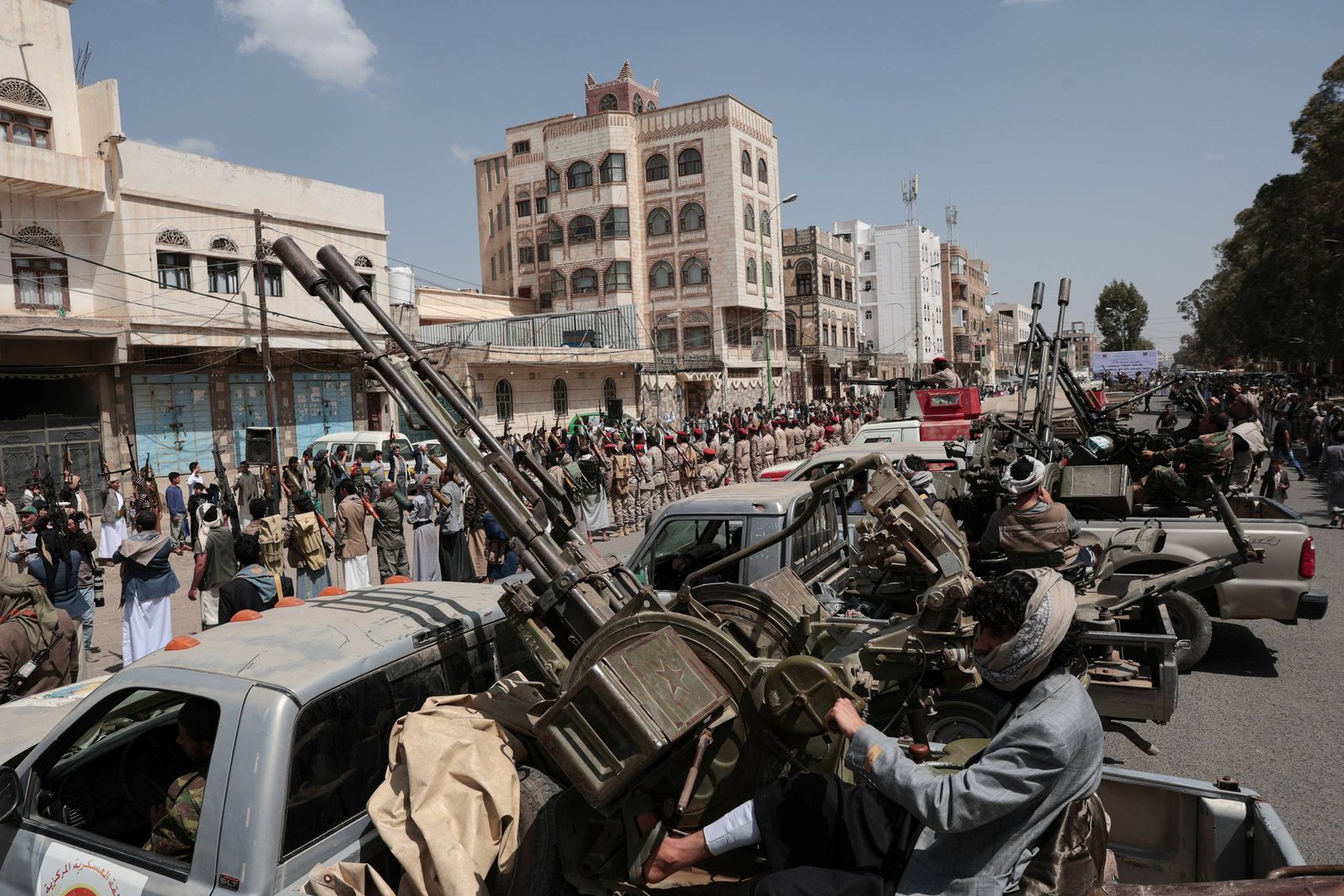
The most significant Houthi salvo came on 6 August, when the group fired several ballistic missiles and drones at positions of the government-aligned Emergency Forces in Hadramawt and Marib. Yemeni military sources told Crisis Group that at least 50 soldiers, including four Saudi Arabian officers, were killed and dozens injured. The Houthis claimed that they acted to pre-empt a planned assault by government forces.
But sources in Sanaa suggest that their motive lay elsewhere. First, the Emergency Forces have been involved in tracking smugglers in Hadramawt, al-Jawf and Marib, monitoring routes the Houthis have used to move weapons and other materiel to areas under their control. Secondly, the targeted locations are adjacent to the Saudi Arabian border and have been critical for supplying government forces in Marib, a major front in past battles with the Houthis. By striking these positions, the Houthis signalled their ability to prevent them from becoming launchpads for a wider government offensive.
Fighting Spreads to Coastal Fronts
Fighting has since spread to several other fronts. The Houthis heightened their attacks on Marib, causing multiple civilian casualties, while clashes intensified in Dhale, Taiz and Shabwa. Houthi forces also engaged with government-aligned National Resistance forces on the Red Sea coast, subsequently striking Mokha city and port. For their part, government-aligned forces launched a series of precision drone attacks on several Houthi positions, including around Marib, Taiz, Mokha, Hajja and Dhale. In so doing, they demonstrated their capacity to act in a coordinated fashion in several places at once. Both sides now have more sophisticated missile, drone and other military capabilities than they had when the front lines largely fell quiet in March 2022.
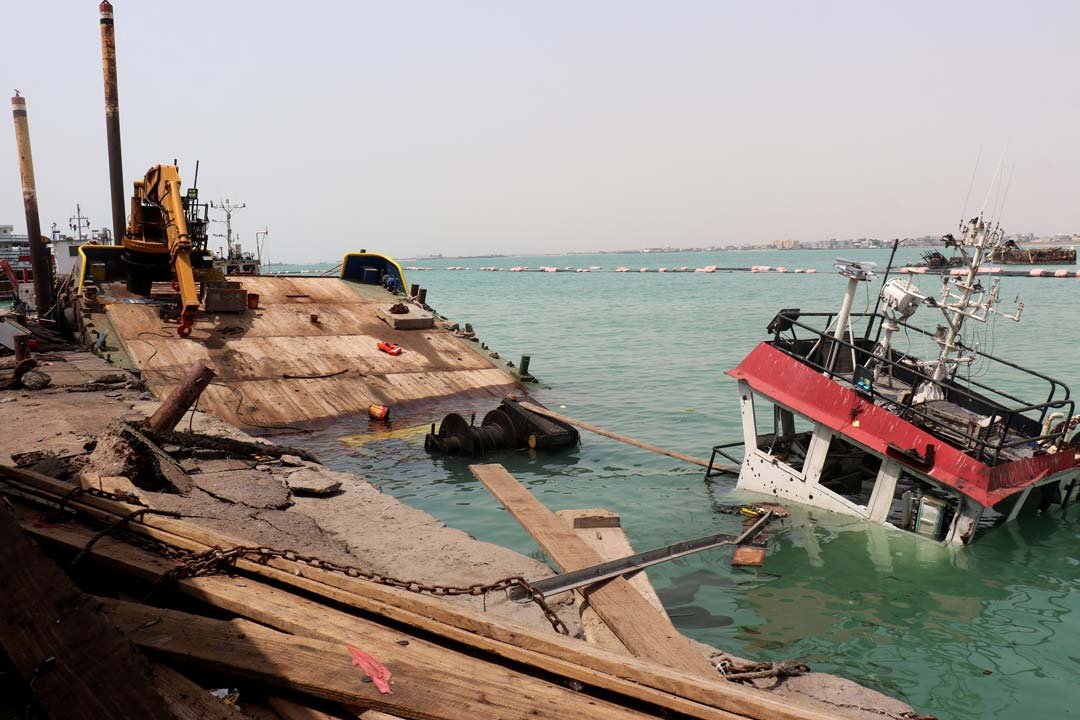
Finally, the Houthis carried out attacks on commercial shipping. On 11 August, they struck a cargo vessel near the Bab al-Mandab strait with three ballistic missiles, killing six people, including Pakistani and Indonesian crew members and two Yemeni rescuers, while injuring ten others.
The Houthis asserted that the ship was carrying Saudi military equipment, a claim the Yemeni government denied, saying it contained only foodstuffs. Following the attack, the Houthis launched heavy strikes on Mokha and other coastal locations, killing at least eight people, including two port security guards, damaging port facilities and nearby boats, making clear that the goals of their maritime campaign extend beyond disrupting shipping in the Red Sea to include increasing the risks of passage through Bab al-Mandab.
The Houthi Strategy
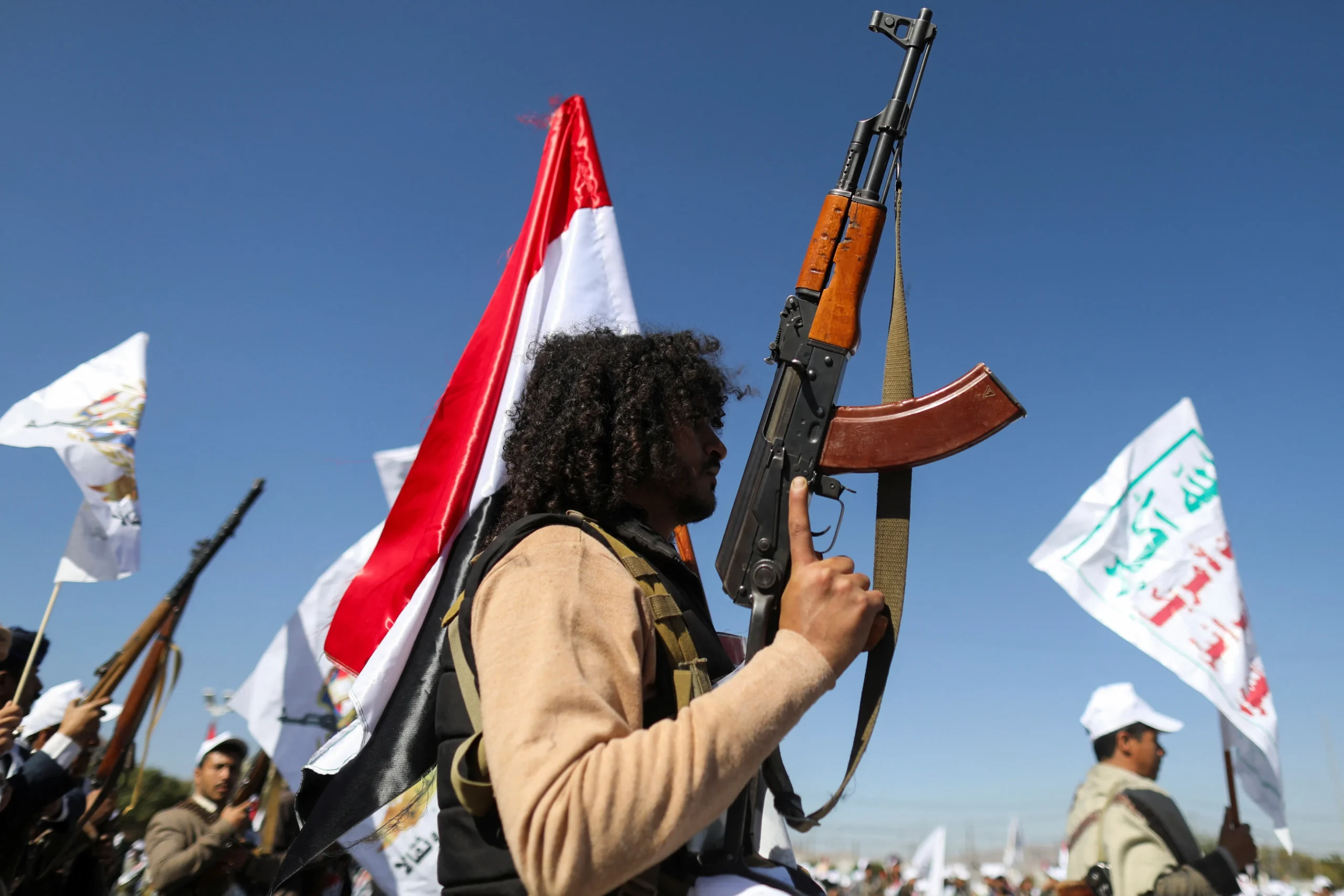
For the Houthis, the renewed fighting is as much about reshaping the political environment as it is about achieving immediate battlefield objectives. For now, they seem unable to mount a comprehensive offensive designed to capture territory in pursuit of military victory. Rather, they are attempting to raise the price of the status quo for Saudi Arabia and their Yemeni opponents in hopes of forcing them to make concessions. Though the Houthis are driven by their own interests, their approach also serves a broader purpose: they are acting in coordination with Iran, at a time when Tehran is eager to demonstrate that it can impose heavy costs on the U.S. and its regional partners.
On the domestic front, the Houthis’ demands have remained constant. They want their foes to allow uninterrupted international flights to and from Sanaa airport; to pay public-sector salaries in the areas they hold (first from Riyadh’s coffers, and subsequently from the proceeds of Yemeni oil sales); to share public revenues with them; and to lift restrictions on Hodeida’s port. Each request has an important political function. The Houthis want to parlay their control of Sanaa and much of northern Yemen into recognition of their sovereignty, including over air links, trade and foreign relations.
The dispute over flights between Sanaa and Tehran is illustrative: at stake is not merely whether humanitarian aid can reach the capital, but also whether the Houthis can forge links to the outside world without the internationally recognised government’s approval. (Of course, their choice of Tehran as a destination is far from innocuous: the route can be used to transfer military equipment and personnel, as the Yemeni government has charged.) The same logic applies to Hodeida’s port, public-sector salaries and revenues. In each instance, the Houthis aspire to convert military control – and now increased military pressure – into political and economic authority, while resisting arrangements that would leave them dependent on institutions controlled by the Yemeni government.
Their attacks in the Bab al-Mandab likewise serve a political purpose, in addition to showcasing solidarity with Iran. Though the Houthis cannot physically close the strait, they can make Saudi-linked shipping more vulnerable, drive up insurance rates and induce companies to consider alternate routes, thereby increasing the status quo’s costs for Saudi Arabia and acquiring leverage with little risk of military losses.
The Government’s Opportunity
The Yemeni government sees the renewed confrontation in starkly different terms. Four years of relative calm had frozen front lines without restoring state authority or fundamentally altering the balance of power. From the government’s perspective, the Houthis used this period to consolidate their rule and strengthen their military capabilities. The government itself remained fragmented, unable to establish a unified military command in areas that it nominally controlled and increasingly dependent on external support, especially after the 2022 Houthi attacks on oil facilities in Hadramawt and Shabwa prevented it from exporting oil.
The government now spots an opportunity to reshape Yemeni dynamics in its favour. It believes it has a justification for confronting the Houthis rather than remaining stuck in a situation of no war, no peace.
The government believes it has several important assets in the new circumstances. It expects Saudi Arabia to hike its political, financial and military support, enabling government-aligned forces to press harder on several fronts and regain territory. So far, while they have been measured in their attacks, they have deployed more advanced weapons than in previous rounds of fighting, causing damage among Houthi ranks. In the second week of August alone, the group held funerals for over 60 fighters.
The Houthis usually do not disclose casualty figures, but sources in Sanaa told Crisis Group that most of these dead were killed by government fire. Government officials also believe that the Houthis are more vulnerable domestically than in the past, due to worsening economic hardship in areas under their control and growing resentment of their coercive security measures. For these reasons, the government is in no mood to return to negotiations that, in its view, would forfeit their new advantages. In conversations with Crisis Group, senior officials said sustained military pressure offers a better chance of improving the government’s position.
Saudi Arabia’s Calculus
Of all the parties directly concerned, Saudi Arabia is arguably in the most complicated position. It can no more ignore attacks on its territory than it can sit back as the Houthis restrict shipping in the Bab al-Mandab or strike Yemeni government forces. At the same time, Riyadh has little interest in returning to the open-ended intervention that characterised the war between 2015 and 2022. Indeed, since the 2022 de facto truce, Saudi policy has been built on reducing threats from Yemen while creating conditions for a political settlement that does not require lasting military involvement. The current Houthi escalation calls that approach into question.
The maritime issue is particularly sensitive. With the Strait of Hormuz largely closed in the wake of the U.S.-Israeli war with Iran, Saudi Arabia’s East-West Pipeline and Red Sea ports, including Yanbu, have grown in importance as alternative energy export routes. Sustained Houthi attempts to target shipping in the Red Sea or Bab al-Mandab would thus carry implications far beyond Yemen. These attacks have already given the Houthis the ability to disrupt the kingdom’s international commerce.
Riyadh has been broadening its network of security partnerships to build a more credible deterrent against the threats posed by the Houthis, Iran and the Iran-aligned groups in Iraq. It spearheaded creation of the Multinational Maritime Defense Alliance, announced on 30 July, which brought together over 40 countries, including the U.S., in a “defensive framework” designed to “safeguard … shared maritime interests in the Bab al-Mandab Strait, the Red Sea and the Gulf of Aden”. On 7 August, Saudi Arabia also concluded the Mecca Joint Defence Agreement, a mutual defence pact, with Pakistan and Türkiye.
Taken together, these steps suggest that Riyadh is seeking to raise the costs of escalation against it, rather than preparing for a larger military campaign. This approach is consistent with Saudi policy since 2022: limiting its exposure to regional conflicts while strengthening the military and diplomatic tools needed to deter escalation or bring it to an end.
For now, Saudi Arabia has reasons to favour a more gradual response. Rather than immediately launching a sustained air campaign, it is letting Yemeni forces take the lead on the ground, providing them with advanced weaponry, intelligence, defensive and maritime support, all the while discouraging them from escalating in a manner that could become difficult to control. In this way, Riyadh hopes to rebuild deterrence without immediately resuming all-out war. But the space for restraint could rapidly narrow. Significant casualties inside Saudi Arabia, a Houthi attack that badly damages an oil facility, a serious shipping incident or a major Houthi push toward Yemen’s western coast or Marib could change Riyadh’s calculations.
Can Yemen’s War Be Contained?
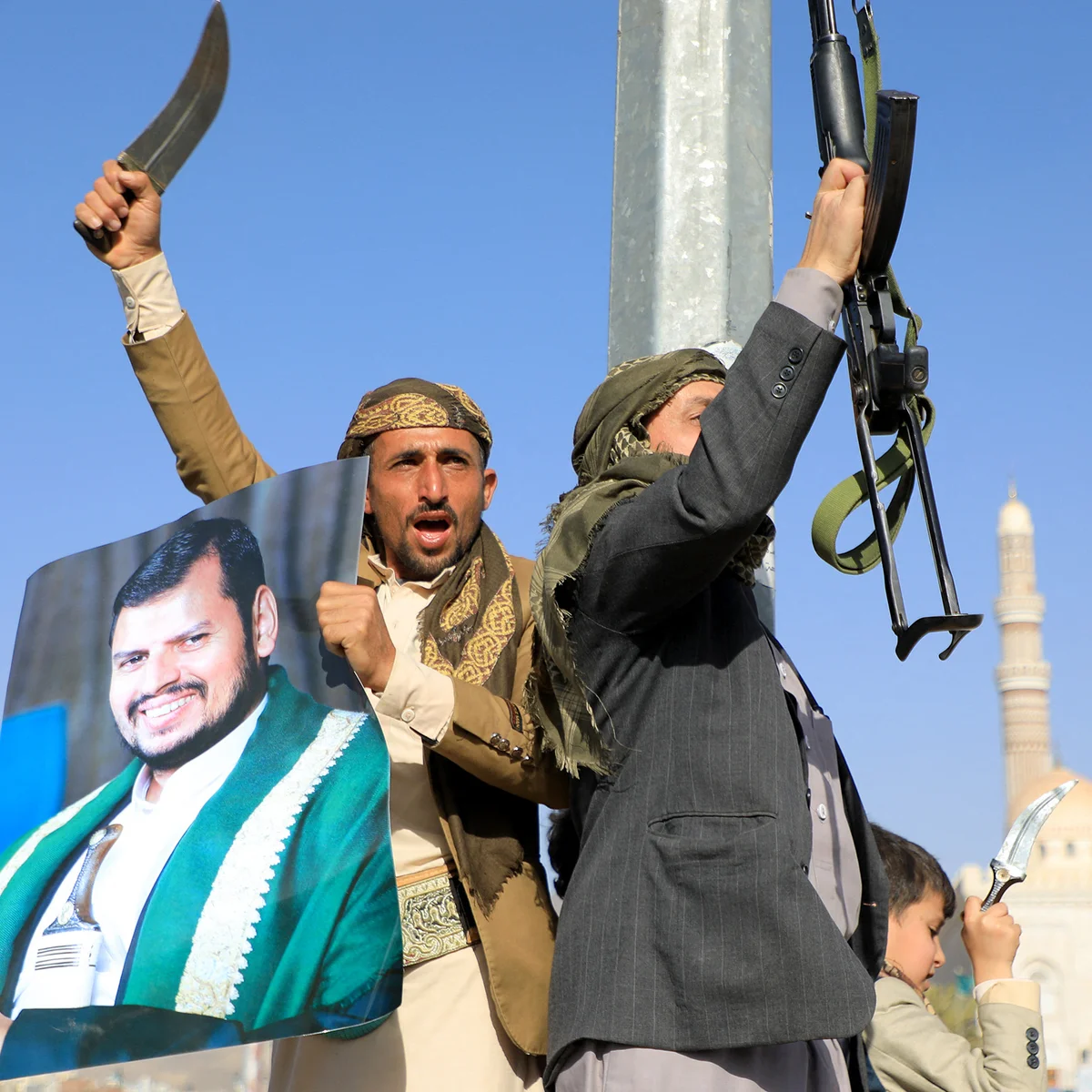
Yemen is back at war. The question now is what kind of war it will turn out to be. The most likely near-term scenario entails continued, restrained exchanges involving missiles, drones and artillery on land and at sea, alongside more intense ground fighting on a few fronts. But a shift from this phase to a more comprehensive conflict need not require an explicit decision by any party.
It could emerge from a series of small, seemingly less consequential decisions. A Houthi missile attack might provoke a government response that, in turn, triggers another Houthi strike, resulting in increased Saudi military support and direct Houthi retaliation against Saudi territory or shipping. At that point, Riyadh might feel compelled to expand its involvement; the government could view the shifting balance of power as an opportunity to open another front. And so on: each step viewed as defensive or limited in nature, yet together moving the conflict toward a far larger confrontation.
Meanwhile, as the conflict broadens, prospects for containment shrink. In the last week of July, Oman sought to bring the Houthis and Saudi Arabia back to the table to revive the truce; the effort failed, partly because the Houthis expanded their negotiating agenda.
They continued to insist on the concessions described above. But they now also demanded that Saudi Arabia withdraw in full from Yemen, stop funding and supporting the Yemeni government, and pay compensation for its military intervention. Riyadh will not oblige and – to the extent that it is hamstrung by U.S. sanctions on the Houthis – it could not even if it wished to. At the same time, Iran, which had earlier sought to reduce tensions between the Houthis and their opponents, has shifted its stance over the past year: amid its wider confrontation with the U.S., it sees real benefit in further disruptions to the oil market resulting from strikes in the Bab al-Mandab.
A return to meaningful negotiations is not beyond reach. The protagonists might well conclude that the current trajectory carries diminishing returns and heightened risks. The Houthis may now view controlled escalation as advantageous, but they may yet see the flip side: that their actions could give rise to the very type of Saudi-backed Yemeni military coalition and domestic mobilisation they have sought to avoid. For its part, Saudi Arabia would clearly prefer to restore a modicum of calm, and its Yemeni partners cannot afford to ignore its entreaties.
The immediate priority ought to be for the Houthis and Saudi-backed government to pause all land and maritime attacks and undertake a series of mutual, practical confidence-building measures. These should include the immediate reopening of Sanaa airport, with an initial list of agreed-upon destinations, in line with earlier discussions; easing restrictions on the movement of ships to and from Hodeida’s ports; and reviving the stalled prisoner exchange understandings, pursuant to which approximately 1,600 detainees were to be released.
But while such de-escalatory steps are necessary, more will be needed to consolidate any ensuing Yemeni calm. Neither the Houthis nor the government is likely to be satisfied with a deal consisting exclusively of measures discussed during the last truce.
The political and regional environment is no longer the same, and the military exchanges of recent weeks suggest that the 2022 truce arrangements will no longer suffice to keep the front lines quiet. If previous diplomatic efforts tended to treat humanitarian, economic and political issues sequentially, the current crisis has starkly illustrated how closely intertwined they are: the status of Sanaa airport, for example, or Hodeida, cannot be divorced from its political implications.
When the guns are silenced and initial confidence-building steps are under way, it will therefore be important to rapidly initiate negotiations, possibly mediated by Oman, addressing broader issues, such as payment of salaries in Houthi-controlled areas; revenue sharing between the Houthis and the government; and ending the economic divisions between Sanaa and Aden, the government’s temporary seat, notably the existence of two central banks and currencies.
Beyond that lie political issues at the heart of the internal conflict. These relate to long-term power sharing arrangements, the status of the south, the state’s future structure (whether Yemen will be a federation, confederation or a more centralised entity) and other constitutional matters. While immediate resolution may not be on the cards, the government and the Houthis should reach agreement on a common agenda for negotiations on this set of issues as well as on a transitional period during which they would coordinate interim power sharing arrangements prior to moving to broader inter-Yemeni talks.
Of course, no durable de-escalation is likely if the U.S.-Iranian confrontation persists. Reviving the memorandum of understanding between the two countries, or a similar arrangement that opens the Strait of Hormuz, ends hostilities and sets the stage for broader negotiations, is thus of critical importance to prevent the region – Yemen included – from being plunged into another prolonged conflict, with devastating consequences for all.