
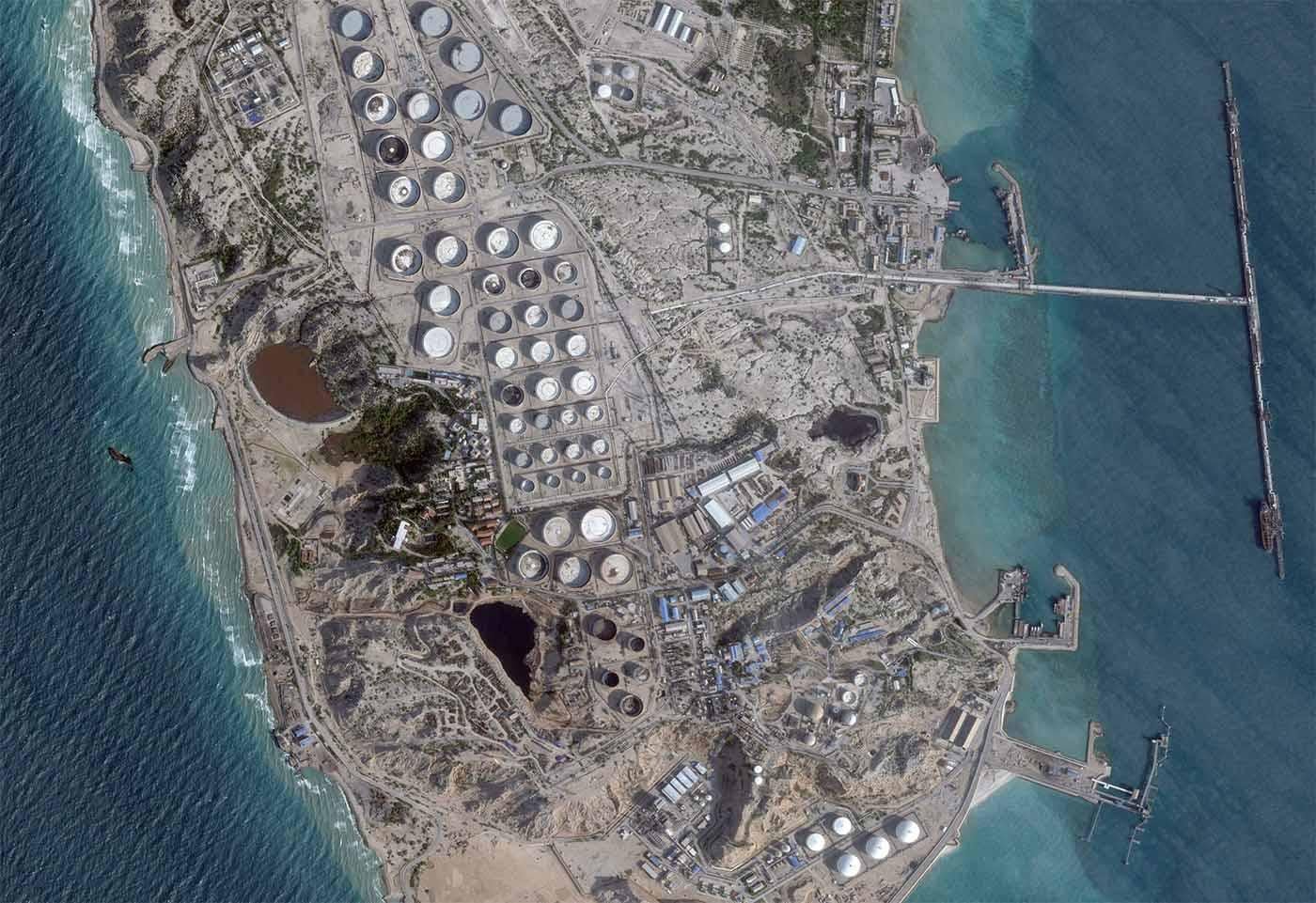
The United States and Israel possess the power to destroy Kharg Island. However, they choose not to strike the physical infrastructure. The reason is the guaranteed global oil shock.
In the Persian Gulf, a small limestone rock and a narrow waterway form the most critical intersection in modern global geopolitics. Kharg Island is a tiny landmass of only twenty-two square kilometers. Nearby, the Strait of Hormuz connects the Gulf to the open ocean. Together, these two locations form the epicenter of a severe military and economic crisis involving Iran, the United States, and Israel. However, the situation has rapidly escalated beyond a mere standoff into active disruption. Modern military forces hesitate to attack the island directly. This hesitation shows the complex reality of modern warfare. A single military error here could cause an immediate global economic crisis.
Kharg Island handles almost all of Iran’s oil exports. It manages approximately ninety percent of the country’s crude oil shipments. The oil that funds the Iranian government must pass through this facility. The island contains massive storage tanks and deep-water docks capable of loading millions of barrels daily. This concentration makes Kharg a highly vulnerable target. Unlike inland oil fields, the island is small and isolated. Furthermore, most oil leaving Kharg goes directly to China. Therefore, attacking Kharg Island is not merely an attack on Iran. It is a direct disruption of energy supplies to the second-largest economy in the world. Recognizing this vulnerability, Iran has maximized its export volumes. Recent reports indicate Iran pushed exports to nearly three million barrels per day before the current hostilities began. The government wanted to export as much oil as possible before any military strike occurred.
The island is the loading point, and the Strait is the only maritime exit. Oil tankers must travel through this narrow channel to reach global markets. The Strait of Hormuz is only twenty-one miles wide at its narrowest point. Yet, it typically carries roughly twenty percent of the global oil supply. Following the outbreak of the war in late February 2026, the Strait of Hormuz is no longer functional for standard maritime trade. Iran has forced a de facto closure of the waterway. The Islamic Revolutionary Guard Corps declared the strait closed and warned they would attack any vessel attempting passage. They have deployed naval mines and launched repeated drone and missile attacks against commercial shipping. A recent example is the severe attack on the Thai-flagged cargo ship Mayuree Naree in early March 2026. Iranian forces struck the vessel with projectiles, causing a massive engine room fire and leaving multiple crew members missing. Consequently, commercial shipping through the Strait has effectively halted. Major global carriers have suspended transits and ordered vessels to reroute. While the oil terminals of Kharg Island have not yet been directly destroyed by American and Israeli bombers, the near-total paralysis of the Strait means the vital artery it feeds into is currently choked off.
This active disruption explains the specific military restraint regarding the island itself. The United States and Israel possess the power to destroy Kharg Island. However, they choose not to strike the physical infrastructure. The reason is the guaranteed global oil shock. If Kharg Island burns, the temporary closure of the Strait of Hormuz becomes a permanent regional catastrophe. Energy analysts predict this specific sequence of events would instantly remove millions of barrels of oil from the global market. Consequently, global oil prices would surge instantly. Prices could easily reach one hundred and fifty dollars or even two hundred dollars per barrel. This sudden price increase would trigger severe worldwide inflation and damage Western economies. Therefore, Kharg Island remains a strict red line. The potential economic damage acts as a protective shield for the Iranian facility. The financial cost of destroying the island is simply too high for the global economy to tolerate.
Because physical destruction is costly, military planners consider alternative options. The strategy is shifting from bombing to physical occupation. Military strategists discuss deploying elite ground troops. This discussion often includes units like the United States Navy SEAL Team Six. The goal would be to physically seize Kharg Island. This approach offers two distinct advantages. First, troops could halt the loading process to stop Iranian oil exports immediately. This cuts off funding to the Iranian military without destroying the physical infrastructure. Second, preserving the oil facilities leaves a functioning economy for any potential future Iranian government. The United States could use the intact oil terminal as a powerful negotiation tool. Officials view the island as a secret weapon. It provides a method to apply maximum pressure on the government.
A ground operation to seize the island remains highly dangerous, though the nature of the threat has changed. President Donald Trump recently announced that American strikes have decimated Iran’s naval forces and air defense networks. He stated that the United States has virtually destroyed these capabilities. Military analysts support these claims, confirming the severe degradation of Iran’s advanced radar and missile batteries. Consequently, an invading force would face fewer traditional anti-aircraft threats. Instead, the primary danger now lies in asymmetric warfare. The extreme risk is that a desperate Iranian military might intentionally destroy the Kharg Island oil terminal themselves rather than allow American forces to capture it. Furthermore, capturing the island only solves half the problem. If American forces take control of Kharg Island, they still need to move ships safely through the completely blocked Strait of Hormuz. Capturing Kharg Island inevitably leads to a prolonged naval conflict to reopen the Strait.
These locations represent the ultimate limitations of military power. They demonstrate how global trade restricts direct military action. The island functions as the vital oil hub. The Strait serves as the unavoidable pathway. Together, they form a complex geopolitical trap. The United States and Israel seek to neutralize Iranian military capabilities. Yet, both nations must operate carefully around this energy infrastructure. Destroying the island initiates a guaranteed global economic disaster. Seizing the island risks a massive ground operation with no guarantee of reopening the maritime routes. Therefore, Kharg Island remains safe from aerial bombardment for now. It stands as a profound symbol of the current conflict. It dictates the boundaries of a regional war. Until military planners find a secure way to reopen the Strait of Hormuz, Kharg Island will remain the most protected target in the Middle East.