
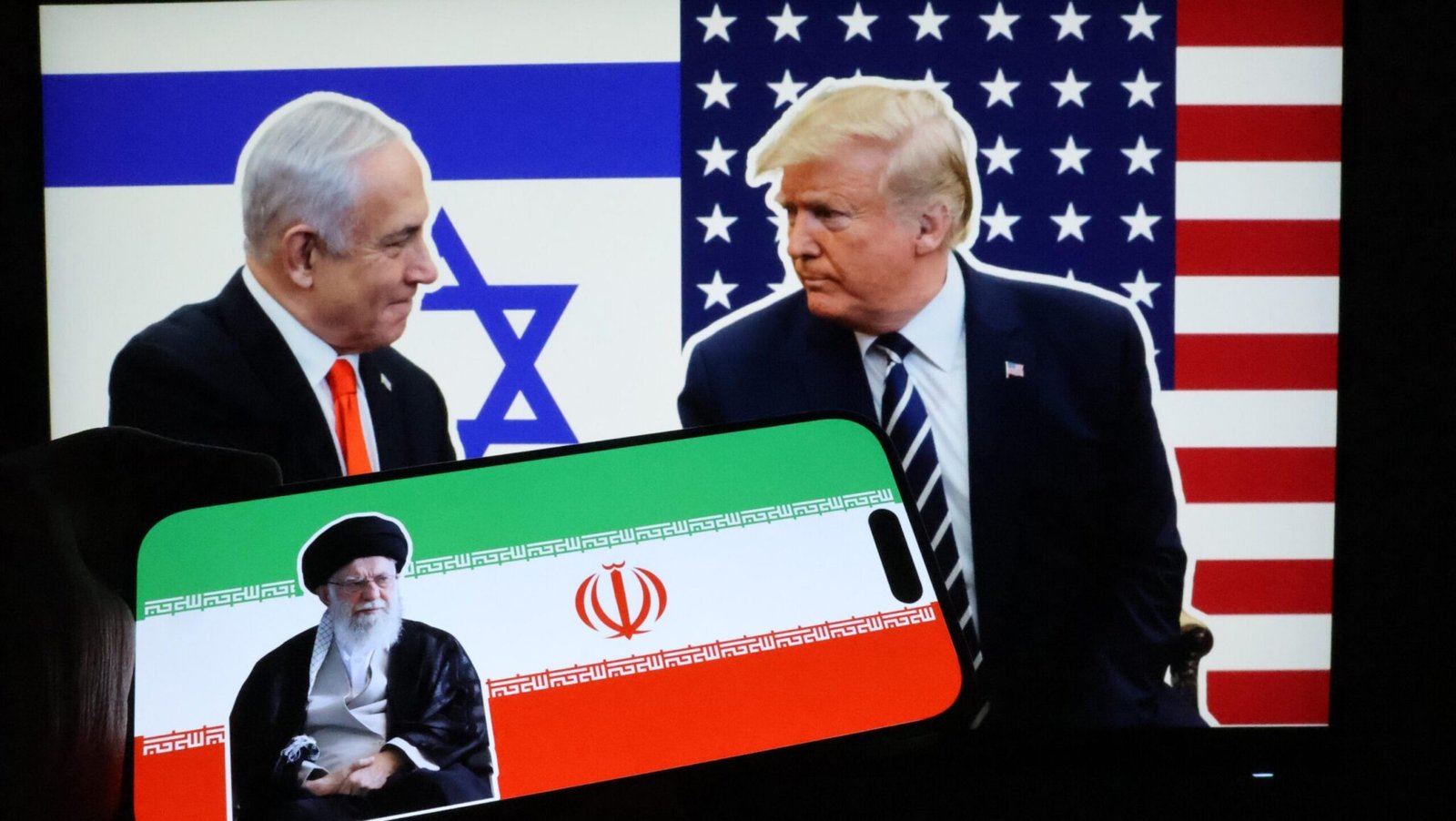
Iran war’s buried weapon-grade uranium, likely uncontrolled, challenges nonproliferation norms. As US-Saudi nuclear deals may permit enrichment, and remote small reactors face drone threats, the crumbling regime requires creative safeguards to counter Russian-Chinese influence.
The structural integrity of Iran nuclear infrastructure represents a major flashpoint in contemporary international security and defense planning. Sophisticated monitoring of Iran nuclear infrastructure confirms that kinetic operations have fundamentally rewritten the parameters of regional deterrence and atomic containment.
Because this Iran nuclear infrastructure holds critical material, securing the surrounding areas remains an urgent operational priority for international coalitions. Ultimately, how the international community manages the remnants of Iran nuclear infrastructure will determine the future stability of global non-proliferation treaties.
Strategic Consequences of Striking Iran Nuclear Infrastructure
The Iran war has delivered another hammer blow to an already crumbling global nuclear regime. The rapid and destabilizing technological and geopolitical changes of recent years have severely undermined the international order and sent shock waves that are reshaping nuclear energy, security, and weapons policy.
Iran’s Nuclear Challenge
The Iran war underscores the evolution of the nuclear regime. It has set a precedent for the forcible dismantlement of a sovereign nation’s active nuclear program. Military strikes on nuclear infrastructure are unusual in the history of containing nuclear proliferation, although Israel has preemptively struck non-operating research reactors in Iraq and Syria. The United States and Israel launched air strikes that incapacitated much of Iran’s hard and soft nuclear infrastructure with a focus on destroying its uranium enrichment and scientific capability.
President Donald Trump has claimed the uranium enrichment capability has been “obliterated,” and the Central Intelligence Agency (CIA) director, John Ratcliffe, has stated that the nuclear sites have been “severely damaged.” This has led to the loss of control of Iran’s fissile material. Iran has produced 400 kilograms of weapon-grade uranium that likely is buried under tons of rubble at the Isfahan nuclear complex. While mystery still shrouds its status, it is probable that Iran does not control this material.
There is a historical precedent for uncertain control of weapons-grade material in the wake of the collapse of the Union of Soviet Socialist Republics (USSR). But that original “loose nukes” problem was remedied through cooperation among the United States, Russia, and the former Soviet states.
Such cooperation seems unlikely in Iran, but joint activity with a common goal is perhaps not out of the question. Trump has claimed that Iran believes that only the United States or China could excavate and remove the buried uranium. And at various times, he has stated that Iran is willing to allow the removal of the material from the country. Israeli Prime Minister Benjamin Netanyahu, apparently with the agreement of the United States, has declared that the war will not be over until the enriched uranium has been “taken out of Iran” and “enrichment sites…dismantled.”
It is dangerous, expensive, and complex for the United States or Israel to attempt to remove the uranium under hostile conditions. And the option of sending it to Russia (as was done under the Joint Comprehensive Plan of Action) when President Vladimir Putin has pledged to Iran’s foreign minister that he will “do everything that serves your interests,” is unlikely to be appealing to the United States or Israel. However, there may be an acceptable third country that could hold the uranium if it is removed from Iran.
For the foreseeable future, the United States and Israel may be satisfied to allow the uranium to remain buried under the rubble. Both seem to believe they can prevent the restitution of Iran’s uranium enrichment program through active monitoring and additional military strikes. In reference to the buried uranium, Trump stated, “We’ll get to that at some point. We have it surveilled…If anybody got near the place, we will know about it, and we’ll blow them up.”
Proliferation Challenges Surrounding Iran Nuclear Infrastructure
This approach has raised questions about how the international system of the future will respond to nations that skirt the fringes of their peaceful nuclear commitments as members of the Non-Proliferation Treaty (NPT). There is already significant pressure on the International Atomic Energy Agency (IAEA) to safeguard existing nuclear facilities, but as nuclear power expands, the number of new nuclear sites requiring oversight will grow. The agency’s mandate, structure, and budget may not be adequate for this task.
If it cannot offer the necessary control and confidence that nuclear programs won’t morph into threats, coalitions of willing and powerful nations may act in concert to limit atomic transgressions and prevent new nuclear states outside of the traditional international diplomatic framework.
Iran’s history here is instructive. Diplomacy restrained but did not end the threat posed by Iran’s nuclear program. It offered cover for non-nuclear dangers, including a ballistic missile and a terrorist network build-up. Military strikes substantially rolled back the nuclear program.
With its baseline now reset, it seems unlikely that the United States or Israel, after spending $25 billion plus to militarily eliminate Iran’s nuclear threat, will accept a solution that allows continued uranium enrichment in Iran.
Middle East Energy Shifts and Iran Nuclear Infrastructure
The Middle East’s Nuclear Energy Expansion
The Iran war’s impacts are also rippling through a Middle East that is increasingly interested in nuclear power. The United Arab Emirates already operates three Korean reactors, Egypt and Turkey are building Russian reactors, and the United States and Saudi Arabia are on the path to nuclear energy cooperation that would result in the construction of one or more reactors. Other nations in the region are also interested in nuclear energy.
The US-Saudi agreement is an important bellwether for how the parameters of civil nuclear energy cooperation will evolve. Because of its controversial content, this agreement could become a casualty, or it could set new precedents for how the United States engages in international commerce.
A key concern about the Saudi agreement revolves around the nonproliferation conditions. Saudi Arabia has insisted on two red lines—preserving its right to enrich uranium and its unwillingness to accept the Additional Protocol to its IAEA safeguards agreement. A nonproliferation report that the Trump administration sent to Congress last November, supporting the Saudi agreement, stated that the United States would address the Additional Protocol by creating a “Bilateral Safeguards Agreement” to supplement the IAEA safeguards system.
The details of that arrangement were not specified, but the report identified it as focusing on “sensitive areas of potential nuclear cooperation,” including uranium enrichment, conversion, fuel fabrication, and reprocessing. The agreement may also allow Saudi Arabia to preserve the right to enrich uranium, although the framework surrounding that activity has not been revealed.
These provisions have triggered a congressional backlash, with some members insisting on a “Gold Standard” for this and future nuclear cooperation agreements. That standard requires a nation to forego enrichment and reprocessing if it wants US nuclear technology. But it is not a requirement under the US Atomic Energy Act, which governs bilateral US nuclear agreements, and it is enshrined in only a few nuclear cooperation agreements, including the US-UAE nuclear pact.
Beyond Saudi Arabia, allowing uranium enrichment is also under negotiation between the United States and South Korea, as is the consideration of spent-fuel reprocessing. Potentially loosening the constraints on these components of US nuclear cooperation would reverse years of policy practice that sought to limit the expansion of sensitive nuclear activities.
But new global energy security and geopolitical realities are intruding on the old nuclear frameworks. There are numerous advanced reactors that require higher enrichment levels (though not to weapon-grade levels) and that are designed to use plutonium as a fuel.
These reactors have lower power levels and flexible deployment options that are appealing to developing economies with growing energy needs, as well as to established nuclear nations. While it is unlikely that the United States will undermine its commitment to preventing nuclear proliferation, the new global realities may result in creative partnerships and policies that supplement traditional IAEA safeguards practices. This could allow the agency to remain relevant but also offer expanded options that can accommodate the scale of the new reactor technology opportunity.
Global Market Competition over Iran Nuclear Infrastructure Assets
Emerging Nuclear Challenges
These tradeoffs will attract sharp criticism, but they may be necessary to claw back international nuclear market share and keep authoritarian nuclear export competitors, such as Russia and China, at bay. The United States lost its lead in nuclear export decades ago, and it is unlikely that it can regain that role using its old playbook.
Russia offers an export package that is very appealing, but it is a political debt trap. It includes state financing, a relaxed repayment schedule, the ability to operate the reactor in-country, and the willingness to accept the spent fuel back. Once China completes its substantial domestic nuclear buildout by mid-century, it may enter the export market with force to keep its industrial supply chains active and to support its geopolitical goals. Its Belt and Road Initiative is formidable, with infrastructure projects in over 150 countries, including many developing economies that may seek small- and mid-sized reactors.
It matters which nation dominates the export of nuclear technology in this century. It is important for geopolitical influence because it establishes a 100-year energy relationship that has many political and economic spillover effects. And it helps to cement allies, sustain strong nuclear governance, and rebuild domestic and trusted national supply chains.
Tactical Safety Vulnerabilities of Iran Nuclear Infrastructure
In addition to market competition and nuclear proliferation, the new nuclear regime will need to manage the vulnerability of civil and military nuclear reactors in conflict zones.
The taboo against attacks on civil nuclear infrastructure has been repeatedly broken by Russia. Despite the IAEA having passed resolutions condemning these actions, Russia has extensively targeted Ukraine’s civilian nuclear power infrastructure.
The United States and Israel, in keeping with IAEA guidance prohibiting attacks on operating nuclear plants, exempted the Bushehr nuclear reactor from strikes in June 2025 and in March 2026. But in the new geopolitical and technological environment, this example of restraint may not be enough. This emerging challenge now extends beyond traditional reactors to include the security of small reactors that can be transported to military forward deployment zones, disaster relief areas, or used to power a variety of civil and military installations. The US military has several programs supporting advanced reactor concepts that are slated for demonstration in the coming years. Other nations may follow the United States’ lead.
Because many of these designs do not rely on water as a coolant, the reactors can be located in remote areas away from traditional security systems. Networked drone swarms are a particular concern for all nuclear reactors, but remote reactors are very vulnerable. These weapons have been used against military and economic targets in the Ukraine and Iran wars, and their capabilities are growing more powerful as a result. This creates a new dimension in the nuclear security threat environment for which there is not yet a good policy or technology response.