
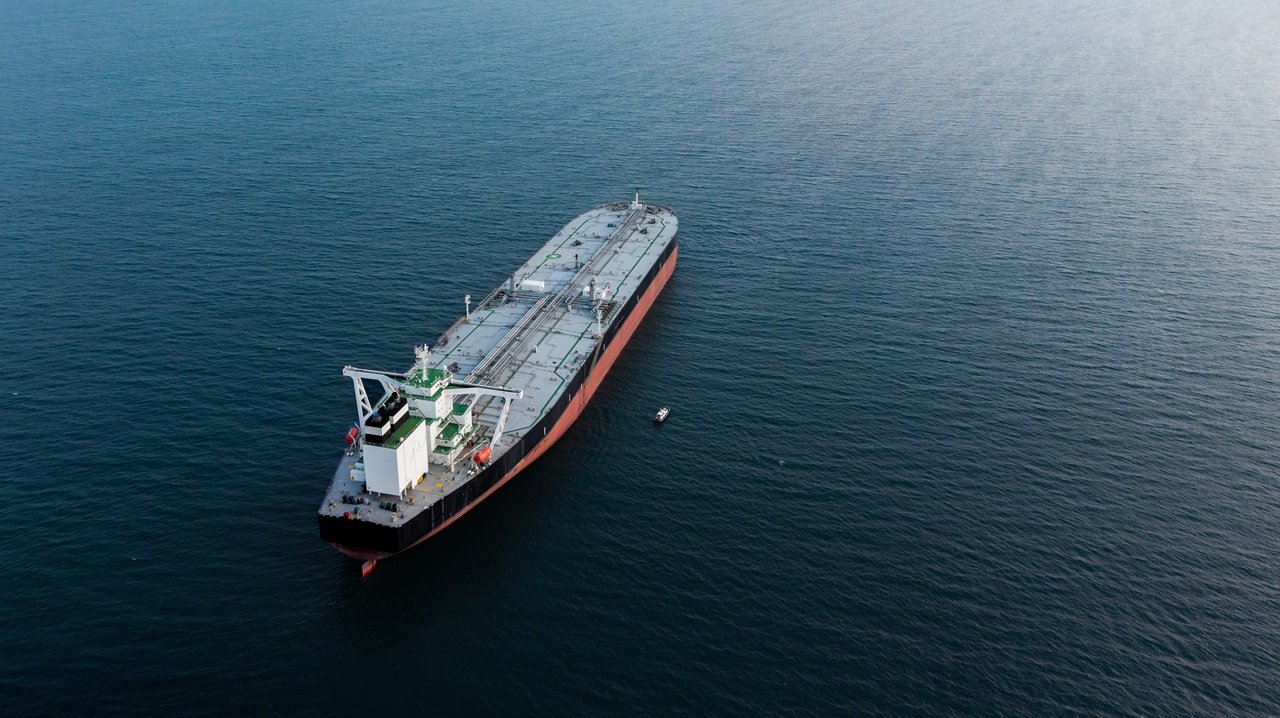
Iran’s closure of the Strait of Hormuz is a high-stakes card, not a checkmate. Playing it would trigger global oil crisis, forcing adaptation that evaporates Tehran’s leverage—just as Russia lost gas power—while empowering US escalation dominance.
Analyzing Iran’s leverage reveals the complex strategic calculations currently playing out in the Middle East. Many experts debate whether Iran’s leverage is sufficient to force major concessions from Western superpowers. However, overestimating Iran’s leverage could lead to severe economic and military miscalculations, proving that Iran’s leverage is a high-stakes gamble.
The Limits of Iran’s Leverage in Diplomatic Standoffs
In the wake of reports that China is planning covert arms deliveries to Iran, President Donald Trump claims to have secured his Chinese counterpart Xi Jinping’s commitment to forgo arming America’s wartime adversary. Meanwhile, the United States and Iran are continuing a half-hearted cease-fire alongside half-hearted talks. Leaders on each side see the ticking clock as a powerful ally, and hope that their leverage will grow as economic pressure saps their foe’s political will.
Trump does not hold as many cards as he hoped in order to coerce Iran’s leaders, whoever they might be, to accept his terms for an end to the war, Iran’s closure of the Strait of Hormuz, and the US termination of a naval blockade of Iran. Yet neither do Iran’s leaders hold all the cards. More importantly, playing cards is more complicated than merely holding them. Trump, who recently compared the world to a casino, probably gets this. Do his Iranian counterparts?
Historical Lessons and the Illusion of Iran’s Leverage
The thing about playing cards is that, once you play a card, you no longer have it. Russian President Vladimir Putin learned this lesson, quite expensively for Russia, in attempting to use his country’s vast pipeline gas exports to Europe as political leverage following Russia’s 2022 invasion of Ukraine. Before Russia mostly cut off its pipeline gas supplies later that year, Putin had considerable leverage over Europe. After he did so, European leaders adapted to this new reality—and Putin’s leverage largely evaporated.
The Russian move was painful for Europe. But Russia forced Europe to create a new energy system, which it is doing. Russia lost what had been its largest and most profitable market for natural gas, and it has not made up for the lost volume or found other customers willing to pay the same price. Europeans are paying more for energy, but they are surviving without Russian gas, and they are unlikely to ever again buy as much as they did in 2021.
Some European leaders have lost their jobs, but Europe continues to arm and fund Ukraine four years later. From this perspective, Iran’s leaders—many of whom assert excellence at the “chess” of international diplomacy—would do well to think again about card-playing.
Global Commodities and the True Scale of Iran’s Leverage
Oil and gas are different commodities and their markets operate differently. Oil is much easier than gas (especially pipeline gas) to deliver to various markets, although its characteristics and purpose-built refineries do impose limits. What is important is that the global energy system is coping with, but not yet adapting to, the loss of oil exports through the Strait of Hormuz. The distinction is an important one.
Many have already discussed what could occur in US and international markets when coping mechanisms, like using working reserves at refineries and strategic stockpile releases to manage the oil supply gap, are no longer sustainable. While estimates vary, all agree that oil prices will skyrocket and oil products will become unavailable for some current uses. This will affect supplies of gasoline, diesel, and aviation fuel, as well as inputs in manufacturing plastics, semiconductors, and other ubiquitous products.
How Playing the Energy Card Diminishes Iran’s Leverage
Iran’s leaders appear to believe that Trump’s fear of this outcome and its possible domestic political consequences will drive him toward the settlement they want. If they play this card—that is, if they create a global oil crisis that imposes sufficiently high costs to force not only coping, but adapting—then Iran will lose its leverage much as Moscow did. It is a gamble of epic proportions.
Escalation Dominance Against Iran’s Leverage
Worse for Tehran, using energy leverage in this way could produce political consequences in the United States like those that Russia’s actions generated in Europe: hardening positions and growing determination to win rather than to talk. What will be different is that the United States has one president, not 27 presidents and prime ministers; that it is already at war and not a mere spectator; that Americans who now see the war as optional will increasingly see it as necessary if Iranian intransigence continues; and that the United States has far greater military capabilities than Europe’s combined militaries (and Iran, for its part, is a less formidable adversary than Russia).
No one should want to cross the threshold that creates a true global oil crisis. Such a crisis will be costly for America and for the world. But it will be far worse for Iran and its leaders and people than for anyone else. Setting aside Iran’s already dire economic state, if the US president were less politically constrained than he is today—a state of affairs that could come about if a major oil crisis led to demands for him to “do something”—the United States will command escalation dominance at every step on the ladder. Some of Trump’s unfulfilled threats could become more realistic. He might find new international support for decisive action, too.
The Final Calculation on Iran’s Leverage
The bottom line is that a long-term shutdown of the Strait of Hormuz is a card, but is not a checkmate move. This doesn’t mean that administration officials can get everything they want from Tehran; if they negotiate successfully, the outcome will inherently be a compromise. What it does mean is that Iran’s leaders could face grave risks if they fail to secure an agreement with Washington before they force US and global economies to absorb lasting damage.