
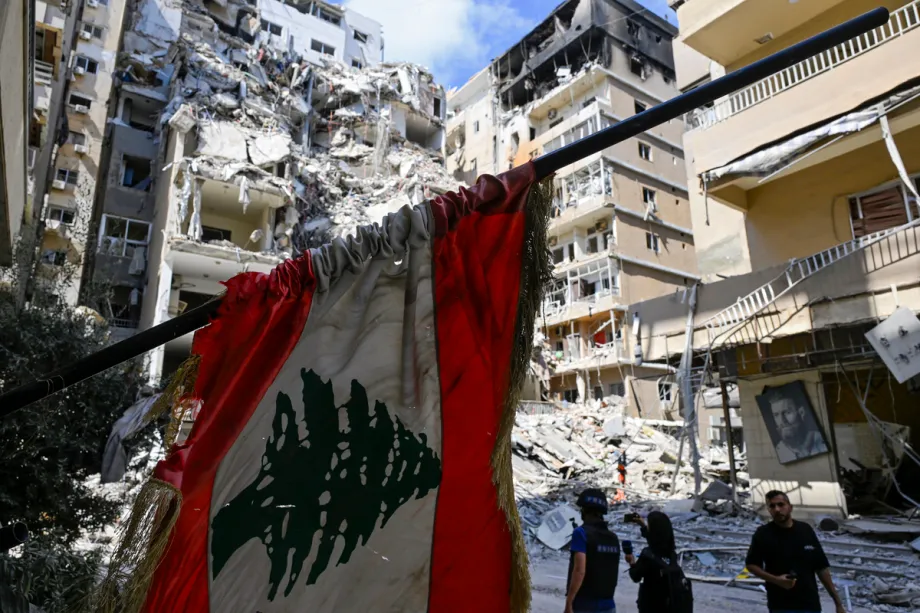
Lebanon’s conflict has frozen into a managed stalemate where ceasefires conceal permanent occupation. All actors prefer this arrangement to escalation or resolution, allowing Israel to hold territory, Hezbollah to avoid full war, and the state to perform authority it lacks.
Lebanon’s conflict architecture has evolved beyond war and peace into a managed stalemate where ceasefires function as diplomatic cover for permanent occupation. This managed stalemate benefits all actors by freezing territorial control without requiring resolution, allowing Israel to hold ground, Hezbollah to avoid full escalation, and the state to perform authority it cannot exercise.
Managed stalemate never real
The pattern is now visible. On 1 June, Israel and Hezbollah agreed to a ceasefire. Within days, both sides violated it. On 5 June, Israeli airstrikes killed three Lebanese army officers and six others on a road south of Nabatiyeh. On 6 June, Israeli helicopters struck Beirut’s southern suburbs in retaliation for Hezbollah drone attacks. On 3 June, Hezbollah leader Naim Kassem called the ceasefire agreement “absurd, humiliating, and insulting” and rejected it entirely. The ceasefire lasted less than a week before it became what all the previous ones became: a framework in name, warfare in practice.
But here is what is not being said plainly: this is no longer a ceasefire breaking down. This is a ceasefire that was never real, now settling into its permanent form.
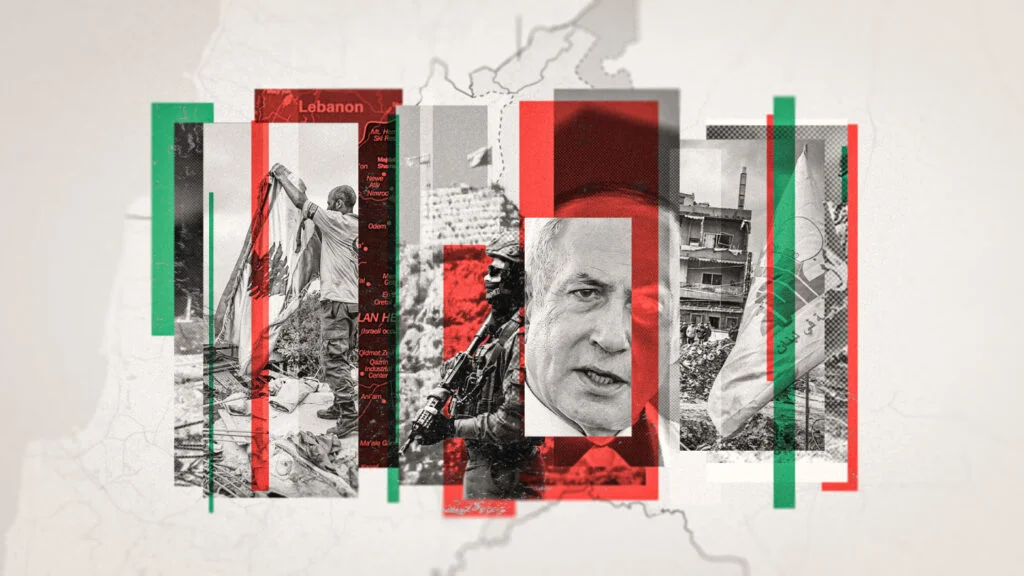
The ceasefire that managed stalemate
The 16 April ceasefire was supposed to be temporary. A ten-day pause. A negotiating window. It was extended on 23 April to three weeks. Extended again on 15 May to forty-five days. On 1 June, a new agreement was reached with explicit terms: Israel would not target Beirut’s southern suburbs. Hezbollah would not attack Israel. The Lebanese state would extend authority southward. All of this would be verified and enforced.
None of it was real. Not because the negotiators were dishonest. Because the framework assumed conditions that do not exist.
The Israeli military occupies approximately one-fifth of Lebanese territory. It has pushed further into the country than at any time since its 1982-2000 occupation. It is not occupying on the basis of a military offensive that ended, it is occupying while a ceasefire nominally holds. Every “violation” is not a breach of the ceasefire. It is the ceasefire’s actual operation.
Hezbollah has not disarmed. It has not withdrawn from southern Lebanon. It has not accepted the subordination to state authority that the ceasefire framework demands. Instead, it has continued limited military operations, attacking Israeli forces and launching drone strikes when Israeli aircraft strike Hezbollah positions. This is not defiance of the ceasefire. This is the ceasefire’s actual structure.
Managing the managed stalemate
The Lebanese state has announced phases of disarmament and state consolidation. The military made declarations of progress on “establishing a state monopoly on arms.” None of this corresponds to reality. The state has not disarmed Hezbollah because it does not have the capacity. It has not extended authority south of Litani because Israel occupies that territory. The state’s announcements are not lies. They are the performance that makes managed stalemate possible.
What exists now is not a ceasefire that will hold or break. It is an arrangement where all parties continue operating while maintaining the fiction that a ceasefire exists.
Managed stalemate prefers all parties
Consider what each actor would face if the ceasefire actually ended:
Israel would need to decide: invade further northward toward Beirut and risk a full conflict with a Lebanese state it has no desire to fight, or stop and accept that Hezbollah remains in the south. Invasion carries costs that exceed benefits. Accepting Hezbollah’s presence seems unacceptable publicly. But accepting it under the cover of a ceasefire framework that is nominally holding? That is manageable.
Hezbollah would face: full escalation against Israel while weakened from eighteen months of bombardment, facing Iranian inability to resupply at scale, and watching Israeli forces consolidate in Lebanon. Or disarmament, which means surrendering the military capacity that gives it political legitimacy. Or this: continue limited military operations, enough to maintain credibility with its base that resistance continues, while avoiding escalation that would trigger Israeli response beyond what the population is already enduring.
The Lebanese state would face: attempting to disarm Hezbollah and triggering sectarian conflict that collapses the government, or accepting that disarmament is impossible and watching the state’s legitimacy erode. Or this: announce disarmament phases, make symbolic gestures, maintain the appearance of state consolidation while actually exercising no authority in the occupied south. This preserves the government’s international standing while avoiding internal collapse.
The United States would face: escalation involving Iran and broader regional conflict, or withdrawing from mediation and accepting that Middle East strategy has failed. Or this: maintain a framework that is nominally active, declare ceasefire extensions and new agreements when violations spike, give each actor the diplomatic cover they need while the actual situation on the ground remains frozen.
Every actor prefers managed stalemate to the alternatives.
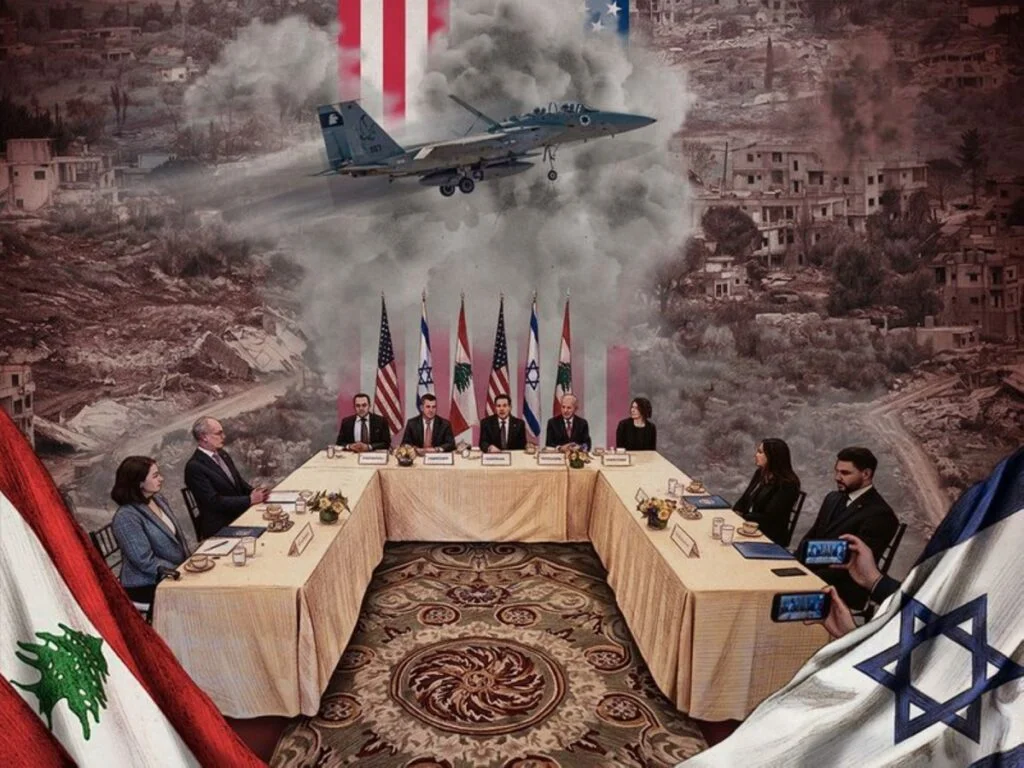
How managed stalemate mechanics
What makes managed stalemate permanent is that it does not require consensus on what is actually happening. Each side can narrate the situation differently.
Israel occupies territory and conducts military operations. These are violations of a ceasefire by Israel’s official position: targeted strikes against Hezbollah infrastructure and “imminent threats” to Israeli forces. By Hezbollah’s position: evidence that the ceasefire was never meant to be honored. By the US position: unfortunate incidents that do not constitute ceasefire collapse, provided both sides commit to negotiations.
Hezbollah conducts drone attacks on Israeli forces. These are violations of the ceasefire by Israel’s position: evidence Hezbollah is not committed to peace. By Hezbollah’s position: legitimate resistance to occupation. By the Lebanese state’s position: regrettable but not the state’s responsibility, as Hezbollah is a separate actor.
The Lebanese state announces progress on disarmament while exercising zero authority in the occupied south. By its position: the state is consolidating control gradually, in phases. By Israel’s position: insufficient progress, justifying continued military presence. By Hezbollah’s position: an illusion designed to serve Israel’s interests.
Each narrative is internally consistent. Each can be maintained indefinitely because none requires proof. The proof is in the territory that remains under Israeli control, the population still under Hezbollah’s de facto protection, the Lebanese state is still unable to exercise authority south of Litani.
The question that will not be asked
The real question is not whether the ceasefire will hold. It will hold because it is not a ceasefire, it is an occupation arrangement with diplomatic cover.
The question is not whether the Lebanese state will extend authority southward. It cannot, because it does not control the territory and has no military capacity to contest Israeli occupation.
The real question is: how long before the fiction becomes accepted reality?
The answer: it already is. The ceasefire framework has been “extended” four times in eight weeks. Each extension is a renewal of the fiction. Each violation is reported as aberration rather than pattern. Each new agreement comes with new terms that will be honored in form and violated in practice. Eventually, the extensions stop being announced. The violations stop being reported. Israeli military presence in Lebanese territory becomes accepted as the new status quo. Hezbollah maintains control of the south through Israeli sufferance. The Lebanese state exercises nominal authority from afar. The international community declares the situation “stabilized.”
This is not peace. It is not war. It is the permanent condition that all parties have learned to prefer.
The ceasefire will not collapse because there is no ceasefire to collapse. What exists is a managed stalemate that serves every actor better than escalation or actual resolution. It will persist because breaking it costs more than maintaining it. And the cost of maintaining it, permanent Israeli occupation of Lebanese territory, Hezbollah’s effective control of the south, the Lebanese state’s irrelevance in half its own country, has become the price of avoiding worse outcomes.