

Houthi efforts to blockade Saudi seaports and Bab al-Mandab remain militarily unviable due to their loss of Mokha port in 2014. Despite missile strikes from Hodeidah, the rebel group operates as an IRGC extension, sacrificing domestic political standing to project Iranian influence.
Naval coalition forces in the Red Sea face a calculated psychological campaign as Houthis’ threats aim to unseat regional shipping confidence without the physical capacity to shut Bab al-Mandab. While Tehran uses its proxy to signal regional aggression, these escalated Houthis’ threats expose severe tactical limits, leaving the group isolated from domestic peace talks and unable to enforce a true maritime blockade against Gulf energy infrastructure.
Houthis’ threats fail in reality
Despite all the escalation they have resorted to—which necessitated a response from the international coalition—the Houthis can do no more than create annoyances. They cannot close Bab al-Mandab, the entrance to the Red Sea. The absolute most they can do is strike a Saudi ship or a tanker belonging to another country. However, the issue of imposing a blockade on Saudi ports is bigger than the Houthis and bigger than Iran itself.
It is impossible for the Houthis to carry out their threats to impose a blockade on Saudi seaports. The reality is simply that, through the empty rhetoric they spew, the Houthis have squandered the opportunity to be part of the political game in Yemen—a game aimed at reaching a political settlement that excludes no party.
Why Houthis’ threats miss impact
By aligning themselves so openly with the “Islamic Republic,” the Houthis have removed themselves from the political game in Yemen. They have simply proven that they are Iranian, not Yemeni, and that any bet on the Houthis regaining consciousness and a minimum sense of national duty was nothing more than a misplaced bet. It was merely a waste of time and nothing else.
In the past few years—especially since reaching a Saudi-Iranian agreement sponsored by China in March 2023—the Houthis maintained a degree of self-restraint, feigning neutrality. They sought to pursue dialogue with Riyadh away from any kind of provocation. This included give-and-take negotiations with the Kingdom of Saudi Arabia aimed at establishing a formula for coexistence between the two sides.
Naval reality limits Houthis’ threats
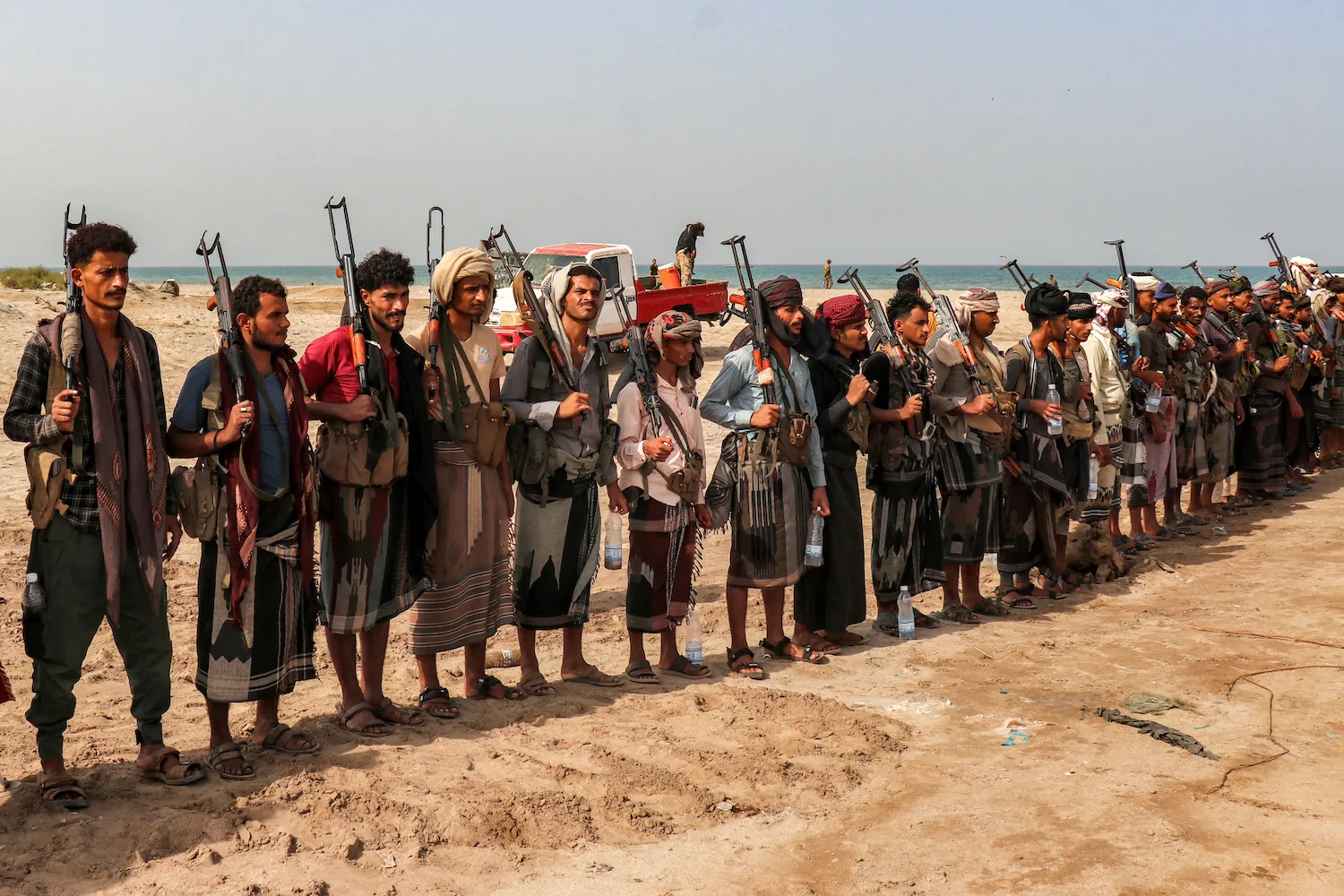
Suddenly, as the “Islamic Republic” in Iran—or more precisely, the “Islamic Revolutionary Guard Corps” (IRGC)—made the decision to escalate militarily, the Houthis, through their leader Abdul-Malik al-Houthi, expressed a stance revealing that they cannot be anything other than an Iranian tool. The Houthis decided to be part of the Iranian onslaught against the Arab Gulf states and Jordan—an onslaught that reflects an unprecedented level of Iranian bankruptcy. The Houthis have revealed that they are nothing more than another brigade in the IRGC, much like Hezbollah in Lebanon.
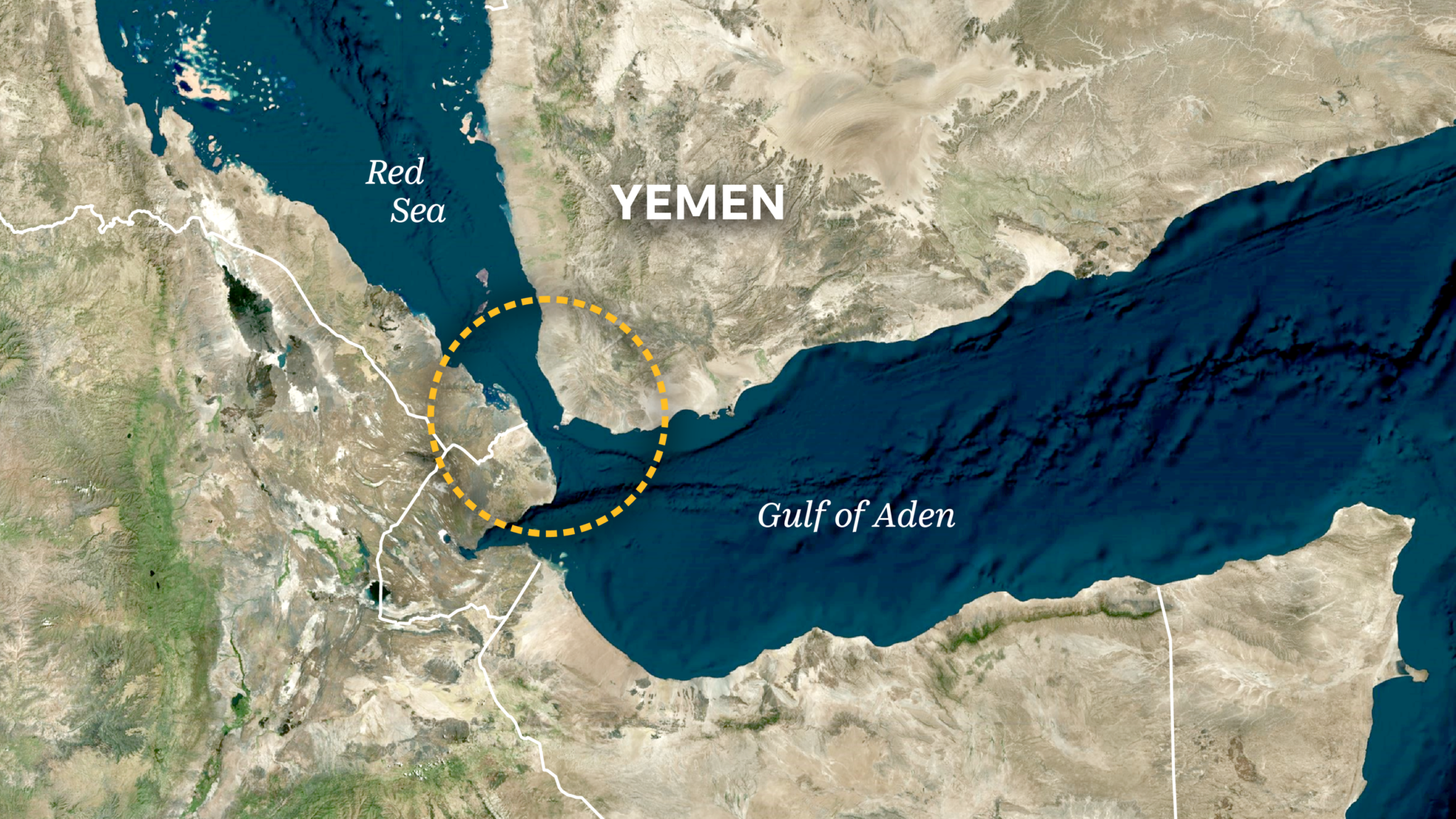
To be sure, the Houthis can create disruptions to maritime navigation in the Red Sea and the Gulf of Aden with the help of Somali pirates, who can be hired to carry out specific missions. However, this in no way means the Houthis have the ability to close Bab al-Mandab, which is the mandatory gateway to the Red Sea and the Suez Canal. This comes down to a very simple reason: the Houthis do not control the Yemeni port of Dhubab/Mokha, which controls traffic through Bab al-Mandab.
The Houthis lost Mokha back in the autumn of 2014 when Yemeni forces decided to expel them from southern Yemen, including the port of Mokha. It is no secret that those local forces—which ousted the Houthis from Aden, Mokha, and certain positions in the Shabwa Governorate—enjoyed the support of the United Arab Emirates, which possessed a clear policy in Yemen based on preventing the Houthis from controlling all of Yemen, especially the South.
Houthis’ threats risk regional transit
Sooner or later, there will be a need for an international and regional return to Yemen, which holds exceptional strategic importance for at least two reasons. The first reason is that Yemeni territory is suitable as a transit route for oil pipelines, helping to bypass the Strait of Hormuz. The second reason is that without the ability to run oil pipelines through Yemeni territory reaching the Red Sea or the Arabian Sea, countries in the region and around the world will not be able to tolerate Iran’s continued presence in Yemen. To put it more clearly, Iran’s disruption of navigation in the Red Sea originating from Yemen cannot be tolerated.
It is no secret that the “Islamic Republic,” through the Houthis, is determined to remain in Yemen and use it to close the Bab al-Mandab Strait and strike ships crossing the strait on their way to the Suez Canal. This is the intention of the Houthis, but their lack of control over the port of Mokha prevents them from being able to execute their threats.
How Houthis’ threats expose weakness
It must be remembered in this context that the Houthis have controlled Sanaa and a significant portion of Yemeni territory since September 21, 2014. Nothing demonstrates Iran’s insistence on maintaining its presence in Yemen more than its insistence on violating the recently imposed ban on Sanaa Airport.
Iran sent a civilian aircraft to Sanaa under the pretext of retrieving a Yemeni delegation to attend the funeral of the late “Supreme Leader” Ali Khamenei. It did not stop there; the Houthis suddenly launched a campaign against the Kingdom of Saudi Arabia that included threats against it. This campaign came after a long period of calm and back-and-forth negotiation between the Houthis and Riyadh, which included the Houthis securing certain gains directly or through the mediation of the Sultanate of Oman.
The question raised these days will remain a two-part question. The first part concerns the Houthis’ ability to execute their threats against Saudi Arabia and maritime navigation in the Red Sea, while the second relates to Iranian bankruptcy.

Regarding the first part, the Houthis will be able to target ships and tankers crossing the Red Sea, especially in light of their control over the strategically important port of Hodeidah overlooking the sea. As for Iran itself, it chose to attack Arab Gulf states and Jordan in the absence of any desire for a direct confrontation with America or Israel. Iran targets Kuwait, Bahrain, the UAE, Qatar, and the Sultanate of Oman, and tasks the Houthis with attacking Saudi Arabia. In contrast, it does not dare to touch any American warship sailing in the Gulf!
Ultimately, Houthi threats are nothing more than an expression of total Iranian bankruptcy. These threats—which come at the expense of Yemen and the Yemenis—reveal that the end of the Iranian regime is inevitably coming. It is merely a matter of time now that the Houthis have exposed the weakness and bankruptcy of the “Islamic Republic,” in addition to, of course, its role in undermining stability in the region. This is a role it has never relinquished since Khomeini raised the slogan of “exporting the revolution”…