
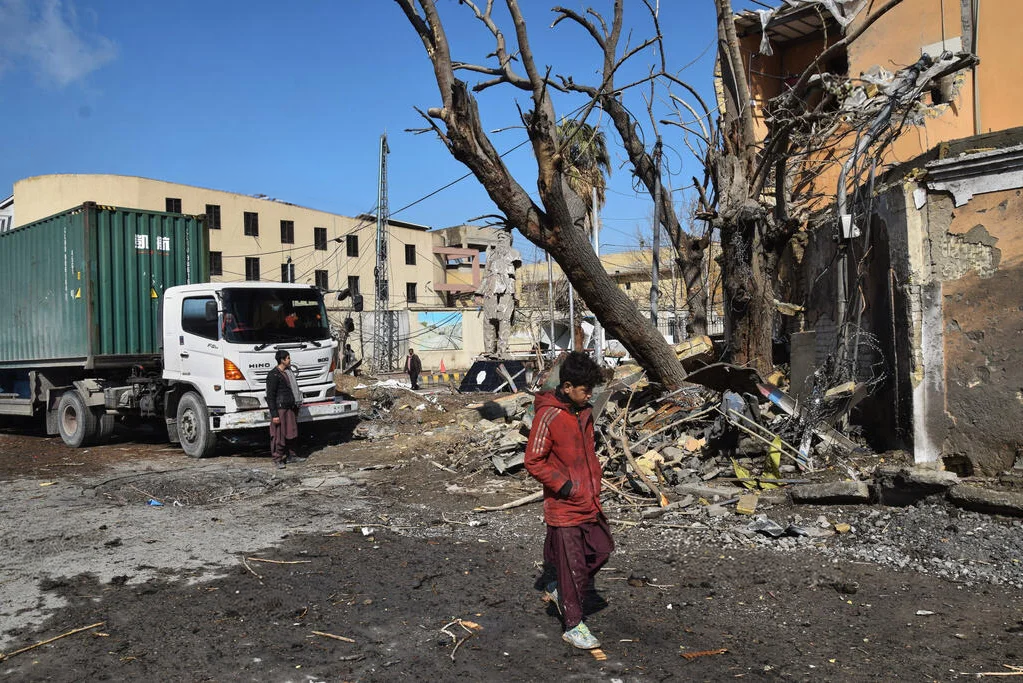
Balochistan sits beside the routes Gulf planners now rely on as Hormuz falters. Militant factions straddle Iran and Pakistan, threaten Gwadar and Chinese projects, and expose a risk that Yemen and Iraq already taught the Gulf to price before any crisis forces the issue.
A Peripheral Conflict Turns Strategic
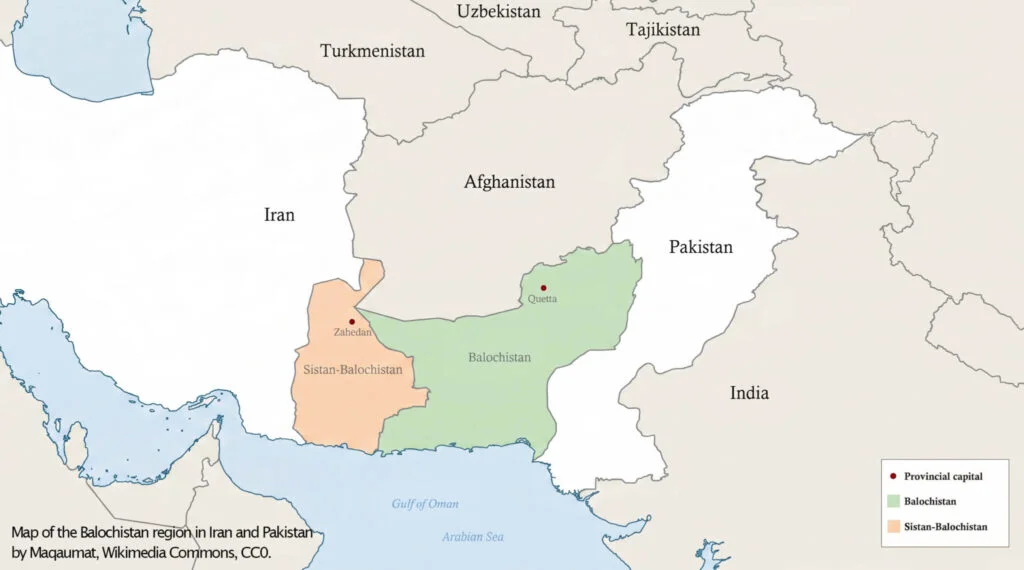
A conflict long treated as peripheral to Gulf security is becoming harder to ignore as the war with Iran puts pressure on the region’s maritime routes. Balochistan, the divided homeland of the Baluch spanning southeastern Iran and southwestern Pakistan, is at the center of this emerging concern. As the Strait of Hormuz becomes contested and the Bab el-Mandeb Strait comes under renewed pressure, instability in Balochistan matters not only for Iran and Pakistan, but also for the security of the Gulf states and the global energy system.
Similar risks have already emerged in Yemen and Iraq. Both have long been flagged as threats to Gulf energy and security because they share several characteristics: proximity to critical maritime chokepoints or export routes, armed non-state actors capable of striking energy or shipping infrastructure, external support for those groups, and central governments with weak or contested control over parts of their territory.
Balochistan meets nearly all of these criteria. It lies on the Gulf of Oman and near strategically important maritime routes, and Baluch militants have undermined both Iranian and Pakistani control over parts of the region. Unlike Yemen’s Houthis and Iraq’s Popular Mobilization Forces (PMF), however, external state backing of Baluch groups remains unsubstantiated. The war could change this.
While the Gulf states have historically treated the Baluch insurgency as background noise in their relationships with Tehran and Islamabad, the Iran war has transformed it from a peripheral nationalist conflict into a potential strategic fault line. While the collapse of the Iranian regime remains unlikely, Gulf states must entertain the scenario in which Tehran loses control over its Hormuz-adjacent southeastern coastline. Such a situation could create opportunities for Baluch groups to strengthen their position.
Baloch Insurgency Has Deep Roots
The Baluch struggle for self-determination is not a byproduct of the current war. In Pakistan, their short-lived independence ended with a contested 1948 accession that many Baluch nationalists still regard as a forced annexation, triggering insurgencies and military suppression. In Iran, Baluch autonomy was crushed a generation earlier under the Pahlavi dynasty’s centralizing campaigns in the late 1920s. On both sides of the divide, the Baluch minority faces homogenizing nation-building projects that threaten to erase their distinct identity.
The history of repression has also fueled armed Baluch resistance. In Iran, both Jundullah and its successor, Jaish al-Adl, emerged in response to the persecution faced by Iran’s Baluch, who comprise approximately 3 percent of the country’s total population. The Baluch are not only an ethno-linguistic minority in Iran but also a religious Sunni minority in a theocratic Shia state. Across the border, the Baluch minority in Pakistan continues to face systematic repression while waging an insurgency against Islamabad. In January 2024, Iran and Pakistan both conducted cross-border strikes in the two Balochistan regions targeting Baluch militant groups.
Militants Unite Under a New Front
That history is still shaping the conflict today. On September 12, the Saravan district of Iran’s volatile southeastern Balochistan Province erupted into a “war zone” between the Islamic Revolutionary Guard Corps (IRGC) and the newly formed “Popular Fighters Front” (PFF). The clashes left at least three IRGC personnel and five militants dead.
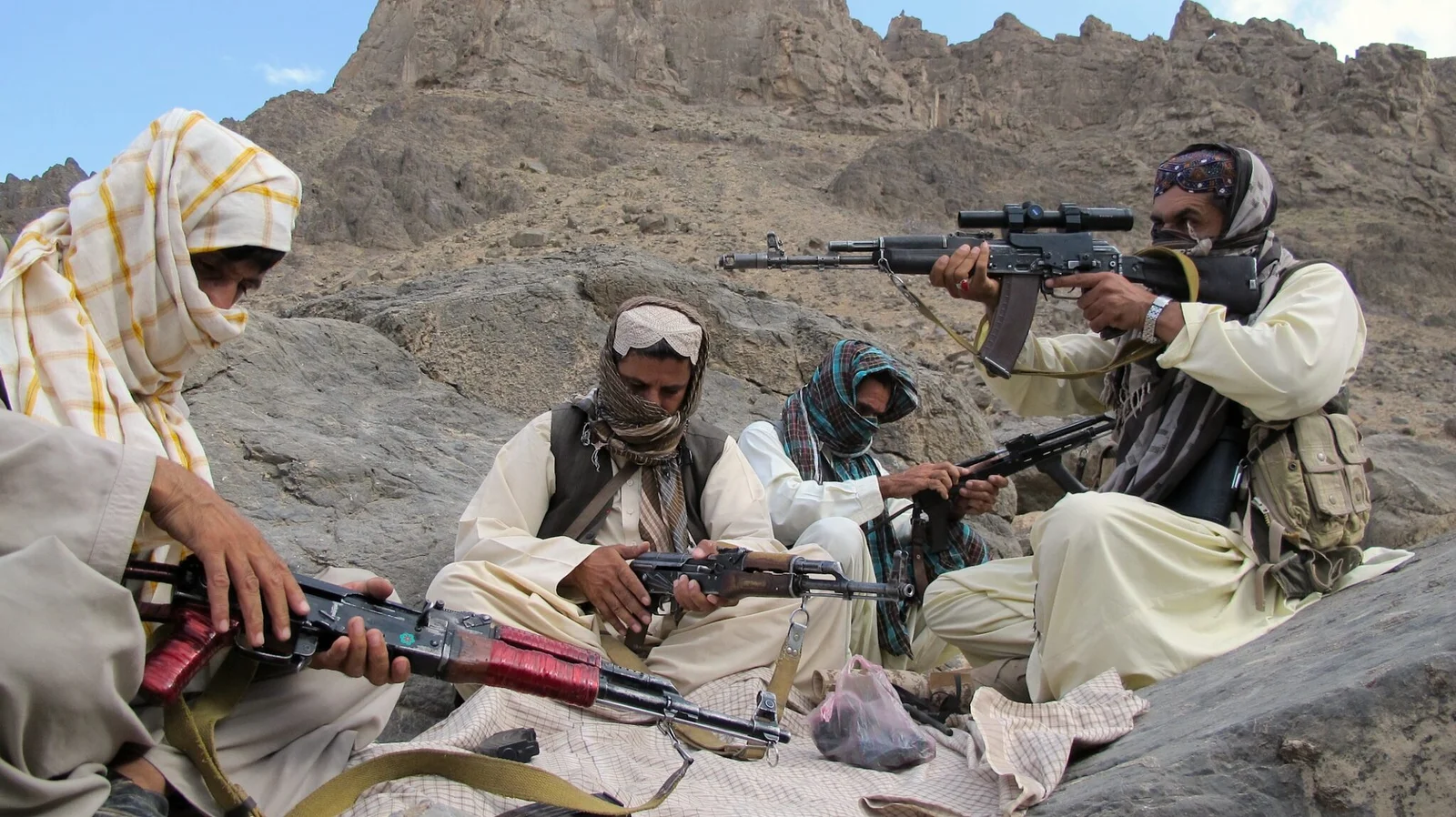
The PFF is a recently formed umbrella organization comprising several Baluch militant groups, including the PADA Baluch Movement, the Nasr-e Baluchestan Movement, the Mohammad Rasulullah group, and Jaish al-Adl. The IRGC views the organization as a rebrand of Jaish al-Adl, which is listed as a terrorist organization by both Iran and the United States.
Gwadar and Chinese Projects Under Fire
On the Pakistani side, the Balochistan Liberation Army (BLA) leads a separate insurgency. The BLA’s attacks have routinely targeted Chinese investment projects in Balochistan, including Gwadar Port, which sits at the center of the China–Pakistan Economic Corridor (CPEC) and serves as a vital link for Beijing’s Belt and Road Initiative. According to the Global Terrorism Index’s 2026 results, Pakistan now ranks first among countries most impacted by terrorism worldwide, with the BLA emerging as the country’s second most active armed group behind the Tehreek-i-Taliban Pakistan.
Accounting for Balochistan
Despite now meeting the same criteria that have made Yemen and Iraq strategic risks, Balochistan has largely been treated as an afterthought by Gulf energy and security planners. Unlike those threats, Balochistan’s risk has always been harder to characterize. The territory is split across two states and contested by several militant factions with different aims and patrons. Until recently, it was also considered a secondary strategic concern. But that description no longer holds. The province now sits directly on the alternative route the region is counting on if Hormuz becomes unreliable.
For the Gulf states, treating Balochistan as a standing risk should not be contingent on the likelihood that Iran or Pakistan will lose formal control of the territory. Gulf assessments of Yemen and Iraq do not require an assumption that either state will collapse, and the same logic should apply to Balochistan. Tehran or Islamabad could retain formal control over the region while losing effective control over parts of its territory, creating risks for the infrastructure and shipping routes that pass through the area.
This assumption already underpins how the Gulf plans around the Bab el-Mandeb and the Kirkuk–Ceyhan corridor. Applying the same approach to the stretch of coastline bordering the eastern mouth of the Strait of Hormuz and the northern coast of both the Gulf of Oman and Arabian Sea is not a departure from how Gulf energy security is normally assessed. It merely extends that approach to a region whose strategic risks have become more apparent during the current war.
Can the Baloch Insurgency Spread?
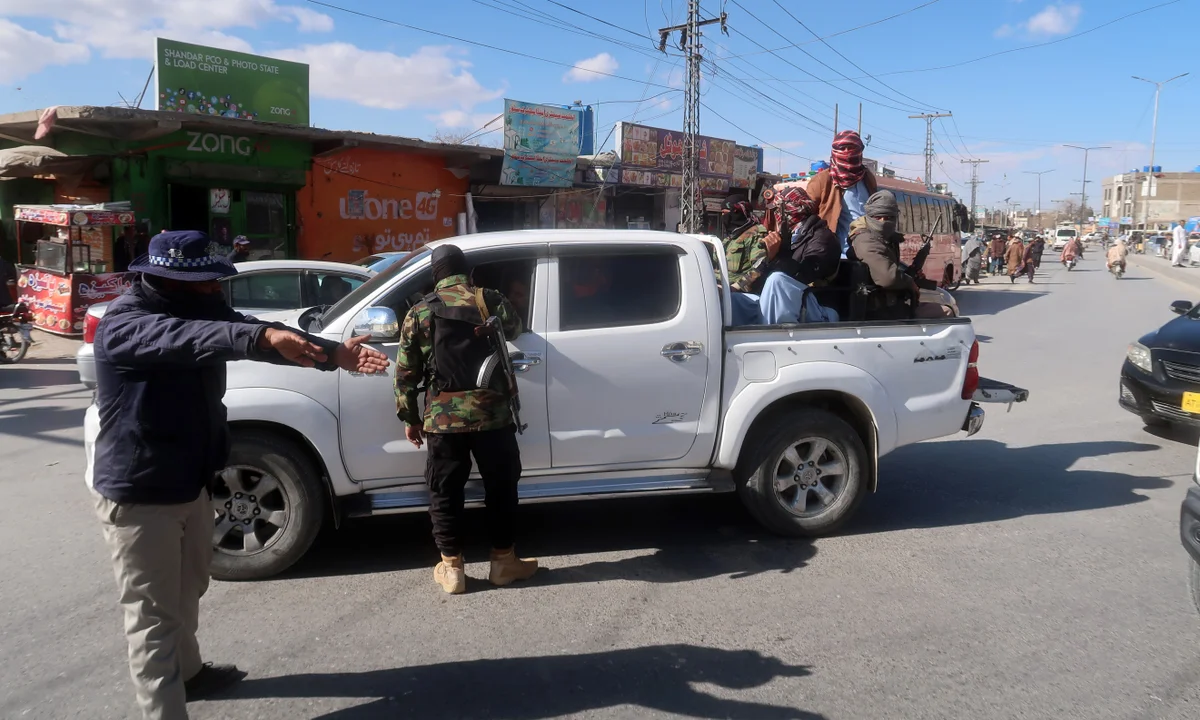
Balochistan therefore demands the same scrutiny long applied to other sources of instability. As the Houthis and PMF have demonstrated, armed non-state actors are capable of disrupting shipping, maritime trade routes, energy exports, and infrastructure. Gulf states need to recognize that instability in Balochistan will not necessarily stay contained within Iran’s borders. The task for planners is to account for the risks before a major crisis exposes the consequences of overlooking them.