
The expanding security relationship between Ukraine and Gulf states, driven by shared drone threats, illustrates the convergence of the U.S.-Iran and Russia-Ukraine wars, with practical cooperation and limits on alignment.
The accelerating U.S.–Iran military confrontation and the endurance of Russia’s war in Ukraine are collapsing the strategic distance between Europe and the Gulf, with Ukraine-GCC security ties emerging as a sharp indicator of how drone warfare is binding once-separate conflict theaters. Moscow’s reliance on Iranian Shahed drones to degrade Ukrainian infrastructure has not only intensified the operational tempo in Eastern Europe but has also mirrored the aerial threat landscape facing Saudi Arabia, the UAE, Qatar, and Kuwait, where Iranian projectiles have struck energy and civilian sites.
This convergence has turned Kyiv’s hard-won counter-drone expertise into a commodity of high strategic demand. The result is a quiet but significant recalibration: Gulf capitals, while maintaining diplomatic channels with Russia, are concluding defense agreements with Ukraine and hosting Ukrainian military advisors to absorb battlefield-tested tactics against mass drone salvos.
These Ukraine-GCC security ties do not constitute a formal alliance, but they reflect a pragmatic alignment of interests that grows more visible as both wars grind past early exit forecasts. The emerging pattern reveals a broader truth: the fragmentation of global order is forcing states to source security solutions from unconventional partners, with drone technology acting as the connector. In this landscape, the endurance of these ties will test whether mutual threat perception can sustain cooperation amid competing great-power loyalties and uncertain war outcomes.
Drone Swarms Link Europe and the Gulf
The war between the United States and Iran has entered another period of escalation, casting doubt on hopes that the recently signed memorandum of understanding between the two countries would mark the beginning of the conflict’s end. Instead, the war appears increasingly likely to continue and potentially expand to new theaters, creating a wider set of security implications beyond the Middle East. The Gulf’s evolving relationship with Ukraine offers one example of this shift, as shared challenges related to large waves of relatively inexpensive drones are driving new forms of security cooperation and underscoring the growing interconnectedness of global conflicts.
Kyiv’s Drone Expertise
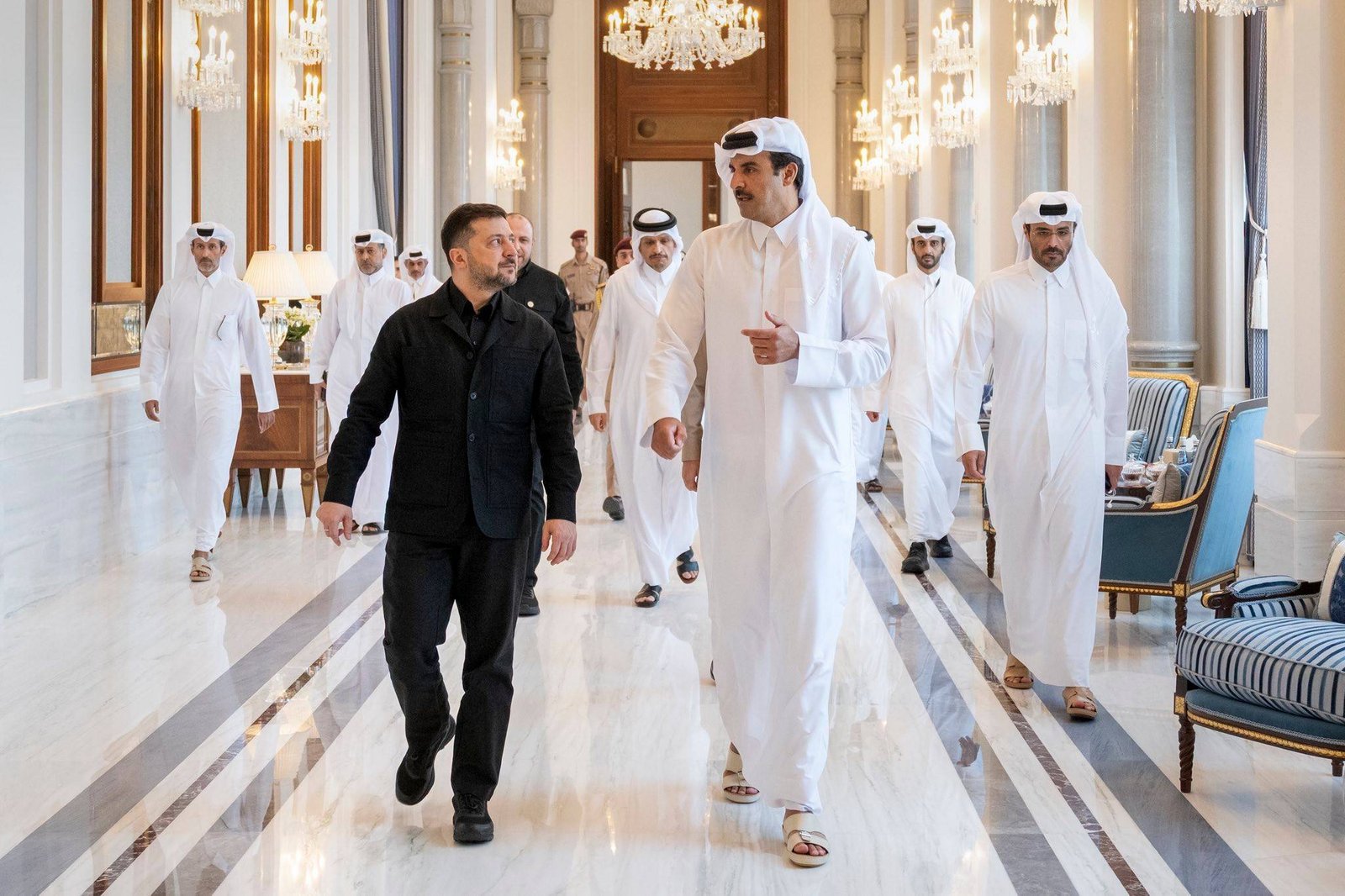
The relationship between Ukraine and the Gulf states has steadily expanded in recent years, encompassing diplomatic, economic, and security cooperation. Shortly after Russia’s full-scale invasion of Ukraine in 2022, Ukrainian President Volodymyr Zelensky ramped up diplomatic engagement with the Gulf Cooperation Council (GCC) states, seeking to increase energy supplies from countries such as Qatar to the European Union as a means to reduce and diversify Europe’s economic dependence on Moscow.
While these efforts were welcomed in the Gulf, they did not signal a backing of Ukraine at the expense of Russia, but rather reflected the GCC’s desire to maintain relations with both sides. This approach allowed Saudi Arabia, the UAE, and Qatar to become important mediators in the Russia–Ukraine conflict, leveraging their diplomatic ties with both Kyiv and Moscow to support initiatives such as prisoner swaps and refugee repatriation.
How Shahed Drones Forged a Common Threat
As the conflict dragged on, Russia became increasingly reliant on Iran for military support, particularly for the supply of Iranian-made Shahed drones. This brought the Russia–Ukraine war into closer alignment with security developments in the Middle East, a dynamic that intensified following the start of the large-scale U.S. and Israeli military campaign against Iran in February. Gulf states themselves became targets of Iranian missile and drone attacks, with Iran targeting not only U.S. military and diplomatic sites in the region but also key energy and civilian infrastructure across the GCC states.
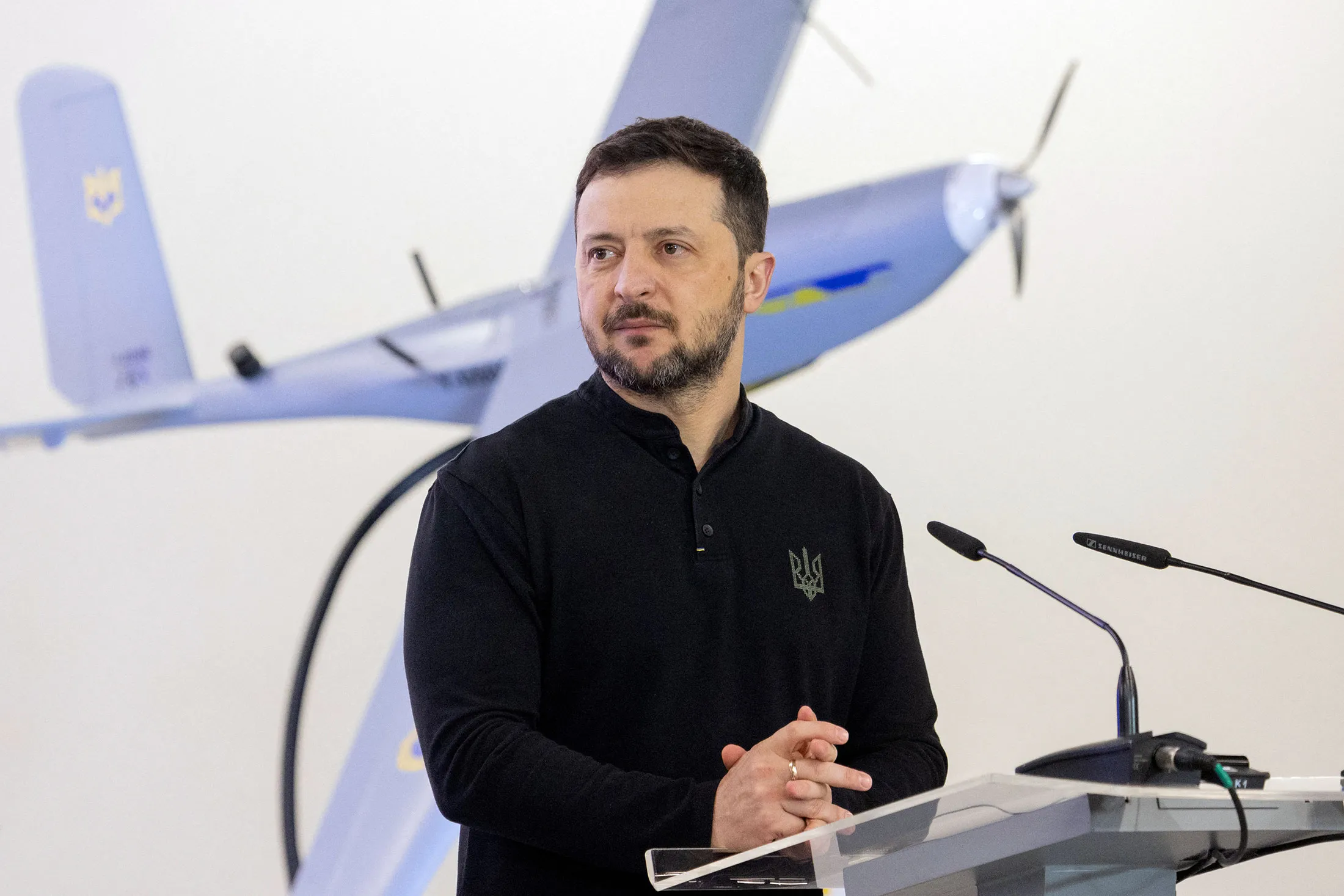
This new security environment made Ukraine’s extensive experience countering repeated, large-scale Shahed drone attacks especially valuable to the Gulf states. Russia’s sustained drone campaign against Ukrainian energy, transportation, and other critical infrastructure forced Kyiv to develop cutting edge drone and counter-drone capabilities while developing relatively low-cost methods of producing drones at scale.
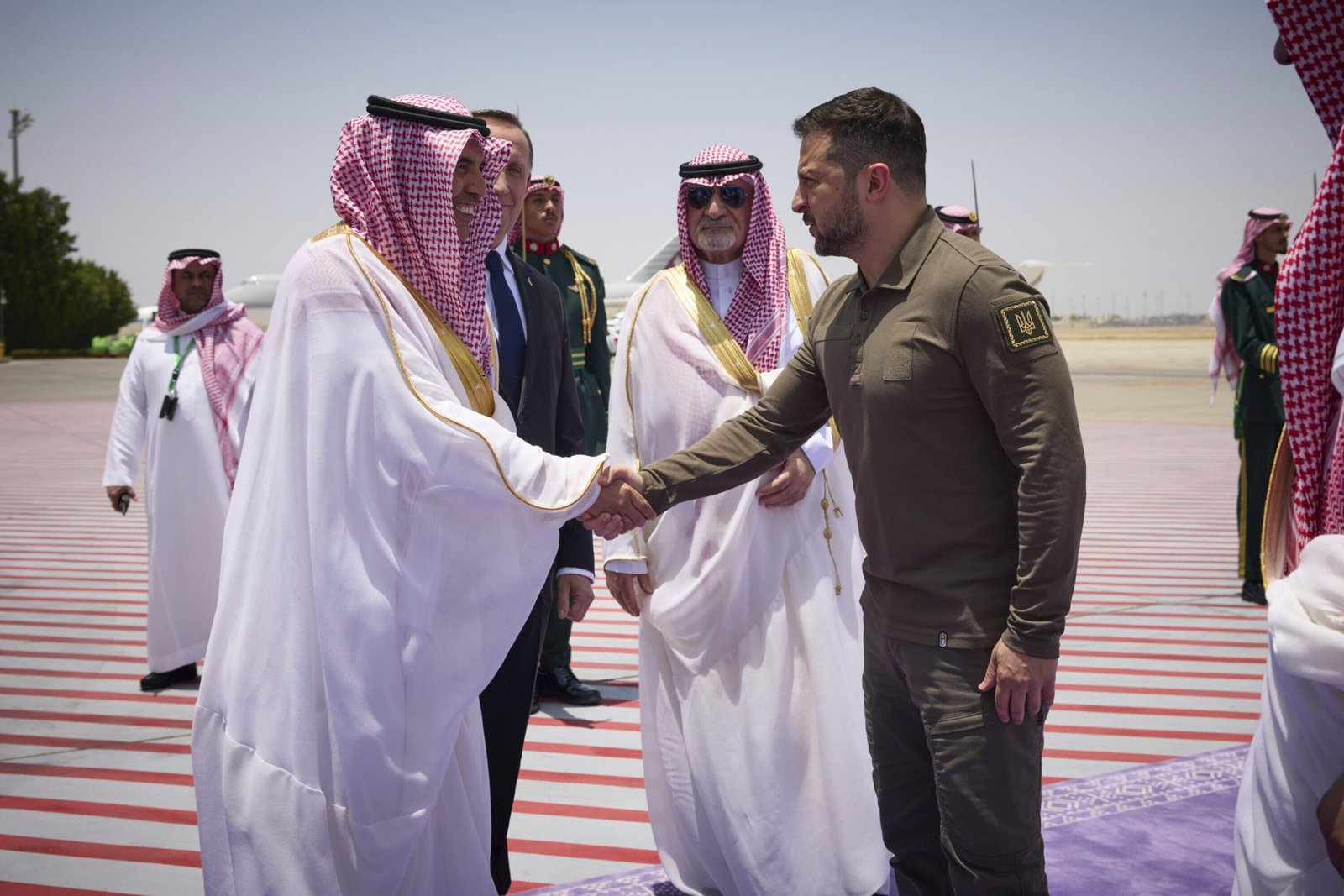
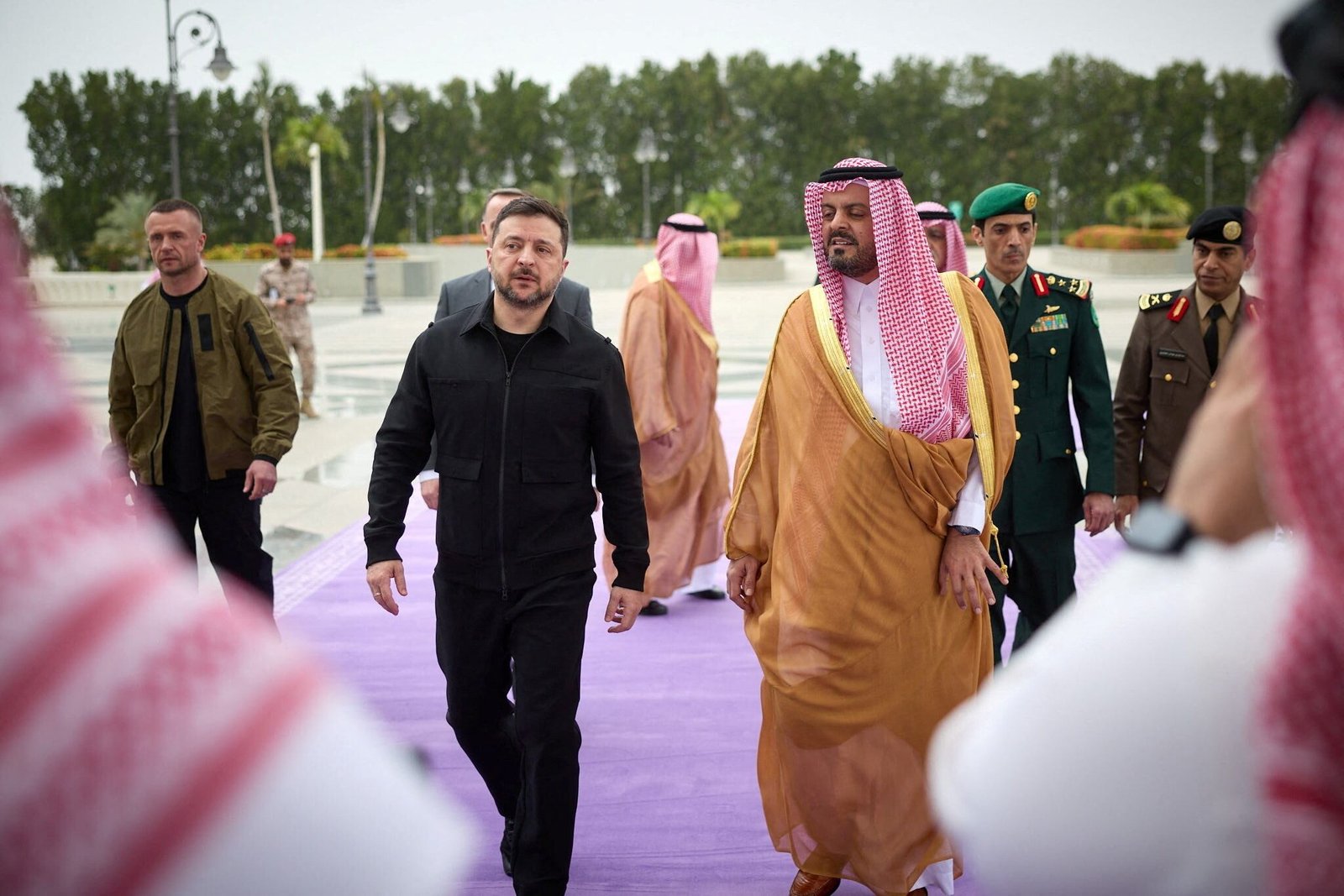
Ukraine has leveraged this experience not only to strengthen its own capabilities vis-à-vis Russia but also to share them with partner countries in the European Union and the Gulf. During Zelensky’s most recent GCC tour in March, Ukraine signed 10-year defense agreements with Saudi Arabia, the UAE, and Qatar, marking a significant expansion of security cooperation between Kyiv and the Gulf. This security relationship deepened further in late June, when Kuwait also approved a defense cooperation agreement with Ukraine.
In addition to providing drone technology and defense equipment, Ukraine has expanded its operational support in the region. More than 200 Ukrainian military experts are now deployed across Saudi Arabia, Qatar, and the UAE, with additional personnel expected to arrive in Kuwait, where they are tasked with sharing the battlefield experience gained from years of countering Russian drone attacks.
Ukraine-GCC Security Ties Become Defining Feature
As the U.S.–Iran conflict surpasses the Trump administration’s initial estimate of lasting several weeks and approaches its sixth month, it has become clear that the Gulf states may need to prepare for a prolonged conflict, even if the intensity of fighting continues to fluctuate. As the war continues, Ukraine’s growing security cooperation with Gulf states and Russia’s backing of Iran are likely to become defining features shaping the region’s security landscape.
From Ukraine’s standpoint, deeper engagement with the Gulf states serves several strategic purposes. By sharing its experience in drone warfare and counter-drone operations, Kyiv can help Gulf states address pressing security threats while simultaneously strengthening its relationships with important economic and diplomatic partners. In return, Ukraine gains much-needed energy supplies, including oil and diesel, as well as financial support at a time when Russian strikes have severely disrupted its energy infrastructure and created significant fuel shortages. These supplies will be critical for Kyiv’s broader economic stability and its capacity to sustain military operations during its war with Russia.
These objectives overlap with those of the Gulf states, which are seeking to better protect their critical energy and civilian infrastructure from Iranian drone attacks. Years of defending against sustained, large-scale attacks have given Ukraine practical operational experience that complements the Gulf’s broader efforts to strengthen its defense systems against significant waves of low-cost drones. Beyond the immediate security benefits, closer cooperation also provides both Kyiv and the Gulf states with greater diplomatic flexibility as negotiations continue to play out in both the U.S.–Iran and Russia–Ukraine conflicts, even amid periodic flare-ups in fighting.
Balance Over Alliance in the Gulf
Despite the growing strategic overlap between Ukraine and the Gulf states, there are also important complications and constraints that could limit the depth of their relationship. One challenge is that Gulf countries have maintained diplomatic and economic ties with Russia throughout the war, forgoing the sanctions and other economic restrictions that have been put in place by the United States and European Union. Rather than pursuing a full-scale alliance with Ukraine, the GCC states are more likely to maintain a balance between Kyiv and Moscow, pursuing a pragmatic and at times transactional approach that preserves their own economic and diplomatic flexibility.
Can the US Factor Derail Deeper Cooperation?
Another constraint is that the GCC states are also looking elsewhere for security support. For example, Turkey is emerging as an important provider of drones and air defense systems to the region, while Saudi Arabia has recently purchased a large-scale drone package from Taiwan. What the Gulf states are ultimately seeking is a diversification of their security support, and Ukraine’s comparative advantage is not one that is guaranteed to last forever as other states seek to develop and promote their own systems.
Perhaps the most critical potential complication to Ukraine–Gulf ties is the role of the United States. Given Washington’s central role in both the Iran war and the Russia–Ukraine war, it will likely remain highly influential in determining how this relationship develops and the extent to which Ukraine is needed or desired as a security partner for Gulf states in countering Iranian threats.
Kyiv ultimately wants to secure U.S. support for its own war with Russia, and if providing drones and technical support to the Gulf helps that cause, then Ukraine will continue or double down on that effort. Although unlikely, a scenario in which Ukraine becomes viewed as a potential alternative or competitor to the United States’ security role in the region would push Kyiv to prioritize its relationship with Washington over deeper engagement with the Gulf states.
Why Ukraine-GCC Security Ties Signal Convergence
The relationship between Ukraine and the GCC states is therefore likely to remain one of shared interests rather than formal alignment. Even so, its continued evolution underscores how wars in Europe and the Middle East are becoming more interconnected, with developments in one theater shaping strategic partnerships and security developments in the other.