
Israel’s non-renewal of a supplementary water pact with Jordan in July 2026 weaponises water access, accelerating Amman’s desalination push and eroding the security interdependence that long stabilised Israel-Jordan relations.
The scaffolding of Israel-Jordan relations was never merely diplomatic. For decades, water and energy flows acted as the unseen ligaments binding two neighbours whose formal peace often lacked popular warmth. The assumption was straightforward: embed mutual survival needs so deeply that even political crises could not sever them. The supplementary water agreement brokered in 2021 crystallised this logic, offering Jordan 50 million cubic metres of additional supply while the kingdom raced to build desalination infrastructure. Israel’s decision in July 2026 not to renew that agreement shatters the premise.
By transforming water from a stabilising commodity into a coercive instrument, Israel is actively corroding the strategic architecture of Israel-Jordan relations. This move does not simply strain bilateral goodwill; it challenges the utility of interdependence as a peacebuilding doctrine. Conditioning vital supplies on diplomatic behaviour accelerates Amman’s pursuit of self-sufficiency, threatening to dismantle a relationship that has absorbed decades of regional shocks. The emerging dynamic is a sharp paradox: the weaponisation of scarcity is driving Jordan toward independence, ultimately diminishing the very pressure Israel seeks to apply on a partner whose security cooperation remains indispensable.
Israel-Jordan relations and the peace model
For decades, one of the main assumptions underpinning Arab–Israeli diplomacy was that critical resource interdependence could help stabilise cold peace, particularly for countries below the level of the Abraham Accords. Far from being simply technical arrangements, pipelines, power grids and water agreements were intended to make peace materially useful and politically sustainable.
Within this logic, Israeli gas exported to Egypt and Israeli water supplied to Jordan became part of a wider model of pragmatic cooperation in a region where formal peace agreements often remained politically and socially unpopular. That model has not collapsed. The peace treaties between Israel, Jordan and Egypt remain intact, and security cooperation continues in important ways. Yet, a new resource politics is emerging across Israel’s relationships with both its Southern neighbours.
Jordan’s chronic water insecurity deepens
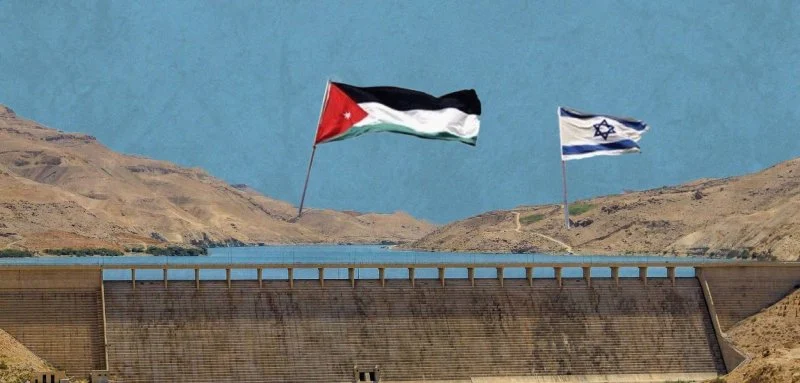
Jordan’s chronic water insecurity has long made cooperation with Israel a strategic necessity. But by refusing to renew a key water agreement, Israel may be pushing one of its closest regional partners towards greater self-sufficiency and further straining an already fragile relationship.
Israel’s non-renewal and its immediate impact
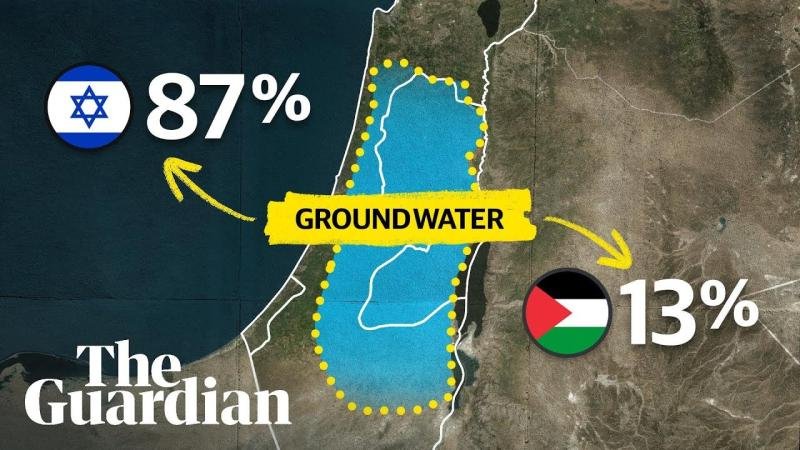
On 7 July 2026, Jordanian media began reporting Israel’s decision not to renew a 2021 US-brokered agreement to supply the Kingdom with an additional 50 million cubic metres of water annually. The agreement supplemented the 50 million cubic metres Israel already provides each year under the 1994 peace treaty. While the immediate impact will be felt in Jordan’s water sector, the decision is about far more than water. It signals a willingness to use one of Jordan’s most acute vulnerabilities as political leverage. In doing so, Israel risks straining relations with a key regional security partner and accelerating Jordan’s efforts to reduce its long-term dependence on Israeli supplies altogether.
How additional water supplies eased pressure
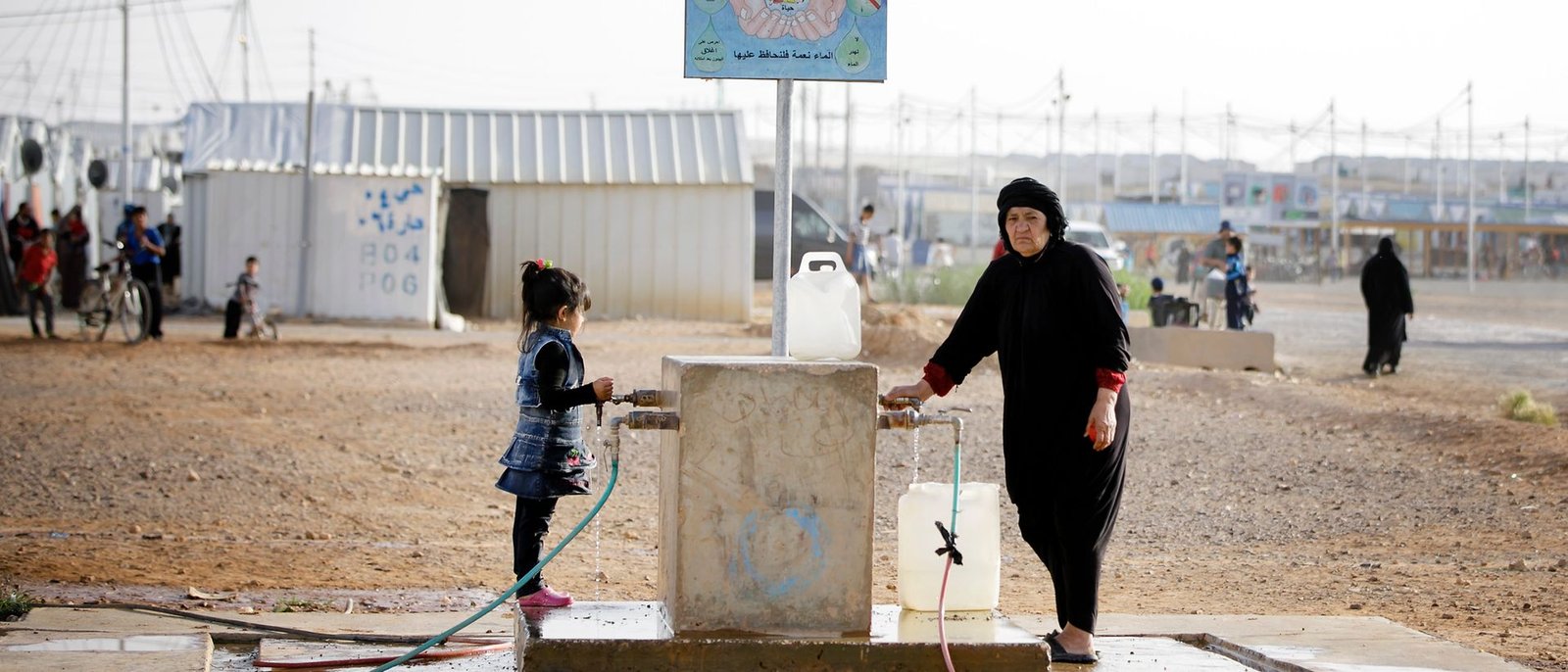
For Jordan, water insecurity is not simply an environmental challenge but a strategic one. The Kingdom is one of the world’s most water-scarce countries, with just 61 cubic metres of renewable freshwater available per person each year – far below the internationally recognised threshold of 500 cubic metres for absolute water scarcity.
Population growth, climate change and successive refugee inflows have placed ever greater pressure on already limited resources. Rainfall is becoming increasingly erratic, while 10 of Jordan’s 12 major aquifers are being depleted faster than they can naturally recharge. Like other US allies in the region, the Kingdom’s critical national infrastructure has also come under attack from Iranian ballistic and cyber attacks. As a result, Jordan has little choice but to rely increasingly on desalination, imported water and the continued exploitation of finite groundwater reserves.
Against this backdrop, the additional Israeli water supplies agreed in 2021 were more than a temporary technical arrangement. They helped ease pressure on Jordan’s water system while the Kingdom pursued longer-term solutions, most notably the National Water Carrier project, a flagship desalination project designed to strengthen the Kingdom’s long-term water security. Although the project promises to significantly strengthen Jordan’s long-term water resilience, it remains several years from full operation. Losing the additional Israeli supplies before then would place further strain on an already overstretched water system.
Water as a coercive diplomatic instrument
Israel has reportedly informed Jordan that renewing the additional water agreement would require Amman to restore fuller diplomatic engagement and moderate its public criticism of Israel, although neither government has confirmed these conditions publicly. Jordan has yet to respond officially. The current dispute is not about whether Israel will honour the 1994 peace treaty’s basic water allocation, but over whether the additional water supplied since 2021 should be treated as a humanitarian and strategic necessity for Jordan or as political leverage in a deteriorating bilateral relationship. The current impasse shows how climate stress, Gaza-related political anger and regional diplomacy are converging around the most sensitive resource in the Jordanian–Israeli relationship.
Copyright© Thomas Koehler/photothek.net
Domestic anger and security partnership tensions
Asking Jordan to soften its rhetoric over Gaza in return for water, however, ignores the Kingdom’s domestic political realities. Jordan is home to millions of Palestinians and people of Palestinian origin, while King Abdullah II serves as custodian of Jerusalem’s Muslim and Christian holy sites. Images from Gaza have generated ;profound public anger, leaving the Jordanian government with little political space to publicly align more closely with Israel. Expecting Amman to recalibrate its position in exchange for water misunderstands the domestic pressures under which Jordanian policymakers operate.
The timing is striking. Despite mounting diplomatic tensions over Gaza, Jordan remains one of Israel’s most important security partners and a cornerstone of the US’s regional security architecture. During Iran’s missile and drone attacks in April 2024, Jordanian forces intercepted projectiles crossing its airspace as part of a broader multinational defensive effort. Jordan has also continued to facilitate intelligence cooperation and support regional security initiatives. The contradiction is difficult to ignore: Israel continues to rely on Jordan’s security cooperation while simultaneously applying pressure through one of the Kingdom’s most acute structural vulnerabilities.
Self-sufficiency to reset Israel-Jordan relations?
Ironically, Israel’s decision may ultimately reduce rather than strengthen its influence. Jordan has already accelerated investment in the Aqaba-Amman National Water Carrier. Although the transition will be costly and take years to complete, once alternative supplies come online, Israel’s water exports will become less strategically indispensable. What begins as a source of political leverage today could ultimately become a catalyst for Jordanian self-sufficiency.