
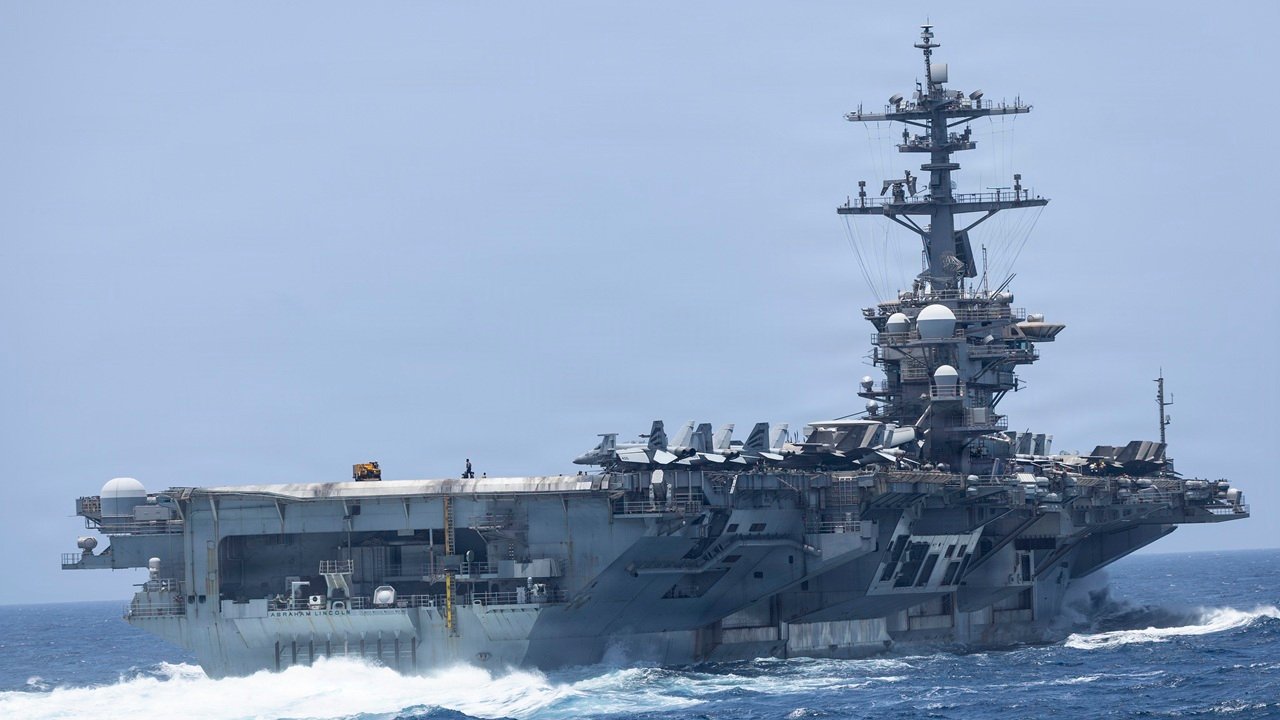
USS Abraham Lincoln Deployment remains extended at 265 days, with only two brief port calls. Sailors report broken sanitation, supply shortages, and suicide attempts; Navy officials have sent mental health workers aboard.
At 265 days at sea, the USS Abraham Lincoln Deployment has become a warning about how extended carrier rotations erode readiness. The Nimitz-class flattop left Naval Base San Diego on November 21, 2025, with little notice, and has since made only two short port calls in Guam and Oman. That schedule is not routine; it is the product of an Iran war that has twice forced the Navy to extend the ship’s return date beyond its original May endpoint, with no public homecoming in sight.
The USS Abraham Lincoln Deployment now operates under conditions that sailors describe as unbearable: moldy showers, broken toilets, cold water, poor food, and missing basic supplies. Those failures have moved from complaints to crisis. Several sailors attempted to jump overboard, one is in medical hold, and families say they have not heard from Navy officials for weeks. The strain is not new. A decade ago, ten sailors died by suicide during the USS George Washington’s prolonged overhaul. Navy leaders now face the same human cost compressed into a single combat deployment. The central question is whether the service can restore basic living standards before more sailors break.
USS Abraham Lincoln Deployment Hits 265 Days
Life on a United States Navy nuclear-powered aircraft carrier is probably never easy. But for the sailors on board the USS Abraham Lincoln (CVN-72), it may be akin to a floating hell. As of Thursday, the Nimitz-class supercarrier has been deployed for 265 days, having departed from Naval Base San Diego with little fanfare on November 21, 2025.
That may be significantly fewer days at this point than the record-setting 326 days that the USS Gerald R. Ford (CVN-78) spent deployed, but CVN-72 has only made two very brief port calls, including one to Guam in December and another to Oman last month. Neither visit likely gave the crew much time ashore.
Conditions Draw Fire From Congress
The recent port call was likely only to receive supplies, as the crew had complained of poor conditions and supply shortages.
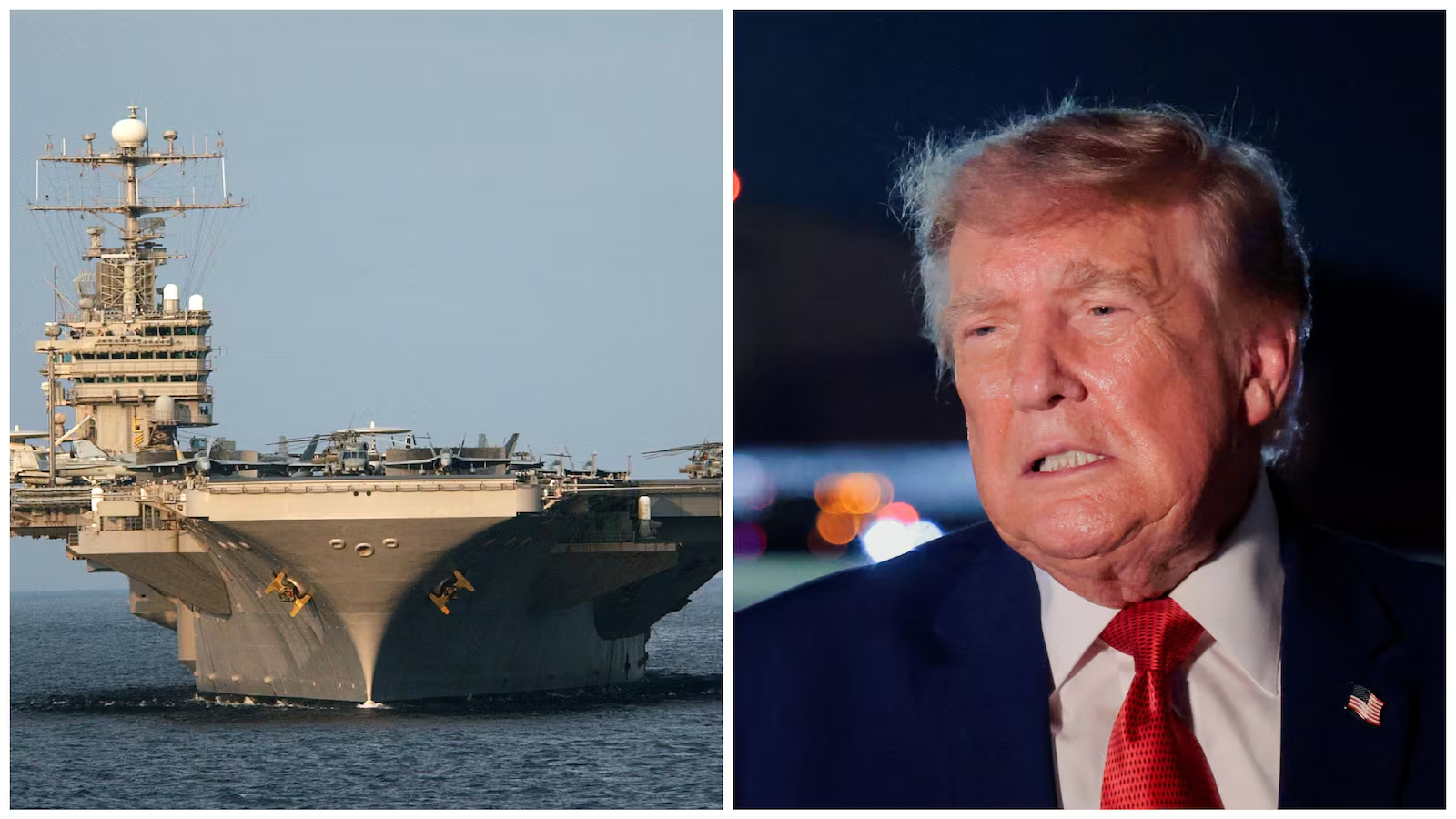
Secretary of Defense Pete Hegseth has downplayed the reports of poor living conditions aboard the Lincoln. The secretary used a common deflection of the Trump administration, describing the reports as “fake news” when they first surfaced in April.
Rep. Mike Levin (D-CA), whose congressional district includes the Lincoln’s home port, Naval Air Station North Island in San Diego, raised alarm at conditions aboard the vessel this week, including moldy showers, broken toilets and laundry facilities, no hot water, substandard meals, and lack of access to basic necessities like soap and deodorant.
“These men and women signed up to serve their country,” Levin wrote. “The least their country owes them is hot water, a working toilet, and a real meal.”
Carrier Rotation Cycle Under Pressure
The vessel was operating in the Western Pacific throughout December and early January. It was in the South China Sea—waters that Beijing maintains are its own, and which come with no shortage of risks for a supercarrier, when it was ordered to the Middle East in February.
The current deployment should have ended in May, but has already been extended twice amid the demands of the Iran war, and there is no publicly announced return date.
The United States Navy currently has just three carriers deployed—with the tenth and final Nimitz-class flattop, the USS George H.W. Bush (CVN-77) also operating in the Arabian Sea; and the forward-deployed USS George Washington (CVN-73) now in the Western Pacific as part of its scheduled 2026 patrol.
CVN-72 began its deployment just as CVN-73 wrapped up its 2025 patrol. That’s how the cycle of carrier rotations is supposed to work, but the US Navy is stretched thin. At this point, it could be argued the crew onboard the USS Abraham Lincoln would much rather be back in the South China Sea, even if they can’t get back to San Diego.
Why Are Sailors Jumping Overboard?
The situation was reportedly so bad that several sailors reportedly attempted to jump off the ship—a dangerous and potentially fatal decision. On a modern aircraft carrier, the flight deck is roughly 60 to 70 feet above the water, meaning that a jumper will hit the waves at up to 35 miles per hour.
One sailor’s wife told the Military Times her husband is now in a medical hold after he tried to jump off the ship.
“He’s scared,” said Annabelle Loma. “He thinks he’ll get a dishonorable discharge, and just because he was burnt out, his 13-year career is ruined, just like that. That’s not fair, that’s not right. That’s not what he should be worrying about right now.”
Ms. Loma hasn’t heard from the US Navy in weeks.
The incident involving her husband isn’t an isolated event; according to multiple news outlets, as many as six sailors attempted to jump off the ship.
A summer 2025 study, “Stressors and Support Experienced by Active Duty US Navy Sailors at Sea,” warned that extended deployments are taking a serious toll on crew morale.
Warships aren’t cruise ships, of course, but the loud noises, lack of rest, and inadequate mental and physical healthcare, along with limited contact with loved ones back home, are creating conditions where some sailors are at the breaking point, or even past it.
Navy Leaders Face Anguished Families
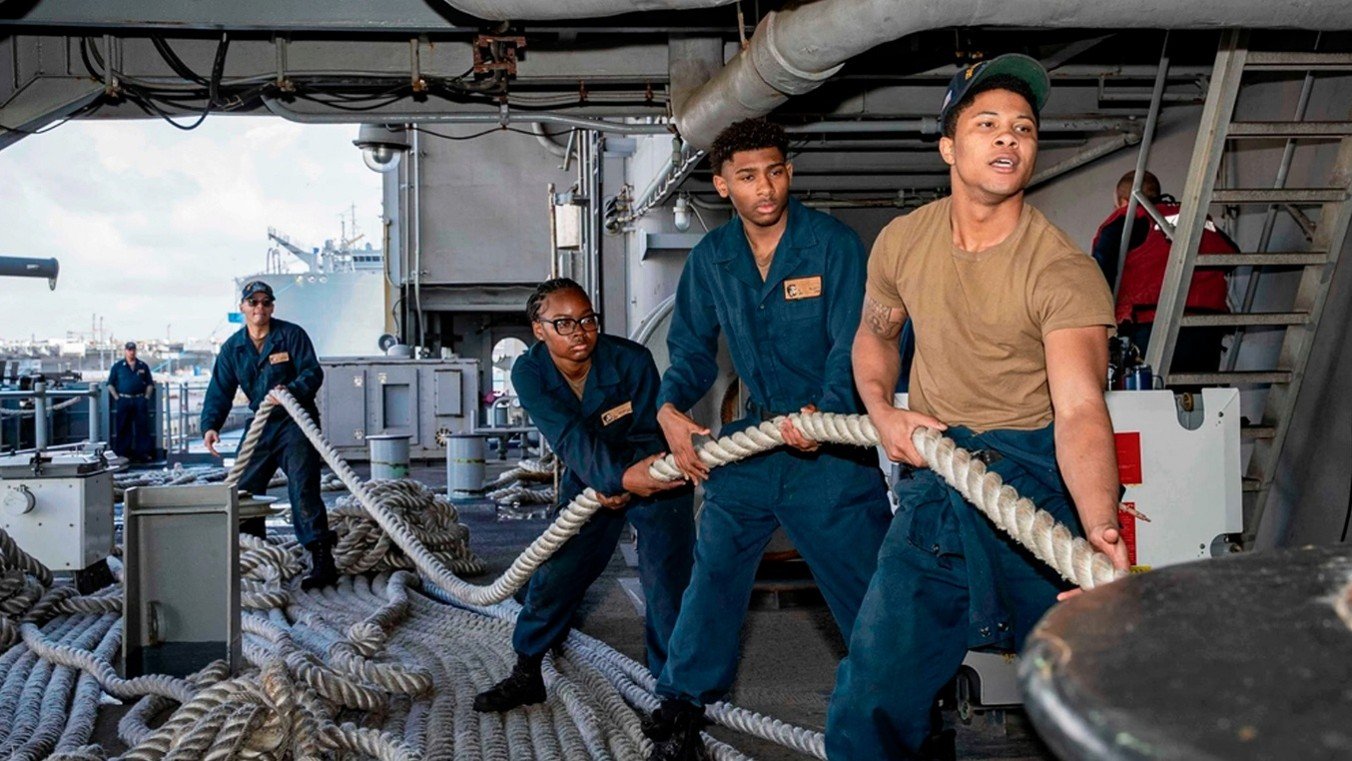
US Navy officials—including acting Secretary of the Navy Hung Cao; Vice Adm. Douglas Verissimo, head of the Naval Air Forces; and Vice Adm. Joseph Cahill, commander of the Naval Surface Forces—have begun to meet in person with families.
The officials were told by the families the pain they and their deployed loved ones are now enduring. For those back home, there may be outlets—but for the crews of the warship, the Navy’s options for help are limited.
The officials confirmed that mental health workers, chaplains, and doctors had already been deployed to the aircraft carrier and that more would be sent.
“Leadership is continuously conducting assessments to monitor and sustain the psychological readiness of every sailor,” the US Navy said in a statement on Monday to Stars & Stripes.
USS Abraham Lincoln Deployment Strains Sailors
It is hoped this isn’t lip service, as the United States Navy should have understood this problem. It isn’t new; less than a decade ago, 10 sailors committed suicide during the midlife refueling and complex overhaul (RCOH) of the USS George Washington from 2017 to 2023.
The refit and maintenance period, which was supposed to be completed in around four years, was extended to nearly six. Matters were made worse as the crew also endured COVID-19 lockdowns. Much of the crew was forced to live in an active construction site—or housed on floating barges converted to barracks with little downtime.
Many sailors said they suffered from lack of sleep and preferred sleeping in their cars to sleeping on the USS George Washington. Compounding the situation further was the fact that the sailors had been trained for meaningful shipboard duties, and instead were relegated to maintenance and cleaning duties.
The US Navy has sought to address this issue with future RCOHs, with work to be completed by contractors. Improved living conditions are being built ashore for the sailors who take part in the maintenance efforts.
How Long Can This Carrier Endure?
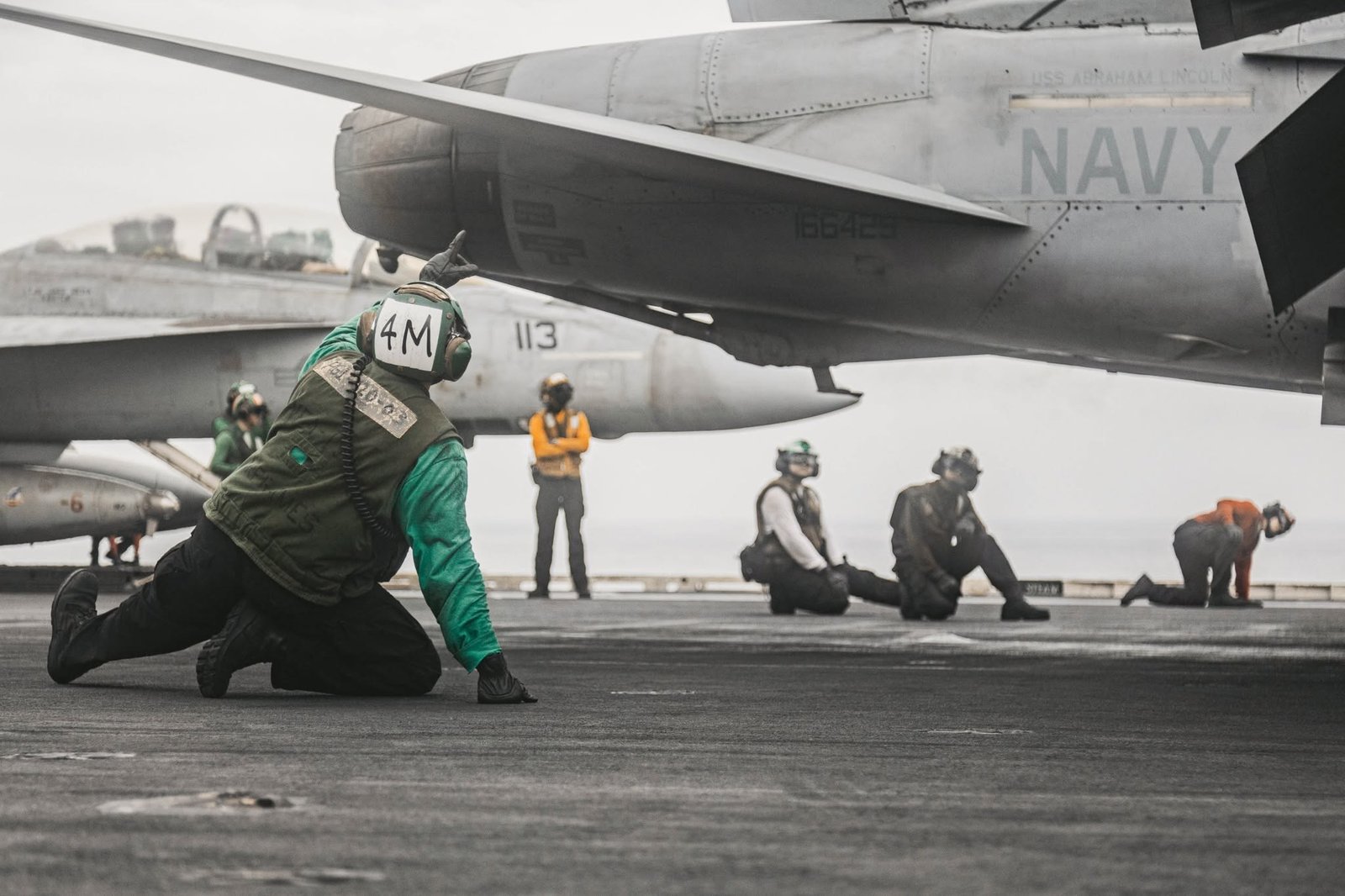
The Pentagon clearly understood the toll that the RCOH took on sailors. Now it will need to figure out how to address the stress that comes from these increasingly long deployments.