
Washington and Tehran remain locked over Strait of Hormuz access after their memorandum collapsed. Iran demands passage fees, the United States rejects any toll, and Gulf producers expand bypass pipelines and terminals
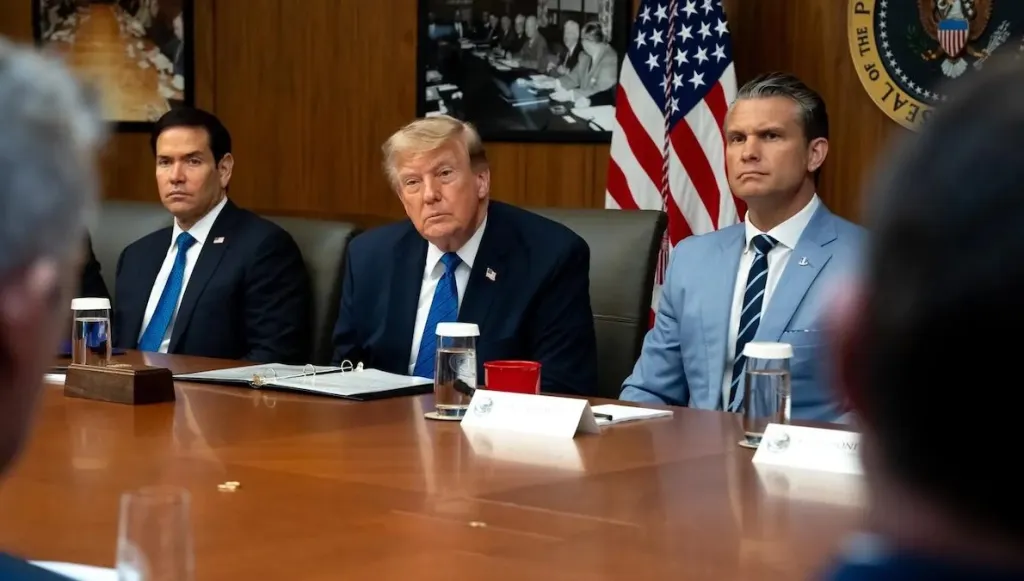
The collapse of the US-Iran Memorandum of Understanding did not end the struggle over the Strait of Hormuz; it reordered the conflict around a single contested question: whether passage through the world’s most critical oil chokepoint will now carry a formal price. Washington has paired public threats with hints of expanded bombing, while Tehran has worked to keep maritime traffic to a minimum. Negotiations remain stalled, and the Trump administration has made clear that any Iranian Hormuz Toll would be treated as both a revenue stream for Tehran and visible proof that the preventive war failed.
Secretary of State Marco Rubio has warned that allowing a state to charge for access to an international waterway would set a dangerous precedent. Yet the prewar status quo is gone. Iran has converted geography into coercive advantage, and every U.S. strike has reinforced Tehran’s incentive to attack Gulf energy infrastructure. Regional producers are responding by expanding pipelines and export terminals that bypass the strait. The core strategic issue is whether Washington can accept an Iranian Hormuz Toll rather than remain trapped in an open-ended war.
Why Tehran shut the strait
In the weeks since the US-Iran Memorandum of Understanding collapsed, Washington and Tehran have used the time to strengthen their respective positions in the event negotiations resume.
For the United States, this has largely taken the form of overt threats by President Donald Trump himself and hints that an even more comprehensive US bombing campaign against Iranian strategic targets is on the table. For Iran, the strategy is familiar: to ensure maritime traffic through the Strait of Hormuz is kept to an absolute minimum.
Can Washington block an Iranian Hormuz Toll?
US and Iranian officials continue to give conflicting accounts of where negotiations stand. Despite Trump’s repeated declarations that Tehran is begging for a deal, the Iranians stress no talks are occurring with the United States. Still, both sides seem to agree that any pending agreement will center on the Strait of Hormuz, the strategic waterway that the Islamic Revolutionary Guard Corps has proved capable of shutting down at will.
Various schemes have been proposed between Iran and Oman, the two countries on either end of the strait. While a deal is not finalized, Iran will most certainly retain more power over the strait’s traffic than it did before the war began in February.
Conflicting accounts from US and Iran
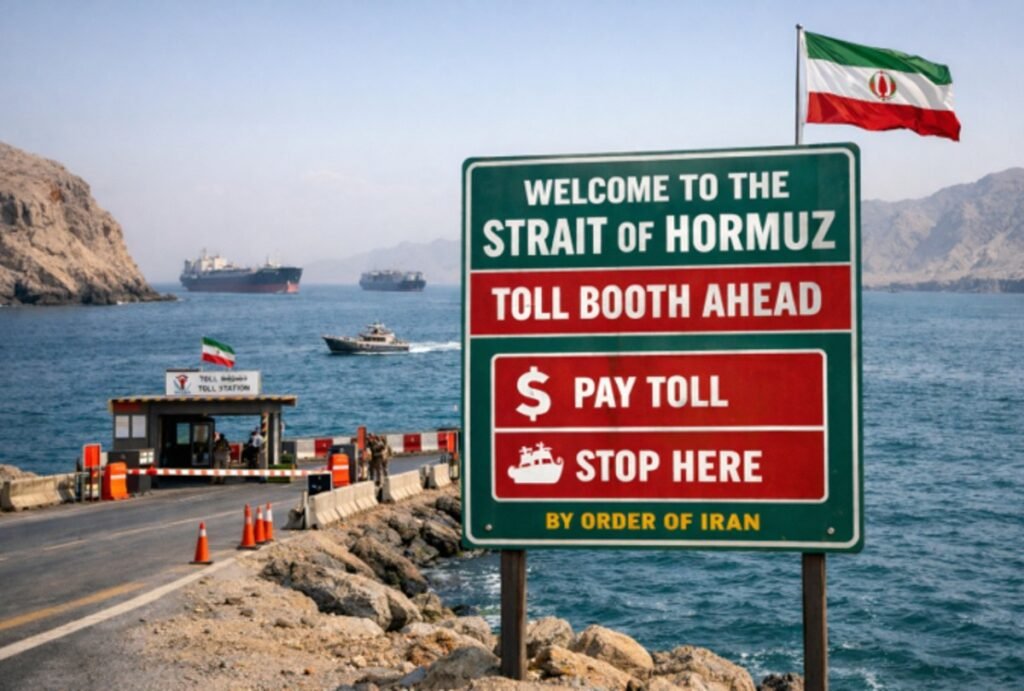
The question now is whether tolls or fees will accompany any arrangement worked out between Tehran and Muscat. The Trump administration is dead set against acceding to any fee structure because it would provide the Iranian government with additional revenue and represent visible proof that Trump’s preventive war was a strategic mistake.
Referring to the Strait of Hormuz, Secretary of State Marco Rubio reiterated the U.S. position in July. “If we create a precedent in the Middle East where a nation-state can decide that they are going to control an international waterway, charge a toll,” he said, “we have created a very dangerous precedent which will repeat itself in other parts of the world.”
What the strait looked like before
Of course, permitting an Iranian toll or fee structure isn’t ideal. Before the war, such a hypothetical would have been difficult to imagine. The strait at that time was free and open, and roughly 120 to 150 ships relied on the route each day to get their products to customers worldwide.
The United States wants Iran to return to this status quo. Yet Iran has no intention of doing so — and to expect otherwise is to be completely ignorant of how events have played out since.
Iran’s new strategic card
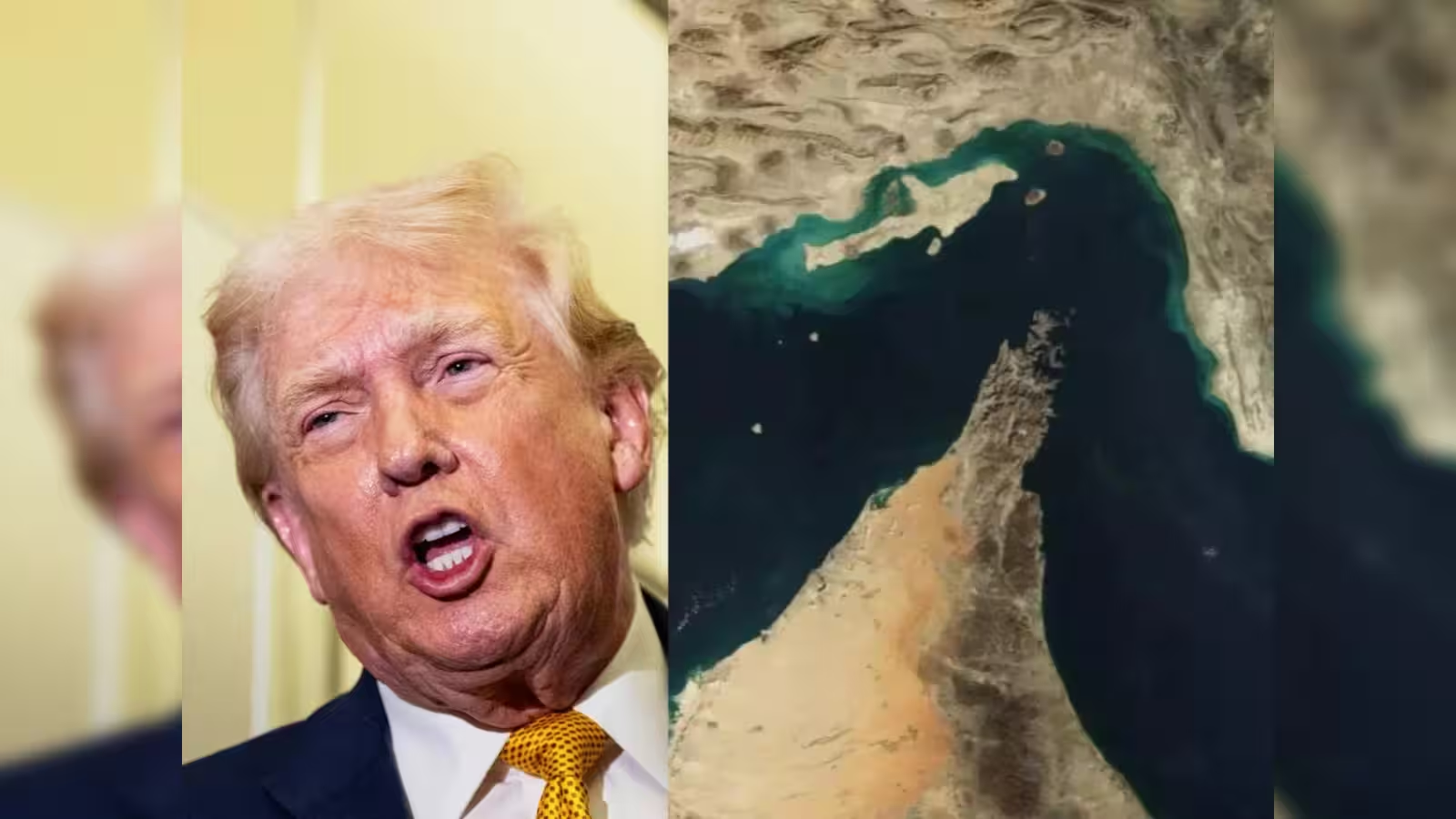
Trump’s war handed Iran the perfect excuse to leverage its geography, and the Iranians didn’t hesitate to do so. Originally, Tehran’s shuttering of the strait aimed to increase the cost on Washington and eventually convince US partners in the region to pressure Trump into ending the war. But, over time, the Strait of Hormuz, in addition to Iran’s more aggressive posture toward its neighbors writ large, has become something far more valuable: a strategic card Iran can play whenever Trump threatens to accelerate military operations.
Re-opening the strait is now as important to the United States as containing Iran’s nuclear program, if not more so. The question is how to do it.
Trump originally tried to pursue this objective through military force, hoping US strikes could degrade Iran’s military capacity to such an extent that the IRGC would have to stop shooting at ships. The strategy overestimated the US military’s power to force a change in Tehran’s strategic calculus and underestimated Iran’s ability to manufacture and launch cheap drones and missiles at scale.
Every US strike merely reaffirmed the Iranian government’s belief that the war was existential for them. Instead of capitulating, Iran fought back, targeting vessels that used the southerly route near Oman’s coast and making it clear that heavier US bombing would compel more Iranian attacks on Gulf energy infrastructure.
US military attempts to bring the strait back to its pre-February state have failed and will likely continue to fail. If the Trump administration seeks to extricate itself from a war without end, its best option is to accept a toll or fee structure in the regional chokepoint.
Accepting the Iranian Hormuz Toll
Hawks on Capitol Hill would no doubt scream bloody murder, and some of Trump’s own political allies would have a difficult time explaining how such a scheme could be seen as appealing. But if the choice is between swallowing fees or endless conflict, then the former is the better option.
The Trump administration may not like paying for the privilege of using the strait, but its decision to go to war in the first place created the situation the United States is now in. Bad policies have unintended consequences.
Fortunately, fees in the strait would not be the end of the world.
This wouldn’t be the first time a country located next to a critical trade chokepoint received some form of compensation. The most obvious case is the Strait of Malacca in Southeast Asia, where shipowners contribute to a voluntary fund, administered by Malaysia, Indonesia and Singapore, for navigational assistance, maritime safety, environmental protection and search and rescue.
A similar arrangement in the Strait of Hormuz would thus not set a precedent. In fact, shipping companies and the insurance carriers that underwrite them might even view these voluntary payments as in their own interest if they helped prevent even costlier disasters or accidents.
Negotiating the final terms
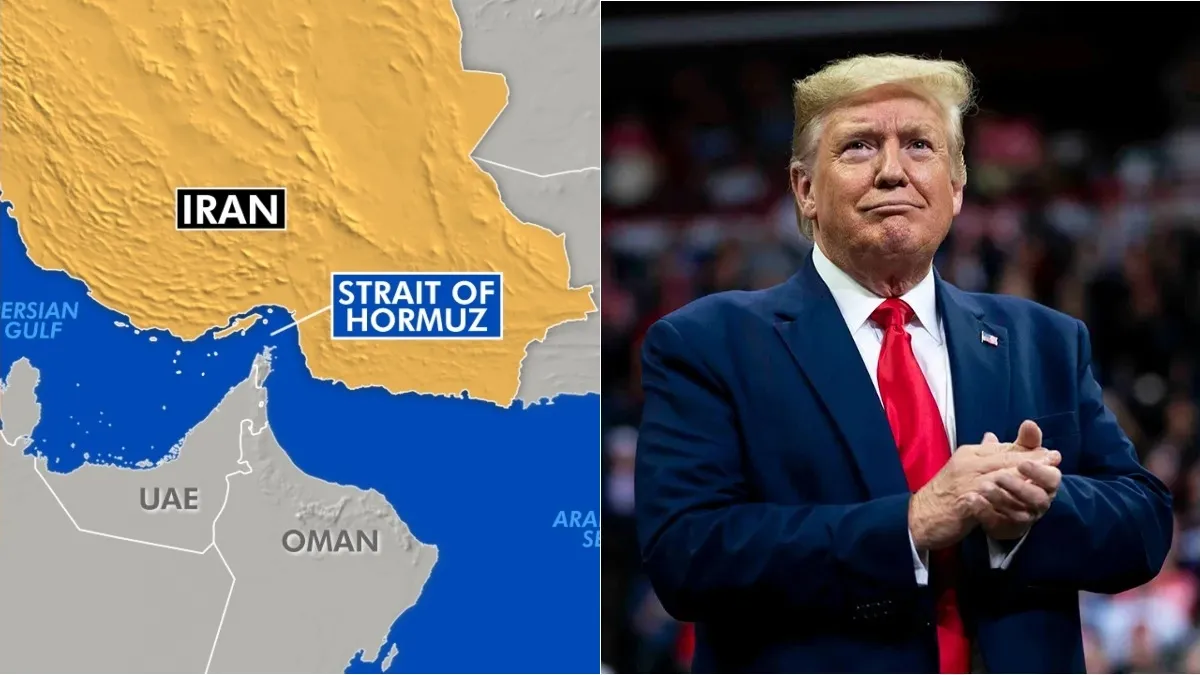
There’s no use brushing the obvious under the rug: U.S. acceptance of Iranian tolls or fees would be an embarrassing acknowledgment that Iran is now a principal arbiter of the strait. Moreover, depending on how high the fees are — Tehran is reportedly demanding 7% of the value of a ship’s cargo — the Iranians would be collecting revenue they wouldn’t have had prior to the war.
But even this scenario is not as dire as many assume. In practice, Iran’s leverage dissipates with every month that passes by. The Gulf Arab states are not sitting still and watching the new status quo helplessly. Rather, Tehran’s neighbors are increasingly adapting to Iran’s machinations by tapping into pipelines that bypass the strait altogether and exploring future projects that make their energy infrastructure more durable and less vulnerable to a single chokepoint.
Saudi Arabia is using its cross-country east-west pipeline to export more crude oil through the Red Sea. While this alternative route remains vulnerable to strikes by the Iran-aligned Houthis and doesn’t fully compensate for the loss of normal traffic in the Strait of Hormuz, it has still allowed the kingdom to avoid shutting down production entirely.
Ditto the United Arab Emirates, which is sending more crude through its Fujairah export terminal, located outside the strait. Fujairah’s share of UAE exports increased to 66% in July from 51% a month earlier.
Iran’s actions during the war will only reinforce Persian Gulf oil producers’ desire to diversify their routes, reducing Tehran’s ability to obstruct energy flows in the future.
Negotiations on reopening the Strait of Hormuz continue. If there comes a point where fees for passage are unavoidable, then US policymakers should keep a cool head. Ceding the point would be the most efficient way for the United States to remove itself from a foolish conflict at minimal cost.