
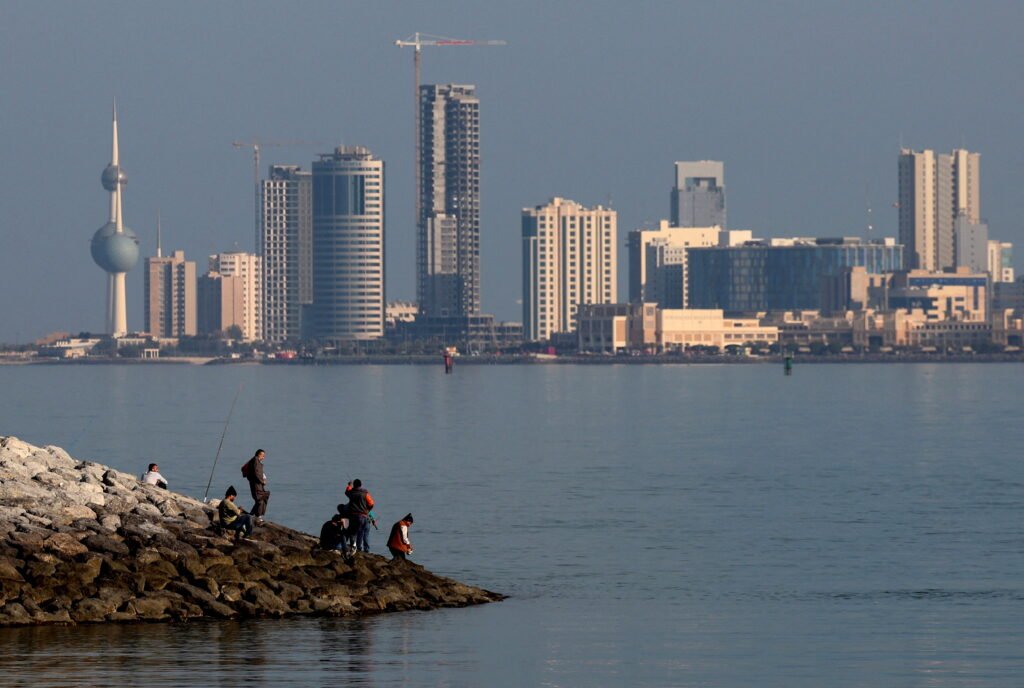
Kuwait attracted a record $16 billion KKR infrastructure deal, followed by a $4.5 billion sovereign loan and strong demand for a $6 billion bond issue, despite Hormuz shipping disruptions and contraction forecasts.
Kuwait Investment has rarely been tested with such immediate pressure. The country’s export architecture depends on the Strait of Hormuz, and Iranian strikes have already hit civilian and energy infrastructure. Even so, capital markets have not closed. The July agreement between KKR and the Kuwait Oil Company brought a record $16 billion foreign direct investment, while the Kuwait Investment Authority secured a $4.5 billion syndicated loan and a $6 billion bond issue drew strong demand.
These transactions indicate that institutional investors still separate Kuwait’s short-term wartime exposure from its longer-term sovereign asset base. The fiscal picture remains unbalanced because oil revenue supplies roughly 90 percent of government income before investment returns, leaving little buffer against export disruptions. Storage constraints compound that exposure. Without durable maritime security in the strait, production gains cannot be converted reliably into export receipts. The government’s ability to borrow helps, but it does not remove the underlying vulnerability. For outside capital, the central question is whether Kuwait can preserve enough export capacity and political coherence to move from emergency borrowing toward structural recovery.
Why Kuwait Investment Defies the Gloom
Kuwait has seen difficult days before, but these are trying times. The small Gulf country has been on the front lines of Iran’s retaliatory attacks targeting critical and civilian infrastructure, such as the international airport and energy facilities. Disrupted maritime traffic through the Strait of Hormuz has significantly restricted Kuwaiti energy exports. Kuwait was even having trouble energizing its economy prior to the Iran war – a period when neighboring Gulf countries were buzzing with economic momentum.
Yet the fog of war has not prevented Kuwait from sending some positive signals. In July, KKR and other investors signed a $16 billion infrastructure deal with the Kuwait Oil Company – the largest foreign direct investment in Kuwait’s history. In early August, the Kuwait Investment Authority, the country’s sovereign wealth fund, received a $4.5 billion syndicated loan, while a $6 billion Kuwaiti bond issuance in July also saw strong demand.
These are long-term votes of confidence in Kuwait, and they arrive at a much-needed moment. Yet major vulnerabilities and risks remain over the immediate and short terms, with few obvious avenues to mitigate pressing economic threats.
An Energy Export Conundrum
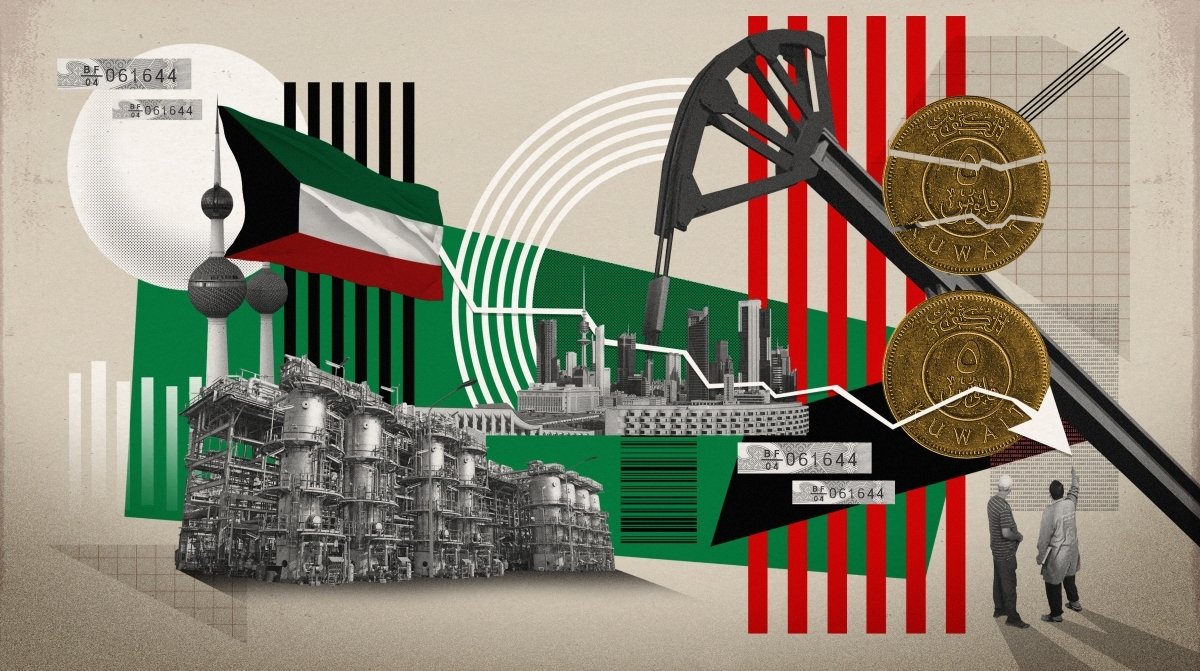
The Iran war – and its effect on the Strait of Hormuz – presents the clearest and most present danger to Kuwait’s economic outlook. The oil sector accounts for about 90% of government revenue before investment income is accounted for, making energy exports critical for fiscal well-being and economic growth. Yet restricted maritime traffic through the Strait of Hormuz, through which virtually all of Kuwaiti crude oil, refined products, and condensates move, has complicated getting these critical exports to buyers. The Kuwait Petroleum Corporation also faced Iranian attacks in July that caused injuries and significant material damage.
During periods of relative calm, Kuwait has been able to boost its production. Kuwait managed to produce 1.97 million barrels of crude oil per day in July and 1.65 mb/d in June, which was a steep increase from 580,000 b/d in May. However, without a durable resolution to tensions in the Strait of Hormuz, limited storage capacity is going to be a persistent constraint.

Can Kuwait Bypass Hormuz Blockade?
Finding a way to get more Kuwaiti oil exports through the strait remains a top priority for Kuwait’s government. Shuttle tactics with ship-to-ship transfers outside the strait can keep oil exports moving but are not intended as a long-term solution. The Kuwaiti foreign minister held a phone call with his Omani counterpart on August 9 about the importance of safety and freedom of maritime navigation through the Strait of Hormuz – a timely conversation given Oman’s ongoing negotiation with Iran over management of the strait. The Kuwaitis are hoping that the Omanis can hash out acceptable terms with the Iranians, though utilizing these routes would likely involve paying for safe passage.
Kuwait’s options for bypassing the Strait of Hormuz entirely are limited. The Kuwaitis are exploring cooperation with the Saudis, and an expansion of the East-West pipeline could create some room for Kuwaiti crude oil. Deeper energy collaboration with Iraq makes some sense but is a political nonstarter for now.
Seeking to link up with Mediterranean transit route alternatives through Syria and Lebanon, which would involve rebuilding old pipelines, remain expensive and longer-term gambits. Cross Gulf Cooperation Council bypass projects – through new pipelines or multimodal bridges – are likewise clunky and capital-intensive options. However, a postwar GCC consensus on mutual energy interests could help overcome lingering suspicions and competitive dynamics.
Growth and Investment Flows
These long development timelines won’t immediately help with economic growth and investment flows. The International Monetary Fund expects Kuwait’s economy to contract by 0.6% in 2026, and other forecasts envision a steeper contraction, though there could be a strong growth rebound in 2027. In the meantime, Kuwait has increased borrowing and reportedly ordered ministries to rein in spending.
The KIA and its estimated $1 trillion in assets under management will continue to be a major draw for international investors. In June, it joined a consortium led by KKR to launch the company Helix Digital Infrastructure to invest and manage assets needed for artificial intelligence hyperscalers. While Kuwait’s domestic technology agenda is nowhere close to as ambitious as that of neighboring Gulf countries, the country remains an important source of investment capital.
The government is taking steps to try to make Kuwait a more attractive destination for international financial institutions. In August, Kuwait’s Capital Markets Authority granted the first institutional marketing license for a collective investment scheme established outside Kuwait to Goldman Sachs International. Such initiatives involve collaboration with the Kuwait Direct Investment Promotion Authority.

Opening Doors to Foreign Capital
Attracting more foreign investment and speeding up the delivery of critical infrastructure projects are key objectives behind the revised New Kuwait Vision 2035 strategy. Regional integration initiatives have a newfound significance after the outbreak of the Iran war. In May, the Kuwaiti Municipal Council approved the route corridor for a high-speed railway to Riyadh, building upon the national railroad project that Kuwait revamped in 2025.
Kuwait Investment Pivots to Gateways
Kuwait’s longer-term plan to be a gateway to the northern Gulf (the original Vision 2035 envisioned a major finance and logistics hub) will continue to be challenging as long as Iran poses a significant threat to regional security. In the remote chance that Tehran’s position in the international system improves markedly and the country reintegrates into the global economic community alongside a durable lifting of sanctions and unfreezing of assets, Kuwait could leverage its geography to capitalize on such a regional shift. However, this change seems a long way off.
Salvation Lies Within
Domestic politics also shape the country’s longer-term economic outlook. Kuwait’s emir dissolved its National Assembly in 2024 and suspended the body indefinitely. The decision removed some obstacles to economic reform – sovereign bond issuances, for example, have been held up in the past because the Parliament would not pass a new debt law.
Yet bypassing the Parliament – the region’s most robust elected body – to initiate necessary reforms suggests a systemic disconnect among the rulers, appointed government, and elected Parliament. The Parliament will likely return as an important factor, for better or worse, in future economic policymaking and reforms. Some manner of compromise and collaboration will help ensure political risks remain manageable.
For now, investors appear able to look beyond the pressing security threats and economic pressures facing Kuwait. That is welcomed news, but it still leaves plenty of hard work ahead needed to reinforce Kuwait’s economic outlook as the country – and region – prepares to move beyond the Iran war.