
Beijing prioritizes commercial engagement and regional infrastructure investments across Arabian markets while avoiding active security guarantees. Chinese policy maintains trade corridors, absorbs regional debt, and expands corporate technology ties amid Middle Eastern conflict.
Diplomatic encounters and high-level summits between global powers frequently spark speculation regarding shifting alliances across the Middle East, yet Beijing remains firmly committed to a pragmatic, economically grounded foreign policy.
The evolution of China-Gulf Relations reflects a calculated strategic preference for commercial expansion and bilateral trade over deep military entanglements or security guarantees. While ongoing regional hostilities, including the Iran conflict and Red Sea maritime disruptions, threaten critical energy supply lines, Chinese leadership consistently avoids absorbing substantial political or operational burdens in regional defense architectures.
Instead, Beijing utilizes noncommittal diplomatic posture and calls for restraint to protect national commercial interests while allowing Western powers to navigate complex local disputes. This deliberate economic priority enables Chinese state and corporate entities to secure vital infrastructure contracts, expand digital technology presence, and absorb sovereign debt across regional markets. Consequently, China-Gulf Relations operate on a transactional model that thrives alongside persistent geopolitical friction, prioritizing long-term market integration while strictly limiting military commitments across the broader Arabian Peninsula.
Analyzing Security Shifts in China-Gulf Relations
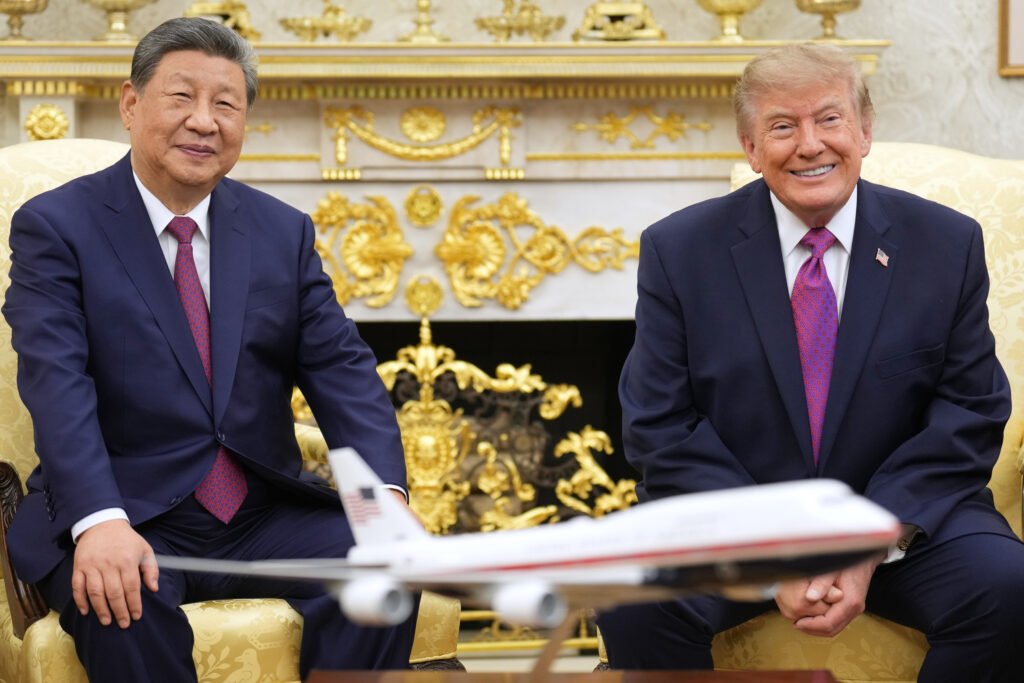
The lead up to President Donald J. Trump’s September 23-25 summit with Chinese President Xi Jinping inevitably renewed questions about China’s role and influence in the Middle East. Some analysts went so far as to claim that China’s Middle East moment had arrived. Yet no major breakthroughs of consequence for the region emerged in the immediate aftermath of the summit and its pageantry.
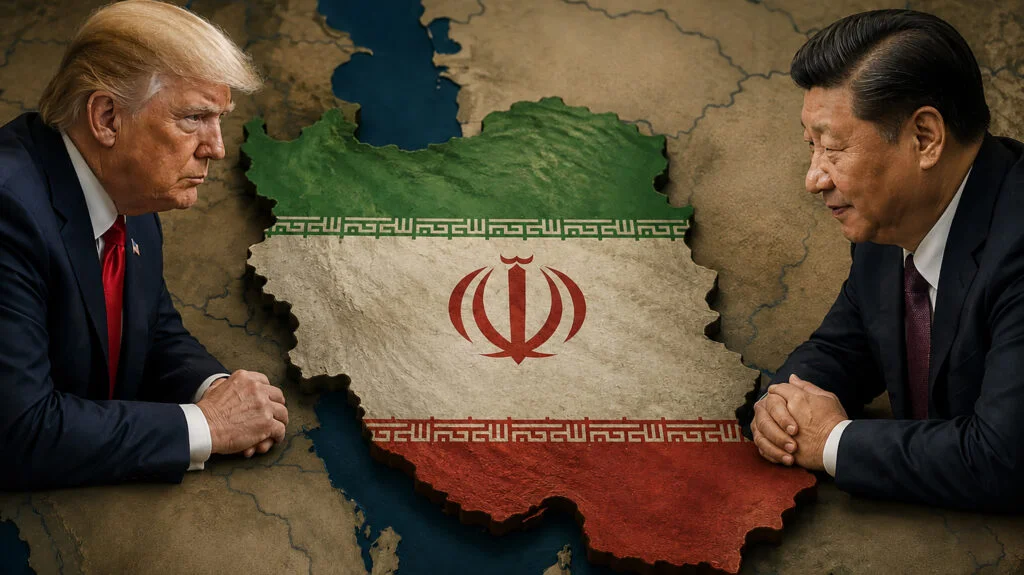
China has signaled some willingness to become more engaged in the region’s security architecture. At a BRICS summit in India earlier in September, Xi reiterated calls for a resolution to the Iran war and indicated Beijing was ready to play a role in peace efforts. The Chinese government has described tightening U.S. sanctions on Iran as “illegal,” stressing it would take “all necessary measures” to defend China’s national interests. Chinese officials likewise called for calm and restraint amid the recent Saudi-Houthi escalation in and around the Red Sea, and China reportedly pressed Iran to help rein in the Houthis.
Why Beijing Avoids Middle East Conflict
A Fair-Weather Friend? These Chinese measures and – largely rhetorical – forms of support make sense. Regional conflict and instability ultimately do not advance Beijing’s core interests in the region. China is nevertheless most likely to continue to tread carefully around the Iran war, Saudi-Houthi tensions, and other geopolitical hotspots in the region. While crises in the Middle East have global ramifications, the region is not located on Beijing’s immediate doorstep and thus does not necessarily rise to a top foreign policy priority.
Some analysts have also expressed a related view that tensions in the Middle East should not derail the process of shaping the consequential U.S.-China relationship. Moreover, Beijing is unlikely to wager substantial political capital on thorny regional conflicts that defy easy solutions and, in China’s reading, continue to bog down the United States.
At the same time, it is hard to envision Beijing imposing strict conditions on Tehran to settle for a deal or curb disruptive Houthi behavior. Pushing the Iranians back to the negotiating table is not the same as demanding a negotiated outcome. The Chinese government has not opted to use its leverage over Tehran as the primary importer of Iranian oil to help contain the Iran war, despite a strong Chinese preference for de-escalation of Gulf tensions. China is likely to adopt a similarly noncommittal and noncontroversial stance toward the Houthi-Saudi conflict, where Beijing enjoys even less direct leverage over the Iran-aligned Yemeni group.
Any significant shifts in Chinese posture toward active involvement in the Red Sea arena or Iran war dynamics would mark a significant deviation from China’s economic and development-led approach, which has largely been able to proceed around and alongside regional conflicts for decades.
Expanding Digital Technology and Corporate Investments
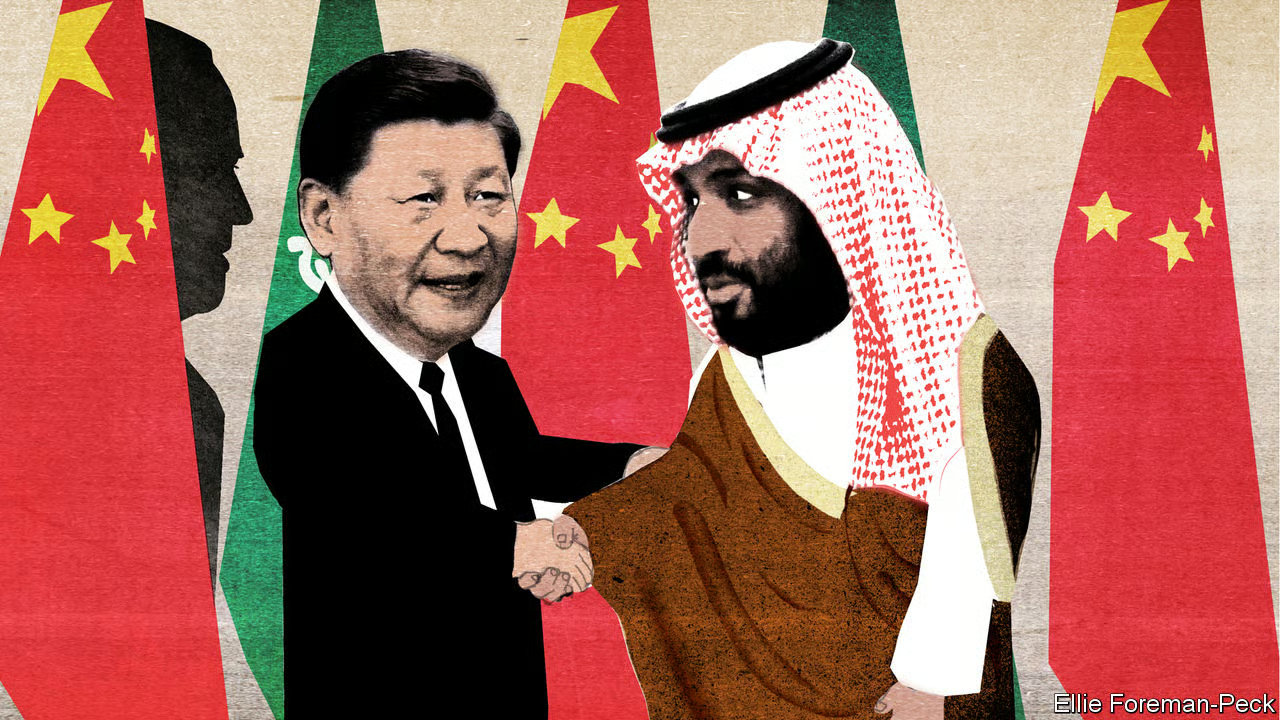
An Economics First Approach Deeper regional involvement for Chinese government and business actors over the near term is most likely to manifest largely in economic forms, reinforcing the broader arc of China’s preferred projection of regional influence. Any Gulf frustration over China’s unwillingness to exert more pressure on Iran and Iran-aligned actors is unlikely to come at the expense of enabling continued commercial and economic engagement between the Gulf and China. In fact, the economic pressures inflicted by prolonged regional conflict will likely push Gulf governments to be more receptive to trade, investment, and commercial engagement from a variety of sources.
China remains a compelling technology partner within the region. Saudi Arabia’s annual LEAP conference offered an opportunity for Chinese firms to plant deeper roots in the country, with BytePlus and Tencent Cloud securing projects and operating licenses as well as Lenovo planning to begin producing laptops in Saudi Arabia by the year’s end. Saudi Arabia’s national tech champion Humain, which is owned by the Saudi Public Investment Fund, also recently released a new Arabic language model developed on the Chinese AI lab’s MiniMax.
Building Trade Corridors Across Gulf Markets
A robust trade and investment corridor between China and the Gulf provides many avenues for expanding economic ties. Dubai Chambers is hosting the Dubai Business Forum – China on October 14 in Shenzhen, where government and business actors will discuss commercial engagement and regional expansion with a program focused heavily on the digital economy. Qatari logistics firms and Qatar’s free zone authority are keen to deepen linkages to China.
The economic infrastructure buildout in the region will provide new opportunities for Chinese firms to offer cost-effective development projects for regional governments. New port, rail, and road development projects serve as concrete avenues for Chinese firms to become more embedded in emerging and expanding corridors and connectivity initiatives.
Funding Infrastructure Projects and National Debt
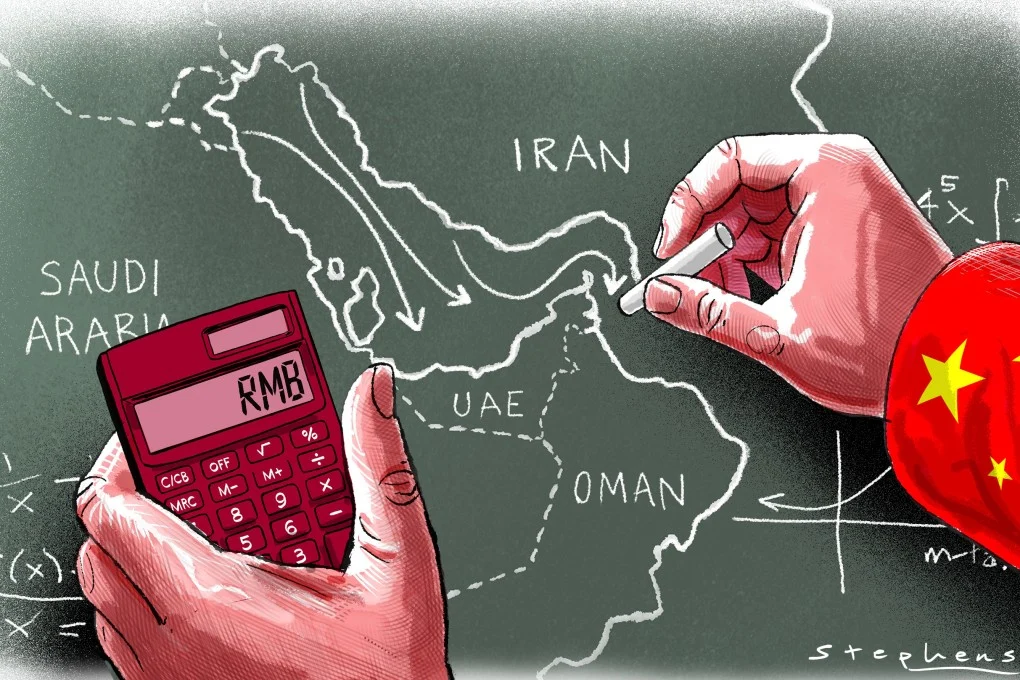
Gulf financing needs are on the rise too, owing to widening deficits and expensive development initiatives. Chinese holdings of Gulf debt have soared over recent years. Future Gulf bond issuances will provide Chinese banks with the opportunity to continue to invest during a critical period for the region.
Regional and Multilateral Dimensions China’s commercial presence is growing at a steady pace in the Gulf’s broader neighborhood. In early September, Xi visited Egypt – a key regional destination for Gulf investments and an increasingly critical transit corridor for Saudi energy exports. Chinese firms – along with Gulf counterparts – are heavily invested in the Suez Canal Economic Zone and renewable energy projects across the country. The Houthis have refrained from targeting Chinese vessels in the Red Sea, while Egypt has largely been spared from direct attacks by Iran and the Houthis. In August, the Chinese tech firm Huawei submitted a bid to build artificial intelligence data centers for the Egyptian government.
How Multilateral Groups Transform China-Gulf Relations
Leveraging multilateral groupings with a strong Chinese influence – such as BRICS, where Egypt, the United Arab Emirates, and Iran are members of the expanded bloc – offers another platform for regional engagement. The Abu Dhabi crown prince met the Iranian president at the September BRICS summit in India, providing the UAE an opportunity to advance its dual strategy of engagement with and deterrence against Iran.
Xi utilized the BRICS summit to announce plans for an AI open-source community and a special economic zone partnership in addition to a digital ecosystem cloud platform. The combination of AI and special economic zone collaboration resonates with Emirati geoeconomic interests. However, U.S.-based tech firms remain key players in Gulf markets: Microsoft announced plans on the sidelines of the United Nations General Assembly to invest $10 billion in Gulf countries with a focus on resilient cloud and AI infrastructure.
Steering Economic Strategy Through Global Turmoil
To be sure, not all China-driven cooperation initiatives involving Gulf countries materialize as planned. Efforts to secure Saudi Arabia’s longer-term participation in the China-led mBridge digital currency initiative fell apart. The Saudis tested the water but then quietly withdrew from the project after the completion of a planned proof of concept in 2025.
The Chinese are unlikely to be deterred by such developments. Instead, a slow and steady march to a primarily economic tune is likely to keep guiding their regional approach amid these uncertain times.