
Israel’s fiscal allocations direct $430 million to new West Bank settlements, $255 million to Haredi yeshivas, and additional sums for infrastructure and draft exemptions, revealing coalition dependence on settlers and ultra-Orthodox parties.
Fiscal allocation in Israel operates less as a technical instrument than as an expression of political authority. The Israeli budget channels state resources toward West Bank settlement construction and Haredi institutional subsidies, transforming contested policy choices into entrenched structural facts. This pattern became especially visible during the current government’s emergency wartime revisions. The Israeli budget now assigns hundreds of millions of dollars to new settlement housing and West Bank infrastructure while simultaneously directing large sums to yeshivot and related programs.
These allocations do not simply reflect coalition bargaining; they constitute an operational strategy for holding together a governing majority that depends on settler parties and ultra-Orthodox factions. The result is a fiscal architecture that legalizes previously unauthorized outposts, funds draft evasion at scale, and reduces accountability for settlers accused of violence.
Across successive amendments and committee approvals, the numbers reveal a consistent hierarchy: the state’s material capacity is deployed to protect specific constituencies rather than to enforce uniform legal obligations. This financial logic explains why settlement expansion has accelerated beyond all earlier records and why Haredi military exemptions persist despite judicial rulings. The political consequences extend beyond the Knesset, shaping Israel’s internal cohesion and the prospects for any durable resolution of the West Bank conflict.
Why the Israeli Budget Anchors Policy
When he asked me to become the Pentagon’s comptroller in the George W. Bush administration, Donald Rumsfeld asserted that “the budget is policy.” That proved not to be the case. It was not the budget that determined that the United States chose to attack the Taliban in Afghanistan, dethrone Saddam Hussein—or, for that matter, attack Iran twice, once last year and again beginning in February.
In Israel, however, the budget is indeed policy. It is the budget that sustains Israeli expansion in the West Bank, including the validation of settlements previously deemed illegal under Israeli law. The budget also continues to fund the Haredi ultra-Orthodox community, even as that community resists participation in the most basic of citizens’ obligations, be they military duty or national service, and refuses to acknowledge the validity of a Jewish state that is not under theocratic control.

Israel Is Building New West Bank Settlements at Record Speed
During the first decade after the Six-Day War, Israeli Labor governments supported the creation of about 30 settlements on the West Bank, primarily for security purposes. The number of settlements began to balloon after Menachem Begin’s 1977 electoral success. Today the number of settlements that the Israeli courts have deemed legal has increased nearly five-fold, while radical settlers have established nearly 400 additional outposts throughout the West Bank.
Moreover, whereas under previous Israeli governments the military disbanded settlements deemed illegal, the current Netanyahu government openly endorses their establishment. Under the leadership of Finance Minister Bezalel Smotrich—who doubles as a minister in the defense ministry—Israeli settlers have created 185 illegal outposts on the West Bank, while over 40,000 housing units were approved for construction in settlements and 103 new settlements were either approved or retroactively legalized. These figures represent a greater level of settlement expansion than that which took place under any previous Israeli government.
Can Haredi Exemptions Keep Expanding?
As for the Haredim, their opposition to the principle of a secular Jewish state harks back to the earliest years of the Zionist movement. Once the state was established in 1948, the Haredim came to terms with political reality. Indeed, during the Israeli War of Independence, many members of what was then a minuscule community not only performed various home front services in support of the Israeli effort, but some actually performed what the US Army terms “combat service support” as well.
Because the Haredim then constituted a small percentage of the fledgling state’s Jewish population, Prime Minister David Ben Gurion, who believed that they were an anachronism that would soon disappear, reached an understanding with Rabbi Abraham Isaiah Karelitz, the Haredi leader, that the few students attending Haredi seminaries (yeshivot) would be exempt from military service. The Haredim did not disappear, however, and their community grew in ever larger numbers, with a corresponding increase in political power that first manifested itself when Menachem Begin became prime minister in 1977.
Coalition Dependence Shapes Fiscal Choices
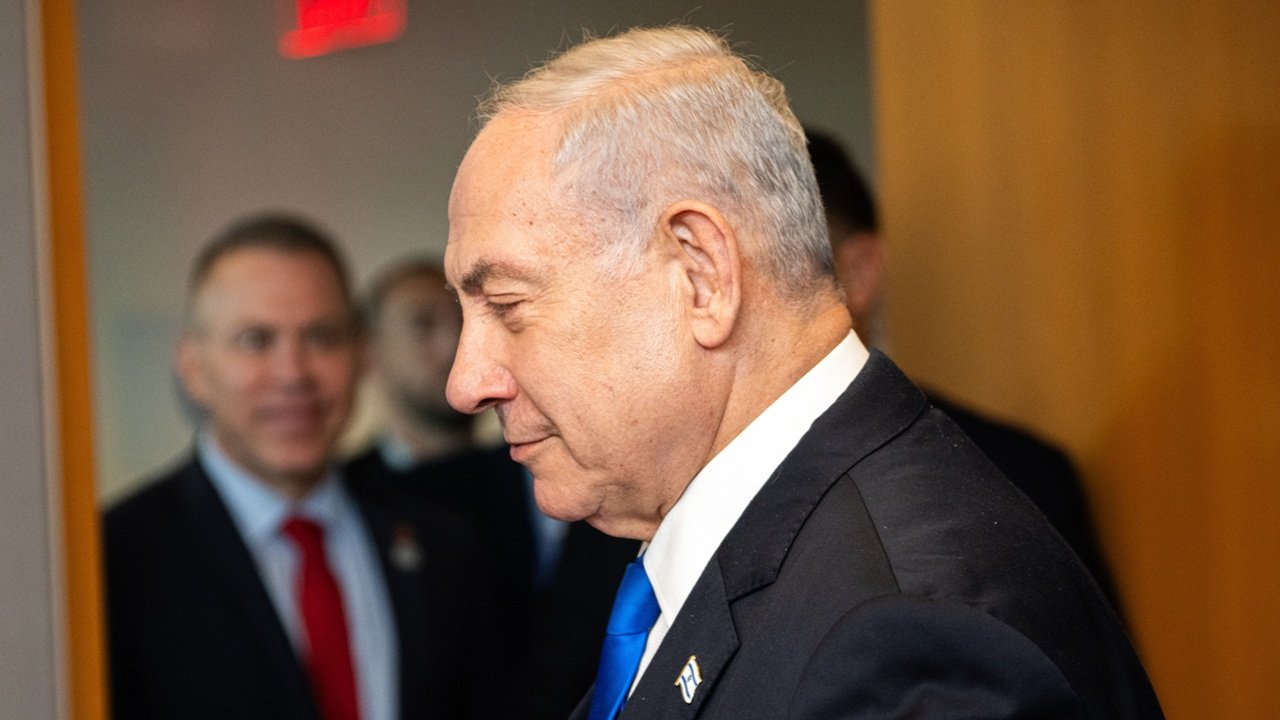
That the government stands by as settlement expansion on the West Bank continues unabated and as the Haredim regularly block major traffic arteries to protest the incarceration of draft evaders has been due to Benjamin Netanyahu’s utter dependence on the settler community and the Haredi parties both for the survival of his current government and for his prospects for leading the next one. And more than anything else, the budget has been Netanyahu’s vehicle for ensuring the support of both groups.
Israel’s Budget Supports Settlement Construction—and Haredi Draft Dodgers
Finance Minister Smotrich, himself a West Bank resident, is together with Security Minister Itamar Ben-Gvir the government’s strongest supporter of the settlement movement. Smotrich has allocated millions to the settlers without encountering any pushback from the Prime Minister. Smotrich’s most recent budget amendment set aside $430 million to establish an additional 34 settlements over the next several years. These funds will subsidize housing for families moving to the West Bank. Smotrich’s plan would bring the total number of settlements that the current Netanyahu government has approved to 103.
The funding for new settlements comes on top of approximately $900 million in the original fiscal year December wartime budget for fiscal year 2026 that was allocated to settlement development, and another $2.3 billion for West Bank infrastructure. Other sums for the West Bank are buried elsewhere in the budget, but are likely to amount to as much as an additional $1 billion. Netanyahu has funded the settlers, and for that matter has given them free rein to terrorize West Bank Palestinians to ensure that Smotrich and Ben-Gvir remain in his government.

Haredi Budget Allocations Still Expand
The same considerations apply to his relations with the Haredim, though Netanyahu himself is not religious. Earlier this year, the prime minister faced a threat by the ultra-Orthodox parties to bring down his government unless it legalized draft evasion by the approximately 66,000 nominally “full-time” seminary students—many of whom nevertheless seem to find considerable time to participate in demonstrations that disrupt the daily lives of ordinary Israelis. He succeeded in placating the Haredim by inserting into the country’s emergency wartime budget no less than $255 million for their yeshivas and other programs. This sum was in addition to the roughly $1.4 billion that the Knesset allocated in March to Haredi institutions for the current Israeli fiscal year.
If that were not enough, as the current Knesset session came to an end, Netayahu tried once again to feed the insatiable Haredi appetite for funds. Earlier this month, with the Knesset already in recess ahead of the October 27 legislative elections, its Finance Committee, which is dominated by Netanyahu supporters, approved an additional $85 million for Haredi educational institutions. It also allocated at least $100 million as further support for the settlements. Both actions reflected Netanyahu’s pre-election overtures to his current settler and Haredi government partners.

What the Israeli Budget Funds Without Oversight
Budget allocations for settlement expansion and Haredi institutions are only one facet of the government’s tolerance of nationalist and religious extremists. The government and the military continue to look the other way as radical settlers continually attack Palestinian residents of the West Bank. Few of these terrorists are arrested, and even fewer are detained for any length of time.
The government is now taking a marginally harder line against Haredim, with police arresting a relatively limited number of draft dodgers, since the Israeli Supreme Court has invalidated military exemptions for Haredi seminarians. But the government also supported a bill to elevate religious studies to a national priority and to ban the arrest of most draft dodgers; the Supreme Court has yet to rule on this latest effort to appease the Haredim. In any event, few Haredim are ever arrested for protesting conscription, even as their demonstrations have become an ongoing public nuisance.
While Israel remains embroiled in conflicts with its external enemies, the country’s internal fissures appear to be widening, with the tacit, and sometimes explicit, support of the Netanyahu government. Unless he is unseated in the October elections, Israel’s internal troubles are unlikely to abate any time soon.