
Iraqi crude shipments from Basra are recovering despite the war, but Iran may be profiting from smuggling, blending, or transit tolls, threatening U.S. sanctions and Iraqi fiscal integrity.
Iraqi oil exports have become both an economic lifeline and a strategic vulnerability as Iraq attempts to restore prewar crude flows through the Persian Gulf. Satellite data shows tanker activity recovering, but this revival raises urgent questions about who controls the maritime route and who profits from the cargo. Iran’s reported facilitation of Iraqi ships transiting the Strait of Hormuz introduces the possibility that lawful crude shipments are being co-opted by Tehran through smuggling, blending, or transit fees.
That would directly undermine U.S. sanctions and the broader campaign of economic isolation against the Islamic Republic. Baghdad faces impossible fiscal pressure after exports collapsed earlier in the war, leaving federal budgets heavily exposed. Yet the desperation that drives Iraq to accept Iranian assistance also creates openings for illicit revenue streams that have already been documented by U.S. Treasury designations. Washington must now distinguish between legitimate Iraqi cargoes and those contaminated by Iranian interests, a task made harder by political fragmentation and the opacity surrounding the Hormuz arrangement. Without active monitoring and clear consequences, the revival of Iraqi oil exports could inadvertently finance the very forces prolonging the conflict.
Iraqi Oil Exports Rebound Slowly
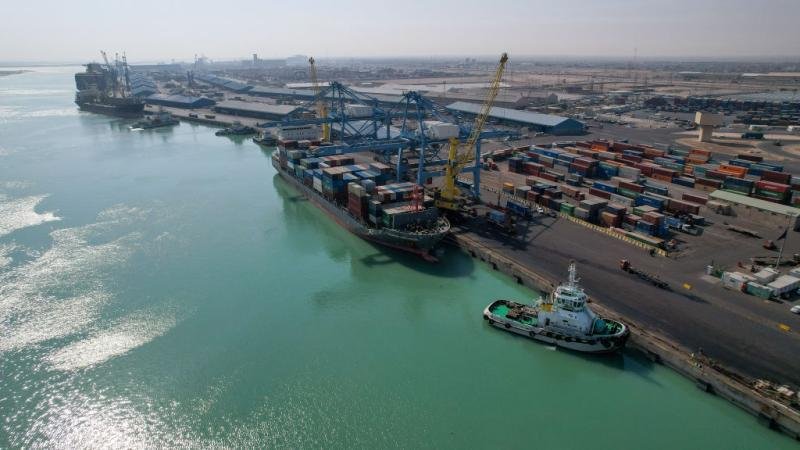
Basra, Iraq’s oil export hub perched on the Persian Gulf, is busier than it has been since conflict between the United States and Iran began in February.
According to Bloomberg, satellite imagery showed seven tankers, which can hold about 13 million barrels of oil combined, at Basra on August 24. In previous weeks, only one or two tankers were visible at their berths through satellite imagery.
The Abu Dhabi National Oil Company reportedly offered to shuttle Iraqi oil through the Omani side of the Strait of Hormuz earlier in the month. Beginning in September, Iraq’s State Oil Marketing Organization (SOMO) is offering oil for pick-up outside of Hormuz, indicating increased confidence that it can move oil through the Gulf.
However, Iraqi President Nizar Amedi said on August 22 that Tehran had facilitated some Iraqi ships transiting the strait, indicating possible use of the Iranian side. Iraq desperately needs a return of Basra exports, but unmonitored, it could profit Iran’s regime either by smuggling illicit Iranian oil or by imposing tolls on Iraqi exports.
Iraq Relies on Southern Exports
Roughly 90 percent of Iraq’s energy production is in its southern fields. These must be exported via Basra, as the country lacks the pipeline infrastructure to send the product north. Prior to the recent conflict, Basra accounted for 94 percent of Iraq’s oil exports, which provide more than 90 percent of the country’s budget, with roughly 3.3 million barrels per day (bpd) exported from the port. As of August 26, an average of 1.9 million bpd loaded at Basra for export, according to TankerTrackers.com. This is a significant improvement from May’s 100,000 bpd, but still a far cry from pre-conflict numbers. The collapsed exports have already led to a financial crisis in Baghdad.
Iran Smuggles Oil Through Basra
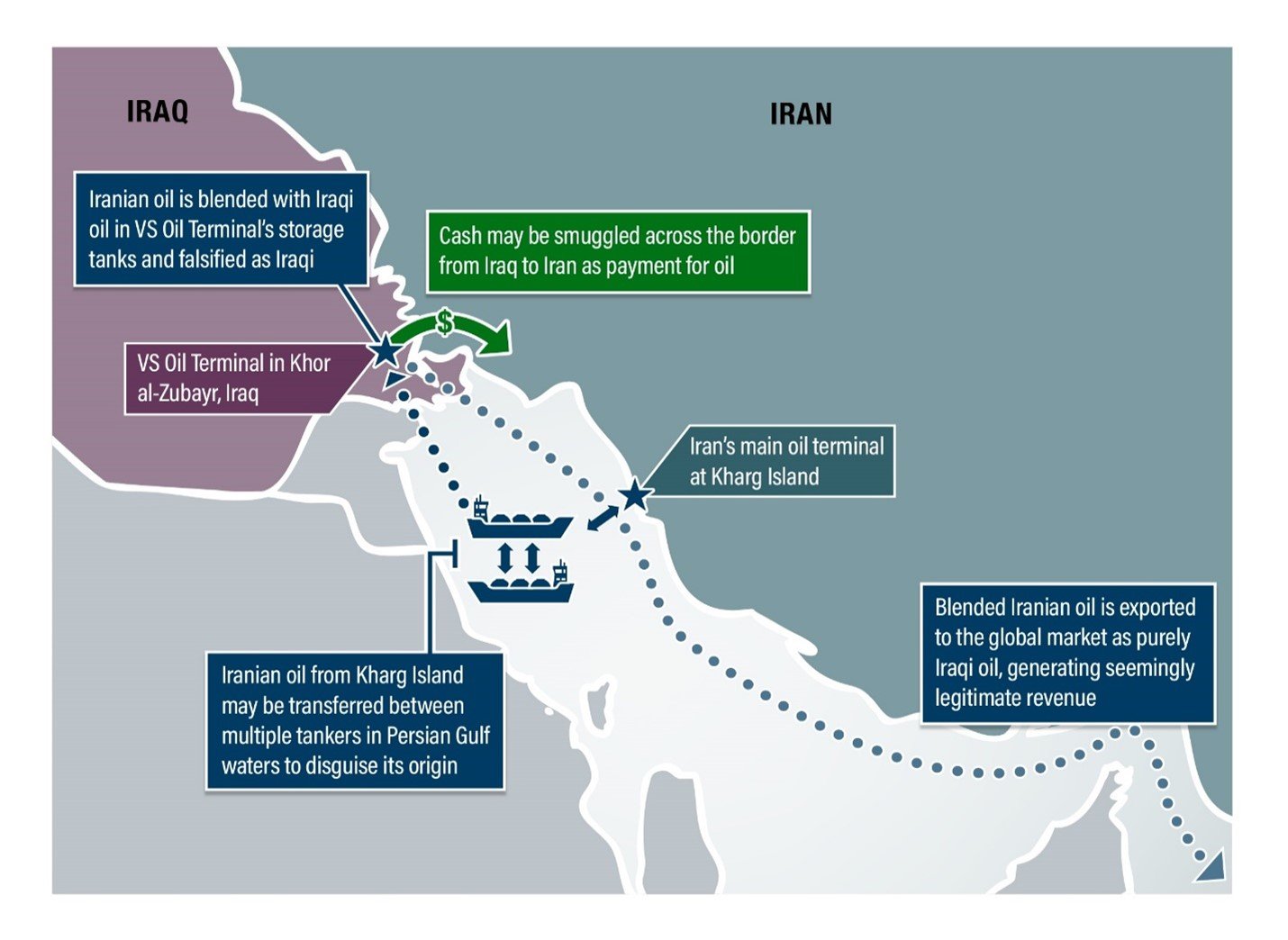
Iraq’s southern export terminal has not only been used for Iraqi product. Numerous designation packages from the U.S. Treasury have outlined Iranian schemes to smuggle oil through Iraq — principally through Basra. The primary method involves blending Iranian and Iraqi oil and then taking the product to market as Iraqi only. Blending obscures the illicit origin of the product, enabling it to evade U.S. sanctions on Iranian oil. It also enables Tehran to sell the oil at market price.
Blending Schemes Cost Iraqi People
On occasion, the Iraqi oil for blending is provided by government bodies, at a subsidized price, to Iranian partners in the country under the guise of a legitimate business allocation. This shortchanges the Iraqi people by providing federal subsidies on a national resource to Iran’s Iraqi terror partners, who turn a profit of more than $1 billion annually.
These smuggling networks rely on false Iraqi paperwork. Treasury has targeted Iraqis involved in Iranian oil smuggling, including Deputy Minister of Oil Ali Maarij, who allegedly provided access to Iraqi oil and false documents for a major Iranian oil smuggling network.
Iraqi Oil Exports Need Monitoring
Basra is irreplaceable for Iraq, but that does not mean every vessel should get a free pass. Washington should monitor vessels loading at Basra and communicate with trusted Iraqi officials to ensure the oil is entirely a legal Iraqi product. If U.S. Central Command (CENTCOM) or U.S. intelligence organizations have suspicions about a vessel, it should not be permitted past the blockade until it can confirm its cargo is Iraqi.
What Is Iran’s Real Price?
The Trump administration should also seek clarity on the terms of Iran’s permission for Iraq to export via Hormuz. Neither country has provided details on the agreement. If it includes payment — which Iran is seeking for transits facilitated by the Islamic Republic — that would be in violation of U.S. sanctions. It also contradicts the newly announced Operation Economic Outcast, the Trump administration’s campaign to financially isolate Tehran. Iraq cannot be exempt from repercussions for financial support to the Islamic Republic.