
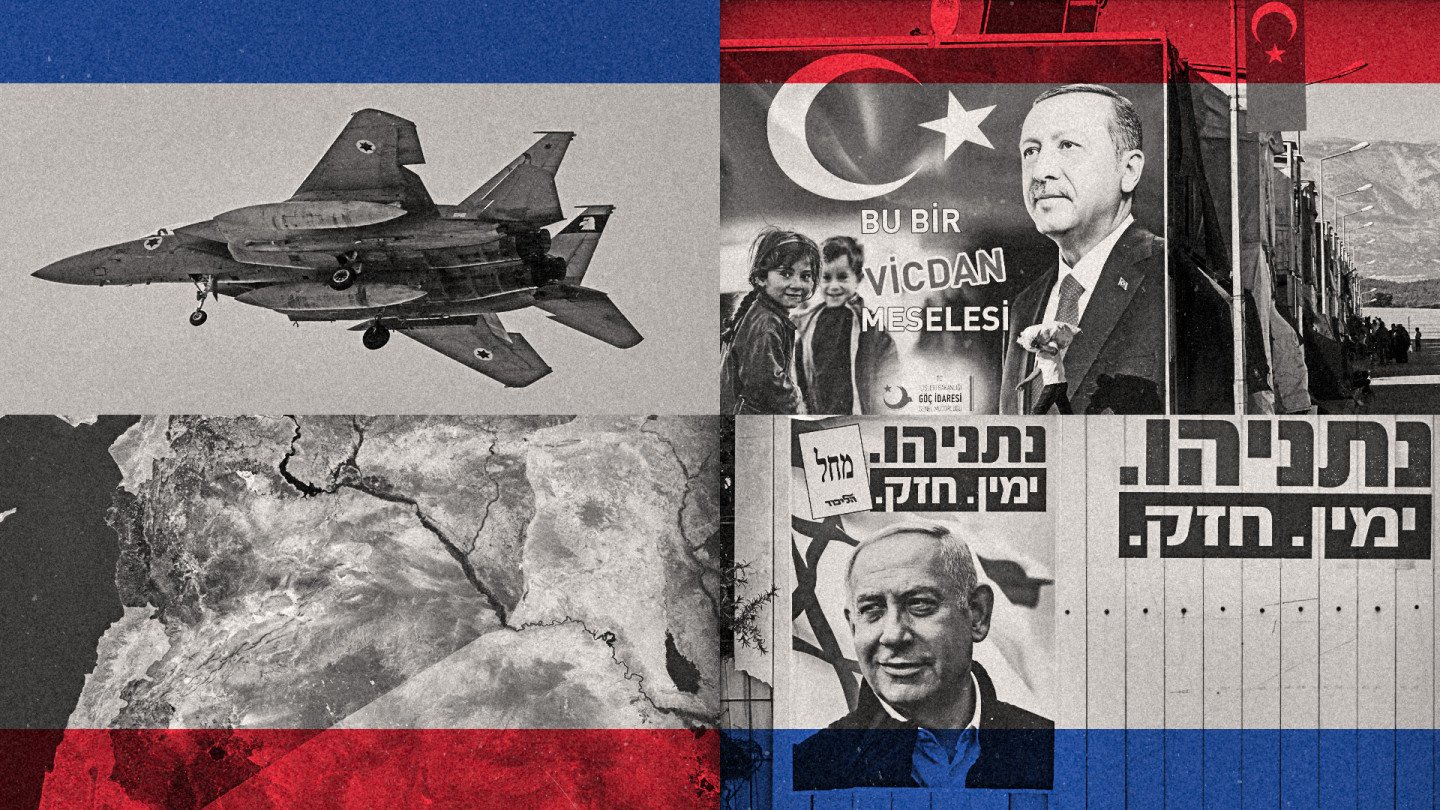
Israel and Turkey now compete for Syrian skies after repeated Israeli strikes on airbases. Deconfliction remains fragile. Damascus cannot assert sovereignty while external powers shape red lines and future air force plans.
The erosion of sovereign control over Syrian territory has accelerated into a direct contest between two militarily capable neighbours, each equipped with American-built aircraft and competing strategic doctrines. The 18 August Israeli strike on Abu al-Duhur Air Base crystallised this reality, exposing how Syria Airspace has become an arena where external powers assert primacy without Damascus exercising meaningful authority.
Ankara and Tel Aviv now operate within undeclared zones of influence, their actions governed less by Syrian consent than by mutual risk calculation and Washington’s fluctuating tolerance. This transformation reflects deeper structural shifts following the Assad regime’s collapse, which eliminated Moscow’s deconfliction role and left a vacuum that both regional powers seek to fill. The immediate trigger—Israel’s claim that Turkey was preparing a deployment—underscores the fragility of the status quo.
Yet the broader contest over Syria Airspace is not merely tactical; it encompasses long-term questions of air defence infrastructure, radar coverage, and the reconstitution of a Syrian air force. Analysts suggest that while deconfliction mechanisms have prevented direct clashes so far, incremental provocations could overwhelm them. The strategic significance extends beyond Syria itself, implicating regional security architectures and the durability of American-mediated stability in the eastern Mediterranean.
Why Syria Airspace Is Contested
On 18 August, Israeli fighter jets struck a northwestern Syrian airfield eight times, with Tel Aviv claiming it had pre-empted a Turkish military deployment there.
While the raid did not result in a clash between the two powerful militaries, it nevertheless demonstrated once again how Syria essentially has no control over its airspace.
The airstrikes hit Syria’s Abu al-Duhur Air Base, causing damage but no casualties. Syrian Foreign Minister Asaad Al-Shaibani said that Turkish military officers visited the site days before the strike. Turkey denied that any delegation was at the base before or during the attack.
Israel claimed Turkey was “on the verge of breaching” the “status quo in security matters” by deploying troops, with Ankara, in turn, describing Israel’s actions as an “unacceptable” and “reckless” threat to regional peace and stability.
Israel previously bombed three airbases in central Syria in April 2025 shortly after Turkey scoped them for potentially deploying forces.
All of these incidents highlight how Syria’s airspace, far from being under its sovereign control, is being contested by its two powerful neighbours who both have large American-equipped air forces.
While Israel appears predominant for now, Turkey may seek to incrementally put constraints on its rival’s aerial supremacy over its southern neighbour.
The battle over Syria’s airspace
“The pressure on Israel’s freedom of action in Syria appears to be increasing, even if it has not yet produced a decisive constraint,” Muaz Al Abdullah, Middle East Research Manager at the non-profit Armed Conflict Location & Event Data, told The New Arab.
He noted that the Trump administration has signalled an effort to broaden the Abraham Accords to include Syria “while reducing the scope of conflicts” involving Israel, and the US by extension, in the Middle East. “That diplomatic backdrop coincides with a visible change on the ground,” Abdullah said.
ACLED data shows a notable decline in Israeli airstrikes in Syria since August 2025. Abdullah assesses that this might mean the “operational window” Israel enjoyed since the former regime of Bashar Al-Assad collapsed in December 2024 is beginning to narrow.
“The broader picture, however, is more mixed: Israeli incursions and violence against civilians have continued in uneven but persistent patterns,” Abdullah told The New Arab.
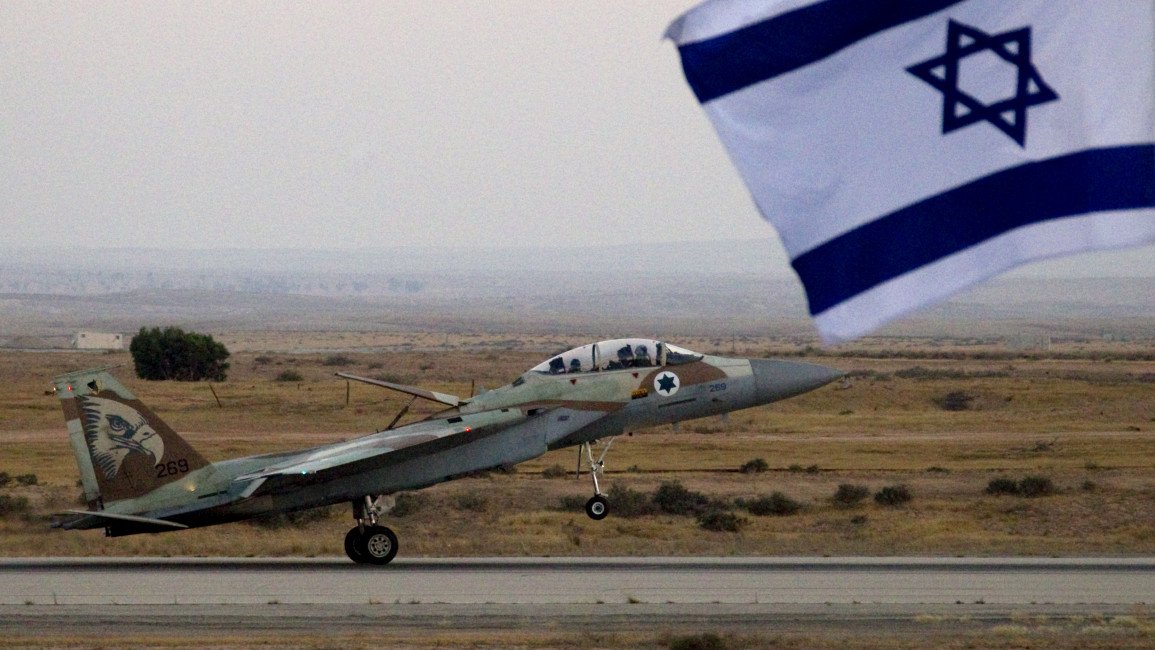
“The shift suggests that Israel may be relying more heavily on ground incursions and other forms of pressure to meet its immediate security objectives,” he added.
“Airstrikes, by contrast, appear to be reserved for moments when those measures are deemed insufficient, as reflected in strikes against Abu al-Duhur, T4, Tadmor, and Hama airbases.”
Replacing Russia’s role?
Before the dramatic, free-fall collapse of the brutal Assad regime, Russia officially controlled much of Syria’s airspace around regime-controlled areas and bombed opposition-held regions like Idlib.
Shortly after Russia intervened in Syria’s civil war in September 2015, it established a deconfliction mechanism with Israel, allowing the Israeli Air Force to continue striking suspected Iranian assets in the war-torn country.
US Special Envoy for Syria Tom Barrack said after Israel’s latest strike that the US is working on a similar mechanism between Israel, Turkey, and Syria to reduce the risk of clashes.
Suleyman Ozeren, a lecturer at the American University and senior fellow at the Orion Policy Institute, doesn’t believe this necessarily indicates that Turkey is replacing Russia’s pre-2024 role in Syria or will ever replace it.
“Unlike Russia, Turkey, at least for now, does not appear capable of deterring Israel from carrying out military incursions and strikes inside Syria,” Ozeren told The New Arab.
“Israel’s decision to bomb Abu al-Duhur Air Base, located relatively close to the Turkish-Syrian border, sends a clear message to both the (Syrian President Ahmed) al-Sharaa government and Ankara,” he added.
“Although Turkey responded to the incident with a relatively restrained protest, the strike itself is a troubling indication of how quickly tensions between Israel and Turkey could escalate.”
Deconfliction and de-escalation
Kristin Ronzi, a Middle East and North Africa analyst at the risk intelligence company RANE, says the Turkish-Israeli deconfliction mechanism has already helped de-escalate tensions between the two countries in Syria and “mitigate the risk” of miscalculation.
“As such, Turkey has maintained significant influence over Syrian airspace in the north, while Israel has influence in the south,” Ronzi told The New Arab.
“Even so, the early 18 August Israeli airstrikes against Abu al-Duhur military base in northwestern Syria indicate that Israel is able to extend its operations further into Syria.”
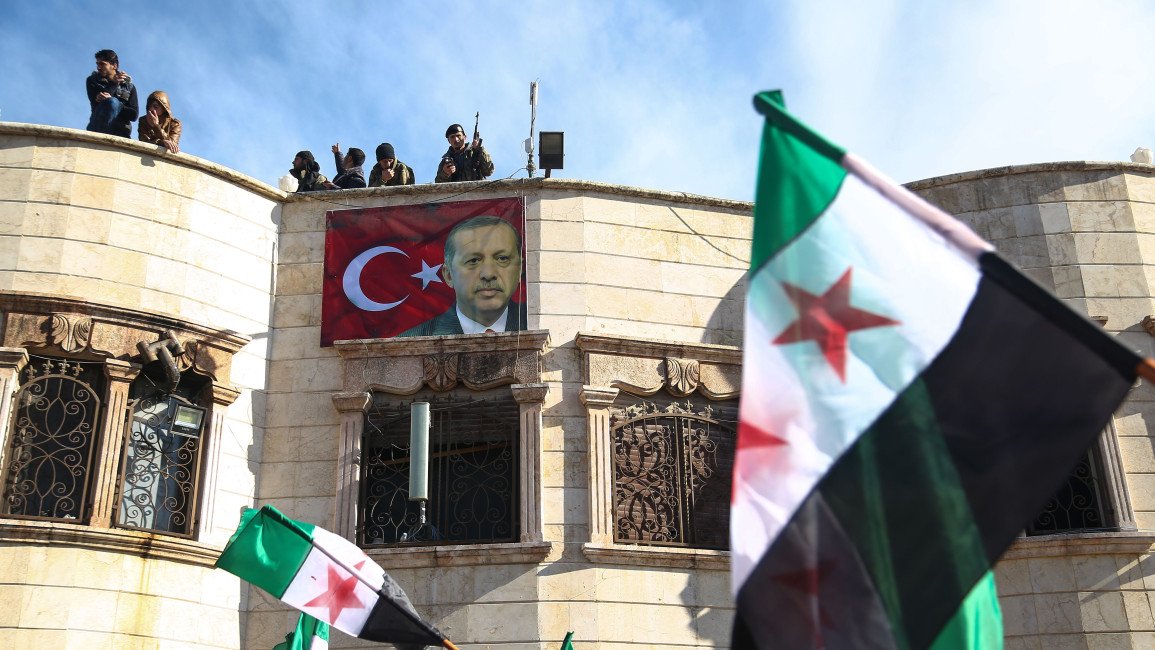
She noted that Barrack’s description of the Israeli strikes as “unnecessary escalation” indicates a limited US tolerance for Israeli airstrikes in Syria in light of warming US-Syria ties and concerns over “Turkish-Israeli frictions”.
“The Trump administration will likely tolerate Israel’s military presence in southern Syria and sporadic ground incursions,” Ronzi said. “But the United States will likely pressure Israel to restrict airstrikes, especially against targets that do not pose a national security threat and risk elevating Syrian-Israeli tensions,” the analyst added.
“Syria will rhetorically reject Israeli violations of its airspace; Syria will be unwilling and unable to effectively control its airspace.”
ACLED’s Abdullah expects that the present status quo of Israel dominating Syria’s southern and central airspace without “direct contestation” with Turkey in central Syria, where there are overlapping areas of influence, will hold.
He recalled Israel’s airstrikes against central Syrian airbases in April 2025 to deter Turkey from establishing any presence.
“The recent strike on Abu al-Duhur does not necessarily represent a contest for dominance between Israel and Turkey in northern Syria,” he said. “It is better understood as a matter of undeclared areas of influence between the two sides, alongside Israeli political objectives tied to the domestic situation inside Israel,” Abdullah added.
“At the same time, where Turkish and Israeli influence in Syria begins and ends is a separate question from Israel’s deterrence strategy of preventing Syria from acquiring an effective, modern air force. That strategy is also one of the reasons behind the Abu al-Duhur strike.”
Ronzi believes Israel will likely reject any Turkish efforts to expand its military influence any further in central Syria.
“Efforts to enhance Syria’s air defence systems would likely be a red line for Israel and Israel would likely obstruct any such efforts, including potentially through pre-emptive airstrikes as Israel has previously done,” she said.
Dreams of a new Syrian air force
Israel’s post-Assad airstrikes destroyed much of what was left of the old regime’s Russian-built air defences and antiquated air force, including its most advanced fighter jets, the Soviet-era MiG-29.
Syria still has some less advanced flyable jets, including Czech-built L-39 light attack aircraft, two of which performed a flyby in a July graduation ceremony for air force cadets, and vintage Soviet-era Su-22s, two of which were spotted over Idlib this August. Israel opposes Syria reconstituting its air force and air defence.
Turkey’s Growing Air Power Gamble
Israel was even concerned that the installation of an HTRS-100 Air Traffic Control Radar System built by Turkey’s Aselsan at Damascus International Airport in January could challenge its air supremacy over Syria.
Ronzi noted that while the HTRS-100 has “commercial and civilian benefits,” it nonetheless “raised Israeli concerns” that it could constrain its military operations.
While Turkey might be able to support “limited Syrian air defence infrastructure,” Abdullah predicts that Israel is likely to “draw a clear line” around any capability that could give Damascus any “meaningful independent control” over its skies.
“Israel’s defence doctrine has increasingly rested on keeping neighbouring states unable to threaten it militarily,” he said.
“In that context, Israel may tolerate Turkey’s deployment of the HTRS-100 radar system at Damascus International Airport, but it is expected to resist any further steps that would allow Syrian forces to own or operate effective air capabilities.”
Will Syria Airspace Spark Wider War?
Ozeren noted that maintaining control over Syrian airspace remains a “key security objective” for Israel that increasingly conflicts with Turkey’s ambitions to expand its influence and presence on the ground in that country.
“Syrian airspace, therefore, is likely to become a major arena in which the competing objectives of Israel and Turkey are tested,” he said. “Without meaningful US intervention, tensions between Israel and Turkey could escalate further.”
“If this competition becomes prolonged, Damascus may eventually seek a more formidable external partner capable of balancing these pressures,” he added. “In that context, a renewed reliance on Russia, though seemingly implausible today, could become a more viable option in the near future.”
ACLED’s Abdullah anticipates that Damascus is likely to turn to Ankara for help in any attempt to rebuild the country’s air force. The expanding partnership between the two makes such cooperation plausible. Turkey could provide pilot training, aircraft, and technical support.
“Recent developments suggest that Syria is already preparing for that possibility,” he said. “The graduation of more than 1,000 non-commissioned officers from the Syrian Air Force Academy points to a broader effort to restore the country’s air arm.”
However, what type of aircraft Syria might seek from Turkey remains uncertain. Furthermore, any procurement decision Damascus ultimately makes will likely be shaped by financial constraints and red lines imposed by Israel.
“Syria may also choose to invest more heavily in unmanned systems rather than trying to rebuild a conventional fighter fleet from the ground up,” Abdullah told The New Arab. “Turkey has a clear advantage in drones, and Syrian forces already have experience that Ankara could help develop,” he added.
“Such a strategy would allow Damascus to challenge Israeli dominance indirectly, without attempting to match Israel in the manned-fighter arena.”
RANE’s Ronzi recalled that Israel’s ferocious attacks on weapons caches and the remnants of Assad’s military following the regime collapse significantly degraded any new military threat his successor can pose to Israel.
“Rebuilding the Syrian Air Force is not likely to be a near-term priority for the interim Syrian government as it faces numerous domestic threats, including the Islamic State, as well as the task of developing new state institutions, over time,” Ronzi said.
Syria will probably attempt to buy new aircraft to improve its military capabilities, most likely from Turkey.
“Even though Israel would maintain a qualitative military edge over any Syrian air force, Israel will be wary of any Syrian effort to rebuild its air force and concerned about the potential that it could eventually be used against Israel,” Ronzi added.