
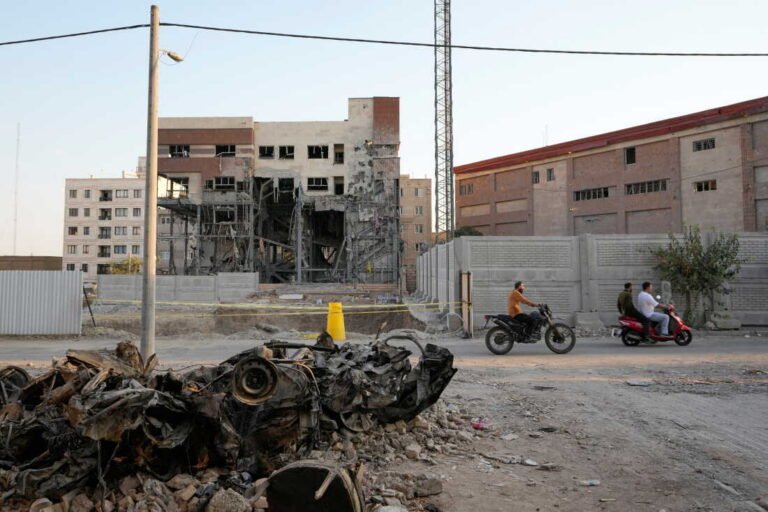
U.S. and Iran exchanged limited strikes near the Strait of Hormuz, causing oil prices to rise. Polls show strong public disapproval of Trump’s Iran policy, while experts debate whether Washington holds any strategic advantage.
The six-month conflict between the United States and Iran has entered a phase where official claims of American advantage collide with a deepening public and expert skepticism. Iran War Skepticism now defines the domestic political landscape as much as battlefield developments, with polls showing nearly two-thirds of Americans disapprove of the administration’s handling of the crisis.
The latest exchange of fire near the Strait of Hormuz, though limited in scale, sent oil prices upward and revived fears of escalation. Yet the core question remains whether any tactical shift can alter the war’s fundamental trajectory. Optimists point to increased shipping and internal Iranian divisions as signs that Washington may finally hold the upper hand.
Skeptics counter that both sides believe time is on their side and that no decisive breakthrough is near. The result is a strategic stalemate where perceptions of progress or failure carry enormous political weight. Iran War Skepticism, fueled by economic pain and military uncertainty, now challenges the very narrative of victory that the administration seeks to project. Without a clear resolution mechanism, the conflict appears poised to continue as a prolonged contest of attrition and intermittent strikes.
Latest Strikes Fuel Iran War Skepticism
There is new turbulence in the war in Iran — but the pressing question is whether any of it will change the underlying realities of the six-month conflict.
The latest dramatic development was an exchange of fire late Sunday in which the United States first attacked two Iranian rocket launchers that were reportedly seeking to deploy new mines in the vital Strait of Hormuz.
Iran responded by firing several missiles toward U.S. forces deployed in Jordan and the United Arab Emirates, though the counterstrikes appear to have been largely intercepted.
It does not look like a slide back toward full-scale war is imminent, even amid the volatility.
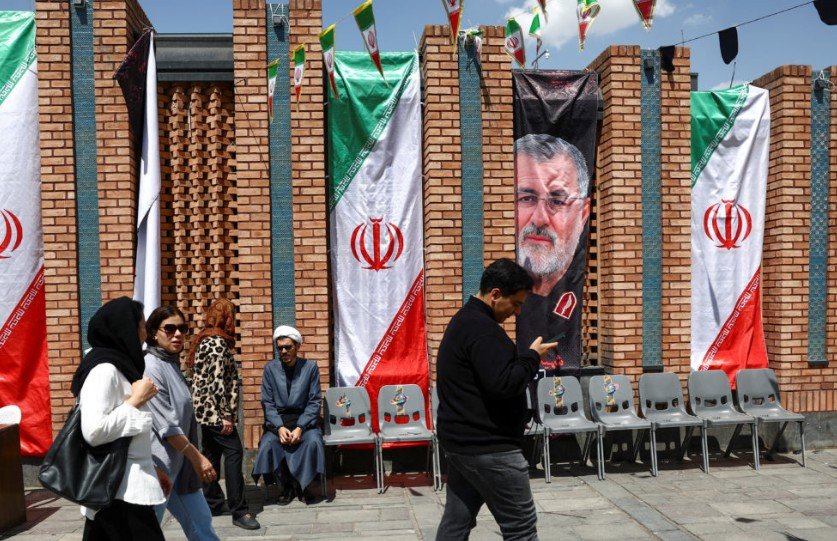
Public Doubt Grows Over Trump’s Iran Claims
On Monday morning, President Trump again lashed out at Iran, which he contended was “officially a Failed Nation” with leadership “in total disarray.”
But social media posts alone don’t change the state of a conflict that has endured far longer than Trump’s initial projections and looks sure to be an electoral burden on Republicans in November’s midterm elections.
Even the relatively modest scale of the newest exchanges of fire caused the price of benchmark West Texas Intermediate crude oil to rise more than 3 percent at one point on Monday. The price hovered around $86 per barrel, roughly $20 up from prewar levels.
Meanwhile, polls show the American public disapproving of Trump’s handling of Iran by almost 2 to 1.
Could the War’s Trajectory Shift Public Perception?
Still, it’s always possible that public perception could shift if the war were perceived to be moving onto a different, more positive trajectory for the U.S.
Some people think it might — and not all of them are pro-Trump.
Brett McGurk, the controversial foreign policy adviser who has served presidents of both parties and is now a CNN analyst, wrote on Sunday that “the status quo — perhaps for the first time since the war began — now favors Washington, not Tehran.”
The case made by McGurk — and other optimists for the American side — has several components.
What Strengthens the Case for U.S. Optimism?
Shipping through the Strait of Hormuz has increased, even though there are very divergent estimates of the scale of the change. Even a modest increase holds out the prospect of loosening Iran’s main point of strategic leverage, however.
Then there is the question of whether Trump’s ramping up of economic pressure will bite hard enough to change attitudes in Tehran.
While most experts believe this approach isn’t a fix in the very short term, they don’t think it’s guaranteed to fail either.
“I am guessing that the hope is that if the regime cannot pay its internal security forces, you will then see a separation between the fellow travelers and the true believers — and you could see further discontent within the general population,” Robert Wilkie, who served as secretary of Veterans Affairs during the first Trump administration, told this column.
Finally, those who see a changing tide note some signs of division within the Iranian leadership. Some top figures in Tehran, including President Masoud Pezeshkian, have seemed at pains to keep diplomatic routes open. Hardliners, concentrated around Iran’s Revolutionary Guard, generally characterize the negotiations as American trickery to create an interlude before all-out war resumes.
Iranian Foreign Minister Abbas Araghchi wrote on social media Friday that “putting diplomacy back on track isn’t impossible” — though he also noted, “It hinges on U.S. understanding of one simple fact: pressure doesn’t work.”
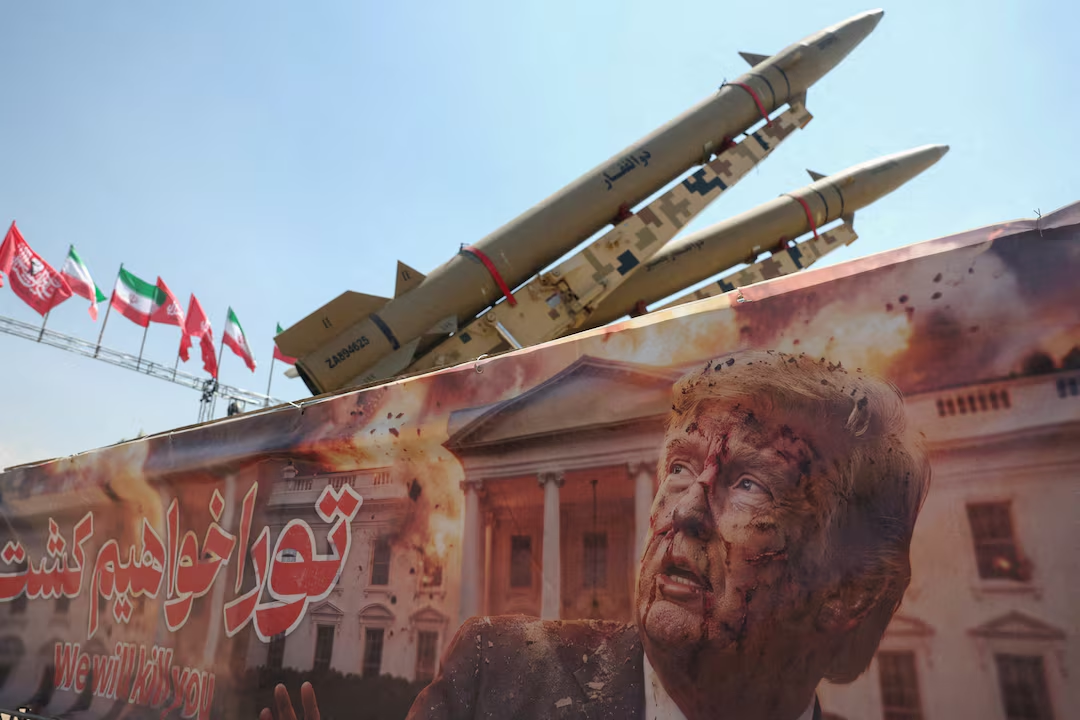
Why Experts Reject the Winning Narrative
But other experts are deeply skeptical that there’s a sea change coming in the conflict anytime soon.
Many note the Islamic Republic is in a fight for its survival, that it has been emboldened by its ability to endure the initial U.S.-Israeli military assault that began Feb. 28 and that leaders in Tehran are well aware of the political dynamics pressing in on Trump and the GOP.
Aaron David Miller, who served in the State Department for decades, with a focus on the Middle East, contended that the easing of traffic restrictions in the Strait and the economic blockade “have persuaded some in the administration — maybe Trump — that he actually is winning; that he will break the Iranian economy, oil will get through the straits and Iran will change.”
But Miller, now a senior fellow at the Carnegie Endowment for International Peace, argued that such optimism would be “a mistake.”
“Both parties think time is on their side, both parties think they have the capability for escalation, and both parties seem willing to absorb the economic and political pain,” he added.
Parsi Warns of a Silent Forever War
Trita Parsi, the Iranian-born executive vice president of the Quincy Institute for Responsible Statecraft, saw no breakthrough imminent for either side but asserted it was the U.S. that was in a state of “strategic disarray.”
Parsi argued that the Trump administration keeps toggling between different approaches, none of which appears to be delivering American objectives.
He expressed concern that the de facto U.S. policy was becoming one of maintaining some level of intermittent military attacks on Iran for the long term — an approach he noted would be unpopular with the public.
“The U.S. will never declare it is in a forever war,” he said. “But if your strategy becomes that you have to periodically bomb this country, you are saying you do not have a strategy to resolve this.”
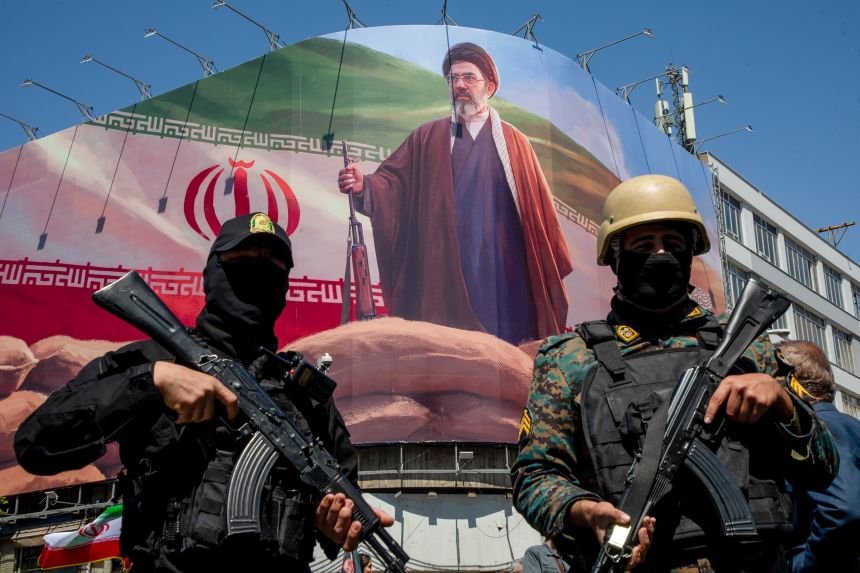
Iran War Skepticism Defines the Long View
Miller, the former State Department figure, was equally circumspect about the overall conflict.
“No matter how this ends, it’s just another round in a historic half-century battle between the Islamic Republic and the U.S.,” he said. “There are no transformative endings, no Hollywood endings.”