
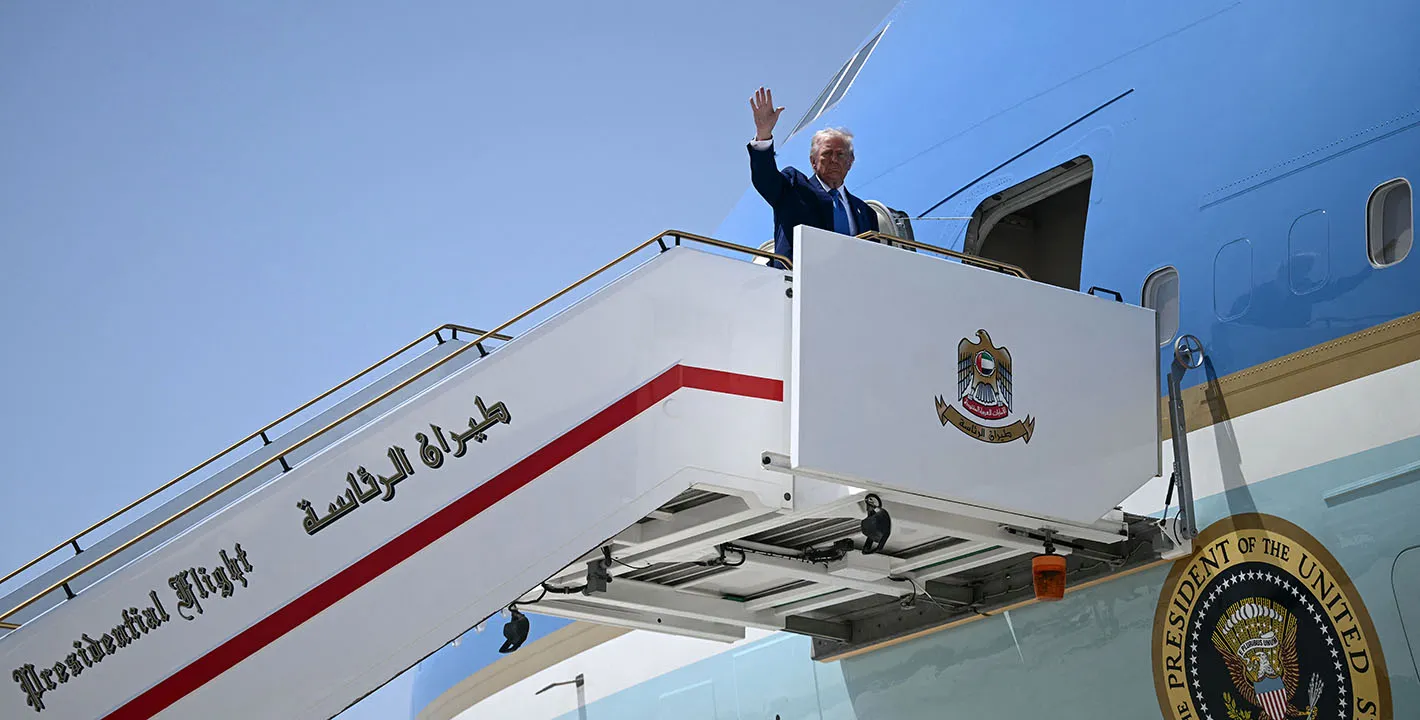
US Mideast Exit accelerates as America’s failed security umbrella collapses under Iranian missile strikes. Israel’s destabilizing role and deep American detachment from the region further erode support for continued U.S. military presence.
The U.S. security umbrella over the Gulf has collapsed, and the US Mideast Exit now underway marks the end of an era defined by American military dominance. The war with Iran exposed the myth that Washington could shield its Arab partners from regional threats. Iranian missiles destroyed the basing system, forcing American forces to retreat to Jordan and Israel. The protective architecture that anchored U.S. strategy for decades is gone, and with it the credibility of Washington’s security guarantees.
US Mideast Exit is not merely a logistical retreat; it reflects a deeper failure of strategy and legitimacy. The Gulf states must now confront a region where no single hegemon provides stability. Multipolarity is emerging not as an abstract theory but as the practical reality of survival. This transformation carries risks—great-power competition, unresolved conflicts, and the absence of a reliable guarantor—but it also offers opportunities for regional actors to reclaim agency. The old security umbrella myth has been shattered, and no amount of American nostalgia can reconstruct it. The question facing the Middle East is whether local powers can build a more sustainable order from the ruins of unipolarity.
Why US Mideast Exit Gains Momentum
The fiasco that is the U.S. war against Iran has resuscitated a question that was first raised a decade and a half ago: Would it be a good thing for the United States to accelerate its disengagement from the Middle East, where it has dominated since the end of the Cold War?
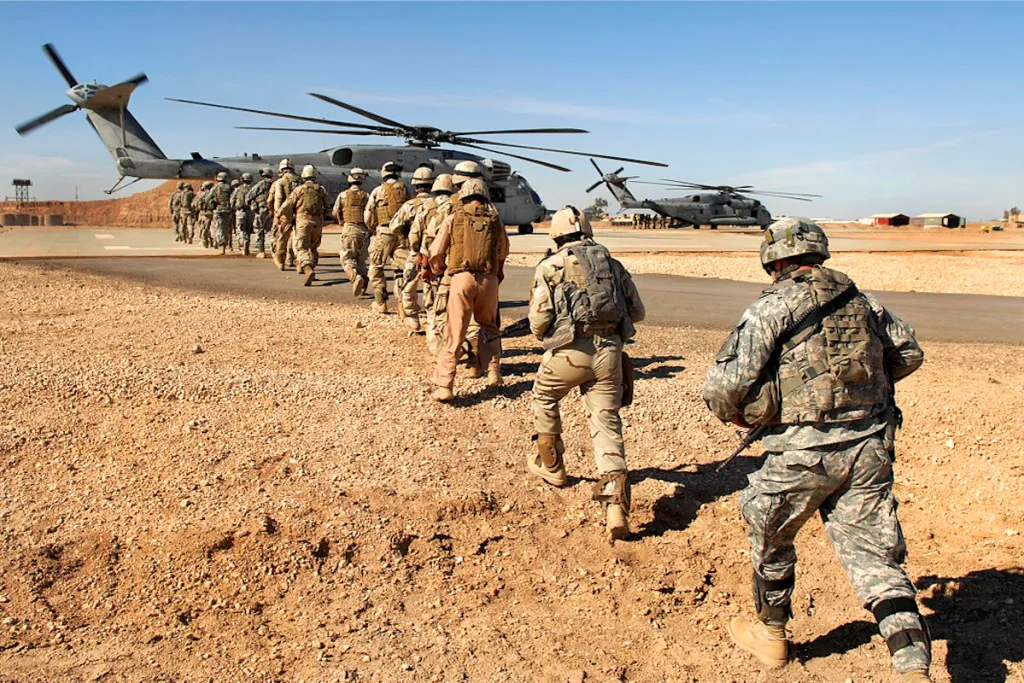
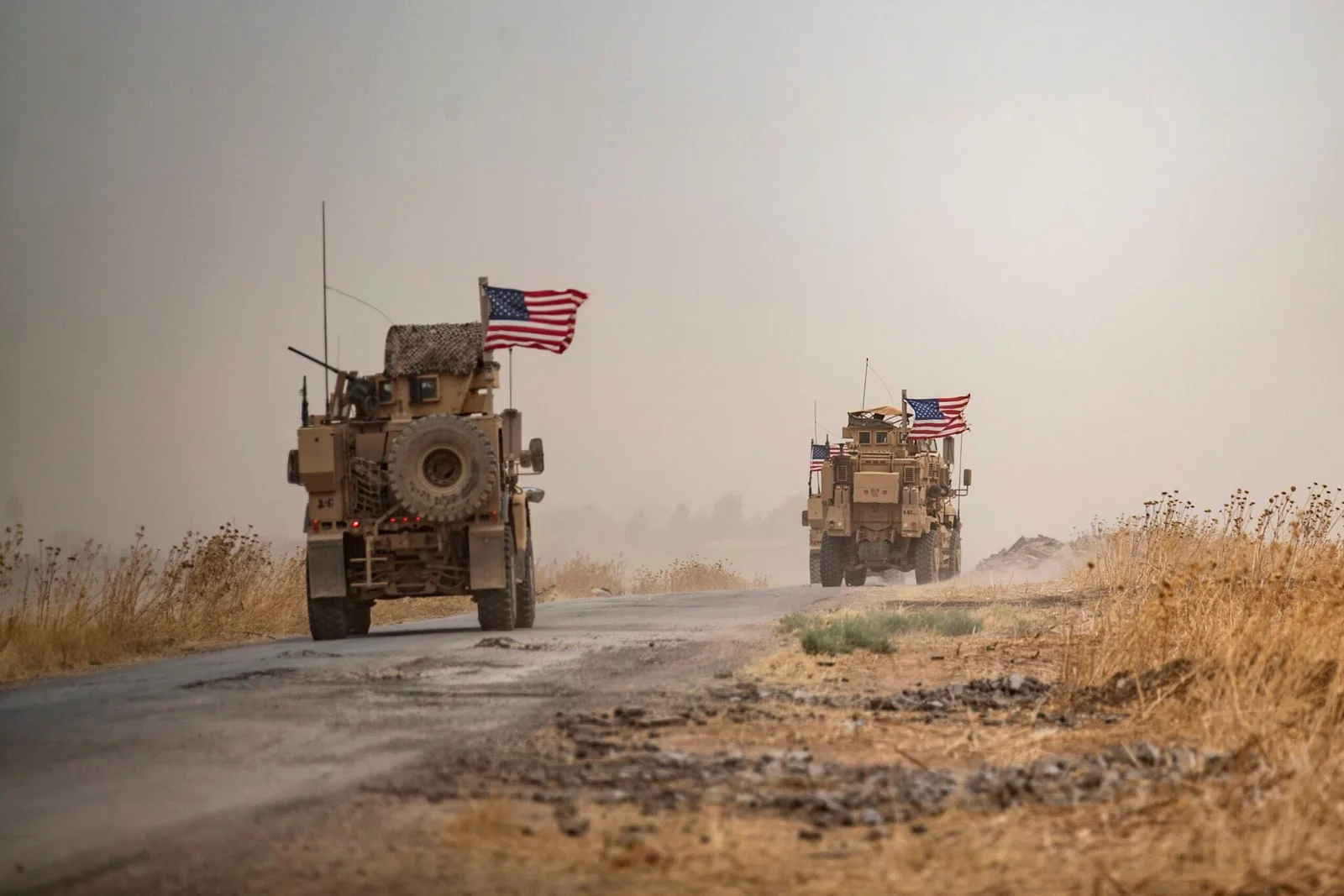
There are at least three reasons for why the answer from the region itself should be yes. The first is that the prevailing U.S. model for dealing with the Middle East—based on security dominance—has failed. The conflict with Iran has shattered the belief that the United States can provide a credible protective umbrella for the Gulf countries. The U.S. basing system has been wrecked by Iranian missiles, forcing American forces to withdraw to Jordan and Israel. Without such a network of bases in place, and given that Tehran has shown its effectiveness by neutralizing them, Washington’s ability to persuade the Gulf states to revive these facilities to contain Iran has been greatly weakened.
Neo-Imperial Illusions Fall Apart
This security-focused model was momentarily replaced during the invasion of Iraq by an equally short-sighted approach that could effectively be described as neo-imperial. It is remarkable how American thinking in the broader Middle East has been shaped by two types of behavior deeply resented in the region—an Israeli and a British one. From the Israelis, the Americans borrowed a taste for using violence to reshape political realities—a belief that if you just put enough military pressure on the region’s countries, they will fold like a cheap suit.
However, Iran, itself a neo-imperial power in many regards, showed what it could achieve by coming to the fight prepared, and using its advantages in well-calculated ways to push the Americans and Israelis onto the back foot.
As for Britain, the aroma of imperial nostalgia overcame decisionmakers in Washington for a time after the invasion of Iraq in 2003, when the Bush administration appointed L. Paul Bremer as effective high commissioner in Baghdad. The plan to allow Iraqis themselves to fill the void left by the Baath regime and manage their own affairs, the so-called Future of Iraq Project, was discarded while officials in Washington tried to replicate a bastardized form of British rule after World War I. Similarly, the Americans have often supported political structures in the region that, under the guise of change, actually reinforce systems of control that they seek to preserve, as in the West Bank and Gaza.
Israel’s Role Distorts US Policy
There is a second reason to say yes to a quicker U.S. exit, namely Washington’s commitment to Israel, which has warped how Americans view the region. While every president since George W. Bush has understood the need for the United States to disengage from the Middle East, there has been little consensus among decisionmakers on what should fill the vacuum. Obama saw a balance of power between Saudi Arabia and Iran as the cornerstone of a stabilized region, as he made clear in his long interview with Jeffrey Goldberg of the Atlantic in April 2016.
Not surprisingly, this vision alarmed Israel and its supporters in the United States, who believed that Obama’s signing of a nuclear deal with Iran, the Joint Comprehensive Plan of Action, or JCPOA, represented recognition of Iran’s regional role—an idea they found abhorrent. However, in pushing hard for Trump to exit from the JCPOA—an agreement further formalized through passage of UN Security Council Resolution 2231—what they really wanted was for the United States to deploy military force and destroy Iran’s nuclear program, hoping this would escalate into a campaign for regime change.
Abraham Accords Collapse Under Pressure
Today, we can contemplate the marvelous success of that endeavor. But Trump later did even more: He offered a model for a post-American Middle East through the Abraham Accords, which aimed to do three things: The accords would disregard the Palestinians and their cause, undermining any notion of establishing a Palestinian state; they would place the Israelis at the heart of a regional grand bargain, in which Israel would emerge as the security spine of a new regional order built on the political spine of Arab-Israeli reconciliation; and Israel’s paramount military role would allow the United States to draw down its forces, leaving Israel in place as the security guarantor for U.S. partners.
Israeli mass murder in Gaza put an end to that illusion. As Israel engaged in horrific crimes in the territory, as it sought to create new facts on the ground in the West Bank, as it occupied large swathes of southern Syria and later southern Lebanon, as it tried to kill Hamas officials in Doha, as Israeli Prime Minister Benjamin Netanyahu vowed to transform the Middle East, most of the pro-American states in the region realized they had more to worry about than Iran. Here was the prospect of a new regional bully, this one backed by the United States, and they had every reason to oppose it.
American Detachment Fuels Exit
What made this situation possible is the United States, which has looked the other way on Israel’s actions as it has strived to ethnically cleanse Gaza, the West Bank, and south Lebanon. The Americans also entered into the war with Iran because of Netanyahu’s promise of victory. Most incomprehensively, the U.S. has put no pressure on the Israelis to curb their belligerence directed at U.S. allies Türkiye and Qatar, making it evident that the Americans are enabling, consciously or unconsciously, Israeli aggression and hubris. Israel feels it can do anything it wants because the United States invariably has its back. In light of this situation, a speedy U.S. exit from the region is hardly regrettable.
A third reason for why less of the United States would benefit the region is that there seems to be little American connection to its countries—excepting one. The Middle East has often been portrayed as a burden for Americans, a place that merits little room in the American popular imaginary.
The one exception is Israel, of course. As the late Amy Kaplan wrote in her brilliant book Our American Israel: The Story of an Entangled Alliance, “The belief that America is an ‘exceptional’ nation of moral force and military power underwrote and strengthened its special bond with Israel. The United States would protect and secure Israel, a moral community of both concentration camp survivors and heroic warriors. At the same time, Israel was seen as unique in its own right—a state both vulnerable and indomitable, an invincible victim.” No one else in the region can approximate this position.
Gaza Exposes Deep Hypocrisy
If there was any ambiguity on that front, Gaza surely removed it. That over 70,000 people (in reality, probably many more), most of them women and children, could be slaughtered for two years by a U.S. ally using high-tech weaponry mainly provided by the Biden and Trump administrations, with no effort by U.S. officials to put an end to it, would not have been remotely conceivable had the victims been Israeli or European. The routine, reflexive bigotry directed against Muslims by certain representatives in the United States, the cardboard images of Arabs so frequent in U.S. popular culture, all underline that the Middle East and its peoples remain hopelessly alien to many Americans.
Why should this matter? Because if the United States’ ties to the region are solely transactional, then there is no reason for it to continue to play the predominant role it has played for the last three and a half decades. The Americans have shown that they cannot protect the Gulf states, just as they’ve played along with their major regional ally in provoking widespread regional instability, so there is little merit in bestowing practical legitimacy on the relationship.
The Gulf states are far too integrated with the United States financially to consider a clean break, but their shared interests with China and Russia are such that it makes sense for them to vary their contacts and endorse U.S. extrication from the region.
US Mideast Exit Accelerates Multipolar Reality
Washington’s nearly four-decade supremacy in the Middle East is nothing to long for. In Palestine, Iraq, Syria, and Lebanon, but also in U.S. interactions with Iran and the Gulf, there is little that one can describe as a durable success. Momentary breakthroughs have been walked back, while the United States has been unable to loosen the headlock of an attachment to Israel that has all too often narrowed its options. Unipolarity created an unhealthy dependence on the Americans and their military, while the burgeoning multipolar moment today may compel states to resolve their own problems, diplomatically. If the Americans are leaving, states in the region should help them pack.