
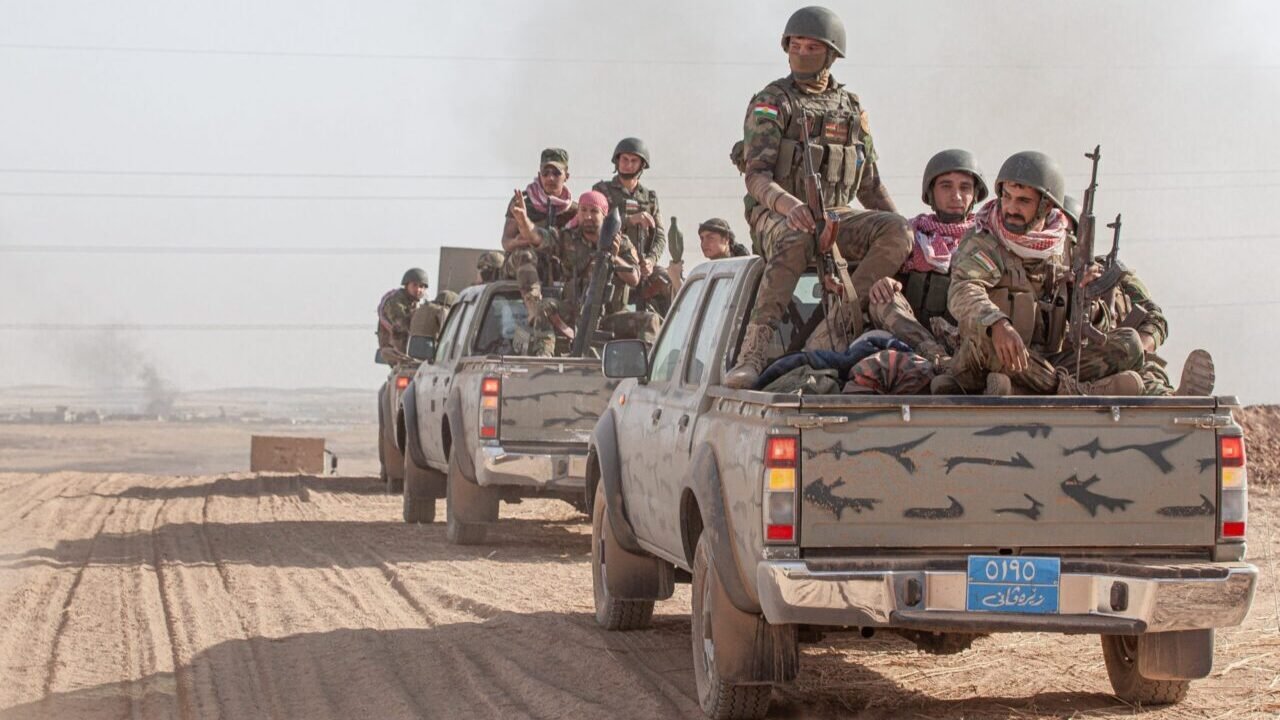
The Kurdistan Regional Government unified its Peshmerga forces on September 21 as US troops prepare to leave Iraq, aiming to counter Iranian-backed militias and deny Tehran a forward base in the north.
The Kurdistan Regional Government’s completion of Peshmerga unification on September 21 represents an attempt to consolidate military authority at a moment of regional uncertainty. As US forces prepare to exit Iraq by September 30, Iranian-backed militias celebrate, but the emergence of a Unified Peshmerga offers Baghdad and Erbil a counterweight to Tehran’s influence.
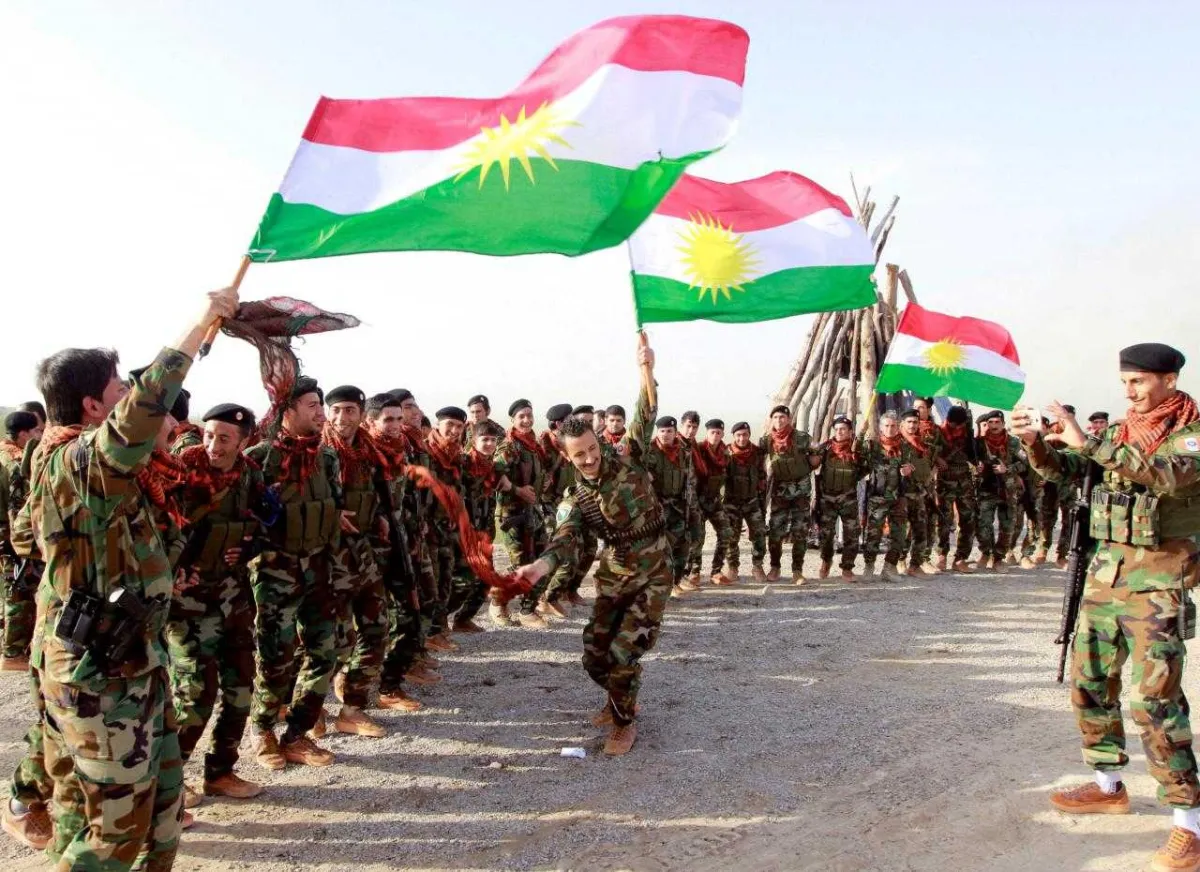
This unification seeks to erase the partisan divide between KDP and PUK forces, creating a command structure loyal to the state rather than to political parties. The logic is clear: a fragmented Kurdish force invites exploitation, while a Unified Peshmerga can deny Iran a forward operating base from which to attack Saudi Arabia, Jordan, or the Gulf states. Yet the announcement also exposes unresolved tensions. The PUK’s historical warmth toward Iran, combined with Baghdad’s inability to confront militias embedded in the Popular Mobilization Forces, means unification alone cannot guarantee security.
Since February 2026, Iranian proxies have launched 1,000 attacks on the Kurdistan Region and 600 on US facilities. Prime Minister Masrour Barzani has acknowledged that the next phase requires advanced weapons, air defense, and human development. Whether Washington treats this as a lasting partnership or a temporary expedient will determine if the unified force becomes a deterrent or a gesture. The stakes extend beyond Kurdistan: a weak Iraq spreads extremism, while a stable one constrains Iran.
Unified Peshmerga Reshapes Northern Iraq
The autonomous Kurdistan Regional Government in northern Iraq announced on September 21 that it had completed a long and complex process of unifying its armed forces, known as the Peshmerga. The region’s prime minister, Masrour Barzani, gave the announcement in Erbil, just as Iraq faces a major crossroads. US forces will depart Iraq ahead of a September 30 deadline, while Iranian-backed militias continue to threaten the Kurds and the region.
The Peshmerga unification announcement symbolizes key changes underway in Iraq. The Kurdistan Region is a unique polity in the Middle East. Established in the wake of the 1991 Gulf War and cemented after the 2003 US invasion, the region has become a successful and stable part of Iraq, with investment flowing into its major cities, Erbil and Dohuk.
The Peshmerga have helped keep the Kurdish region stable and unique. They provided the security that checked ISIS’s initial advance in 2014. The region also provided basing options for Combined Joint Task Force Inherent Resolve, the US-led coalition against ISIS. In 2015–2016, the Peshmerga advanced and liberated areas of Iraq and helped the Iraqi army prepare for the liberation of Mosul in 2016–2017.
Kurdish Divisions Test Party Loyalties
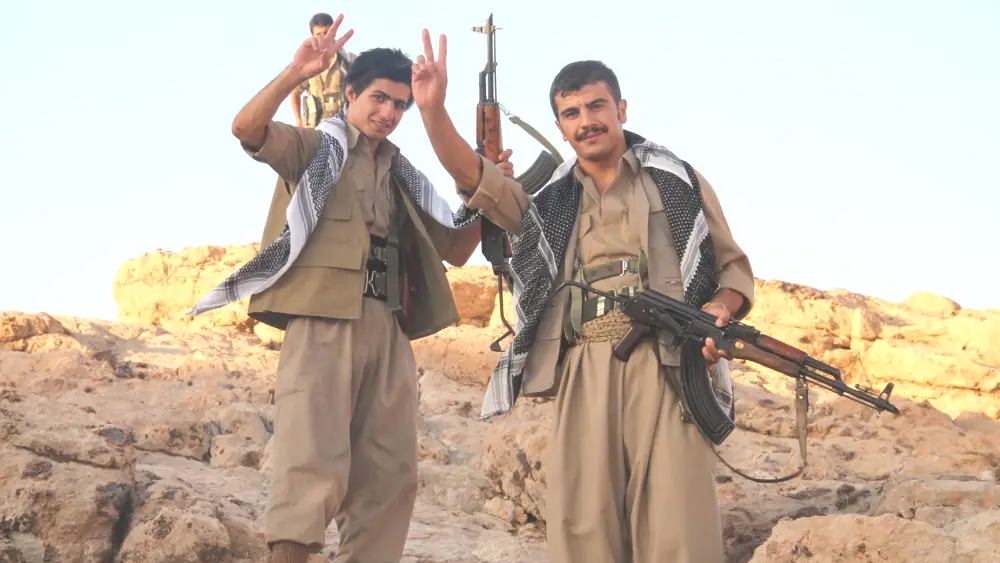
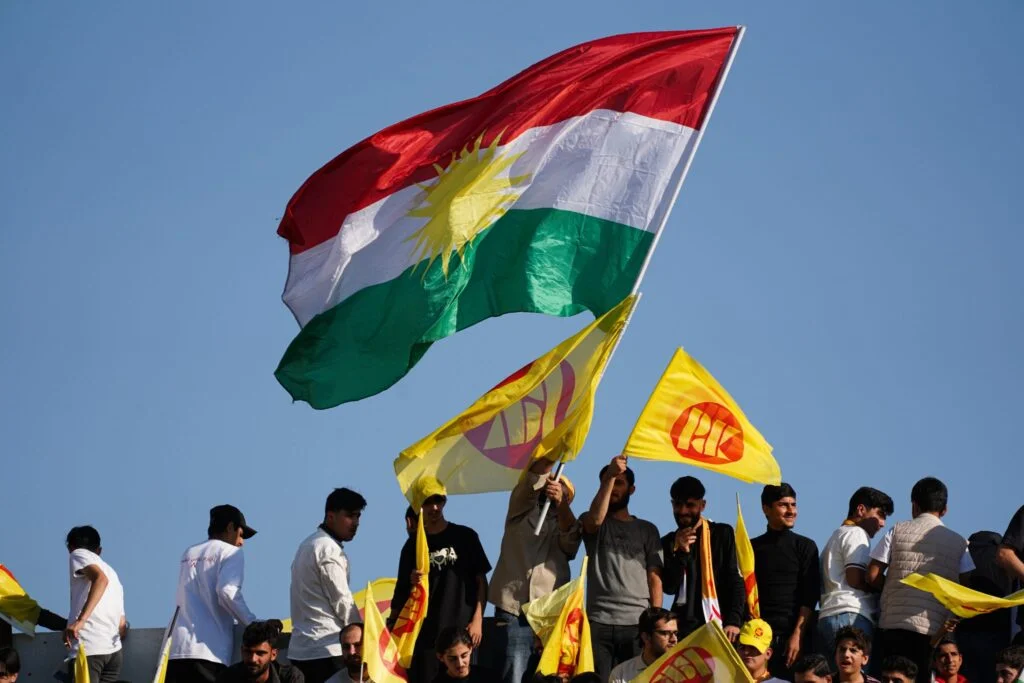
However, divisions in the Kurdistan Region have also led to many challenges. The region is divided between the Kurdistan Democratic Party (KDP) and the Patriotic Union of Kurdistan (PUK). The KDP essentially runs Erbil and Dohuk, while the PUK runs the Sulimaniyeh governorate on the border of Iran. PUK is also considered to have warmer relations with Iran. As a result, the Peshmerga forces are often politically divided along party lines. The goal of reform and unification is to ensure Peshmerga units are not loyal to the party first.
Regional Prime Minister Masrour Barzani said on September 21 that with the “support of our friends in the United States and the Coalition forces, following numerous meetings, intensive efforts, and continuous work, we have reached the stage where we can announce the unification of the Peshmerga forces today.”
He spoke about a four-year process that had now culminated in success. “I also extend my deep gratitude and appreciation to our friends in the United States and all coalition forces for their cooperation and support over the past years. Their support undoubtedly played an important role in enabling the Peshmerga to defeat ISIS terrorists and, ultimately, in safeguarding the security and stability of the Kurdistan Region,” he said.
US Exit Emboldens Iranian Proxies
This is an important point. US forces, deployed as part of the anti-ISIS coalition, are supposed to leave Iraq by September 30. Iranian-backed militias are celebrating even as they face pressure to disarm as the US withdraws. Some have sought to place conditions on their disarmament.
It’s important to understand that the militias have used the US presence as an excuse to carry out attacks on American facilities. In 2019, several attacks on US forces in Iraq led to an attack on the US Embassy in Baghdad. The Trump administration retaliated by carrying out a drone attack killing Islamic Revolutionary Guard Corps (IRGC) Quds Force commander Qasem Soleimani and militia commander Abu Mahdi al-Muhanids. Muhandis led Kataib Hezbollah, a militia closely linked to the IRGC. Kataib Hezbollah was blamed for a 2024 attack that killed three American service members in Jordan.
The threat of militias such as Kataib Hezbollah is clear. An Iranian-backed militia in Iraq attacked Saudi Arabia’s key East-West pipeline on September 11. This disrupted oil deliveries and is harming the global economy within the broader Iran conflict. However, the attack illustrated how Iraqi militias provide Iran with a forward operating base to carry out attacks. Iran and its Iraqi proxies have also expanded the conflict to Iraq itself, carrying out almost 1,000 attacks on the Kurdistan Region and 600 attacks on US facilities in Iraq since February 2026.
Baghdad Struggles to Control Militias
Now Baghdad must decide how to deal with the militias. Most of the militias fall under the umbrella of the Popular Mobilization Forces (PMF), an official government paramilitary force. Some of the militias are also part of the Islamic Resistance in Iraq, a front for Iranian activity. Because the militias have a foot in both camps, they can pretend to be under state control while also acting on their own. Most of the militias, except the large Badr Organization, have been sanctioned by the United States as Foreign Terrorist Organizations.
This leaves Baghdad in a bind. The government doesn’t have the strength to confront the militias. With US forces in Iraq reduced, the militias may feel empowered. However, they also have less of an excuse to claim they are fighting for Iraqi sovereignty. The unification of the Peshmerga therefore comes at an important time. If Iraq is to stabilize, it will need a unified Peshmerga to keep Iran from using it as a base to attack Saudi Arabia, Jordan, the Gulf states, or the Kurdistan Region.
Can Unified Peshmerga Deny Iran a Base?
What comes next? The KRG’s prime minister says that “the next phase must focus on strengthening military capabilities, providing advanced weapons and air defense systems, developing capabilities, and comprehensively advancing the Peshmerga forces, particularly their human capabilities.” Iraq’s Prime Minister Ali al-Zaidi flew to New York City for the UN General Assembly on September 21, allowing for talks with the United States.
Getting Iraq right matters because what happens in Baghdad intersects with much of what happens in the region. A weak Iraq helped spread extremism around the region. At the same time, Iran has exploited a weak Iraq to carry out attacks. Baghdad is not going to change course suddenly, but it can embrace the processes taking place and work to rein in the militias and strengthen its forces through cooperation with the Peshmerga.