
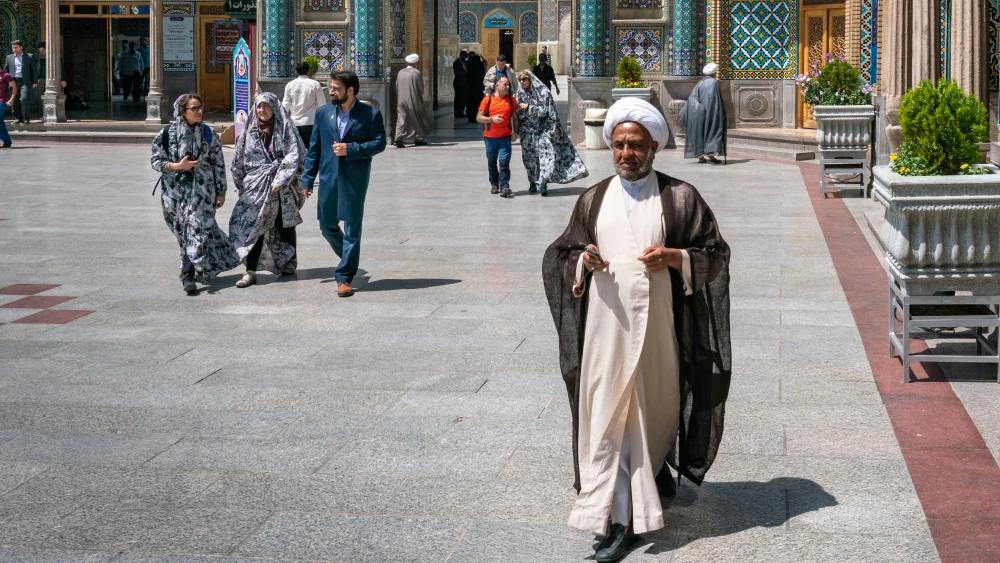
Western governments mistakenly treat Islamic Authority as the authentic voice of Muslim societies, empowering clerics over secularists, reformers, and atheists while ignoring the pluralism within Muslim communities and undermining the fight against extremism.
Church of England Defers to Islamic Authority
The Church of England’s decision to honor a Pakistani cleric for his contribution to interfaith dialogue—and its subsequent withdrawal of the award after evidence emerged of his praise for Al Qaeda leader Osama bin Laden—was more than an embarrassing failure of due diligence. It exposed a Western misconception: the assumption that religious authority is synonymous with social legitimacy and authentic representation of Muslims.
For decades, Western governments have approached Islamic societies through a narrow “extremist” versus “moderate” binary: Both categories are religious. The extremist is the Muslim whose interpretation of Islam is dangerous; the moderate is the Muslim whose interpretation is acceptable. In both cases, faith becomes the lens through which the West understands political identity, civic motivation, and social dynamics.
This is a serious analytical mistake. Muslim-majority societies are not religious monoliths. They contain Islamists, traditionalists, reformists, secularists, atheists, agnostics, nationalists, liberals, socialists, monarchists, democrats and authoritarian constituencies. They also contain Muslims who regard their faith as a private matter rather than a political program. By treating clerics and religious organizations as the interlocutors of Muslim societies, Western governments have empowered faith-based constituencies at the direct expense of others.
Cold War Roots and Abraham Accords
The roots of this problem are historical and geopolitical. During the Cold War, religion became a useful weapon against “godless communism.” Afghanistan was the most consequential example. The United States and its allies supported Afghan mujahideen forces fighting the Soviet occupation, helping to create an infrastructure of Islamist mobilization whose consequences extended beyond the Cold War. The strategic logic was understandable; the long-term costs were not. The United States treated religion as an instrument of geopolitics, rather than as one dimension of complex societies.
This habit survives in contemporary diplomacy. The Abraham Accords are fundamentally agreements about state interests, security, sovereignty and economic cooperation. Yet much of their public presentation has been wrapped in the language of “Abrahamic” reconciliation and interfaith harmony. The U.S. State Department’s description of the Abraham Accords illustrates this theological framing. Such language is not objectionable, but when religion becomes the vocabulary for statecraft in the Middle East, political, civic and economic identities disappear behind essentialist religious labels.
Do Constitutions Embed Religious Law
The consequences are most troubling where Western policy helped construct new political orders. Post-2001 Afghanistan became an “Islamic Republic,” while Iraq’s post-Saddam constitution declared Islam the official religion and a fundamental source of legislation. Afghanistan’s constitutional framework and Iraq’s constitution demonstrate how religious jurisprudence embeds into state governance. Western policymakers were reluctant to challenge these arrangements, fearing accusations of being anti-Islam. The result was a paradox: In trying to demonstrate respect for Islam, Western governments legitimized political structures that constrained the pluralism they claimed to support.
Integration Debates Silence Secular Muslims
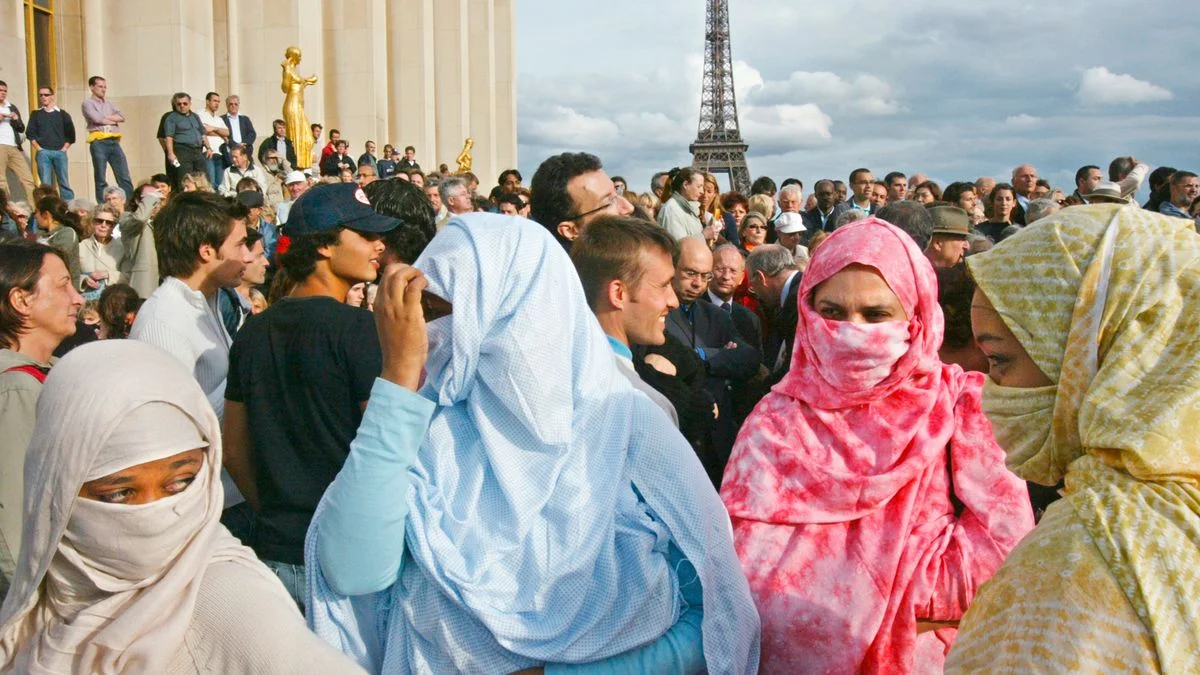
The same problem appears within Western societies. Muslim integration is too often discussed through the accommodation of religious identity—faith schools, halal provision, or sharia councils—rather than through citizenship, equality and participation in a common political community. Britain’s experience with sharia councils illustrates the tension. While voluntary religious arbitration can exist within a free legal system, religious authority cannot supersede the universal rights guaranteed by the state, as highlighted in the United Kingdom’s position on sharia councils.
The consequence is the systematic marginalization of Muslims who do not fit the preferred religious template: reformers, secularists, atheists, ex-Muslims, dissidents, feminists, and critics of political Islam. London and other Western capitals treat their voices as less representative because they challenge the assumption that Islam should occupy a privileged position in public life.
Equal Freedom Beyond Islamic Authority
This is not merely an intellectual problem. It undermines the struggle against Islamist extremism. Extremist movements should not be reduced to religion alone; political violence emerges from the interaction of ideology, theology, political grievances, authoritarianism and social conditions. But neither should the religious dimension be sanitized or ignored. A policy that is afraid to scrutinize religious ideas cannot challenge movements that use those ideas to legitimize political violence.
The answer is not less religious freedom. It is equal religious freedom. Muslims must be free to practice their faith without coercion. But they must enjoy equal freedom to reinterpret Islam, reject it, satirize it, leave it, or regard it as a private matter. Non-Muslims must enjoy the same freedoms. Religious belief deserves protection from coercion; religious ideas do not deserve immunity from criticism. Western policy should abandon the search for “moderate Muslims” and instead cultivate pluralist societies where citizens freely determine for themselves what role religion should play in their lives.