
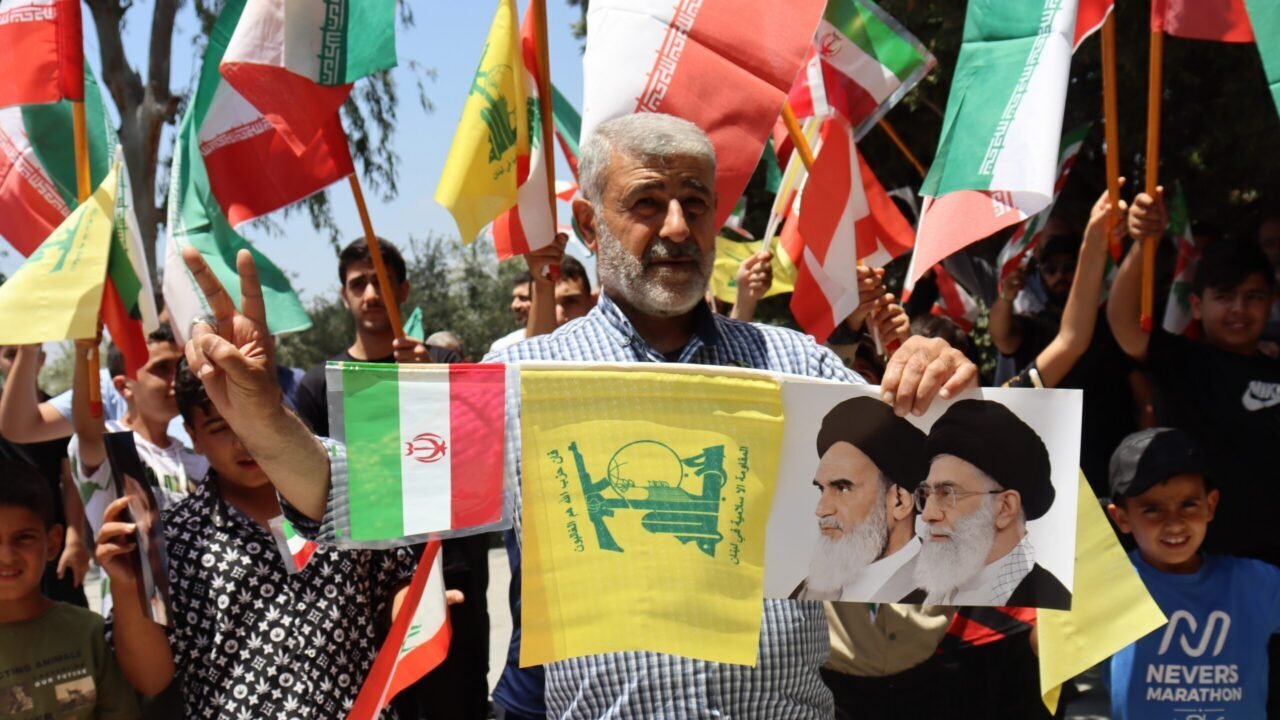
Hezbollah promises displaced families up to $14,000 while assigning permanent reconstruction to Beirut. The group uses municipal and Amal-linked institutions to claim credit for state spending, testing whether a stronger Lebanese state can bypass sectarian gatekeepers.
Hezbollah Aid Program Shifts the Bill
The Lebanese terrorist group Hezbollah may no longer have the resources to rebuild the communities devastated by its war with Israel. But it may not need to foot the bill to reap the political rewards. Its secretary-general, Naim Qassem, has repeatedly insisted that “rebuilding what Israel destroyed” is “the Lebanese state’s responsibility,” while promising to pressure Beirut into fulfilling that obligation.
On October 13, that calculation became clear as Hezbollah announced a new phase of its “Promise and Commitment” assistance program, offering displaced families up to $14,000 over the following year.
Later that day, Prime Minister Nawaf Salam met with Hezbollah and Amal lawmakers to discuss government reconstruction projects, including approximately $70 million in World Bank-backed infrastructure contracts expected to be awarded by year’s end. If Beirut delivers, Hezbollah can claim its pressure secured the rebuilding, letting the group conserve dwindling resources while recovering some of the political standing it lost in the war.
Hezbollah Reconstruction Strains Shia Loyalty
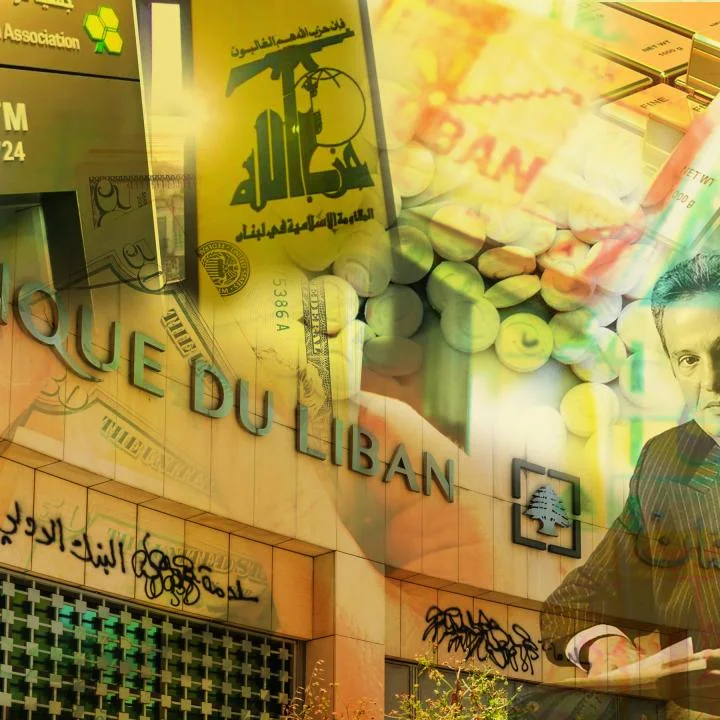
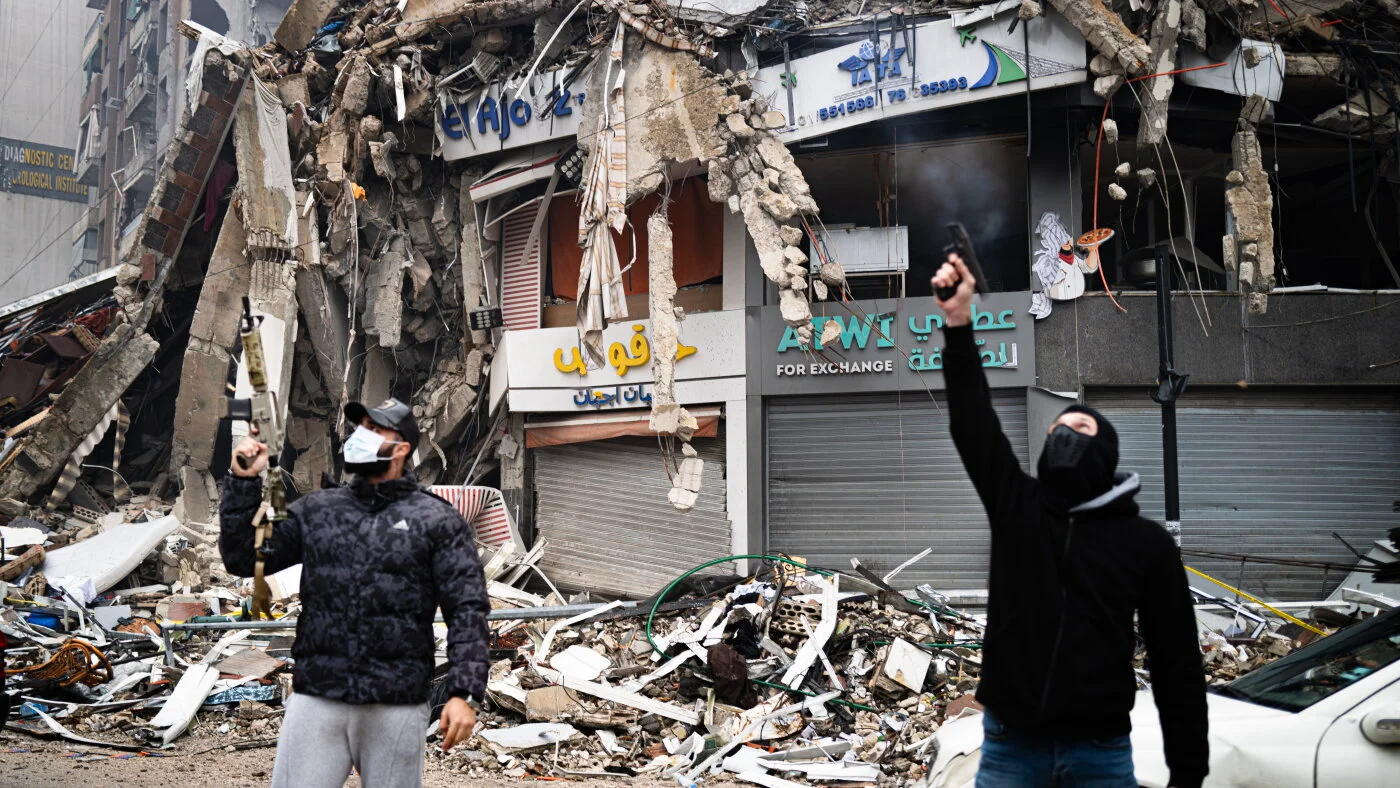
Hezbollah’s decision to enter the war against Israel in October 2023, then reignite the fighting in March 2026, devastated the predominantly Shia communities that supply its voters, fighters, and broader popular support that form the backbone of its political and military support. Rebuilding their homes and livelihoods is essential to retaining their loyalty. But Hezbollah has struggled to honor the compensation it promised after the November 2024 ceasefire. The fighting battered its finances, Bashar al-Assad’s downfall disrupted its supply routes through Syria, and Iran’s own troubles have strained its ability to bankroll the group.
Hezbollah’s inability to meet its constituents’ needs also threatens the credibility of its welfare institutions, a longstanding pillar of its social influence. A Statistics Lebanon survey published October 9 found that 52 percent of Shia respondents expressed little or no confidence in those institutions.
Qassem Assigns Rebuilding to Beirut
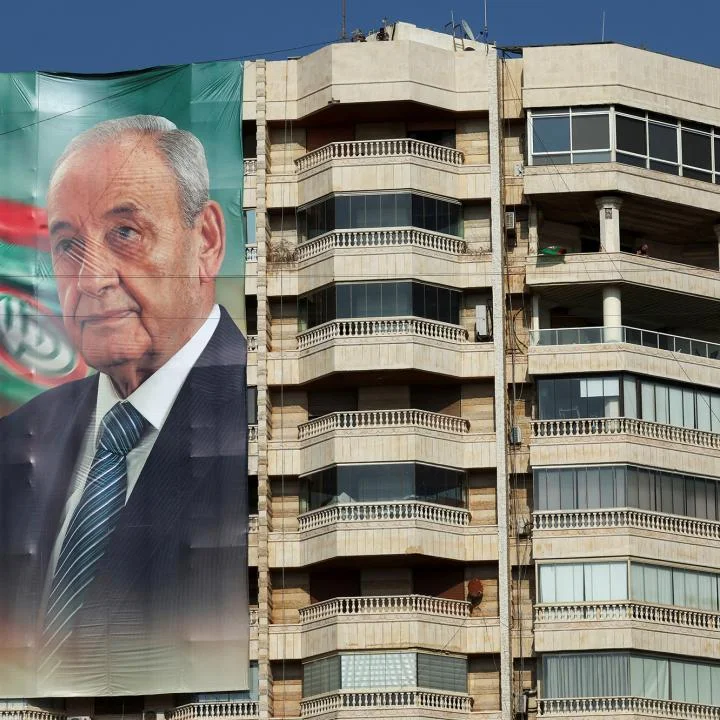
Qassem began laying the groundwork for Hezbollah to benefit politically from government-funded reconstruction shortly after the November 2024 ceasefire. When he launched “Promise and Commitment” that December, he pledged temporary assistance while assigning the far costlier task of reconstruction to the Lebanese state. He subsequently clarified that Hezbollah’s own reconstruction commitment included pressuring Beirut to deliver. And if assistance failed to materialize, he sought to place the blame squarely on the government.
By April 2025, Qassem was already accusing Lebanon of delaying reconstruction—contrasting Hezbollah’s “globally unparalleled” efforts to “relieve the state of its [reconstruction] burdens” with what he described as the government’s deliberate “impoverishing” of Shias and “targeting” them for sectarian reasons. At Hezbollah’s October 13 announcement, Executive Council Chairman Ali Daamoush accused Beirut of neglecting displaced families, dismissing its rubble removal and infrastructure projects as inadequate substitutes for direct compensation.
Municipal Capture Controls Damage Claims
Hezbollah has also claimed that its pressure has produced results. In December 2025, parliamentarian Hassan Fadlallah, while insisting reconstruction remained the state’s responsibility, said he and colleague Amin Sherri had successfully lobbied Salam to fund structural repairs to war-damaged buildings in Beirut and Hezbollah’s stronghold in the capital’s southern suburbs through the Higher Relief Commission (HRC), the government’s disaster-relief agency.
Hezbollah has a precedent for benefiting politically from government-funded reconstruction. After the 2006 war with Israel, the Siniora government offered families whose homes were destroyed in Beirut’s southern suburbs up to $53,000 in compensation. Most entrusted those payments to Al Waad, Hezbollah’s reconstruction organization, which then administered the funds and managed the rebuilding, becoming its public face.
Today, Hezbollah has other avenues to claim credit for state-funded compensation. Under the Lebanese government’s January 2026 reconstruction framework, state agencies would administer compensation, including the Council of the South and HRC. Applicants would generally need municipal certification of property damage and occupancy before their claims could proceed. Hezbollah and its political ally Amal swept all 80 municipalities in Baalbek-Hermel and the overwhelming majority in South Lebanon and Nabatieh in 2025, placing that necessary step in the hands of their local officials.
In August, Hezbollah and Amal convened southern municipal officials and their lawmakers to coordinate damage documentation, assistance applications, and follow-up with government ministries. In October, Beirut’s Southern Suburbs Municipalities Union reported submitting records of 11,400 destroyed or uninhabitable homes to the HRC. The union also obtained $2 million in government funding to repair 22 unsafe buildings after raising their condition with Salam, with another $9 million promised.
Amal Alliance Shares the Credit
Amal’s influence within state reconstruction institutions gives Hezbollah another avenue to claim credit for Beirut-financed assistance. Their electoral alliance gives both parties an interest in presenting government-funded rebuilding as a joint achievement.
Amal dominates the Council of the South, a government relief and reconstruction agency, and holds the Finance Ministry through Berri-backed Finance Minister Yassine Jaber, who also sits on the HRC’s governing body. Council of the South chairman Hashem Haidar acknowledged receiving guidance from Amal leader Nabih Berri. The Council for Development and Reconstruction (CDR), which administers the World Bank’s LEAP infrastructure program, reported that its chairman, Mohammad Ali Kabbani, received Berri’s directives.
In July 2026, Hezbollah and Amal jointly convened southern mayors, Public Works Minister Fayez Rasamny, and Haidar at Amal headquarters to press for more reconstruction aid and greater municipal involvement in setting spending priorities. Rasamny pledged to advance those demands within the government.
The parties have publicly embraced reconstruction as a joint undertaking. In a March 2025 interview, Qassem described rebuilding as a shared Hezbollah-Amal responsibility while assigning its financing to Beirut. Amal’s de facto second-in-command, Ali Hassan Khalil, likewise described mobilizing state institutions for reconstruction as a joint effort. He acknowledged that their constituents blamed both parties for delayed compensation. He said they had pressed ministries to increase Council of the South funding and challenged World Bank financing they believed would exclude devastated border villages.
Both parties have not concealed their intention to present reconstruction as a joint undertaking. At a joint press conference after a parliamentary budget committee meeting, Khalil credited pressure from both Amal’s and Hezbollah’s parliamentary blocs, along with Finance Minister Jaber’s agreement, with securing initial reconstruction allocations for the Council of the South and HRC. Hezbollah parliamentarian Hassan Fadlallah likewise credited both blocs, describing the preliminary allocations as the first practical step toward government-funded reconstruction.
Can Beirut Bypass the Shia Duo
The political benefits of these arrangements have also extended beyond reconstruction. Political scientist Melani Cammett found that Lebanese political parties routinely acted as intermediaries for government-funded hospitalization, arranging state coverage for constituents and then claiming credit for benefits largely financed by the government. More recent research associates such patronage with stronger political support.
A 2026 study by Kota Suechika found that, among Hezbollah and Amal supporters, regular recipients of goods or services from government agencies, political parties, or other organizations expressed significantly stronger support for Hezbollah across nearly all attributes than those receiving little or no patronage.
This presents Beirut with a challenge that its financial oversight cannot resolve. Lebanon cannot deny reconstruction to Shia communities devastated by the war. Hezbollah and Amal’s representatives are duly elected lawmakers with legislative and oversight responsibilities, but their offices do not entitle their parties to control or mediate state assistance.
Neither the June 26 US-brokered framework between Lebanon and Israel, which commits Beirut to preventing reconstruction funds from reaching armed groups and their affiliates, nor the World Bank’s LEAP safeguards can prevent Hezbollah and Amal from claiming political credit for legitimate government spending. Beirut should instead stop treating the “Shia Duo” as the gatekeeper between the state and its Shia citizens.
President Joseph Aoun should remove Hezbollah-affiliated former minister Ali Hamieh as reconstruction adviser and channel new state- and donor-funded projects through independently supervised agencies rather than politically entrenched institutions such as the Amal-linked Council of the South. Residents should be able to apply directly for compensation, submit alternative documentation in place of municipal certification, obtain independent damage assessments, and appeal decisions. Public records should identify who financed, approved, contracted, and completed each project.
Hezbollah Reconstruction Outlasts the State
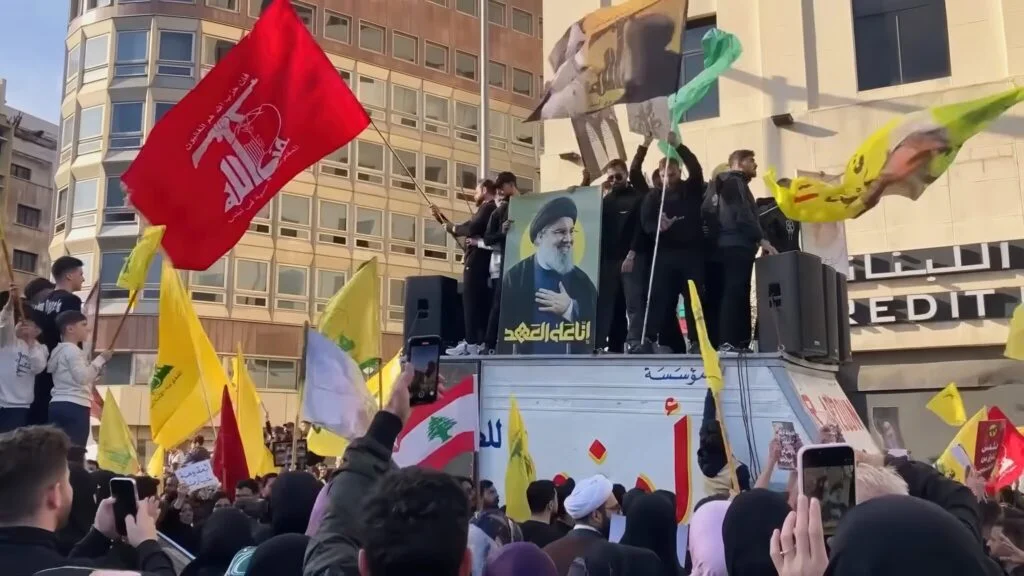
Hezbollah’s three-year war with Israel has placed it at an existential crossroads. At similar historical junctures, the group has adapted by integrating further into the Lebanese state to protect “the resistance”—without becoming more subordinate to Beirut.
Reconstruction may mark the next stage of that adaptation. Hezbollah’s diminished resources make it less capable of sustaining its constituency through institutions it finances itself. Rather than relinquish its role as the Shia community’s gatekeeper, the group is instead increasingly pressing the Lebanese state to provide that constituency with what Hezbollah can no longer provide independently, while positioning itself to claim the result as its own achievement.
That complicates a basic assumption about postwar Lebanon: that strengthening the state necessarily comes at Hezbollah’s expense. A more capable Lebanese state could establish a more direct relationship with its citizens. But if Hezbollah succeeds in inserting itself between that expanding state capacity and its constituents, Beirut could instead become another source of benefits from which the group draws political capital. Hezbollah could then survive not despite the state’s recovery, but in part through it—leaving Beirut stronger as a provider without necessarily becoming stronger as a political authority.